Student Spotlight: Keisuke

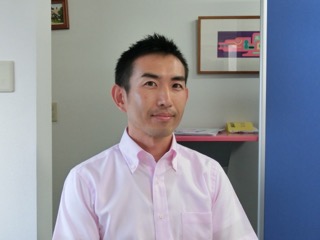
CIMG2416Keisuke Musashino, a native of Chiba, Japan, has taught Japanese immersion classes at Mt. Tabor Middle School in Portland since 1998. Prior to finding his place in Portland, Keisuke spent a year in Tennessee as a student on a study abroad program and three years in Georgia as a student. Having been a duck since last June, he enjoys everything the “tracktown” offers and spending time in the library.


Why did you choose to come to the LTS program?

The short answer is that I felt that I needed to study more about teaching language. Here is a longer version: when I was invited to be an intern at Mt. Tabor in 1997, I had no training in teaching the Japanese language. A short teacher training course over the summer before starting my internship and the internship experience itself really got my feet wet for teaching, and it did not take much time for me to realize the different culture of teaching and learning in the US, and complexity of teaching Japanese to middle school immersion students. Furthermore, being a classroom teacher at a public school gives you a whole lot of responsibility in and outside of classroom. So, I learned many things the hard way.

At my school, my colleague and I worked for several years to create a curriculum for each grade level emphasizing both Social Studies content and Japanese language. My responsibility is teaching the language (including grammar), mostly through thematic units. Without extensive knowledge about the Japanese language and how to teach it, I have basically taught myself how to do it using whatever resources available. That ignited my desire to go back to school, so I decided to take a leave of absence for a year. As I started looking for institutions, I thought about the U of O based on the location and knowing that they take a leadership role in teaching languages with CASLS. Then I ran into the LTS website and was really intrigued with what the program would offer. After communicating with Keli by e-mail, I was convinced that the LTS program would give me the best learning opportunity. Plus, I could get to live in Eugene for a year! So, it was an easy choice for me.

What advice would you give to other experienced teachers who are interested in the LTS program?

There are so many good things about this program. First of all, I think this is a rare program that has a really good balance between theory and practice, and even teachers with years of experience will be able to learn a lot from each class the program offers. In addition to the core classes such as lesson planning, curriculum design and assessment design, students can also take some elective classes based on their needs. For example, I took classes about discipline management, Japanese pedagogical grammar and another pedagogy class specifically for East Asian languages. They are all important for me as a teacher who teaches middle school Japanese immersion classes. Also, if you have teaching experience, you can really reflect on your past teaching practices with what you learned in class and share your experience with your classmates who are just entering the profession. Also, I should note that the program can be completed in five terms (starting in the summer term and ending in the summer term in the following year) – that was another reason why I chose the program. I felt I could get the most out of my year-long study leave. Oh, one more thing – this is a wonderful learning community with caring professors and energetic/fun classmates! I feel I am fortunate to be able to get to know them, study with them, socialize with them and run with them (please see the post about LTSEOTT – LTS Eye of the Tiger – on this blog!). I would honestly say my passion for teaching is even stronger now.

What is your MA project on?

The student body in the Japanese immersion program has become more linguistically diverse, and the class size has also become larger (typical for public schools, I guess). Besides, teaching middle school students is sometimes challenging. They are somewhere between children and adults, are usually honest, but very self-conscious, and have different interests and learning styles. With all those elements, I struggled with reaching all the students last year and keeping them motivated. That experience inspired me to investigate challenges specifically in the middle school immersion context, L2 identity, motivation and differentiated instruction. Based on the findings, I would like to create examples of teaching materials for my class that I can use when I go back to my school after finishing the program.

What are you most looking forward to in your remaining time in the program?

I cannot believe there is only one term left. While I really enjoyed all the classes I took in the last four terms and the experience of working with students in the second-year Japanese students as a GTF for the Fall and Winter term, I am most definitely excited about giving my full attention to my final project this summer. Also, as I only have a week until I go back to my school after graduating in August, I look forward to enjoying the summer weather in Eugene, being outside whenever I can, hanging out with my wonderful classmates and just having fun.

Faculty Spotlight Jeff Magoto

What is your position at the University of Oregon?

I’m the director of the Yamada Language Center, which is one of the best jobs on campus. I get to work with faculty and students working in one or more of the 20+ languages offered at UO, whether that’s the four students taking Persian or the thousands who are taking Spanish, or the one instructor in Swahili or the many dozens in Romance Languages. Our staff of 15 tries to support their efforts by offering flexible classroom and self-study spaces, resources for language practice and development, and training in both pedagogy and technology use. Lastly, I get to join the heads of other language units in advising our College of Arts and Sciences deans on language, linguistics, and general humanities matters.

How are you associated with LTS?

I’m an ardent supporter of LTS, and even though I don’t teach in the program very regularly, I’ve been able to work with numerous LTS students over the years. I usually serve as a reader for at least one student’s Master’s Project a year, and I’m the supervisor for the Fulbright Language Teaching Assistants (FLTAs) who take courses in LTS and teach in YLC’s Selfstudy Language Program, LT 199. I also regularly work with LTS faculty members Deborah Healey and Robert Elliott on course development and CALL projects for departments such as NILI or AEI .

What other projects are you involved in?

Well, I’m currently one of the conveners of the UO Language Council. UOLC is a collaborative effort of faculty, administrators, students and staff to support and inspire language study on campus and beyond through professional development, innovation, and outreach. It’s a wonderful chance to work with folks across the spectrum of CAS, International Affairs, Professional Schools, and Admissions, each of whom has an impact on who ends up in our language. classes. I also have a nearly 10 year-old speech-based software project, ANVILL, that grew out of my work as Norman Kerr’s advisor on his LTS Terminal Project in 2007. It continues to grow and improve because there have always been brave LTS alumni willing to try it out, take it out into the field, and guide us in its development. Thanks to them, it’s now used in about 10 countries in addition to the US. They still send us suggestions for improvement!

What do you enjoy most about working with language educators? (video response)

MA Project Spotlight: Annelise

Annelise Marshall is a soon-to-be graduate of the LTS program, who will begin teaching in Mexico this fall.
IMG_2536 (6)
What is the title of your MA project?
Engaging International Students in the U.S. University Experience

Why did you choose this topic?
My experiences as an undergraduate gave me a passion for Student Life, and when I started getting to know some English learners at the U of O I started thinking about how beneficial involvement with the university environment can be. I wanted to see how I could help students increase their engagement to provide a more positive experience while at the U of O while also benefiting their language learning.

How will this project influence your future teaching?
I do hope to someday work with university level learners in the U.S., and I’ll certainly draw on this project then to provide a better learning experience, but I also hope to use elements of my project while teaching abroad, as I will be in the fall. I’ve been able to learn a lot about the use of authentic materials and pragmatics instruction that I think will be helpful in any teaching context.

What do you like best about your project?
I’ve been able to talk to a lot of students, teachers, and administrators who have reacted really positively to my topic. It’s really motivating to hear from others that they feel the need my project addresses.

Faculty post Anna Mikhaylova – Heritage language learners

Heritage language learners in language classrooms – Anna Mikhaylova

A widely cited broad definition of heritage speakers in the US by Valdés (2001) includes individuals raised in homes where a language other than English is spoken, who are to some degree bilingual in English and the heritage language and, who also have a personal interest or involvement in an ancestral language. Polinsky and Kagan (2007) offer a narrow definition of heritage language as the language which was sequentially first, but may not have been completely acquired due to the speaker’s shift to another language as their dominant means of communication. The latter distinction suggests that, like foreign language learners, heritage speakers may differ in their proficiency levels. Kagan and Dillon (2004) outline the following “matrix” for programs targeting heritage language learners: proper placement; time on task; programmatic rigor; specific instructional materials; an uninterrupted, comprehensive curriculum; instructors trained in heritage language acquisition; a multi-year sequence; consideration of the home/community native speaker environment; and a metalinguistic framework that raises awareness of the importance of grammatical accuracy and register (p.100).

The National Heritage Language Resource Center at UCLA has many useful resources for both teachers and linguists interested in working with heritage language learners. One of the center’s big projects, led by Maria Carreira and Olga Kagan was a national survey of 1732 heritage speakers of 22 different heritage languages across the United States. As a result, the following general profile of an adult heritage language (HL) learner studying the heritage language at the university level was published in 2011. Such a learner (1) acquired English in early childhood, after acquiring the HL; (2) has limited exposure to the HL outside the home; (3) has relatively strong aural and oral skills but limited literacy skills; (4) has positive HL attitudes and experiences; and (5) studies the HL mainly to connect with communities of speakers in the United States and to gain insights into his or her roots.

While some universities do have classes devoted specifically to heritage language learners or even whole programs, like the Spanish Heritage Language Program here at the University of Oregon, more often heritage language learners find themselves in the same classroom with foreign language learners of the same language. Screen Shot 2016-06-10 at 8.33.04 AM

One of the differences (an assumed advantage) observed for heritage language speakers of various languages over foreign language learners is that the former are exposed to the target language naturalistically from birth in family/community contexts while the latter usually post-puberty and in instructed contexts. From this often assumed definitional difference stem other common observations about heritage speakers being usually stronger in oral skills than in literacy-based reading and writing, having a stronger cultural connection, a larger vocabulary and greater focus on meaning than on form in language use, while second language speakers are believed to have stronger reading and writing skills and metalinguistic knowledge and greater attention to form with noticeably weaker oral fluency. While, unfortunately to date there are not too many empirical studies that test effectiveness of instruction, but those that do find that instruction is useful for both types of learners.

Based on these observations, a number of scholars (Beaudrie, Ducar, and Potowski (2014) among others) have called for different or at least differentiated instructional and research methodology approaches targeting the two types of learners. For example, Kagan and Dillon (2009) suggest that macro-based (top-down) and discourse based teaching is more suitable for HL learners in instruction of grammar and vocabulary than the bottom-up grammar/vocabulary to function teaching often used in L2 contexts. Carreira & Kagan (2011) argue for a community-based curriculum, which incorporates materials and types of activities that help learners connect to their experiences in the U.S.

References:
Beaudrie, S., Ducar, C. & Potowski, K. 2014. Heritage Language Teaching: Research and Practice. Columbus, OH: McGraw-Hill Education.
Carreira, Maria. 2011. Formative assessment in HL teaching: Purposes, procedures, and practices. The Heritage Language Journal, 8(1).
Carreira, M. & Kagan, O. (2011) The Results of the National Heritage Language Survey: Implications for teaching, curriculum design, and professional development. Foreign Language Annals, Volume 44, No 1. pp. 40-64.
Kagan, 0., & Dillon, K. (2004). Heritage speakers’ potential for high-level language proficiency. In H. Byrnes & H. Maxim (Eds.), Advanced foreign language learning: A challenge to college programs (pp. 99-112). Boston: Heinle/Thomson.
Kagan, O., & Dillon, K. (2009). The professional development of teachers of heritage language learners: A matrix. Bridging contexts, making connections, 155-175.
Polinsky, Maria, and Olga Kagan. 2007. Heritage Languages: In the ‘Wild’ and in the Classroom. Language and Linguistics Compass 1/5: 368–395
Valdes, G. (2001). Heritage language students: Profiles and possibilities. In Peyton, J.K., Ranard, D.A., and McGinnis, S. (eds.), Heritage languages in America: Preserving a national resource. McHenry, IL The Center for Applied Linguistics and Delta Systems. pp. 37-78

LTS: Eye of the Tiger

12495084_1056701597686376_2670593250537554057_n

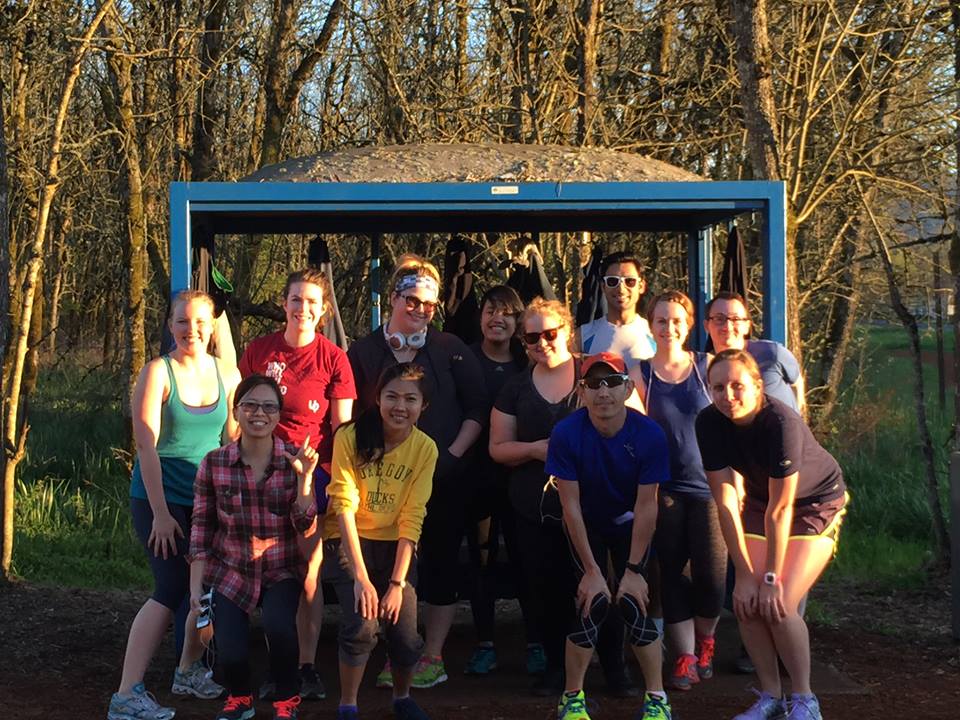
The group after a good run at Amazon Park in South Eugene

LTS students have a lot on their plates—from working on MA projects to internships and GTFs. For a little stress relief, some LTSers have started a weekly running club, which has come to be known as the LTS Eye of the Tiger. Since January, Eye of the Tiger has met at least once a week.

While everyone goes at their own pace, Eye of the Tiger is a supportive space where everyone is encouraged to meet their own goals. LTS student Juli– arguably the founder of Eye of the Tiger– even crafts individual workouts for attendants!

13124928_1096395317097099_6015168058912344925_n

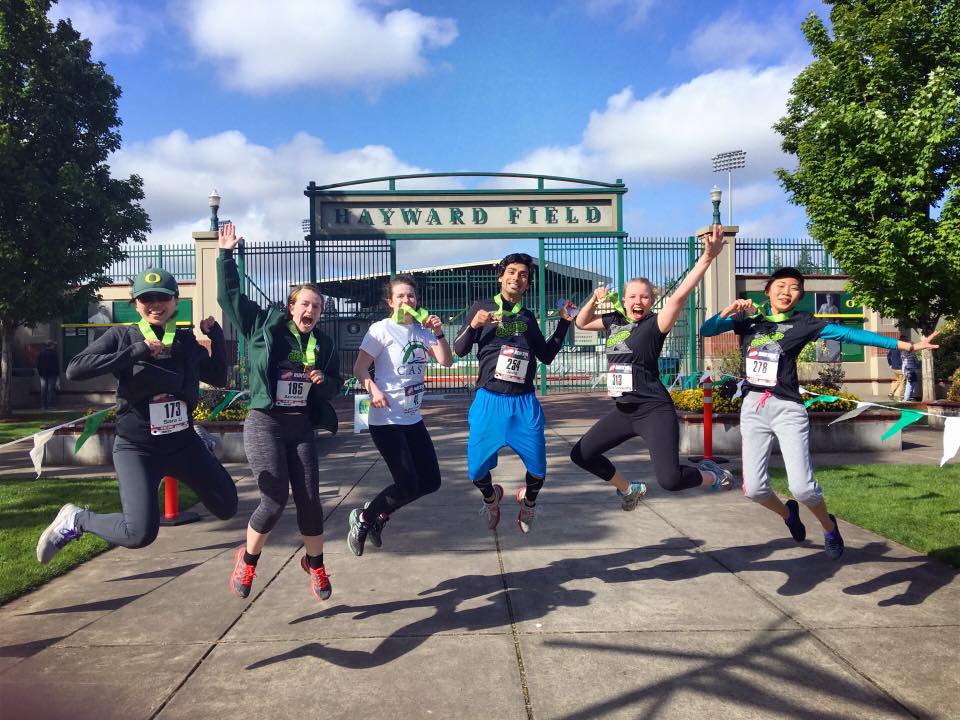
Some of the 5k runners after the race

Earlier this term, some Eye of the Tiger runners participated in races during the Eugene Marathon. 7 students ran the 5k, while 2 ran the half marathon. All together the LTS students ran a total of 47.9 miles!

Next term, many students plan to run the Butte to Butte, a local 10k which occurs every 4th of July.


Eye of the Tiger has also resulted in some special LTS merchandise. 13327488_1083406275052096_1801707673359109232_n13307497_839247680415_298908721876199184_n


13310447_1115820811821216_1778703224392574571_n

Juli opening her cowbell at the Prefontaine Classic

Finally, Eye of the Tiger members pitched in to buy a custom cow bell for Juli, for her future workout leading, and to thank her for work on the club. While Juli is a serious runner who has multiple races wins, she is always supportive of others, no matter where they are in their running (or walking) journey.


Faculty Post: Laura Holland

Author’s Note: I have used films in my classes since I began teaching English Language in the 1980s. I use and have developed materials for both film clips and whole movies with great success. This teaching tip focuses on using film clips to spark discussion, study grammar, prepare debates, and practice pronunciation, stress and intonation and more.

Film clip + storytelling + chanting = engaged listening/speaking practice

Laura G. Holland

lgh@uoregon.edu

Laura_Parque de Amor_Lima (002)

 Teachers have at their disposal now a myriad of authentic materials from which to develop interesting and engaging integrated activities for their students. The briefest film clip can be developed into hours of meaningful classroom lessons that allow students to share their personal stories and hear those of their peers, all the while developing higher order thinking skills. Transcripts from the film clips can be used to focus on grammar, vocabulary, and all areas of pronunciation and stress in addition to content. They can also be used to develop extended chants that weave together focused fun-drill practice and employ techniques described by Charles Curran and Jennybelle Rardin and more recently Scott Thornbury as “Backwards Build-Up” and “Back Chaining” respectively, in addition to other traditional and non-traditional drilling practices that highlight message shift through varying intonation.

Whether you are responsible for your entire curriculum or simply want to supplement the curriculum you are required to teach, try some of the following ways to engage and motivate your students both in and out of class

•••••••••••••••••••••••••••••••••••••••••••••••••••••••••••••••••••••••••••••••••••••••••••••••••••••

« Show a film clip »

Choose a film clip appropriate for your level and age of students. Keep it short, 5 minutes or less. Use the theme as a “springboard” for discussion. You can use discussion cards, questions posed on a PowerPoint slide, bag strip questions, questions posed orally or written on the board, whatever is most appropriate to your Student Leaning Outcomes (SLOs). Get students telling their stories and talking about their own life experiences. They can discuss situations about people they know or have heard of, anything to spark their engagement. Spend less time on comprehension questions and go directly to higher order thinking questions and tasks, incorporating activities that assume comprehension but create more meaningful communication right from the start.

« Discussions and Story-Telling »

Topics that my students enjoy discussing and sharing their opinions about: Food, Sports, Dance, Music, Movies and TV, Superstitions and Luck, Scars (every scar has a story), Tattoos and Plastic Surgery, Outdoor activities, Friendship, Family, Controversial Topics, Travel, Holidays, Pastimes, and so on. Discussions can be standing or seated, in pairs or small groups. You can use any of the methods noted above for posing the discussion questions (DQs).

« Debates and Discussions »

Choose a topic from the film, your textbook, the news or other medium. Have Ss sit in groups, fluency circles, standing or seated face-to-face or other. Assign roles so that Ss argue points of view (POVs) that may not be their own, working in pairs to create the most valid arguments.

 « Chanting »

Create your own chants using sentences from the film/video clips, sentences from the textbook, and so on. Add in extended practice and variations highlighting them in bold to show they are not from the original “text.” Give your students practice with the differing messages that changes in intonation create, as well as the ability to “feel” how stress works in English.

« Transcripts »

Use transcripts from the films (create them yourself for better quality and number each line for easier reference), and do grammar transformations, for example: take all the present tense verbs and put them in past tense, making all necessary time marker changes; change all negative lines into positive and vice versa, all statements into questions and vice versa, note synonyms and antonyms, find more formal/informal ways to express line “12,” and so on. Have students practice pronunciation and intonation using “Creative Computer” as described by Rardin et. al. Ask Ss to paraphrase, summarize, give a title to the scene, choose a different ending, etc. Ask students to look at line “7” (for example), and discuss with a partner why the speaker used that verb form to express her ideas or to state his opinion. This helps students understand the meaning of the grammatical forms and why native speakers chose specific ones to express their ideas.

Moonstruck movie poster

Citations

Curran, Charles, A. (1976). Counseling-learning in Second Language Teaching. U.S. Apple River Press.

Rardin, Jennybelle P.; Tranel, Daniel D.; Tirone, Patricia L.; Green Bernard D. (1988). Education in a New Dimension: The Counseling-Learning Approach to Community Language Learning, U.S. Counseling-Learning Publications.

Thornbury, Scott. (1997). About Language. New York. Cambridge University Press.

Thornbury, Scott. (2005). How to teach speaking. Harlow, England: Longman.

LTS and CASLS

Many LTS students work with language learners in the Eugene area as interns, GTFs, volunteers, tutors, and more, but there is another unique opportunity you may not know about. The University of Oregon is home to the Center for Applied Second Language Studies (CASLS), one of just sixteen National Foreign Language Resource Centers which work to develop and share resources for language teaching and learning. Working with CASLS is an additional opportunity for LTS students and alumni.

13083251_507916539394243_4491631907873970223_n

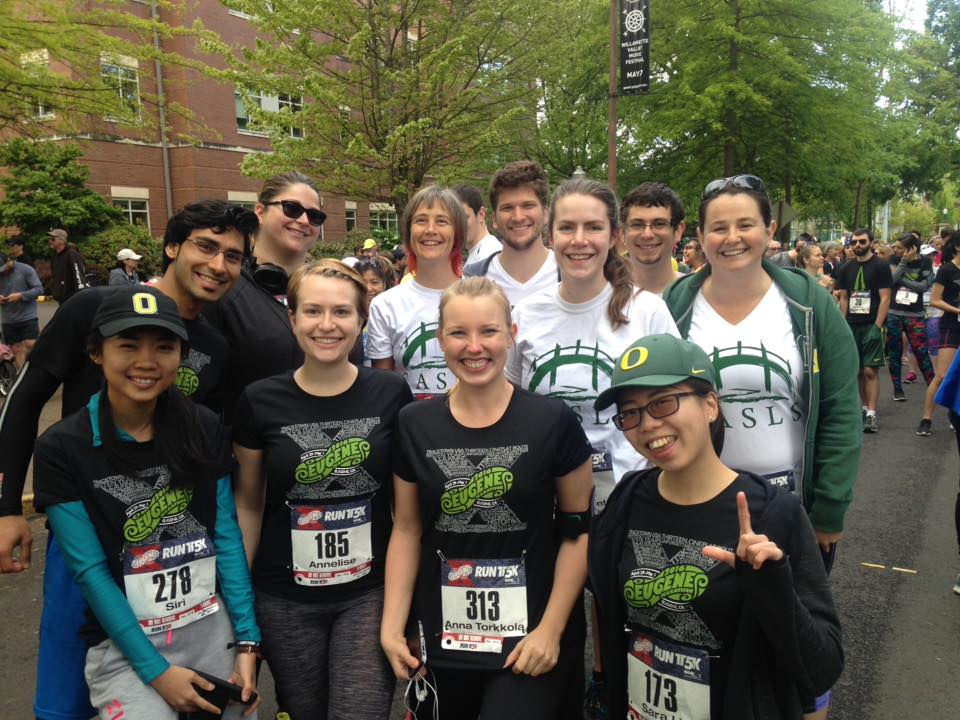
LTS and CASLS members recently participated in the 5k during the Eugene marathon. Although both groups had their own teams, they got together to take a photo before the race

Currently, LTS folks working with CASLS include: two LTS alumni who are current CASLS staff, two current students who are interns, and one current student who is a GTF. Additionally, Dr. Julie Sykes, the CASLS director regularly teaches an elective course for LTS students on pragmatics in language teaching.

To find out more about the kind of work that results from partnerships between CASLS and LTS, check out this blog post featuring the work of current LTS student and CASLS intern, Becky. Becky interned with CASLS from Summer Term 2015 to Winter Term 2016, and created an “interactive story” mobile app for language learners called Finders Keepers. 

For more information about using games in language teaching and learning, browse other posts on Games2Teach, which is run by LTS alum Ben!

Preparing for life after LTS

Summer is just around the corner! It’s the time of year in LTS where students are thinking about The Great Beyond: applying for teaching or other professional language-related positions after graduation. Here are some of the tips and resources we share in LTS:

  • Get plugged in to professional organizations in the field. Professional organizations are great resources for job leads and information. We keep a list of these organizations for LTS students on our LTS google site.
  • Build an online portfolio, starting with the creative work from your first classes (statements of teaching philosophies, lesson plans, materials collections, course design…). LTS students start adding to their online portfolios in the second term of the program.
  • Attend and present at conferences. LTS students have attended several conferences this year, and can apply for a $500 award for presenting at one.
  • Publish your ideas, even the brief ones! CASLS has been publishing good activity ideas on InterCom, and one of the Assessment class assignments asks students to prepare a review to submit to TESOL-EJ, for example.
  • Hone your professional communication skills, both in classes and out of them. The LTS program has developed a one-of-a-kind set of online resources called “On the Path to Language Teaching” that includes example cover letters and resumes in our field, as well as an extensive set of mock-interview videos made by our faculty, students, and alumni (the image below is a screenshot from the homepage). These videos include commentaries on the interviews by language and career professionals – a great way to see if your own reactions line up with those who are doing the hiring!
  • Practice, practice, practice! The LTS program is certainly hands-on. Students in the program can pursue multiple teaching internships and take supervised teaching courses that provide substantial feedback and support. They can also work closely with international UO students as tutors and conversation partners, or develop curriculum or assessment ideas through internships at CASLS. All of these experiences look great on a resume.
  • Take advantage of LTS connections to potential employers and internship sites. LTS has a growing network of connections to language teaching institutes, schools, and universities in Asia, Latin America, and Africa, for example, and also keeps in touch about more local position openings. Alumni and current students both can stay in touch to hear about these opportunities.
  • Finally, develop your relationships with peers, faculty, and other mentors while you are in the program. Your peers of today will be your colleagues and your network of tomorrow, and are invaluable as such. LTS fosters a strong cohort support system that students themselves maintain with gusto. Also stay in touch with faculty after graduation; they will remain a source of support for you for a long time!

Although the LTS program is only 15 months long, it is packed full of vitamins and nutrients to help you keep going for the long haul. Bon appetit! — Keli Yerian

Screenshot 2016-04-27 11.48.22

Screenshot from homepage of online interview video materials for LTS students


Student Spotlight: Ava

Ava Swanson is originally from Harrisburg, Oregon. She graduated from LCC and UO before entering LTS. When she needs to destress from grad school responsibilities, she likes to play catch, eat burritos, and pet her fluffy guinea pigs.
 Ava in San Francisco
Why did you decide to join the LTS program?
 I came to the LTS program two years after completing my undergrad at University of Oregon. I studied Spanish, Latin American Studies, and also obtained a SLAT certificate. I worked some odd jobs after graduation and was trying to decide my next step. I knew it would be related to language teaching, so I interviewed some of the language teachers I knew about their personal and professional experiences that helped them get their current jobs. It was during an interview with Laura Holland, my former SLAT instructor, that the LTS program was brought to my attention. The program offered what I was looking for in terms of my professional development.
 
What is the topic of your MA project?
 My project is a materials portfolio for teachers of low-level immigrant students in a community ESL community. It’s based on the fact that while many immigrants move to the US for better economic and professional opportunities, many don’t have access to these opportunities if they aren’t literate in English. My lessons will use children’s literature books to help low-level students develop their literacy skills. An additional focus of the project is teaching these parent-students how to share the books read in class with their young children.  This helps parents practice their reading skills, develops children’s emergent literacy skills, and creates a culture of literacy in the home.
 
Why did you choose this topic?
 I chose to investigate literacy and children’s literature because I definitely grew up with a culture of reading in my home. My dad read to me often when I was young and trips to the library and bookstore were a regular occurrence. I still have a lot of my childhood books on my bookshelves. I love re-reading and sharing them with my younger family members as an adult. 
 I chose to focus on immigrant students for my target audience because I’ve met and learned about some really amazing people who have come to the US for better opportunities for themselves and their families. It can be really difficult to settle in a new country, especially when you don’t speak the majority language.
 
What are you looking forward to the most in your remaining time in LTS?
 Now that we’re nearing the end of the program, I’m really looking forward to showing my finished project to my family. They’re really happy that I’m pursuing my educational goals and my dad and my girlfriend have been especially supportive. I can’t wait to hand them my finished portfolio!

LTS Faculty Spotlight: Andy Halvorsen

Tiffany Andy Brenda in Gabon 2016

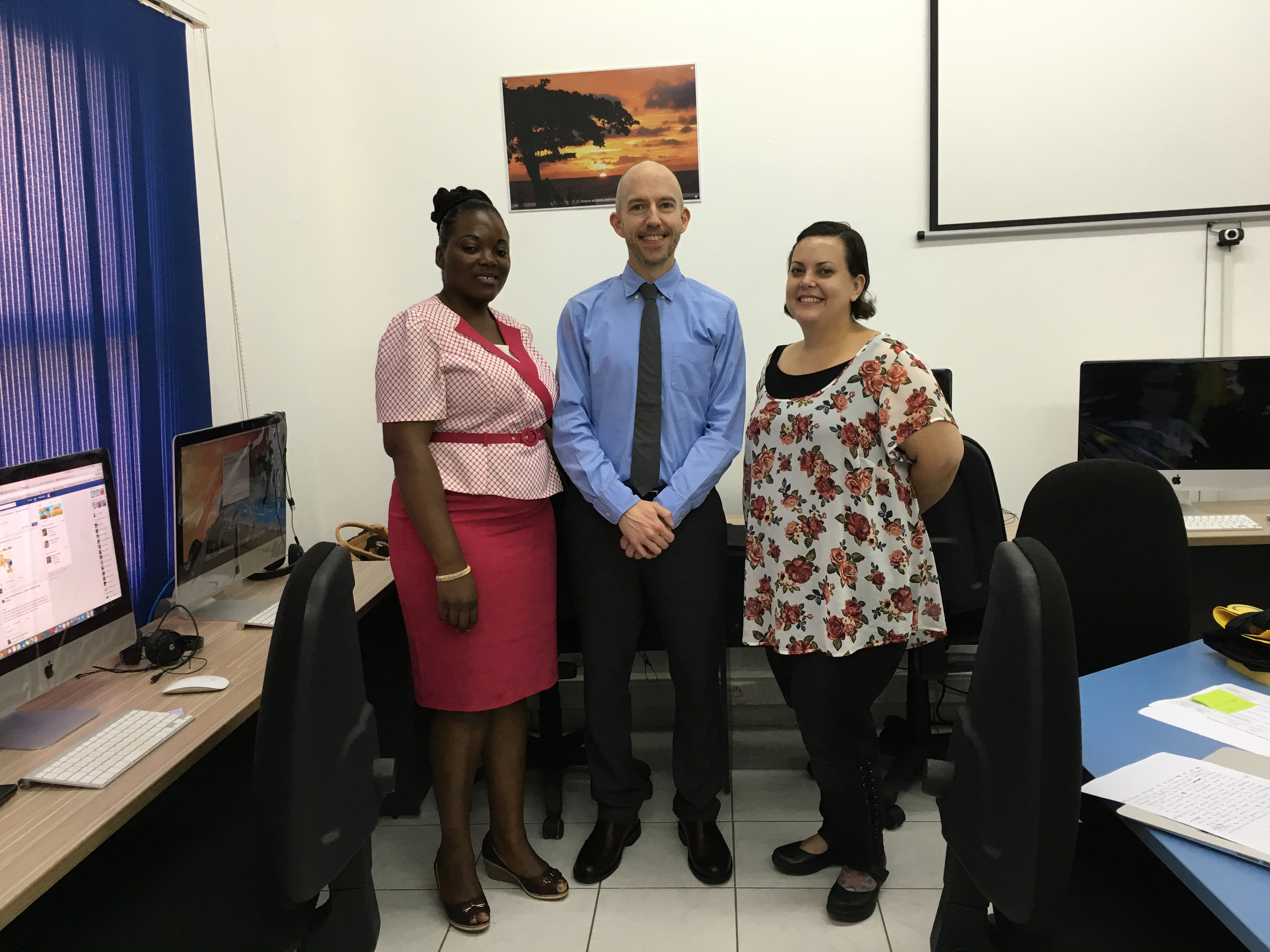
Andy in the new English Language Center in Libreville, Gabon, with Brenda and LTS alum Tiffany VanPelt.

How are you associated with LTS?

I’m a faculty member of the American English Institute, and I’ve been teaching in LTS for 2 years. I generally teach LT 436/536 in Spring (the Language Teaching Planning course). I’ve also served as an advisor on the final projects of LTS graduate students.

What else do you do in your work and teaching?

Lately I’ve been doing a lot of work in the Innovative Programming unit of the AEI. I’ve worked on the development and design of our upcoming MOOC for English language teachers, and I’ve also just completed an online webinar through American English that talks about how to get the most out of your online teaching and learning experience. I’ve enjoyed being involved with educational technology here at the University of Oregon because it relates to my research interests in social media and how platforms such as Facebook and Twitter can be used to enhance language learning opportunities in a number of diverse ways.

I’ve also recently been involved in our partnership with the Gabon Oregon Center and I had the opportunity to spend two weeks in Gabon to deliver a scientific writing workshop to university faculty there.

Where were you teaching before you came to Oregon?

Before coming to the UO, I spent two years in Thailand as an English Language Fellow (ELF) with the US State Department. While in Thailand, I primarily did teacher training work, and I also had the opportunity to teach a weekly English course to high-schools students which was broadcast on television.

What do you think are some of the best perks of being a language teacher and teacher educator?

For me, the biggest perk about this type of work is the people you get to interact with on a regular basis. I’ve met and worked with teachers and students from all over the world, and I’ve broadened my understanding of education significantly. My recent trip to Gabon is a good example. I’d never had the chance to visit West Africa before, but the experience was amazing. I felt like I was able to improve the writing skills of the workshop participants, but, as often happens when I travel for work, I honestly felt like I took as much if not more away from the experience as the participants did!

What is something you’ve learned from your students or teachers-in-training?

video response: