Value diversity in the languages you teach

picture-276In this LTS blog post, LTS and Linguistics faculty member Melissa Baese-Berk writes about the importance of valuing and integrating multiple varieties of dialects and accents in the language classroom.

The reality of language and power

Each fall, I teach a general education course called “Language and Power” here at the University of Oregon. One of the textbooks we use is Rosina Lippi-Green’s English with an Accent. In this text, Lippi-Green introduces students to the idea of Standard Language Ideology: “a bias toward an abstract, idealized homogenous language, which is imposed and maintained by dominant institutions and which has as it’s model written language, but which is primarily drawn from the spoken language of the upper middle class.” Lippi-Green argues that by defining some “standard” all other languages, dialects, and accents are defined in contrast as “non-standard.”

During our term, we spend a lot of time examining our ideas about “standard language,” and the impact that these ideas have had on our thoughts about language more generally speaking. We begin the term discussing the remarkable structure throughout language, even in unexpected places (e.g., non-standard dialects). We also spend several weeks discussing the substantial variability found at every level of language both within and across speakers.

Shifts in student thinking

As students begin to examine linguistic facts about structure and variability, they frequently begin to question many of their own beliefs about language. Many of my students are heritage language students who have been exposed to one dialect at home and then learn a different dialect in their language classroom. They’ve received different messages about the prestige of their home and school dialects and languages throughout their lives. When they realize that a many of the judgments about languages and dialects are social, rather than linguistic in origin, students begin to see value and prestige in all the forms of language they use.

What this means for language teachers

Language teachers hold remarkable power in helping students form ideas about language, dialects, and accents. The language and dialects students are exposed to in the classroom are held in high prestige because they are the targets for learning. However, when the language varieties used in the classroom are limited to those typically seen as prestigious by the broader community, students may view other varieties as “non-standard.” Students from heritage backgrounds may feel as though their home varieties are being marginalized. Students being exposed to the language for the first time may learn to reinforce the typical societal views about prestige of certain language varieties. If, however, students are exposed to multiple dialects and accents during the course of their learning, they may learn to value all these varieties. Exposure to these varieties may have the added side effect that students may also able to communicate with more individuals outside of the classroom, rather than only individuals who speak a “standard” or prestige variety.

To read more about Melissa’s work and teaching in LTS, see her past blog post here: https://blogs.uoregon.edu/linglts/2016/01/15/lts-faculty-spotlight-melissa-baese-berk/


Student Spotlight: Yan Deng

Student Spotlight: Yan Deng

deng-yan

  • Tell us about yourself! Where are you from? What did you do before joining the LTS program? Do you have any hobbies?

My name is Yan Deng and I come from Lanzhou, which is the capital city of northwest China’s Gansu province. The city is not very big, but there are still 2 million people who live there. My favorite food is Lanzhou beef noodles, which is a very famous food in China. Before I came to the U.S.A, I already got my bachelor’s degree at a Chinese university. My major was Chinese Education. I wanted to know about different cultures and to learn different languages, so I decided to study abroad. In 2011, I came to the University of Oregon, and my major was Educational Foundations. In class, I learned a lot about American teaching methods. Outside of class, I tried to learn more about American culture, such as how American students celebrate holidays, how they work on campus, and how they chat with their friends at cafes.

I have been in Eugene for 5 years. Eugene is a small, quiet and beautiful city, and I love living here. While I was an undergraduate student at UO, I volunteered at an American elementary school for two years. I noticed there were a lot of differences between American elementary schools and Chinese elementary schools. I have been a Chinese tutor for one-and-a-half years at UO, and I liked the job so I am still doing it now. I love to encourage American students to know more about China and to learn Chinese. I think we could all learn from each other.

Hobbies? I like swimming and reading. My favorite books are the Harry Potter series. Sometimes I like to watch American TV shows, such as CSI and Criminal Minds. To be honest, I get scared by some of the plots.

  • Tell us about Talking with Ducks. What is that experience like for you?

For me, I like the TWD class because I can learn a lot about teaching. The most important part is how the team members help each other. For example, I was a leader in week 2. I had to make sure my pronunciation was correct, and the rules of my game had to be clear. Since I am an international student, I have to worry about these things. To be honest, I wrote down every sentence of my lesson plan, and I read them to my team members, Devon and George. They helped me to edit my lesson plan. I was so glad they were so patient with me. No one loafs around on the job!

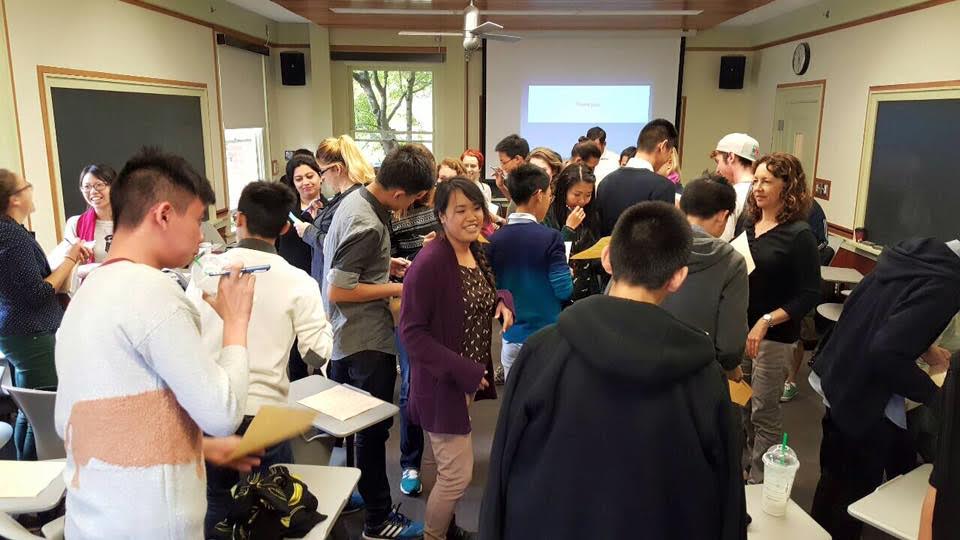
In Thursday’s class, when students came in , we didn’t feel nervous because we were ready. But there were still some situations that I hadn’t thought of before. Thus, we needed to help each other. For example, I didn’t realize students would still sit a big circle after I separated them into different groups. I didn’t know how to solve the problem, but George quickly jumped in and gave more explanation to solve the problem. When students were playing the game, I forgot to explain the game time limit, but Devon was on it. How about the other LTS Ducks? Yes, they all did very well. Sue and Maude were very creative in their groups, letting their group members use the envelopes (which were just materials from my activity) in the game. Joliene, Reeya and Juli built a great and comfortable environment for their group members to practice English. Laura, the professor of the TWD class, made sure everything was going very well. Because of this teamwork, I love the class and I enjoy every minute of it!

  • Tell us about the Chinese Club!

chiclub2chiclub1

The Chinese Club is held at the Edison Elementary School, and is one of the after school clubs. In our club, we have 11 students who come from different grades. The goal of the club is to encourage students to learn about Chinese culture as well as some simple Chinese characters. We tried to build a real language environment to help students learn Chinese. Last week, our topic was “daily life in Beijing.” We created some class activities to help students know the real Beijing, such as visiting the Summer Palace and the Forbidden City, and eating Beijing duck.

  • What are you most excited to learn or do in the LTS program?

I am so excited to learn a lot of different teaching methods in LTS program. We discuss issues in class, and we solve problems together. When I am studying in every class, I know I am coming closer step-by-step to my dream. Even though I have a very full schedule, I know my friends and I are always a team. I will be brave and I will keep swimming, just like Dory! Ha ha~

Collaborations: LTS and East Asian Languages and Literatures

The Language Teaching Specialization (LTS) within the Department of Linguistics and the Department of East Asian Languages and Literatures (EALL) have made a short video highlighting the close connections among linguistics and pedagogy students in both departments. Thank you to the Graduate School for providing funding for this.

There are many ways that LTS and EALL students and faculty benefit from this relationship.

  • Graduate students can pursue concurrent MA degrees in both departments with reduced credit requirements due to some shared coursework
  • Students in either department can take elective coursework in the other department
  • Graduate students can include committee members from both departments on their MA projects
  • Students in either department can pursue a SLAT undergraduate or postgraduate certificate by taking specific coursework in both departments
  • Graduate students in LTS can sometimes find funded graduate teaching positions in EALL
  • Graduate students in LTS can find tutoring employment through EALL in the Chinese Flagship Program

These connections are not limited to LTS and EALL; LTS also shares coursework, teaching, internship, and MA Project advising opportunities through collaborations on campus with the American English Institute, the Center for Second Language, Romance Languages, the Yamada Language Center, German and Scandinavian, Russian and East European Studies, and the Northwest Indian Language Institute, as well as through collaborations with Lane Community College.

Student Spotlight: Devon Hughes

Student Spotlight: Devon Hughes

devon-duck

Devon Hughes is a member of the 2016-2017 LTS cohort from Dunn, North Carolina. Before joining the MA program, Devon worked at a law firm in New York where she lives with her husband (when not in Eugene, of course). Her teaching experience prior to her move to Oregon includes a 2-year placement in Madrid, Spain where she worked for the Ministry of Education teaching English to elementary school students. Devon graduated from Davidson College in 2010 with a Bachelor’s in English.

  • Tell us about yourself! What do you like to do in your free time?

I spend my free time exploring wherever I am: FaceTiming with my husband back in New York, cooking, playing piano and singing, reading, learning how to weight-lift, and catching up on and writing for Misadventures Magazine, an adventure magazine by and for women. I recently wrote a poem (using what I studied in undergrad!) about adjusting to life in grad school so far away from home and loved ones. Feel free to check it out here.

  • Tell us about Women Teaching Women and future plans you may have.

After being out of school for 5 years and working a few jobs unrelated to TESOL, I started to become restless. I found myself daydreaming about teaching. When I envisioned my “ideal” classroom, I realized it was always the same: women of various language backgrounds learning English together in an engaging, warm, and intellectually stimulating environment. One day, I finally decided to see if such a school, institute, or company already existed where women taught other women English. So, as you do when you have a question, I googled it – “women teaching women English.” The first search result was a free downloadable textbook, created by the University of Oregon’s American English Institute (AEI) for the U.S. Department of State in collaboration with a non-profit in Lebanon whose primary aim is to empower Lebanese women. I appreciated how this non-profit viewed English education as just one of many tools for female empowerment. Months later, as I was narrowing down my graduate school search, I remembered the Women Teaching Women textbook and the University of Oregon, and I decided to apply to the LTS program.

What’s been really great about this program so far is how, almost immediately, I was able to research and write about my area of interest for my classes, connect with the professor who took the lead on the Women Teaching Women textbook project (Dr. Leslie Opp-Beckman), who in turn connected me with the director of the non-profit in Lebanon. I’ve only just begun my time here in Eugene, but I’m already being encouraged by the program faculty to ask questions, make connections, and get involved in the field. I can’t thank them enough for their support!

Short-term, I want to continue working the vision of my “ideal” classroom into the questions I explore in my research papers and the lesson plans I create, and hopefully that will aid me in my Master’s project. I have a hunch that it will be about the possible benefits of women teaching women English and what the opportunities in that specific classroom could be. Long-term, really, who knows? I look forward to seeing what opportunities may arise through my connections with the LTS program and the AEI, be it the chance to work on materials for the non-profit in Lebanon, going abroad to teach women English language learners, or looking into possible classroom models geared toward women here in the states.

  • You’re a GE (Graduate Employee) for the American English Institute 2016-2017 school year. What is that like?

Exhilarating! After being out of the TESOL classroom for 4 years, it’s great to be back and have a classroom full of English language learners! It’s a lot of work balancing teaching every day at the AEI with a full load of Master’s level classes, grading papers, lesson planning, homework. But it’s the work I want to do! I feel like having those years outside of the classroom gave me the energy I needed to dive right back in. Perhaps I’m in over my head, but I’m really thankful for the opportunity to work in the field I’m trying to get back into as a way to finance my education. What’s really cool is how, every day, what I’m covering in my LTS classes can be turned right back around and applied in my AEI Oral Skills class. Some of it is trial and error, but I think that’s necessary for any type of learning.

  • What are you most interested to learn or do in the LTS program?

I’m most excited to learn about how to be a “great” teacher. I’ve always studied my teachers, taking mental note of what makes them great in my opinion, so I’m curious to discover what are those elements for successful teaching, according to the research and practice in the field.

 
Video Blog Update!
We checked in with Devon to see what else she’s learned from participating as a GE for the AEI over the past few terms. Watch here to see how her experience has progressed until now!


Faculty spotlight: Kaori Idemaru

idemaru

What is your position at UO?

I am Associate Professor of Japanese Linguistics in East Asian Languages and Literatures (EALL).  But my research and teaching cover other languages, including Korean and English.

How are you connected to LTS and LTS students?

My department and LTS often share students in various ways.  We have many concurrent degree students who are pursuing both Linguistic and EALL degrees.  I also send my students to take LTS courses, and LTS students take my courses.  Also one of LTS graduates, Yukari Furikado-Koranda, is now a colleague of mine in my department!  It’s wonderful to work with her. You can see more about the collaboration between EALL and LTS here.

What is a current research project you are working on?

I am working on a project that looks at characteristics and constraints of speech learning, and another that looks at how people use voice to sound polite.

What do you enjoy most about working with graduate students?

I really enjoy working with grad students discussing and designing interesting and innovative research methods to address their research questions.


Why should you join LTS?

Finished the first week of LT 528 Culture, Language, and Literature!

Finished the first week of LT 528 Culture, Language, and Literature!

Are you thinking about joining the LTS program (or currently looking for a Master’s program dedicated to language education and pedagogy) but aren’t quite sure about your motivations to take the graduate school plunge or wondering what you can expect out of such a program? In order to help prospective students understand what the LTS program is all about we asked current graduate students about their reasons for signing up to be a member of the LTS 2016-2017 cohort!

Why did you join the LTS program?

  • Suparada Eak-in (Thailand): “I am an English teacher in Thailand. I joined the LTS program because I wanted to gain more knowledge and experience about teaching, language and culture.”
  • Anh Duong (Vietnam): “I’m a Vietnamese FLTA. I joined the program because I am an English teacher in my home country, so I believe I will benefit a lot from the program developing my teaching skills and to know more about American education.”
  • Aska Okamoto (Tokyo, Japan): “I did the SLAT program when I was in undergrad and really liked it. I worked at a Japanese Immersion school for one year as an OPT and decided to come back as an LTS student because I want to research more about L2 teaching.”
  • Dan White (Portland, Oregon): “I became interested in language teaching while getting my undergrad in Linguistics. I taught English in Korea for 3 years, and I would like to get my Master’s to become a better language teacher.”
  • Kainat Shaikh (Pakistan): “I am an FLTA teaching the Urdu language at the Yamada Language Center. I am a Fulbright scholar and researcher. I joined LTS to experience American classes and to learn from the experience of the UO faculty. LTS will improve my English teaching methodologies and will bring light upon modern pedagogy.”
  • Iryna Zagoruyko (Ukraine): “I’m very fascinated with teaching after I’ve been teaching Russian for two years at the U of O.”
  • Becky Lawrence (Lafayette, Louisiana): “I originally joined LTS because it was a short program that would allow me to specialize in English teaching. However, I realized that there were many opportunities for me that I’m so grateful for. I got to meet others from many countries around the world, which has expanded my perspective greatly. I also extended my time another year so that I can do an internship in Japan for this term. Basically, the LTS program has everything I ever wanted in an MA program and more!”
  • Ruya Zhao (Beijing, China): “First, I’ve been dreaming of being a language teacher. Second, as an international student (as well as bilingual in English and Chinese), this program offers me many chances to practice and learn pedagogical theories.”
  • Juli Accurso (Ohio): “I joined the LTS program because it was the next ‘academic’ step that blended with my interests in language, linguistics and teaching that I discovered in undergrad!”
  • Sue Yoon (South Korea): “I really enjoyed taking LT courses as an undergraduate student here at UO, so I decided to join the LTS program and learn more about language teaching!”
  • Chris Meierotto (Denver, Colorado): “I felt that the program offered through the University of Oregon was more attractive than other teaching programs because of its focus on application, emphasis on technology, and its fundamental approach as a language teaching program rather than just an English program.”
  • Jiyoon Lee (Seoul, South Korea): “I liked the uniqueness of this program. I want to teach both Korean and English in the future, and this program allows me to focus on multiple languages. It’s great that I can take some elective classes from the EALL department as well.”
  • Yan Deng (China): “There are three reasons. First, when I was little, I wanted to be a language teacher. Second, LTS is a wonderful program and I could learn a lot from it. Third, there are a lot of people who come from different countries. Since I want to make new friends, I love the LTS program.”
  • Heidi Shi (China): “I’m currently a Ph.D student majoring in Chinese linguistics. The LTS program is my concurrent degree and the reason why I wanted to join was because it facilitates my research in Chinese pedagogy.”
  • Lin Zhu (China): “I realize that teaching one’s own native language is not as easy as I thought. So, the LTS program is really helpful for me to be a good language teacher.”
  • George Minchillo (Dallas, Texas): “After graduating from my undergraduate studies, I wanted to take some time to travel. When the English Program in Korea offered me the opportunity to travel and work at the same time teaching English, I couldn’t resist. After a year teaching in Korea, I decided to pursue a graduate program that would allow me to continue on this career path and the LTS program promised just that. I’ve seen the success of former students and couldn’t wait to join the cohort!”
  • Adam Li (China): “I was eager to learn more techniques in LTS and it’s also easy to get a concurrent degree with my EALL program.”
  • Valeria Ochoa (Las Vegas, Nevada): “I joined the LTS program to help others learn language efficiently and comfortably as well as to better understand how language acquisition works. I also want to be an awesome, well-prepared teacher.”
  • Irena Njenga (Kenya): “I want to learn how to integrate language and culture.”
  • Joliene Adams (Portland, Oregon): “I joined LTS because it’s more than your average TESOL program, because of a diversity of language teaching and potential languages one could teach that are offered within, and because of the job placement rate and satisfaction I found when researching graduates!”
  • Kunie Kellem (Japan): “I would like to learn the practical methodology for teaching students in Japan.”
  • Krystal Lyau (Taiwan): “I would like to become a language teacher, and help my students learn a second language without suffering.”
  • Devon Hughes (Dunn, North Carolina): “I joined the LTS program because it offered, on paper, the same courses as a M.A. in Education TESOL, with the added benefits of being housed in the linguistics department and the partnership with the AEI. I knew, with both of these aspects, I would be able to have a solid, theoretical linguistic foundation on which to build a career of application and practice in the TESOL classroom. The opportunity to be the AEI GE also made this program stand out from the rest. It’s rare to receive funding in the social sciences at the Master’s level. I’m thrilled to have work in the exact type of classroom I want to be in after graduation.”

Are you currently an undergraduate student who may be interested in joining the LTS program in the future? Or are you perhaps a graduate student who is interested in becoming a language teacher but are not sure another Master’s degree is what you’re looking for? We also asked students pursuing the Linguistics department’s SLAT certification (and taking classes together with the LTS cohort) about their interest in language teaching!

Why did you pursue the SLAT certification?

  • Maude Molesworth (San Francisco, California): “I joined the SLAT program because I am interested in teaching, and possibly teaching English abroad after I graduate.”
  • Jeremy Morse (Eugene, Oregon): “I think the knowledge and experience I can gain from the SLAT classes prepare me perfectly for what I want to do next: teaching English abroad.”
  • Teal Henshen (Springfield, Oregon): “I joined the SLAT program because I love languages and want to travel to teach.”
  • Russell Morgan (Los Angeles, California): “As a linguistics major it seemed like a good option to get a certificate while completing my upper division credits. I’d like to go overseas to teach and maybe come back for a Master’s.”

Faculty Spotlight: Joana Jansen

joanaOlallie2016 (002)

What is the nature of your work at the University of Oregon? 

I am the Associate Director of the Northwest Indian Language Institute (NILI) which is one of the research institutes and centers on campus. I am privileged to be able to support projects focused on revitalization and linguistic description of Native American languages, and students and community members working on these projects. In the part of the world that we now know as the state of Oregon, there were once 18-25 languages, many with multiple dialects. Most are not spoken today by elders who grew up speaking the language, but more and more are being spoken by language learners. There is so much interest in passion in returning the languages to daily use – it is inspiring!

My work at NILI is quite varied. There is not ‘typical’ day or week. I could be drafting a grant proposal, working on a research project with tribal partners, supervising GRFs to disseminate information and products via NILI’s website, meeting with Linguistics students, planning for NILI’s Summer Institute, and/or delivering online workshops and trainings to Native language teachers.

How are you associated with LTS?

I have worked with a number of LTS students, particularly those working on Native American language projects. Their work and ideas strengthen NILI. I have also been a reader for LTS Masters projects. I have not taught in LTS classes regularly, but this term I am teaching Linguistic Principles and Second Language Acquisition.

What is your favorite language of those that are taught at UO? 

The Ichishkíin language is spoken by elders of several tribes in Oregon and Washington. Most of the work I have done on documentation and curriculum has been focused on Ichishkíin – we’ve been teaching it at UO since Yakama Elder Virginia Beavert came here to get her PhD in 2007. LTS students and grads have been key to the class. In the early years of the class, LTS student Roger Jacob developed course materials and co-taught with me and Virginia. Now, LTS grad Regan Anderson is teaching it with Virginia, and other students are involved building and enhancing curriculum, which is shared with teachers at the tribes. The language is also taught at NILI Summer Institute and that brings together students and teachers of Ichishkiin from across the region, including UO students.

What do you enjoy most about working with language educators?

It’s a cliché but – I learn so much from the teachers I work with! Their love for their students is inspiring. Because I work in many different communities, I can facilitate connections between people and help to share ideas and inspiration.

You are teaching one of the first classes our cohort is taking – do you have any words of wisdom or advice for them as they continue in the program?

I’ve seen a lot of students grow in skills and confidence during the LTS program, and the relationships built in the cohort are really important. As a group, you hold a lot of knowledge: help and learn from one another. Also, even though you are in graduate school, take time for yourself and your family, keep a balance in your lives. Exercise, play, relax, go outside!

Class of 2016: What’s Next?

sparkle

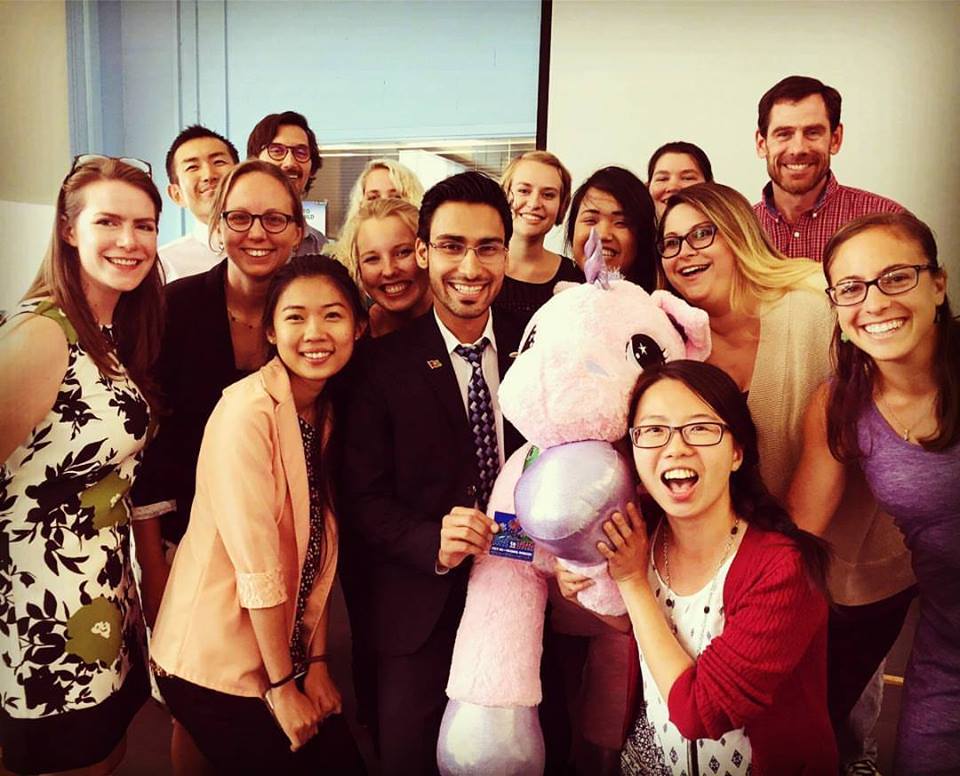
The class of 2016–with special guest Sparkle– after the final day of the symposium

LTS graduates go on to work all over the world, work with various levels and ages, and teach a variety of languages. Here are some of the positions that the class of 2016 have been offered:

Katie: I will be going to Oaxaca, Mexico, to work in the language department of a local university as a teacher/researcher and eat lots of enchiladas.

Siri: I’m going to resume my work at the Royal Thai Armed Forces Language Institute, Thailand.

John: I will be teaching Spanish part-time at our local high school (Triangle Lake) and teaching German part-time at Gutenberg College, a small private college here in Eugene.

Emily:  I will be teaching in Bangkok, Thailand.

Sara: I am heading to a Chinese and ESL teaching position for elementary third grade students in a public school in Beaverton, OR. I will be teaching Chinese and English language arts and other immersion program subjects in Chinese, such as Math and Science. I am excited to be heading to this wonderful opportunity.

Kateland: I’m going to be teaching in Indonesia with the Peace Corps for two years starting in March, 2017. I will be in a rural secondary school in either East or West Java, where I will co-teach English with an Indonesian counterpart, as well as take part in community and youth development.

Annelise: I’ll be teaching English at a university in Oaxaca, Mexico, where I will hopefully also get to be involved in curriculum design.

Christopher: I’ll be working as a Research Associate at CASLS (Center for Applied Second Language Studies) on a virtual reality language app. Yay!

Anna: I’ll be teaching middle school ELA at a Cambodia international school (where the student population is 90% Cambodian).

Keisuke: I will be moving back to Portland and going back to Mt. Tabor Middle School where I spent 17 years prior to becoming a proud LTSer. What an amazing year – even better than I could have imagined!


MA Project Spotlight: Emily

EmilyLetcher (1 of 1) (1)Emily Letcher is from the Eugene area and is an alumnus of both the University of Oregon and the Second Language Acquisition & Teaching (SLAT) certificate program. This Fall she will begin teaching in Bangkok, Thailand.

What is the title of your MA project?

Teaching Interlanguage Pragmatics of Disagreement in a Secondary EFL Context Using Film and TV Shows

Why did you choose this topic?

I am very passionate about the study and use of critical thinking, logic and argumentation, both as a personal interest and also as a skill that I think ought to be taught. Before I began the LTS program, I had recently returned from Italy, where I was teaching debate in several of my high school conversation classes. That wonderful experience, and the students themselves, impressed upon me just how capable and enthusiastic our young adult students are at voicing their different beliefs and tackling contemporary issues. I don’t just want students to be able to express their opinions behind a podium though, I want them to be able to do so interpersonally, at an everyday, conversational level, and even when their opinion differs from the other person’s.

Of course, students do this in their own language already, but trying to disagree in a foreign language, with speakers of that language, opens up a whole new can of worms. There are so many sociocultural factors that go into deciding how to say what you say in order to have successful communication. Were you polite? Were you too direct? The quality of the argument you put forth won’t matter as much if you are not aware of these unwritten “rules” that are shared and understood by people from that language culture. I developed this project in order to provide concrete ways to help students recognize these pragmatic issues and choose how to respond to them, so that they will hopefully be able to more confidently and successfully express themselves in English.

unnamed3-1ee02fw

What do you like best about your project?

My project uses film and TV shows as the main method to teaching students about disagreement.
Films and TV shows are very important to me because of how they reflect our perceptions of reality and also project our ideals for it. They may not always be very academic, but I think they have the potential to reach and connect more people than anything else does, and that makes them invaluable. I could say so much more but I will simply say that I am very happy to be able to incorporate this huge part of my life into my project.

What advice would you give to future students about the MA project?

Choose something that you are passionate about, not because you’ll be spending every waking hour thinking about it, which you will, but because this is one of the best opportunities for you to learn more about something specific that interests you and to apply it in a way that is meaningful not just for you but for a whole audience. As a teacher, you will always be in a position to influence and inspire students. Regardless of whether you use this project with your students though, this is an immediate, tangible opportunity for you to also influence and inspire your current and future colleagues and possibly even the academic field. I have been inspired by all my cohort members’ work and am very proud to be graduating with them.

MA Project Spotlight: Sara

What is the title of your MA project?
English Goes Graphic: Using Graphic Novels in College EFL in Taiwan
xxx
13823244_1254721381213418_1397447441_nWhy did you choose this topic?
I chose this topic because visual language has been a big part of my life. I think I’ve always been a visual learner–I love and learn from turning texts into drawings and I used to make fun a lot of serious authors on the textbooks with a bit of creative doodle on their face. And to be honest, a part of me was happy when I saw that students now a days still entertain or express themselves through drawing on their textbooks. Apparently, visuals, compared to texts, speaks louder to these students. While visuals and texts have their own strengths and weaknesses, they can definitely support each other in interpersonal communication. As I noticed that the first thing my 7th grade Taiwanese students checked out in their brand new English textbook was not the page number or table of contents but the one-page comics at the end of each unit, I realized the value of comics in language learning. Unfortunately, despite the wide accessibility of comics in Taiwan among students, comics are mostly in either Chinese or Japanese, and they have not yet been widely explored as a language learning medium. Since research has shown that comics and graphic novels are motivating and authentic literature that promote multimodal literacy for learners of diverse characteristics, I chose this topic in the wish to explore the effectiveness and possibilities of using graphic novels in teaching novice and intermediate Taiwanese college EFL students.   
 
How will this project influence your future teaching?
Because of this project, I have learned more about my target students’ needs, limits of current English textbooks, Taiwanese college students’ low reading proficiency and motivation, and appropriate graphic novels that can be highly adaptable to my future classrooms as supplementary materials to other English textbooks and extensive pleasure reading materials. This project also reminded me to start with what students are probably already interested in and familiar with, and this applies to both material selection and daily instruction. I also realized that as educators, we sometimes would focus too much on what we do in class and neglected to also think about what’s beyond the classroom. Through the use of graphic novel, I want to build up autonomous and motivated pleasure readers that will continue learning English through reading, interpreting and even creating their own comics or graphic novels because language learning is for a lifetime.     
 
What advice would you give to future LTS students about the MA project?
1. Write about something that interests both you and the target readers 
2. Start brainstorming earlier and it’s never too early to do extensive reading on research to collect data  
3. Draw on your own and others experiences to form ideas. Talk to people about your idea for your project. 
4. Think about your dream job and target students and make drafting out the project a productive pastime
5. Show support to your peers’ project (they are the brothers that stand by you in this fight!) 
6. Always keep up with the deadline and arrange time for fun too!  
 
What has surprised you about your project so far?
The data from my needs analysis suggested that although Taiwanese English instructors and college students could have very limited knowledge and exposure of graphic novels, they already showed much interest and expectation toward using graphic novels in their English classrooms. 
 
What do you like best about your project?
I really liked the diversity of the materials I have created for my teaching/material portfolio. I have three sections, the first one is self-contained materials for using a few pages of graphic novel excerpts to teach integrative language skills. The second is materials created for teaching English pragmatics, such as giving compliments and forming complaints in a language analysis inductive approach. The last section is a project-based language learning in a Flipped Learning approach, targeting intermediate level students to maximize both the amount of graphic novel reading before class and the in-class time for communicative activities.