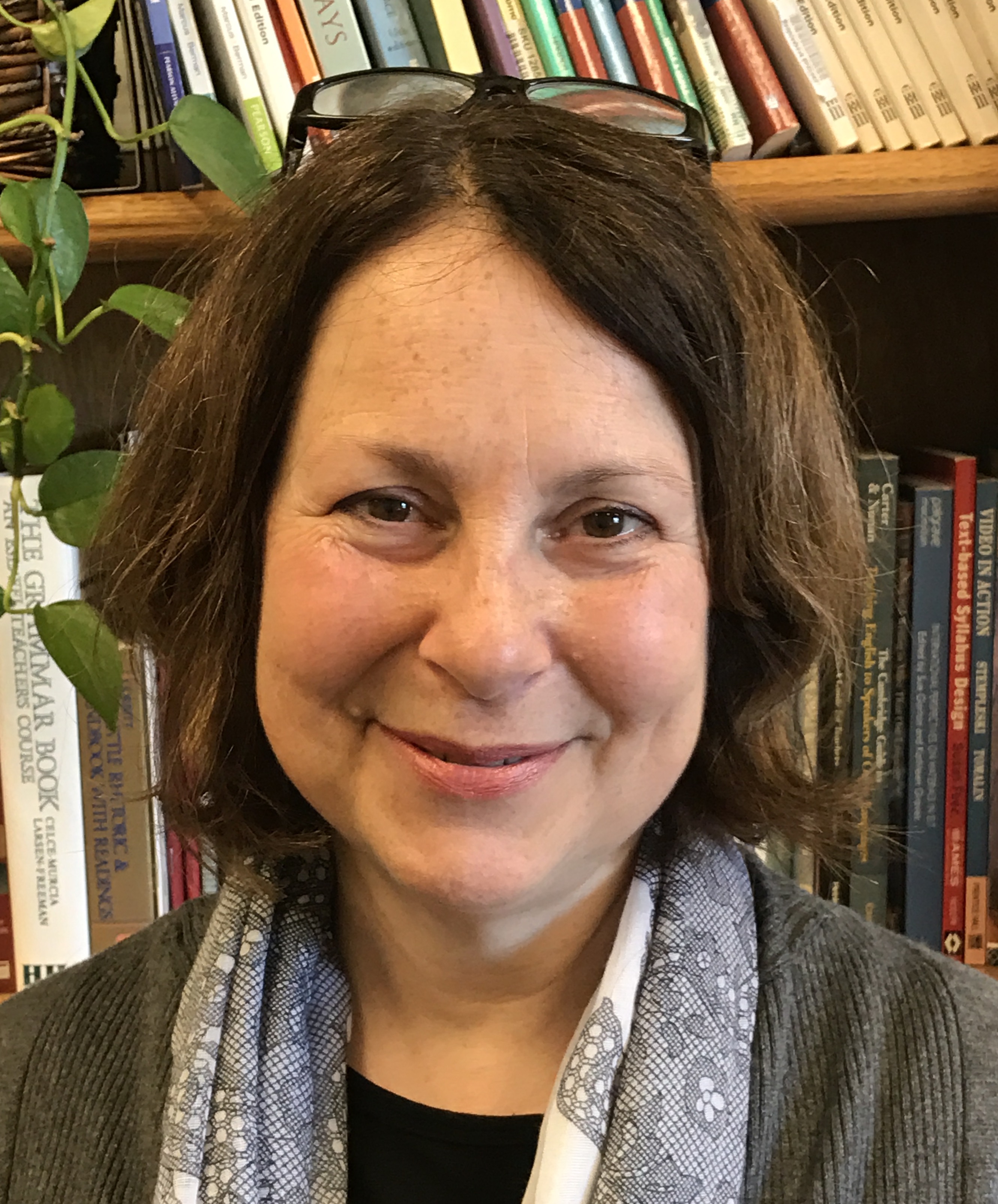
Student spotlight Niki

This week’s student spotlight is on Niki, a current student in LTS getting ready to graduate in about a month!

Hello Niki! Tell us a little bit about yourself, your background, and how your path brought you to LTS

It’s great to think about what brought me to the LTS program—it’s been a long road! I graduated with a double major in History and Government, and thought I’d wind up going to law school or teaching history, but I’d always loved and studied languages. I kept feeling drawn to that. After a few years working in university administration, I went  back to school and earned a BA in French—a language I’d studied off and on since I was 12. I completed a K-12 teacher prep program in Languages Other Than English at the University of Texas, and had plans to teach French in middle or high school. My trajectory changed in 2018. I’d started volunteering to teach ESL to adults at my local library, and fell in love with the work! After two years of that, I started researching MA programs, and was so intrigued by the LTS program. A big part of that was the multilingual environment and approach you have here. I liked that I could learn about TESOL, but could also work with French and be in a multicultural community of polyglots.

Niki (center) with cohort members Allyson (left) and Nicole (right) and Niki’s project advisor Trish Pashby (in softball gear) and LTS director Keli Yerian at a local softball game.

You have had some varied teaching experiences by now. What experiences or themes in your teaching have stood out for you over time?

A long time ago, someone told me one of the most important qualities a teacher can have is to be flexible. Now that I’ve taught in a variety of contexts with students from 8 to 75 years old, I can say the need to be flexible has been an overarching theme. Every school is different, every class is different, and the needs of students are always changing. That’s one thing I love about teaching—it is never boring! And teachers can spend hours planning a lesson, only to have it flop. (I might be speaking from experience here, ha ha!). On the other hand, a teacher can invent an activity on the fly and have it turn into a huge success. Another theme is that it’s important to learn the fundamentals of pedagogy and then ground yourself in those principles as you figure out how you want to layer your own unique style on top. Figuring out who you are as a teacher, and figuring out who your students are, and what they need, is a beautiful thing, because that is how you co-create learning. Finally, I will say, it is very important to get to know your students so that you can respond to them appropriately. It’s sort of like choosing a gift for someone— it’s best to figure out exactly what fits that person, rather than picking randomly or focusing on what you would prefer to give them, if that makes sense.

I worked at Services for Student Athletes, which was such a unique and rewarding experience. I mainly tutored international athletes who were taking courses at the American English Institute here at UO. I also tutored athletes in a few other subjects I know well, like History, Art, and Linguistics. The most important thing I learned was about the unique academic needs of student athletes. These folks have very demanding travel schedules and sometimes feel a lot of pressure to perform in their sport. I viewed my role as helping them create space for an academic self, and helping them forge a path to academic success in the midst of their other responsibilities. I had a few students for three terms in a row, and it was amazing to watch their English proficiency grow. I’m so proud of them!

What are your next steps on your path after LTS?

I’m moving back to Los Angeles and will look for a job. (Hi, recruiters!)

What is a fun fact about yourself that others may not know yet?

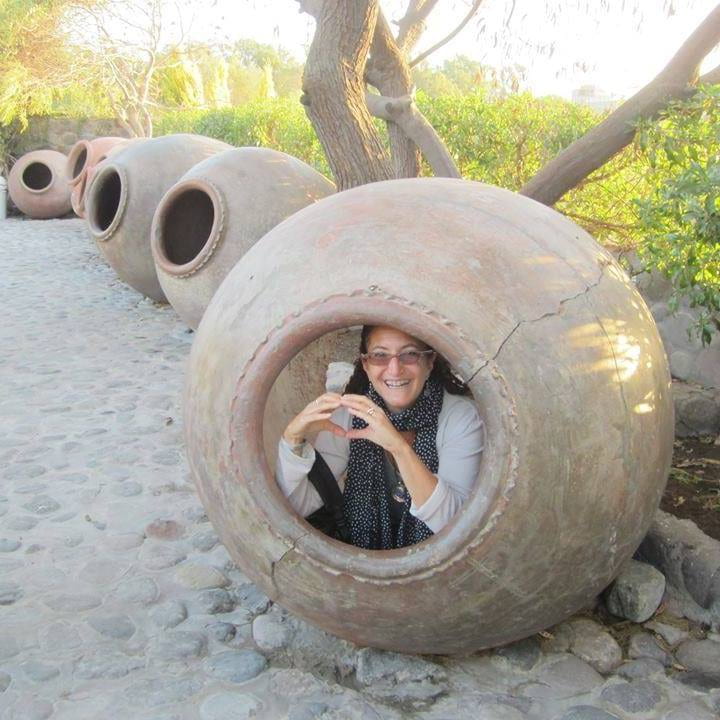
I have raised several salamanders, including axolotls! Aren’t they cute?

Multi-level teaching internship for LTS students

This post is the 3rd of an awesome 3-part series this Spring/Summer on internship experiences in LTS (see the first here and second here). It is written by Laura Holland, faculty member in LTS and the American English Institute (AEI), and 3 of the 4 interns (Elaine Sun, Tigre Lusardi, Ellie Collins, all LTS students) who assisted her with a remote multi-level Speaking-Listening class.

Team “One-Room-Schoolhouse” rocks the house!

Laura G. Holland 

The global pandemic has taken a toll on enrollments in Intensive English Programs (IEPs) throughout the country and UO/AEI is no exception. Late in winter term we were informed that we only had enough students to offer one each of our core courses in the IEP, one Speaking-Listening, Grammar and a Reading/Writing class. Each class would serve all levels in a “one-room-schoolhouse” model. I was offered the Speaking-Listening class, my favorite to teach, but I confess I was initially skeptical of our ability to deliver a great student experience with this new constraint, and I wondered how in the world I might make successful, meaningful experiences for such a diverse level of student proficiencies.

In my heart (and teacher’s brain), I knew that the only way this might be even remotely possible would be to recruit interns. I put out the call to Keli Yerian, Director of the LTS Program and she in turn, sent out a message to the MA cohort. Within 2 days, I had four eager interns, 3 of whom I had worked with previously, and ready to take on this further experiment in online education (because teaching languages online IS still a bit experimental after only a year). I can safely say that without the interns, we would never have had the simply amazing experience that we had. Going into the term I was praying to stave off disaster; within the first week, I knew we were on to something big and by the end of term, we had delivered one of my favorite courses of my long and varied career.

Throughout the course and especially in the final weeks we requested IEP student feedback, asking what they liked, what they would like more of, which lessons and activities “stuck with them.” We asked in multi-modalities: in-class small group discussions, their weekly homework videos and writing in the chat in whole group. In each of these queries, students highlighted working with the interns, their ability to engage daily with UO students, both domestic and international. They were inspired by all and as a teacher, it was SUCH a luxury to have 4 talented and enthusiastic co-teachers to help plan ideas I never in 100 years would have thought of. The balance and variety they brought took our content over the top. Because we had “ditched” the textbooks this term (which one would we use with 6 different levels?!), we were free to develop our own passions and materials and as a result, we all thrived. Our team met weekly to plan and discuss, and to brainstorm ways to adapt all our lessons and activities to both in-person and online formats, so as to be prepared and ready for all contexts. As a teacher at the doorstep of retiring, I found this to be so inspiring and am grateful to be going out with a bang.

Our team of 4 interns included more variety than I could have hoped for: undergrad and graduate students, male and female, native and non-native speaking, novice and experienced teachers, people who had always wanted to be teachers and people who had begun careers elsewhere and found their way to teaching for a second act. From moment one, they were on it and together, we created one of the most exciting courses I’ve had the privilege to teach. They developed lessons incorporating pre-, while- and post-listening activities and discussed facing fears, and many other topics of interest; they incorporated poetry in the most successful poetry lesson I’ve seen; they compared “Bucket Lists” and they asked the students to tell stories from the past and look to the future; we discussed their hopes, fears and dreams for themselves and for the world; we watched videos and gave speeches and developed everyone’s academic discussion skills.

Thank you to the interns—I am being perfectly honest when I say this term could never have been this amazing without each of your many contributions and full-on presence. I will remember this experience forever and I’m positive our students will too.

Thank you, Gracias, Xi xie nie, Merci, Tack, Arigato, Shokran, Sulpayki!

Ellie Collins 

Though the prospect of an online speaking and listening class that spanned 6 levels was certainly intimidating, this internship ended up being one of my favorite experiences of the LTS program. During this internship, I had the opportunity to watch Laura Holland’s excellent teaching in action—I learned so much by observing her interact with students. One of the things that Laura does best is encourage her students to step outside their comfort zones to grow into better learners and speakers. At the same time, she encouraged me to step outside my comfort zone to plan and lead activities for the course. I grew as a teacher while learning to plan out lessons as well as teach lessons that were planned by someone else. Throughout this internship, I learned more about how to manage a classroom and differentiate lessons between many different proficiency levels and interests. I am so grateful for the opportunity to intern in this course, and I look forward to implementing the many things I’ve learned into my own classroom in the future!

Elaine Sun

I feel glad to work with Laura and the other three interns during this past Spring term. Also, working with students from all over the world was a precious experience. It was a wonderful chance for me to test the materials I designed for language teaching in a real language classroom. Ten weeks passed much faster than I thought. As an intern, I really enjoyed working with the students. While they were practicing English, they were also sharing their personal stories and some fun facts about their culture. Some of the stories were truly touching and made me think deeper about the target topic. It was also the first time for me to lead an English class as the main teacher. I feel grateful for Laura giving us this chance. This intern experience gave me the courage and helped me to get ready for being an L2 teacher. Finally, I just want to say “thank you” to everyone I met in this class. It wouldn’t be a wonderful trip without each of you.

Tigre Lusardi 

Interning with Laura’s multi-level Speaking and Listening class this spring was a seriously fun and wild ride! As a new teacher I really appreciated getting a glimpse of how a veteran teacher like Laura approached planning and executing a class for learners who varied so widely in their previous English language study and in their comfort and proficiency levels with speaking. Balancing every learner’s needs and goals and making sure that they were all participating and progressing was no small feat! One of the most delightful things to observe was how the learners’ comfort with expressing their ideas grew by leaps and bounds throughout the term. By far one of my favorite parts of this experience was noticing when learners felt confident enough both with their English and with us, the teaching team, to crack jokes or to tease us gently. Expressing humor in a second language is sophisticated both linguistically and inter-personally, especially given the idiosyncrasies of Zoom and online classes. I only wish I had had more than 10 weeks to spend learning alongside Laura and such an engaged and engaging group of learners!

LTS internships at Oak Hill School

LTS students who are proficient in Mandarin have the opportunity to assist in language classes at Oak Hill School, thanks to the welcoming instructors there, Li-Hsien Yang and Sophie Wang. Li-Hsien Yang is in fact a graduate of the LTS program herself! (See her 2018 blog post here). She worked as part of the CASLS team for many years.

Photo from Oak Hill School website

Oak Hill School is an independent, non-religious, non-profit K-12 school in Eugene. It offers 3 languages: Mandarin, Spanish, and French.

Two LTS students, Andrew and Ailsa, give us their reflections below on their experiences at Oak Hill this past Winter and Spring terms teaching Mandarin and ESL at the high school level.

Andrew Stevens

           Recently I had the opportunity to dip my toes back into teaching waters during my internship at Oak Hill high school. I worked with an ESL class and a Mandarin class where I got to implement many of the skills and techniques I have learned in the LTS program. Leading the weekly ESL group in discussions about Tom Sawyer allowed me to find ways to relate the material to the modern day lives of the students (often resulting in some memorable and hilarious stories from all). Designing my comprehension questions for each chapter of the book also helped me to incorporate elements of project-based language teaching, an important element of my master’s project. Our main instructor Li-Hsien Yang was incredibly helpful during both classes, especially as I eased my way into creating review materials and leading sessions for our Mandarin 2 class. Her scaffolding and encouragement helped me adjust to the experience of teaching Chinese while better understanding which aspects of my teaching translate well to this context and which ones I still need to work on. 

Aside from the memorable stories and interactions with all my students (including Yu’s insightful social commentary, Tommy’s Hong Kong adventures, Lalo’s musical experiences and Walker’s Bolivian football parties) my most important take-away from this internship was the chance to experience distance-teaching. Coping with the challenges of the pandemic has been especially difficult for the high school students I was teaching and interacting with them on a weekly basis gave me a realistic perspective of teaching as it exists outside of the ideal circumstances often assumed in the pedagogical theory classroom. Supporting students with encouragement and empathy is more important than ever in the current climate and this internship helped me solidify my teaching beliefs with regards to these principles. Distance teaching was far from just doom and gloom however, and with the challenges of distance teaching come the affordances as well. Zoom classes allowed for turn taking, chat bombs, and breakout rooms giving students opportunities to speak and interact that would have been very different in a traditional classroom (most of these techniques I copy/pasted straight from our LTS instructors’ classrooms). In all I can say that I am incredibly grateful for the experience and it has made me excited to dive-in to a full time teaching position after I finish my time with the LTS program. 

Ailsa Li 

I’m thankful for the LTS program to provide a wonderful chance for an internship.  I’m glad to have this opportunity to actually practically implement my learning into teaching. This was a term-long internship for teaching intermediate level Chinese in Oak Hill High School, I was teaching a special class called Chinese Honors which is for learners who have learned Chinese previously and decided to continue learning from the middle of the path. In Spring term the class had only one student, Anna, who was a very thoughtful student who always liked to engage in class activities and spontaneously ask questions. I was co-teaching with instructors Li-Hsien Yang and Sophie Wang. Even though we met on Zoom each week, the class atmosphere was super welcoming and warm. The instructors and students were more like family who could share thoughts freely without the constraints of large-sized class.  

Beyond the great experience in all the class sessions I joined, my major take-away from the internship is how to be a motivational teacher. Novice teachers need to develop their own teaching philosophies that accommodate the students’ interests and teaching objectives. An experienced teacher knows how to encourage students to use the target language spontaneously, whether it be a small chat about personal issues, the weather, or school life with friends, while still focusing on using the grammar etc. from the textbook. All current pedagogies in language teaching promote authentic context and natural language use, so educators cannot only rely on textbooks. Actually, both educators and students notice that textbooks are sometimes out-of-date and are not well-suited for real-word contexts. For us as future instructors in a new era in education, the most essential job is integrating content into context, from textbooks to the real world. 

Student Spotlight Shiyun (Jasmine) Li

Jasmine Li is a current LTS student who is graduating this Summer 2019. She has focused on English materials and teaching in the program, and is completing her project on a topic she loves: stimulating English learners’ interest in authentic literature  through the the careful integration of both modified and authentic texts.

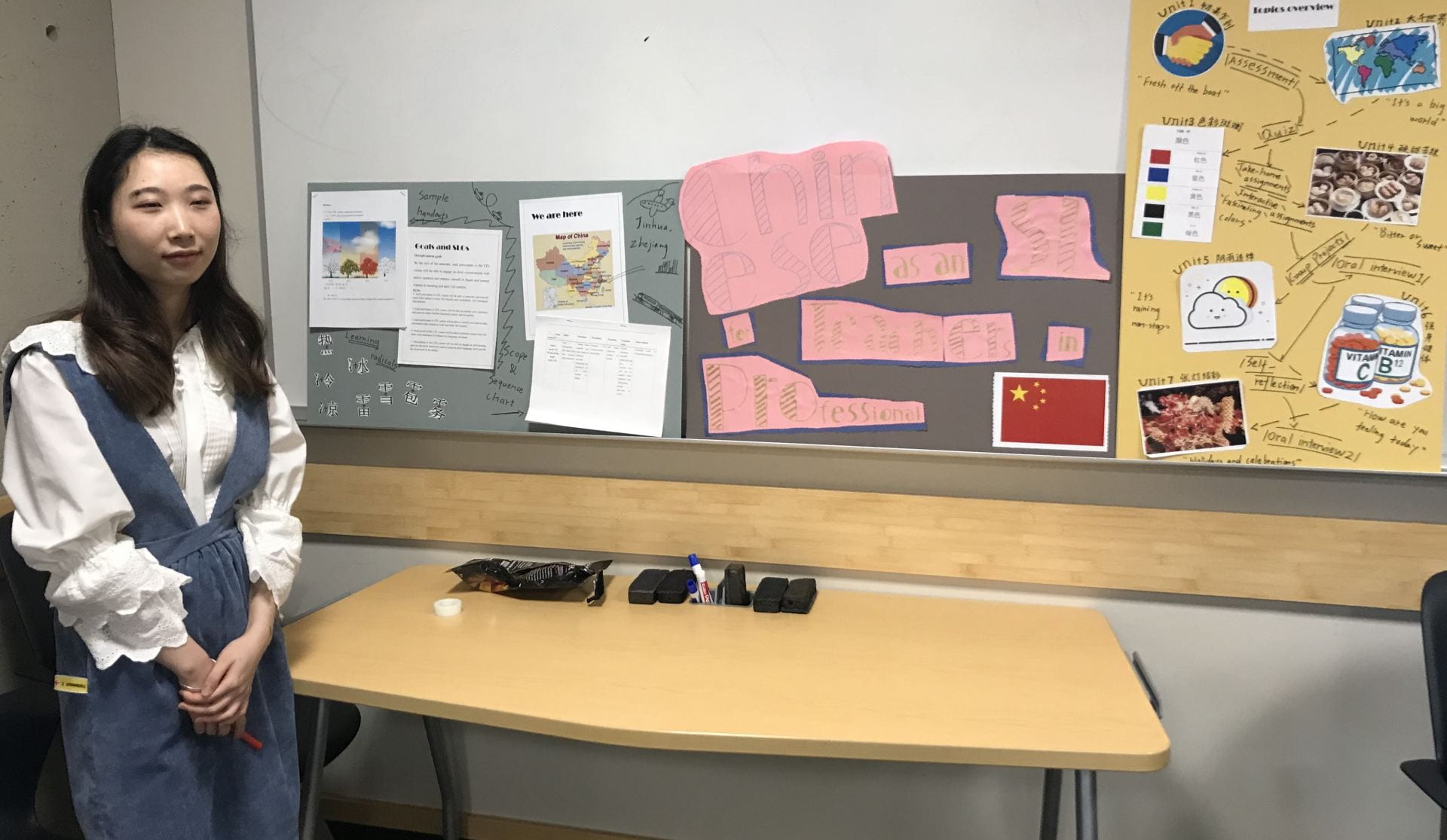
Jasmine with some poster materials in her curriculum class winter term

Could you tell us a little about yourself?

My name is Shiyun Li, but everyone just calls me Jasmine. I’m from China, but I’ve spent most of my undergraduate and graduate years in the US. I have a BA in English Literature and I went back to China and taught English for a year before coming to Eugene to continue my studies. I’m always enthusiastic about short stories and detective novels. And traveling by myself is what I like to do the most in my spare time outside the school. I love to meet with different people along the way and listen to their stories, which to me is even more exciting than travel itself. The counties that are still on my travel list are: Japan, Italy and Jamaica. I hope I can visit these countries in the near future and have more exciting adventures along the way.

What are you working on in your MA project, and how are you feeling about it now that you are halfway done?

I’m currently working on the topic of use extensive reading approach in EFL context and integrating modified and authentic materials to teach reading for adult and young adult English learners. I feel like everything I’ve been creating for the project is finally coming together now. It is never easy when you are writing, but at the same time you are looking forward to write more about it. And I really like how my perspective has changed during the process of writing and how much I’ve learned so far by working on my project.

Sunrise at Miami Beach

What was most interesting for you in your English and Chinese language teaching internship experiences this past term?

The most memorable part about my internships is the teaching I did in AEIS (Academic English for International Students) because it was the first time I taught a cross-cultural language class at the university level. In the program I’ve learned how to plan a lesson and create materials according to learners’ needs and abilities, so it was a great opportunity for me to put what I’ve learned in practice. It is really rewarding to see students are doing a good job and learning new things from what I’ve prepared for them.

What are you hoping to do after LTS?

After what I’ve learned in the LTS, I’m hoping that I could be given an opportunity to continue my education and doing research in the language teaching field. I’d like to pursue a PhD in Second Language Acquisition and put my focus on bilingualism and second language learning process. But still, I wish to always be a good language teacher in my students’ perspective.

LTS 2016 – 2017 Cohort Final Presentations: A Brief Summary and a Fond Farewell

LTS 2016 – 2017 Cohort Final Presentation: A Brief Summary

As the 2016-2017 LTS program comes to a close, the presentations are finished and the finalized projects are rolling in! As this year’s cohort gets ready for their next big adventures in the wilds of language teaching around the globe, this final blog post for the Summer 2017 term will provide a brief glimpse of the hard work and dedication the graduates have put into bettering themselves as language educators, and into bettering the world of language education as a whole. If you missed out on the presentations this year, here is a small gallery of snapshots of each presenter’s work!

Women Teaching Women English: A Contemporary Women Writers Course for Female English Language and Literature Students in Egyptian Universities by Devon Hughes


Academic Writing Skills for International Students of Chemistry at a U.S. University by George Minchillo


Marching to Different Drummers: Teaching a Mixed Class of Heritage and Non-Heritage Learners of Russian with Motivation in Mind by Iryna Zagoruyko


Korean as a Second Language for English Speaking Husbands: a Multi-cultural Family Situation-based Curriculum by Jiyoon Lee


An Adaptive Place–Conscious Ichishkíin Materials Portfolio by Joliene Adams


Crafting a Brand in English for English Language Learning (ELL) College Athletes by Juli Accurso


Using TBLT to Address Locative Phrase Word Order Transfer Errors from English L1 to Chinese L2 by Lin Zhu


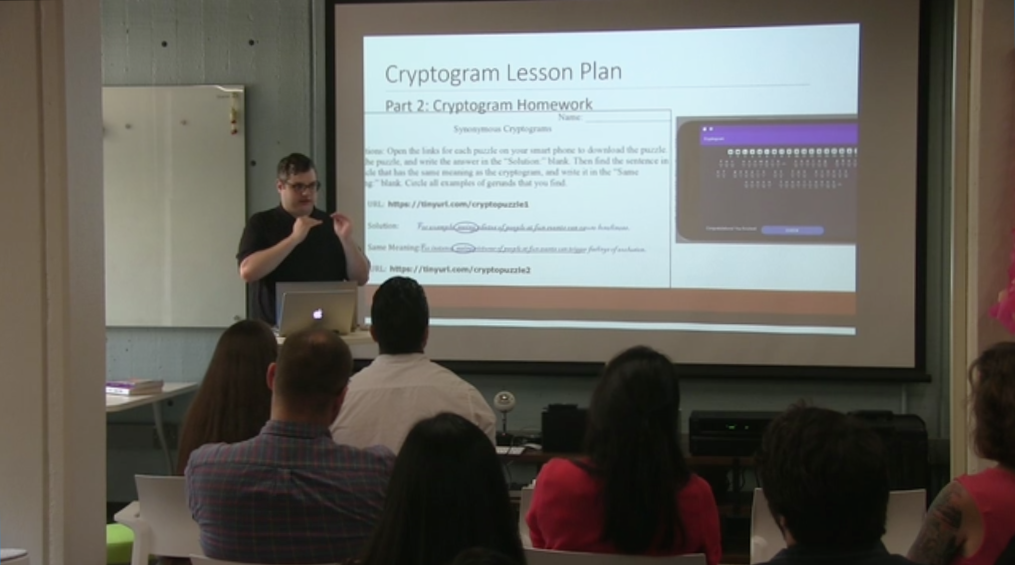
Deciphering the Cryptogram: A Word Puzzle Supplement to Traditional Lexicogrammatical Acquisition by Dan White


Using Literature to Develop Critical Thinking and Reading Skills in an EFL Class at University by SeungEun Kim


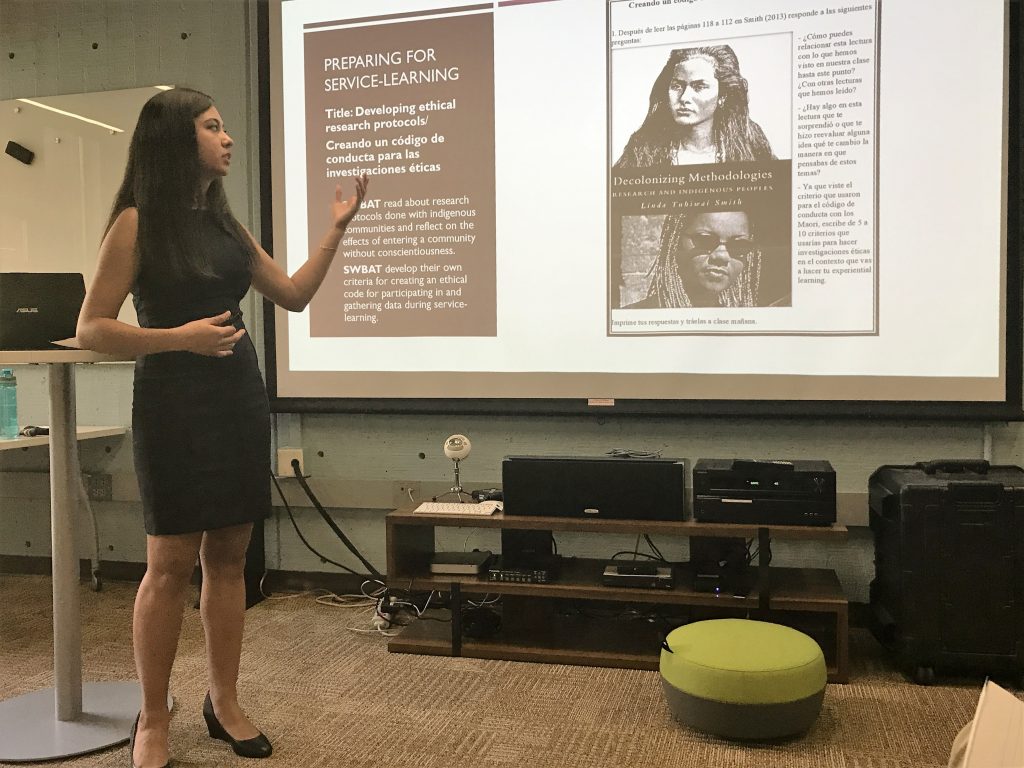
Integrating Service Learning into University Level Spanish Heritage Language Classes in the United States by Valeria Ochoa


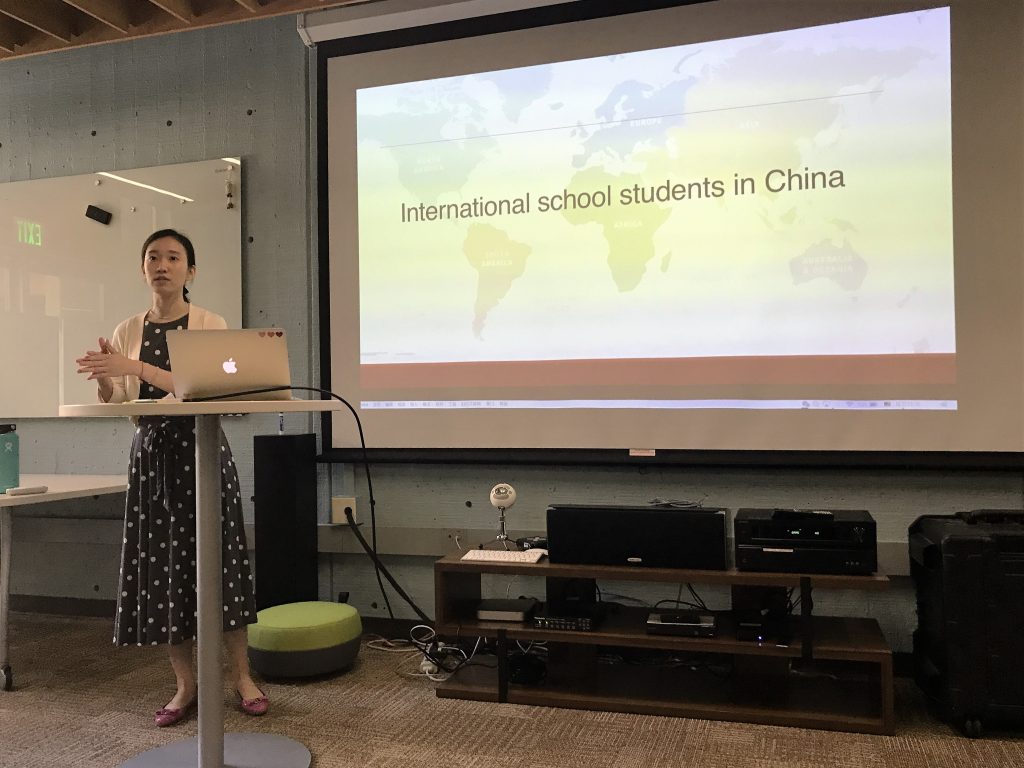
A Career Exploration Course in Mandarin Chinese for Young Learners in East Asia by Reeya Zhao


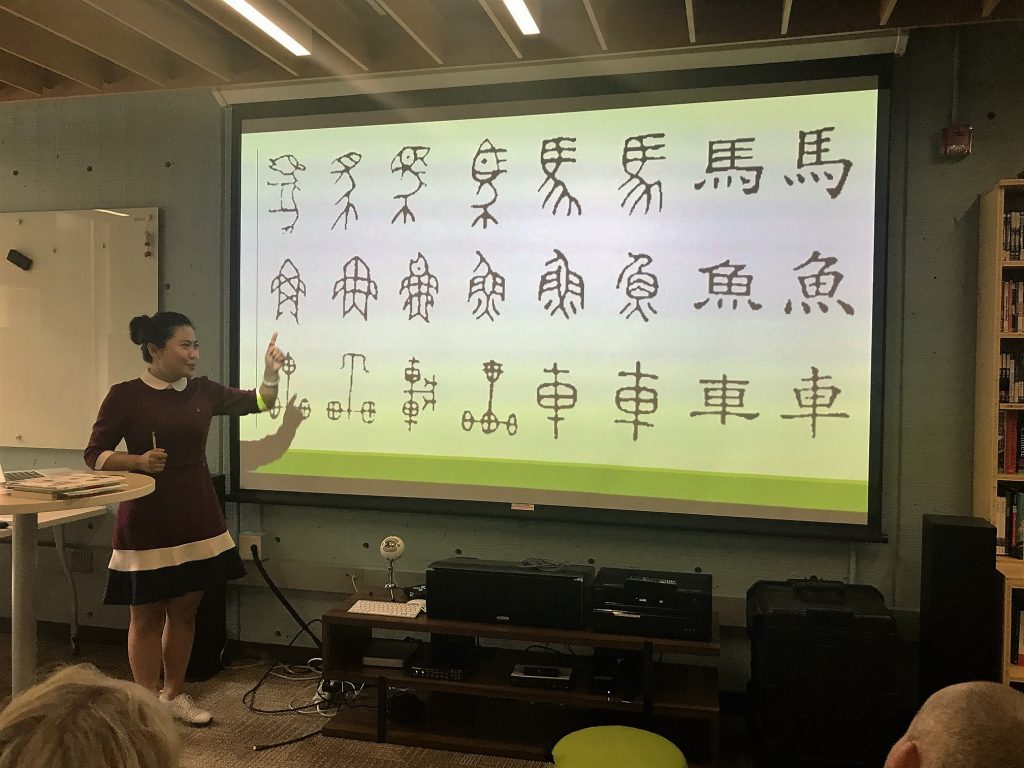
Using Graphic Novels and Children’s Literature Books in U.S. 2nd year CFL University Courses by Yan Deng


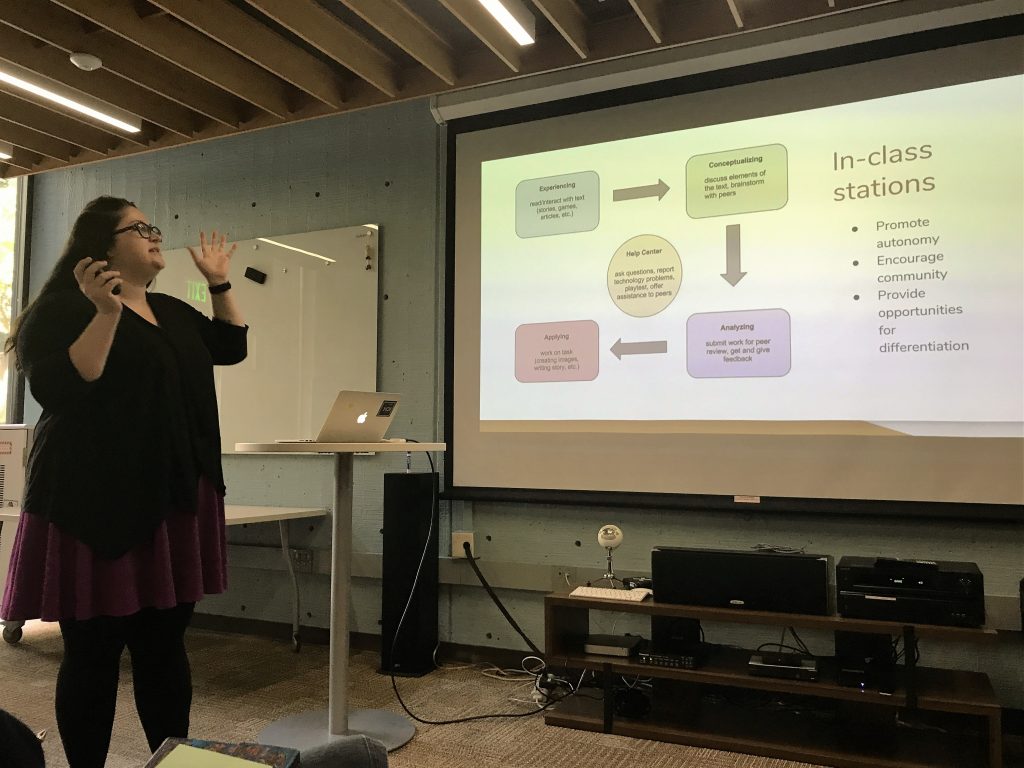
Creative Writing in the Digital Age: A Course Design for Intermediate ELLs Majoring in English at an American University by Becky Lawrence


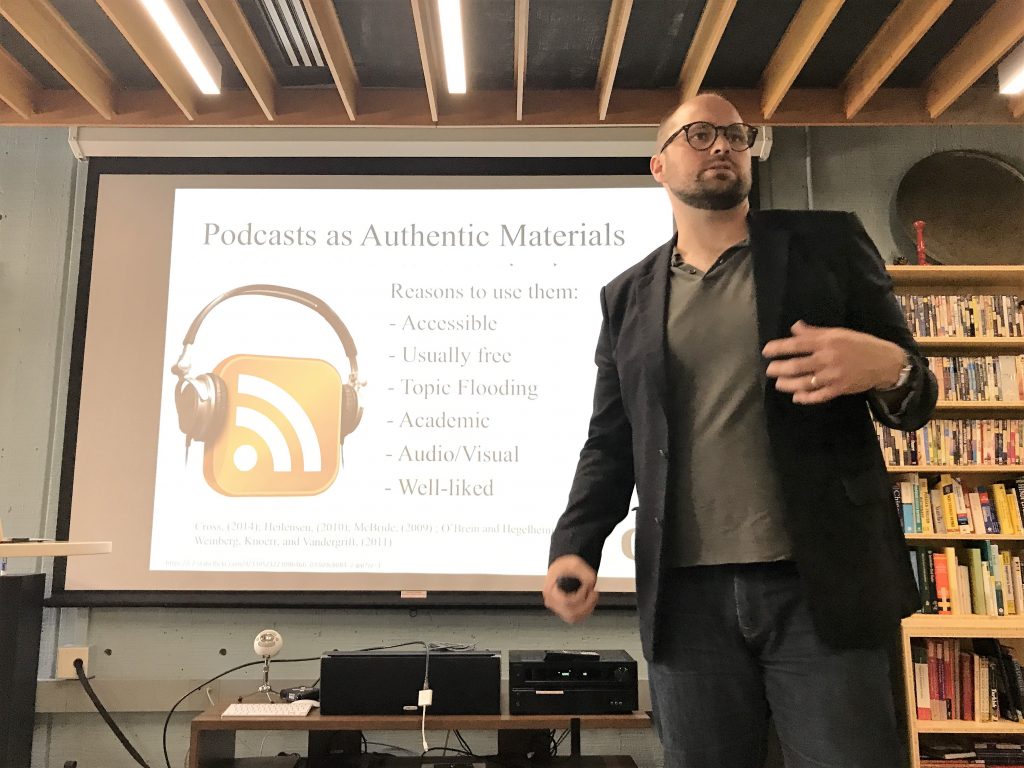
Using Podcasts to Teach Academic Listening for International Undergraduate Students through Metacognition: A Flipped Portfolio by Chris Meierotto

As a means of “paying forward” all of the help and support that we received from our professors, fellow classmates, and previous cohorts, the 2016-2017 cohort wrote up a short collection of thoughts and suggestions for future/prospective students regarding the final presentations:

How did it feel leading up to the presentations?

“I was able to learn a lot from the other presentations I saw. I learned how to make a good introduction to my project.” – Yan Deng

“It was definitely nerve wrecking at times. However, by this point in the program, I think us cohort members start viewing ourselves as a productive, contributing members of the field rather than students trying to play catch up, so I also viewed it as a chance to show what I could do as an educator.” – George Minchillo

“I felt great since it was a showcase of all my work, and I was happy to share my project with the cohort and faculty. It was a final milestone, and I tried to do my best for the audience to be interested and engaged in what I was presenting.” – Iryna Zagoruyko

How does it feel to know that you have the presentations behind you?

“I feel good because this was an opportunity to share what I have been engaged in for so long with the audience. After doing so many things during my time in LTS, I still felt supported when preparing for the presentations.” – Lin Zhu

“I feel free at last! However, I do think back to some parts of my presentation that I think could have gone better.” – Heidi Shi

“After doing the 2 year option and finally getting to the end of my final project and presentation, I feel exhilarated, excited, and exhausted! I’d been working on my project for a long time and it has morphed and evolved throughout my time in LTS. To present it in its final form in front of my peers, faculty, friends, and family was such an amazing feeling.” – Becky Lawrence

“It is always a bit sad to be done with anything in life. But, I feel that I did everything I could in my project, and hope very much that it could be useful in teaching mixed classes of Russian. I hope activities from my project will be implemented in the REEES curriculum here at the UO.” – Iryna Zagoruyko

What were the most difficult or the easiest parts of giving the presentations?

“I really tried to focus my presentation on entertaining the audience. I tried to leave out most of the minor details, and instead focus on showing the more ‘flashy’ parts of my project.” – Dan White

“The easiest part for me was making the draft of the slides, because I have so many things that I can pick and choose from my whole project to put in the presentation. The most difficult part was tackling audience questions, because some of them were unexpected!” – Lin Zhu

“The easiest part for me was actually having the chance to show my project! The hardest part was having a lot of information, and choosing which ones I should include in the presentation.” – Yan Deng

“For me, the most difficult part was having the confidence in the work I had done, and in portraying myself as an ‘expert’ in front of experts. The most useful part of the presentation was receiving additional feedback from peers and faculty that could be implemented in the final revisions of the project.” – George Minchillo

Any suggestions for future cohorts?

“For future cohorts, I would advise you to start thinking of project ideas early. Be creative, and try to combine your passions and interests with sound language teaching pedagogy. Take advantage of the built-in support of a cohort system, and ultimately just enjoy the process, because it will fly by before you know it!” – Becky Lawrence

“Prepare ahead of time, practice at least five times, and don’t make the slides too text-heavy! Be confident in yourself :)” – Heidi Shi

“Have confidence in the work you’ve done. You will undoubtedly be one of the most well-read and knowledgeable people about your context and materials in the room!” – George Minchillo

“Even though at this stage in the program, you will have completed 98% of your project. However, adequate time should be set aside to prepare for the presentation.” – Lin Zhu

“Enjoy the moment! Be nice to your cohort! They will be the greatest wealth in your academic life.” – Yan Deng

“Definitely be serious about your project! View it not only as an exercise, but strive to do everything possible to ‘break the ground’ in your field and context. Do not underestimate yourself – you have all the potential to create great activities/course designs for somebody to use in their teaching!” – Iryna Zagoruyko

A Fond Farewell

No matter where we go, and no matter what we do in the future, let’s always remember and think back to the knowledge, experience, and camaraderie we shared with one another as we grew into professional educators together. Even if we lose contact, or never find ourselves in a shared space again, we can always provide inspiration to one another to achieve our best, and to work hard to mold the world of academia as we see fit! For these reasons, I believe it is not necessary to say goodbye, but simply to say good luck to the 2016 – 2017 LTS cohort. I know we will all move on to do great things!

Thank you to my cohort members for all of their support! I hope to see you all again soon.
George Minchillo

“Die Grenzen meiner Sprache bedeuten die Grenzen meiner Welt. The limits of my language are the limits of my world.” – Ludwig Wittgenstein

Student Spotlight – Iryna Zagoruyko

Student Spotlight – Iryna Zagoruyko

Tell us about yourself! Where are you from? What kind of work have you done? Do you have any hobbies?

My name is Iryna Zagoruyko and I am originally from Ukraine. I moved to the U.S. 5 years ago. I got my first Master’s degree in Business Administration in Ukraine. After graduation, I worked as a manager of foreign economic relations at the Korean International Company in the capital of Ukraine, Kyiv. Also, in Ukraine I worked as an Interpreter of English for foreign economic delegations. After I moved to the U.S., I worked as a student specialist in the ESL Department at Lane Community College in Eugene. After that, I did my second Master’s degree with the Russian, East European, and Eurasian Studies Department at UO, simultaneously teaching first- and second-year Russian courses as a GE for two years (2014-2016). Being a Russian GE really changed my life goals: I understood that language teaching is my passion and decided to receive more knowledge on that. Now I am a graduate student at the LTS program of the Linguistics Department of the UO, and plan to receive my third Masters’ degree in language teaching this Summer.

This year was quite intense for me. Juggling being a graduate student in the intense LTS program, working at CASLS, and having a small baby (who was born three weeks after I started the LTS program) was quite a challenge. I did not manage to have a lot of free time for hobbies or interests and had to plan smartly to balance all aspects of my life. But every spare minute I have I try to spend with family: my baby and my husband. We really enjoy hiking together, going to the coast in Florence, and just being together at home.

Could you tell us more about your GE position at UO?

This year I was a graduate employee (GE) at CASLS (Center for Applied Second Language Studies) at UO. I worked on the Russian version of CASLS’ Bridging Project, a year-long hybrid course centered on exploring student identities. This project encourages students with high levels of proficiency, especially heritage students and those who graduate from immersion programs, to continue language study at the college level, which has become increasingly more challenging. CASLS is a great environment where people support and value each other. It was a big honor for me to work in such a highly-valued and highly-recognized National Foreign Language Resource Centers as CASLS. I truly believe that work which is done at CASLS will improve teaching and learning of world languages.

Could you tell us a little bit about the ideas that you have for your Master’s project?

My master’s project is called “Marching to Different Drummers: Differentiated Instruction for Teaching Mixed Classes of Heritage and Non-Heritage Learners of Russian with Motivation in Mind.” The motivation for this project is to offer language teachers access to the concepts of differentiated instruction, and strategies for applying it to their specific teaching context – mixed/homogeneous classes of heritage and non-heritage learners of Russian of novice to intermediate levels of proficiency.

What is the most valuable thing that you’ve learned during your time at the UO?

Probably, that we, LTS students, are all in a perfect place to gain very valuable knowledge on teaching which we can later apply in our lives. Professors in the LTS program possess extremely high levels of expertise in language teaching and offer us great support. Being a part of a single cohort of LTS students who are taking the same classes and doing the same projects together is really fun.

Professional Development with the International Association for Language Learning Technology

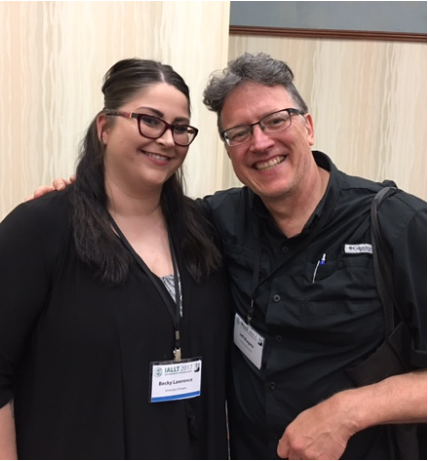
Becky and Jeff at the banquet dinner and awards ceremony.

In addition to the many internship opportunities available to LTS students, there are also many opportunities for professional development in the field of language teaching! In March, several LTS students attended the 2017 TESOL Convention in Seattle, Washington, which was a great opportunity for them to learn new ideas from experienced teachers in the field. Becky Lawrence (2017 cohort) presented at TESOL Electronic Village, which was an amazing opportunity for her to share what she has been working on in the LTS program with other teachers.

Becky also accompanied LTS faculty and Yamada Language Center director, Jeff Magoto, to the biennial 2017 International Association for Language Learning Technology (IALLT) conference held at Concordia College in Moorhead, Minnesota this past June. Jeff, also a longtime IALLT member, gave presentations about the Yamada Language Center and ANVILL. Becky gave a presentation about her MA project, which was great practice for the final MA presentations coming up in August.

Fun fact! The 2019 IALLT Conference will be held in our very own American English Institute at the University of Oregon, hosted by Jeff Magoto himself! Because technology in language teaching is such a crucial part of the LTS program, IALLT is a great organization for LTS students. They provide a lot of support and opportunities for graduate students and new teachers to present at conferences and publish in their journals. The IALLT organization is very warm and welcoming. Despite not knowing anyone besides Jeff upon arriving, Becky left the conference with many new friends!

For graduate students interested in attending IALLT conferences, IALLT also offers a $500 Ursula Williams Graduate Student Conference Grant to help pay for costs such as registration and housing. Becky was a recipient of this grant for the 2017 conference, and plans to stay involved in the organization to support graduate students in the future!

TESOL and IALLT are just two of the organizations that LTS students can become a part of, whether to attend, present, or publish.

To learn more about TESOL, visit http://www.tesol.org/

To learn more about IALLT, visit https://iallt.org/

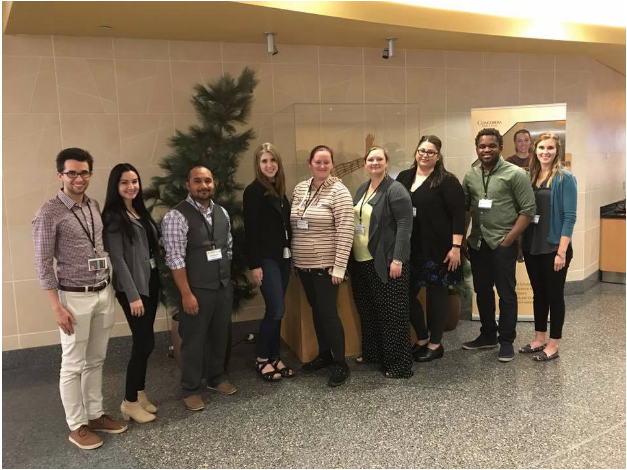
Several of the graduate students who attended IALLT with Dr. Amanda Romjue (center), a 2015 Ursula Williams Grant recipient and current graduate student mentor.

2016-2017 LTS Fulbright Scholars Spotlight

Student Spotlight – 2016-2017 Fulbright Scholars
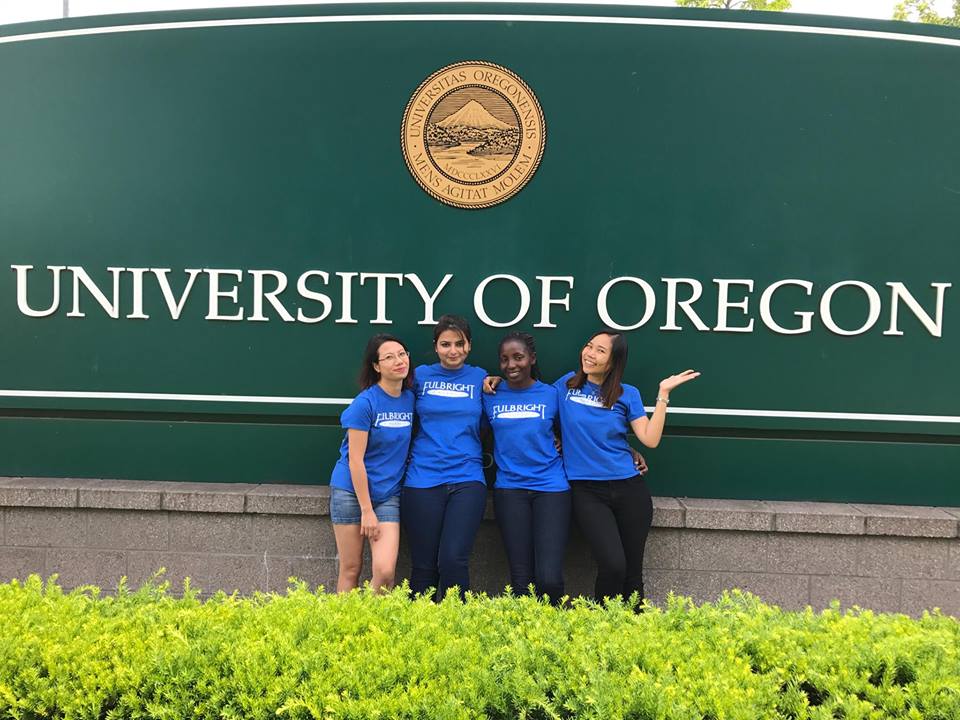
From Left to Right: Duong Hong Anh, Kainat Shaikh, Irene Njenga, Suparada Eak-in

This end-of-term Student Spotlight is a special “goodbye” to our dear friends, colleagues, and classmates from the Fulbright Foreign Language Teaching Assistant Program. The Yamada Language Center at the University of Oregon has hosted these four lovely language teachers throughout the 2016-2017 school year, and the LTS cohort has had the wonderful opportunity to study along side them in the various Language Teaching courses they participated in. The YLC has been proud to welcome the FLTA’s without whom 4 of the 8 Self Study Program languages would not be available to the UO students and community. Now that Spring term is over, each scholar will soon be heading back to her home country, and the LTS program would like to recognize and remember the wonderful experiences we got to share with them!

Tell us about yourselves! Where are you from? What kind of work have you done? Any hobbies?

Anh: 

I am Anh Duong. I come from Hanoi, the capital city of Vietnam. I am an English instructor at the University of Languages and International Studies back in my home country. I was granted the Fulbright scholarship last year and came to UO to study and work as an FLTA. About my personal life; I love music, movies, traveling, reading, and taking pictures. Since I came here, I have taken up cubing, basketball, and playing the guitar as my new hobbies.

Kainat:

I am from Hyderabad, Sindh, Pakistan. I work at the National University of Modern Languages (NUML), so currently I am on leave as I am availing the Fulbright Fellowship. I teach graduates and undergraduates majoring in English Literature and Linguistics. I like reading books, and writing critical reviews. I enjoy traveling, especially to the places which have had a rich history.

Irene:

My name is Irene Njenga, and I am from the central region of Kenya. I have a Bachelor’s Degree in Linguistics and a Master’s in Education, both from the University of Nairobi. Before coming to UO, I had worked in two places. My first job was at Dadaab Refugee Camp (Kenya) as the officer in-charge of the Accelerated Learning Program, and my second job was as an English teacher at Mukurwe High School (Kenya). I enjoy traveling and socializing with people from different cultures because it opens my mind to new ways of thinking and stimulates my creative problem-solving skills. I also enjoy swimming, cooking, reading novels, listening to music and watching movies.

Suparada:

My name is Suparada Eak-in. I am from Thailand. Back in Thailand, I worked as a lecturer of English in the Department of English and as a Deputy Director of the International Office at Mahanakorn University of Technology. My specialization is Teaching English as a Foreign Language and Teaching English for Specific Purposes. I taught EAP and ESP to non-English majors including Engineering, IT and Business students. In my free time, I like learning new languages, doing art and working out. Now, I am learning four languages: Korean, Japanese, Chinese and Vietnamese by myself. I also draw and take pictures. My favorite exercises are jogging, Thai boxing and yoga.

Tell us about teaching at the UO as an FLTA! What is that like?

Anh:

One of my key missions in the US is to teach Vietnamese to both students at UO and community members at the YLC. I appreciate the chance to teach my native language and share Vietnamese culture with American people as well as heritage students. Thanks to the Self Study Program at YLC, with small-size classes but extensive interaction with students, I have precious opportunities to listen to many individual stories, enabling better understanding of American culture as well as my own culture.

Kainat:

The YLC is the place to grow professionally, interdependently and culturally. I never taught Hindi/Urdu before coming to US, though it is the national language of Pakistan. I, being a native speaker, learned a lot about my culture, language and country by staying oceans away and that’s not only remarkable but a kind of liberating feeling.

Although I have been teaching for one year before becoming part of YLC, participating in the program has provided me an insight to see language teaching not as a way to show how languages are different from one another, but as a platform to let me explore how languages all around the world are spoken in their natural, cultural and raw forms. So, in order to completely imbibe in this language teaching experience, I myself decided to learn a new language. I attended classes of Turkish. New language gives a new lens to view the world. As such it may seem that speaking different languages actually makes us different from one another but actually learning a new language makes one feel connected to the wider community which is not one’s own. In one place, where creating borders may divide us, but learning new languages can unite us, this is my takeaway from YLC.

Irene:

Swahili is one of the easiest languages to learn! Although a biased view, it is true that Swahili is not a tonal language, has a fixed stress pattern, and words are spelled exactly how they are pronounced i.e. no silent letters! Teaching Swahili at the UO has been very rewarding. It has also been a great opportunity to interact with new cultures and incorporate Swahili culture into language teaching. I believe that my students enjoyed the lessons and gained competence in using the language. This has also helped me refine my teaching skills and familiarity with using the communicative approach in teaching grammar. I never discussed grammar in a tabular form and very rarely used grammar technical terminology.

Suparada:

Teaching Thai at YLC is different from teaching English at my university in Thailand. Firstly, YLC classes are small with no more than fifteen students. This provides me the opportunity to get to know my students more so I can facilitate their language learning more properly. Moreover, YLC offers the Self Study Program which places emphasis on the students’ needs. The challenge is to compromise/balance students’ individual needs and prepare the lessons to serve their needs efficiently. Lecture-based and commercial textbooks seem not to correspond with YLC students’ learning styles and goals. Thus, I mainly implemented a theme-based method in my classes. I set the themes according to the students’ needs and designed interactive activities to engage students in learning. I found that the students enjoyed learning and improved their skills proficiently.

What classes did you take during your time at UO? Did you have any other projects that you worked on? What was the most valuable thing you’ve gained from your experience here?

Anh:

Apart from teaching Vietnamese, I also attended some classes, two of which were Teaching English Culture and Literature, and Testing and Assessment in the LTS Program. The most significant thing I took from these classes is the inspiration from my professors and classmates. I especially enjoy the lively and thought-provoking discussions with different points of view and practical projects in teaching that will benefit my own teaching in the future.

Kainat:

I enrolled myself in three courses, one course per term. My grant with Fulbright ensures that I grow strong academically by taking the classes that can serve my long term goals. Therefore, I took classes in LTS all three terms; Teaching Culture & Literature in Language Classrooms, Teaching Pronunciation, & Teaching and Assessment. My time with LTS cohort is worth treasuring as I met intelligent and creative people from various parts of the world.

I am also part of International Cultural Service Program (ICSP). I presented all around Eugene in different high schools, facility centers, care systems, and at UO as well, as the cultural ambassador of Pakistan.

From my entire year at UO, the most valuable asset that I have gained is to challenge the limits, and to outrun them.

Irene:

I took classes in Language Teaching and International Studies. I worked on various projects like incorporating literature into English language teaching, education and culture in Kenya, as well as creating direct types of assessment. The most valuable thing I have gained is that language teaching can be fun. I have learned how to use different scaffolding activities in teaching language, classroom management techniques, key assessment principles, and skills in creating and/or adopting assessment tools and procedures for the language classroom.

Suparada:

I took two classes in LTS and one class in Linguistics. The classes in both programs provided me knowledge that I can apply in my teaching career. My favorite class was Teaching Pronunciation, which I took last term. I like this class most because I did not only learn the contents but also had opportunities to practice. Besides, I like observing the techniques that Dr. Patricia Pashby used in class. I found those techniques useful and worked well with my students.

Apart from teaching and learning, I worked as a cultural ambassador in the ICSP at UO. I presented Thailand and Thai culture to school students and senior communities in Eugene. It is a great opportunity to meet and talk with local people outside of the university and have productive cultural exchanges.

Any plans for the future, or final thoughts you would like to share?

Anh:

My gratitude goes to the Fulbright program for giving me a chance to come to the US, meet amazing people, and share my story.

Kainat:

When I go back to Pakistan, I will resume my teaching, but there will be entirely different teaching methodologies. I will be working on making classes more student-centered where students should take responsibility of their learning. I learned a lot about testing and assessment this last term, and it has completely changed my perception towards language teaching. I am really looking forward to using the new teaching and testing trends which can ensure learning for not just a fleeting moment but for a life-time.

Irene leaves us with her favorite quote:

“If you can’t fly then run, if you can’t run then walk, if you can’t walk then crawl, but whatever you do you have to keep moving forward.” Martin Luther King Jr.

I believe that despite the obstacles we face when pursuing our dreams, we should always be focused and keep working to realize them.

Suparada:

All of these experiences make me eager to go back and share them with my colleagues and students back home. I also want to better develop teaching methodology and education in my home country.
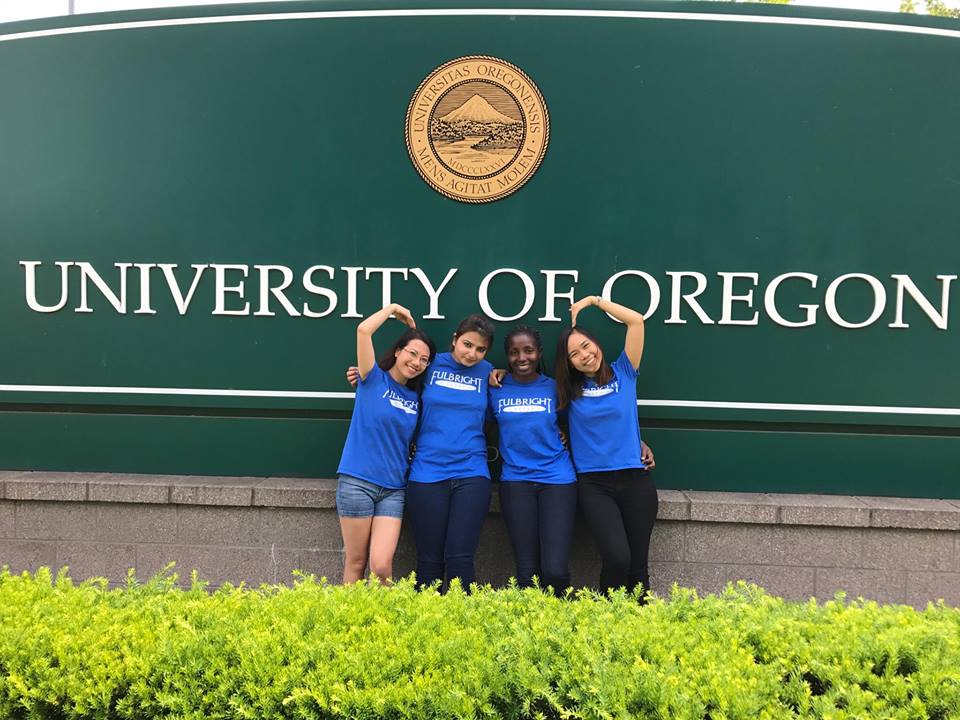
Safe travels home!


Student Spotlight – Reeya Zhao

Student Spotlight – Reeya Zhao

Reeya Zhao presenting a poster of her project titled, “A Career-Exploration Course in Mandarin Chinese for Young Learners,” at the UO 2016-2017 Graduate Research Forum

Tell us about yourself! Where are you from? Where have you studied? Do you have any hobbies?

My name is Reeya Zhao, and I’m from Beijing, China, where I spent most of my life before turning 18. The city of Beijing is a mix of ancient, modern, domestic and overseas sites and cultures. People come and go since they can find both opportunities and challenges there. At the age of 18, I decided to leave to attend the East China Normal University in Shanghai, and that’s where I found the Disney summer internship and the OIIP programs in 2014. I worked at Walt Disney World in Orlando, Florida for two months as a merchandise representative before OIIP. This was technically my first overseas job, and I had so much fun because we often stocked past midnight after the garden closed and I met many Disney characters backstage. OIIP is an international internship program at the University of Oregon. During that 5 months, I took two courses at the UO while working as an intern in the kindergarten department of Mt. Vernon elementary school, with two teachers and two teaching assistants. After that, I made my decision to be a language teacher and come back some day pursuing further education.

Has the LTS program brought you any extracurricular opportunities?

Now, it has been almost one year for me studying in the LTS program. As an international student, I feel it’s very intensive yet worthwhile. By following the suggestions of which courses to take from our coordinator Dr. Keli Yerian, I feel that each term is a little bit more intensive than the previous one. The Gaokao (China College Entrance Examination) was the first high pressure educational experience for me, and the LTS cohort and program are the first ones to push me to become more professional in various ways. In the Fall and Winter terms, I participated in the Edison Chinese Club Program. Two other Chinese cohort members (Yan and Adam) and I planned and taught Mandarin lessons together after school on every Friday, and were directed by Professors Keli Yerian and Lara Ravitch. This was challenging at the beginning because not only did we need to think of attractive activities and how to best sequence all of it, we also pre-planned for imagined classroom management problems, and sometimes dealt with unexpected situations. For example, with planned small group activities, some kids might feel like working alone on some days, and we would come up with an “emergency plan” to let him/her be out of the group for a while. However, we always reminded ourselves to encourage them to come back eventually, because cooperation is one of the essential skills we want the learners to develop further in our Chinese club.

Tell us a little bit about your Master’s project! What is the context of your project?

My Master’s project is a course design for young learners of ages 10-14 studying at international schools in China. I believe that students within this age range are developing their awareness of future careers, and they need the language as a bridge between them and the outside world in this foreign country. Due to these reasons, I’m thinking of a career-exploration course taught in Mandarin Chinese to formally develop their multi-language and multi–culture abilities.

What are the most valuable aspects of the LTS program as you’ve experienced it so far?

I also value the circumstances of discussing, sharing, and working together with all the cohort members in LTS. I also love the various connections provided by all my instructors and the courses they lead. For example, in the Talking with Ducks course led by Professor Laura Holland, we had three classes each week. On Tuesdays, all the TWD teachers carefully planned and discussed the chosen activities together. On Thursdays, we actually taught in an English conversation college course for international students. Then, on Fridays, all the LTS cohorts got into the class to debrief and reflect how we did on those Thursdays. Last but not least, I also like the LT 536 course design and the LT 549 testing and assessment classes where I was pushed to design a course and assessments. In doing so, I was given the motivation to research and look into the use of authentic materials.

LTS Faculty Post Trish Pashby: Pronunciation Teaching—Moving from Fear to Fun

Trish Pashby is a Senior Instructor II in the American English Institute and has been a teacher educator in LTS since the program began in 2004. She has taught many of the LTS courses over this time, and currently teaches her favorites, LT 541 Teaching Pronunciation and LT 528 Teaching Culture and Literature.

For me, pronunciation lessons are the most fun possible in the classroom. I love the whole process:

  • finding out who my students are, what they want, what they need;
  • creating opportunities for them to unveil simple yet hidden patterns of the English sound system;
  • observing as they compare how they had been previously producing a word (or phrase or text) to a variation that improves their intelligibility and confidence;
  • setting up practice drills followed by more communicative activities that allow them to work with the new pronunciation in various ways;
  • checking in with them about their progress and providing encouragement and guidance to keep going.

Sadly, only a handful of my colleagues share this passion. In fact, many English language teachers lack confidence in how to teach it at all (Baker, 2014; Murphy, 2014). This may be partly explained by the fact that “relatively few teacher education programs provide courses on how to teach L2 pronunciation” (Baker, 2014), which experts in the field (Derwing, 2010; Murphy, 2014) deem essential. The LTS program requires LT 541 (Teaching English Pronunciation) for students focusing on English. In this post, I will share some of the key areas we cover in the course. If you are a current or future language instructor who feels nervous about teaching pronunciation, I strongly encourage you to dabble and play with the following. Parts may lead to ways for you to build your confidence, and maybe even fall in love.

Intelligibility vs Comprehensibility vs Accent—and other “Big Picture” Issues

Munro and Derwing (1999) define intelligibility as how much a listener actually understands, comprehensibility as how difficult it is for the listener to understand, and accent as how the speech varies from the dialect of the listener. For example, substituting a “th” with /s/ in “think” or /d/ in “the” will probably fall under “accent” if the listener notices the substitution but has no trouble understanding. In diagnosing the pronunciation of their learners, teachers need to distinguish among the three, and prioritize the former.

Several key questions interact with this to create the “big picture.” What are the learners’ goals? Who will they be interacting with? What is possible? Reasonable? Desirable? (Don’t assume all of your learners want to acquire your particular pronunciation. Some may prefer another dialect of English. Or want to maintain a connection to their native language.) What about those seeking to sound native-like? What progress can they make and what role can you play in that? Can non-native speakers be good pronunciation teachers?

My answer to this last question: Yes, of course non-native speakers can be excellent pronunciation teachers as long as they understand the sound system of the target language and have the skills to communicate this to learners through effective practice activities. They can use their own voice to model the language but should also present a variety of models to their students, just as native speaker teachers should.

Advice: Keep your assumptions to a minimum and instead rely on (1) much communication with your learners and (2) current research in the field.

Suprasegmentals (Stress, Rhythm, Intonation)

For many teachers, especially those who are native speakers of English, suprasegmentals may present the most challenging aspect of pronunciation teaching and require considerable training of the ear. I clearly remember sitting in a phonology class years ago as a student unable to distinguish one syllable from another—to my ear, none sounded longer, clearer, higher. However, suprasegmentals can play a huge role in the intelligibility and comprehensibility of your learners and will thus need your attention.

Rising vs falling intonation might be a reasonable place to begin—for example, exploring American English patterns for differentiating wh-questions from yes/no questions. I tend to start off my pronunciation courses with a lesson on “tonic stress” (the main stress in a thought group), which is essential for the international graduate students and scholars I work with. This is then followed with a session on word stress, also key to their intelligibility and comprehensibility. Rhythm (stressing content words and reducing function words) is covered in many pronunciation texts for students, yet not all experts agree on how accurate/effective this is. Dickerson (2014) argues this approach should be replaced with finding the “anchor” among the content words to complement the tonic stress.

To consider: How does intonation affect meaning in English? Where does tonic stress usually occur? Why might it vary from this position? What are typical word stress patterns in English? Which of these might be most useful for students?

Advice: Teach yourself–with patience and kindness–to hear/notice stress, intonation, and rhythm (most of which may lurk below your consciousness, especially if you acquired English as a child) and become familiar with the fascinating role they play in English communication. I recommend getting your hands on one or more pronunciation textbooks for students and carefully studying the exercises. In my case, I finally learned to hear stress via the first edition of Marsha Chan’s (1987) Phrase by Phrase.

LT 541: Students George Minchillo (center) and Yan Deng (right) teaching pronunciation to an international visitor (March 8, 2017)

Segmentals (Consonants and Vowels)

Set a goal for yourself to learn the phonetic symbols and details of articulation for all the sounds of the target language. You probably won’t be creating lessons for all of them, but you’ll want to be ready in case a student needs some feedback or instruction. If IPA symbols intimidate you, look into alternative systems such as “the color vowel chart,” which provides a very accessible way to for teachers and students to understand and manage North American English vowels: https://elts.solutions/color-vowel-chart/.

To consider: Which sounds most strongly affect intelligibility and comprehensibility? How do sounds change depending on their place in a word and the sounds surrounding them? What is the best way to convey this information to learners? What kind of practice is most effective?

Advice: If mastering all of the vowels and consonants feels overwhelming, pace yourself and start with a few at a time. Consider which sounds are most connected to your learners’ intelligibility and comprehensibility issues. You can also explore information on “functional load”: the frequency of a sound’s occurrence and in how many instances this sound distinguishes one word from another.

Designing Lessons

As with any subject you teach, you will need a framework/approach for designing effective lessons. Learners will require access to information and opportunities for practice. In the LT 541 course, we use Celce-Murcia et al.’s (2010) “communicative framework.” Lessons begin with clear explanations and demonstrations in which students can experience the sound or pattern, often with visual, tactile, or kinesthetic accompaniment. Tools like the following can play a role:

  • mirrors to observe lip, teeth and jaw movements
  • feathers to test aspiration of of /p/, /t/, /k/ at the beginning of words
  • plastic teeth with puppet tongue to show articulation
  • animated video of sound articulation http://soundsofspeech.uiowa.edu/english/english.html
  • rubber bands to stretch on stressed syllables
  • coins or other small object to illustrate stressed and unstressed syllables
  • kazoos to focus on intonation (humming will work too)

Tools from Trish’s pronunciation “toy box”

Students will need plenty of production practice, moving from very controlled exercises (with limited focus on meaning to keep the attention on the new sounds) to gradually more meaningful contexts. They will also need strategies to continue building skills outside of the classroom.

Integrating Pronunciation across the Curriculum

English classes focusing primarily on pronunciation are rare. Thus teachers must find ways to bring pronunciation instruction into courses that focus on other skills. These lessons may be less elaborate than those in a pronunciation course but can certainly cover both segmental and suprasegmental aspects affecting intelligibility and comprehensibility. Char Heitman, a guest lecturer in LT 541, presents a variety of such activities to use in a reading/writing course including having students search texts for specific spelling/sound correspondence examples, chart new vocabulary according to word stress patterns, and practice thought groups and intonation before discussing key ideas [http://eflteachingresources.blogspot.com/2015/02/shaping-way-we-teach-english-webinar_15.html]. Additional ways for integrating pronunciation across the curriculum can be found in several chapters of Tamara Jones’ (2016) Pronunciation in the Classroom: The Overlooked Essential.

Recommendations

Form a group with colleagues or classmates (or go solo, if you prefer) to tackle areas of pronunciation instruction most important and interesting for your teaching context. Resources might include the following.

Teaching Guides:

  • Celce-Murcia, M. et al (2010). Teaching Pronunciation: A Course Book and Reference Guide (2nd edition)
  • Grant, L. (2014). Pronunciation Myths: Applying Second Language Research to Classroom Teaching. Ann Arbor, MI: University of Michigan Press
  • Jones, T. (2016). Pronunciation in the Classroom: The Overlooked Essential. Alexandria, VA: TESOL Press.
  • Meyers, C. & Holt, S. (1998). Pronunciation for Success. Aspen.

Student Textbooks:

  • Dale, P. (2004). Pronunciation Made Simple. Pearson.
  • Lane, L. (2012). Focus on Pronunciation 3. Pearson.
  • Grant, L. (2016). Well Said. Cengage.
  • Miller, S. (2005) Targeting Pronunciation. Cengage.

Journals in the field, such as TESOL Quarterly, regularly publish research related to pronunciation teaching. TESOL’s “Speech, Pronunciation, Listening” interest section publishes a newsletter with practical ideas for teachers [http://www.tesol.org/connect/interest-sections/speech-pronunciation-and-listening/as-we-speak]. Conferences are an especially enjoyable way to build your pronunciation expertise. The annual TESOL conference always features a number of excellent pronunciation workshops and demonstrations, from which I have learned many of my favorite techniques and activities for pronunciation fun.

References

Baker, A. (2014). Exploring teachers’ knowledge of second language pronunciation techniques: Teacher cognitions, observed classroom practices, and student perceptions. TESOL Quarterly, 48, 136–163.

Derwing, T. (2010). Utopian goals for pronunciation teaching. In J. Levis & K. LeVelle (Eds.), Proceedings of the 1st Pronunciation in Second Language Learning and Teaching Conference, Iowa State University, Sept. 2009. (pp. 24-37).

Dickerson, W. (2014). A NAIL in the coffin of stress-timed rhythm. Proceedings of the 6th annual pronunciation in second language learning and teaching conference, UC Santa Barbara, Sept. 2014. ( pp 184-196).

Munro, M. & Derwing, T. (1999) Foreign Accent, Comprehensibility, and Intelligibility in the Speech of Second Language Learners. Language Learning, Vol. 49, Supplement 1, 285–310.

Murphy, J. (2014). Myth 7: Teacher training programs provide adequate preparation in how to teach pronunciation. In L. Grant (ed) Pronunciation Myths: Applying Second Language Research to Classroom Teaching.pp188-224 Ann Arbor, MI: University of Michigan Press.