Alumni Spotlight Yanika Phetchroj

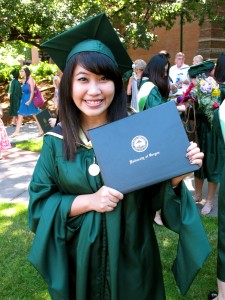
My name is Yanika Phetchroj, from Thailand. I enrolled in the LTS program in summer 2009 and graduated the following summer.

What and where are you teaching now?

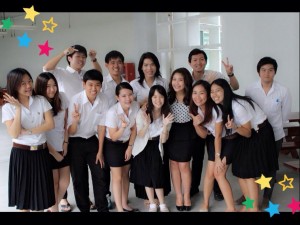
Now I’m teaching English at the English Department at Thammasat University, the second oldest and one of the most prestigious universities in Thailand. I 644227_212153002263945_1461405675_nhave been teaching here for three years. My students are undergraduates from various departments and years. The classes that I normally teach are English Listening and Speaking, Reading for Information, Paragraph Writing, English Structure, and English for Hotel Personnel.
What was your MA project about?

My MA project was “Activities and techniques for improving oral skills in Thai high school EFL classes”. I did this because I have strong interest in teaching oral skills. Also, from my experience as a learner and as a native Thai speaking teacher of English, I found that Thai students have problems when it comes to English speaking and listening skills. Most Thai students start learning English with native Thai speaking teachers who teach English by emphasizing grammatical rules (the traditional Grammar Translation Method), and oral skills are overlooked. Thai ELT teachers predominantly speak Thai in the English classroom and most of the major examinations such as the university entrance examination only test students’ understanding of English grammar and their reading skills. Also, many Thai teachers find it difficult to teach English speaking skills since they don’t have a native accent. The consequence from this is thIMG_0489at after many years of learning English, Thai students still can’t speak English. After taking classes in the LTS program, I was enthusiastic to do something that could improve Thai students’ oral skills and help Thai teachers teach English oral skills with confidence and comfort. So, my project combined many activities that Thai teachers can use in their classrooms to help their students learn and practice oral skills. These activities have been adapted and designed especially for Thai students.
What did you find most valuable from the LTS program? What did you learn in LTS that are you using as a teacher now?

Since I didn’t have any background knowledge in the second language acquisition before I entered the program, everything seemed new to me. Right from the beginning, it was very useful to learn the different principles and methods of language teaching. For me, I grew up with Grammar Translation Method, so it was the only way of teaching and learning English that I knew. When I learned about CLT, Communicative Language Teaching, I was very excited and couldn’t wait to apply this method to my future classes. Another favorite class of mine was Computer Assisted Language Learning (CALL). I had so much fun exploring new technology that could help me teach. Nowadays, I still use some of the programs I learnt from that course in my classroom. As a teacher now, I have found myself using what I learnt from the Curriculum and Materials Development class most. Every semester I have fun creating new materials and supplements for my students based on current issues and on my students’ interests.

What did you find most challenging when you were a new teacher?

When I started teaching, I found that it was very difficult to stick to my class plan. Some activities took longer than I expected and it turned out that I couldn’t finish what I had planned at first. I also think that besides a teacher, students can make the class very enjoyable or so bland too. Some activities that I thought would be interesting to students turned to be boring. So, I had to make some changes right away. I also found that what works for some students doesn’t work for others. Some activities or teaching techniques may work well one semester, but don’t work at all the next semester with different groups of students. So it is important to find out what students like or are interested in as fast as I can to design the activities that suit them the most. 

What advice would you give current students in the program?

My advice from me will be that everyone should find the areas they are interested in the most as soon as they can, such as teaching, designing testing and assessment, or developing curriculum and materials. Because when they know your interest, they can make use of every class by doing assignments or reading something relating to it, and that will help them and their MA project a lot. Also, since the students in the LTS program are so diverse, they should take this opportunity to exchange their thoughts and experiences with their classmates who may come from different countries and culture in order to learn more and expand their knowledge.



Alumni Spotlight Mylece Burling

webmail.uoregon

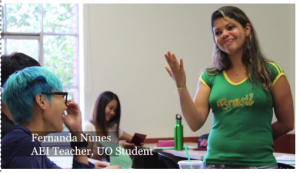
Mylece Burling received her BA degree from UO with a major in Romance languages in Portuguese and Spanish. She joined LTS in 2012 and graduated in 2013. Her MA project was titled, “A Teaching Portfolio of Workshop Tasks for Brazilian English Teachers Applying for the HE/Capes Scholarship”. She is shown here (on right, as Malificent, the evil stepmother of Snow White) with another teacher and some of her students at Halloween.

What was your MA project about?

My MA project was a teaching portfolio of English language tasks for English teachers in Brazil. The objective was to help non-native English teachers to navigate the pragmatic and linguistic language barriers of the scholarship application, in order to enable them to continue their professional development as English teachers.

What did you learn in LTS that are you using as a teacher now?

LTS has helped me to begin to develop the ability to effectively select activities and plan lessons that are relevant and useful for my students. It provided a framework that I have been using as a way to structure my lessons. It has helped me to organize and analyze my teaching in a way that I can view my lessons objectively, evaluate and try to change and improve.

What did you find most challenging as a new teacher?

Student motivation. Of course as a new teacher my lessons could be more effective; however, if students are not also somewhat self-motivated they will not learn. The importance of student motivation was something I could not understand without real life teaching experience and it is something I wish I would have spent more time on during LTS. Inspiring one’s students to teach themselves is the ultimate goal of any teacher.

You are now teaching English in Spain, but also pursuing other interests dear to your heart. Can you describe what you are doing, and why you chose Spain?

I first came to Spain through the “Auxiliares de Conversación” program and taught English to all levels in a public elementary school for one year in the city of La Coruña, in the Northwest of Spain. Currently I am teaching English part time at a private academy in Madrid. I teach all levels and all ages from primary to retired adults, absolute beginners to nearly bilingual. Due to the economic situation in Spain many citizens are searching for work outside the country. As English is the language used for communication among citizens of different countries for matters of business and tourism, there is a high demand for English education in Spain. My LTS degree has been indispensable in finding work here as it provides access to better positions in better schools.

In addition to my work I am also studying sculpture at one of the official state-sponsored art schools, for which I moved to the capital, Madrid. After this first year I intend to specialize in wood or stone. Europe is the basis of the history of Western civilization and art. Being in this environment has contributed to my continuing education of art history, providing inspiration and a solid background for my artwork. I intend to stay in school as long as possible, though it has proved considerably more challenging to study art on a professional level than I originally thought.

I also enjoy rock climbing which has been popular in Spain since the birth of the sport in France and is world famous for its limestone cliffs in the northeastern mountain ranges. Last year I was able to find more time to travel and climb, while this year it has been hard to find time for everything.

What advice to you have for current or prospective LTS students?

My advice to current and prospective LTS students is not to forget the importance of your peers as a resource. While you are together try to learn as much as possible from one another.

Alumni spotlight Fernanda Gonçalves

Fernanda Gonçalves (formerly Nunes) graduated from LTS in 2013. Fernanda was already an experienced English teacher in Brazil who had participated in the American English Institute’s E-Teacher program before she joined LTS. In 2013 while she was at the UO, Fernanda was the subject of a slideshow project by UO Journalism student Nicole Trumbo, who documented some of Fernanda’s hopes and dreams as an international graduate student (while Fernanda also was learning Salsa dancing).

Screenshot 2015-09-23 14.29.15

http://blogs.uoregon.edu/ntrumbosu13gateway/audio-slideshow/

Looking back on this slideshow, what is your reaction now?

In this slideshow I cite the goals that made me go to the US. And now looking back I see they were all accomplished.  Now I have a better job, I am a better teacher and I have more time for my daughter…which means that I am also a better mom!

What and where are you teaching now?

I am teaching English as a foreign language at a Federal Institution for high school students and it has been the job of my dreams. I am deeply happy and grateful for being a federal teacher now.

What is an example of something you learned in the LTS program that you still use today?

To better plan my classes, there is no better lesson plan format than the one I learned in the LTS program. It has helped me tremendously and thanks to it, my lessons have become more coherent and my students have been learning much more and much better now.

What is your best memory of LTS?

To choose a best memory is almost impossible because I had so many. I learned so much with all the classes that I had. All the professors not only taught me unforgettable lessons, but they also inspired me for life. The cohort was also so amazing. Each unique classmate was so special to each other that we all became a big family. We were always together…to study or to party…we could always count on each other. However, if I have to mention a very special moment, it is my master’s project presentation. I could not believe it when I saw most of my friends there for me, not only from the cohort, but also the friends I had made inside and outside the University of Oregon. My AEI students were also there and some of my professors. So, when I started my project presentation, I knew I was among friends…and it gave me the strength and confidence I needed to try my best. Seeing that room full of friends not only gave me one of the best experiences/memories of my life, but it also showed me that when one has friends, one has it all!

Alumni spotlight Sothy Kea

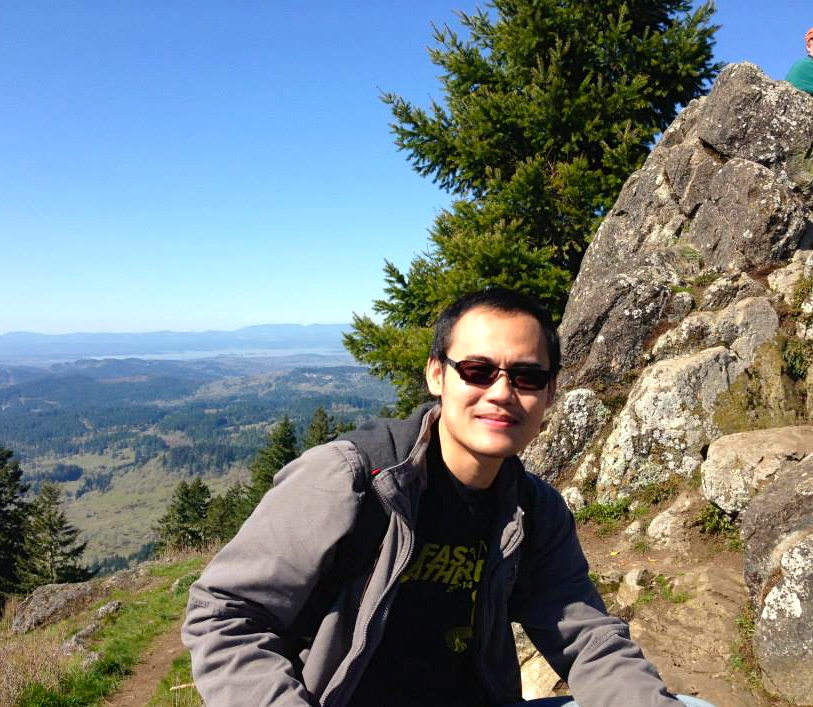
Sothy Kea was a Fulbright student from Cambodia who graduated in 2014. His MA Project was titled, “An Integrated Oral Skills English Pronunciation Course for Cambodian College Students”. Below he shares his current perspective on what was most useful and memorable from his time in LTS (photo below is at Spencer Butte, Eugene, OR).

What did you want to accomplish when you applied to the LTS program?

When I first applied to the program, I wished to improve my knowledge about English language teaching methodology, research, linguistics, and curriculum design. Upon program completion, I was hoping to provide assistance in revising curricula, conducting workshops, and teaching in the undergraduate and graduate teacher training programs at my workplace: Institute of Foreign Languages, Royal University of Phnom Penh.

KEA Sothy 1What is your teaching or administrative position now?

Now I am holding two positions. I am a university lecturer teaching in a Bachelor’s Degree in a TEFL program and a Master’s Degree in TESOL at the Institute of Foreign Languages, Royal University of Phnom Penh. I am also a Language Program Manager at CIA First International School in Phnom Penh, Cambodia. In this position, I am responsible for managing various language programs at the school. At the moment, I am managing the General English Program, and in the future, I will expand this program and develop other language programs.

Now that you have returned home, what do you think was most useful from the LTS program?

The curriculum of LTS Program is of sound quality. A large number of subjects that I took are both directly and indirectly relevant and useful for my current work. For instance, I am currently teaching the same subject of Academic Writing for Graduate Students in MA in TESOL and teaching Applied Linguistics subject in BA in TEFL Program at my university in which a great deal of knowledge and content of English Grammar and Linguistics Principles and Second Language Acquisition courses  are relevant and useful. Plus, working as the Language Program manager, I have to revise the current curriculum and develop new ones. Thus, the Curriculum and Materials Development course and my curriculum design Master’s project are of great help to me. They allow me to analyze the program, effectively identify its problems, and propose feasible solutions. The rest of the subjects in LTS have also indirectly contributed to my understanding about language learning and teaching and better teaching performance.

What is one of your favorite memories from your time in Oregon?

If I could recall, one of my favorite memories in Oregon is my graduation day. This is one of the best moments of my academic life at UO. It marked the achievement of a milestone and the great result of hard work throughout the program. I was so excited to have such achievement and to see my cohort having the same feeling. It was also fantastic to have the presence of my professors, friends, and relatives on this special occasion. The moment I received the certificate on stage was when I thought to myself that “this is the result of not only over one year of sweat and blood at the UO in the USA but also a whole life of education, and I am thankful to all the people who are part of this”.

Alumni spotlight Beth Sheppard

Beth Sheppard graduated from LTS in 2008 and is now an Instructor at the American English Institute (AEI). Her MA project title is, “Bringing Your Language Home: A Workshop and Materials for Pacific Northwest Families Involved in Language Revitalization”.

What did you value most from the LTS program?

My favorite part was the sense of community among our cohort of students and with our instructors. I really enjoyed getting to know every single person I studied with, whether it was collaborative class work, cohort lunch gatherings, professor office hours, or learning from my project advisor. I also remember how much I enjoyed the taste of theory we were treated to in the first summer term. These were yummy classes!

What did you learn in LTS that you still use in your teaching today?

I’d say the attitude we worked under was more important than any piece of information. In the LTS program we practiced cooperating with colleagues and focused our explorations of teaching on meeting students’ actual needs. These key principles are still the basis for my teaching.

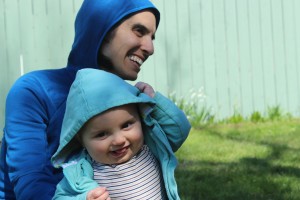
What advice would you give to new LTS students?bethandtoby

Try to open yourself to every topic in every class. The ones you don’t think you’re excited about might end up being the most memorable. Pick a topic early for your project. Read your way into the literature over winter break.


My LTS Experience: Wedad Al-lahji

My LTS Experience

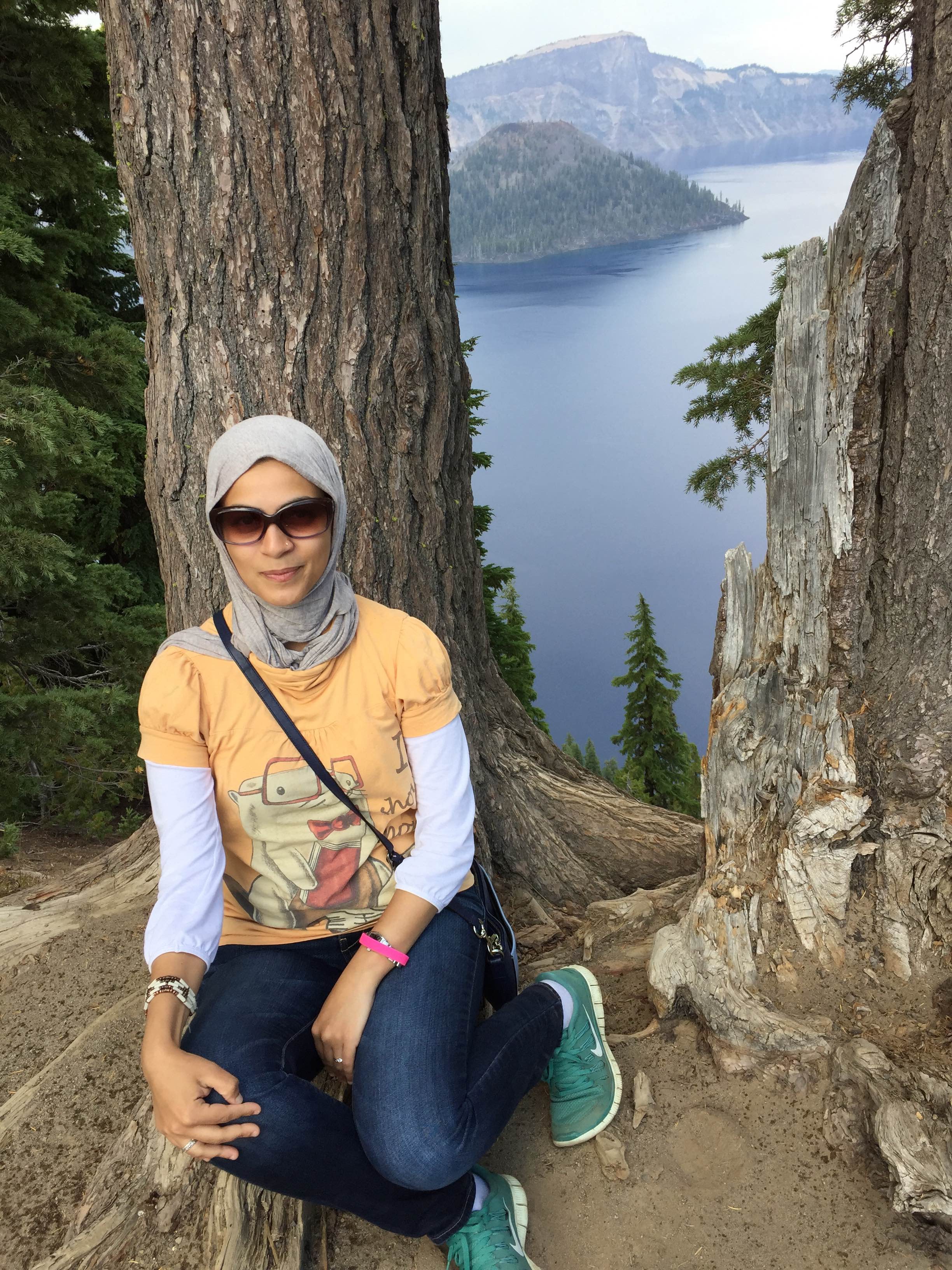
by Wedad Al-lahjiWedad A

For an international student who has never lived in a foreign country before, who is a mother of three daughters, and who has not been in school for eight years, beginning the program was scary but eventually turned out to be the most wonderful rewarding experience. Through the two years I spent in the program I learned and experienced a lot through being in an encouraging friendly environment.

My first term in the program was scary and very challenging but my teachers were so supportive and provided me with guidance about how I can meet my courses’ requirements. After that, it was easy for me to take responsibility for succeeding in graduate school with all the scaffolding we have in the LTS program.

Besides the great amount of academic knowledge I learned in different courses, I had the chance to be in different teaching experiences through teaching in Yamada Language Center, leading the Arabic Circle in the Mills International Center, and different internships. My first internship was in a second year Arabic class. It was so helpful because I was not familiar at all with this context – teaching Arabic in a foreign context. It also prepared me for teaching my own class at Yamada. The second internship was at Center for Applied Second Language Studied (CASLS). I worked with my friend on creating online Arabic reading and listening lessons for students learning Arabic. It was also a great experience of creating language-learning materials.

My third and last internship was in an English Oral Skills 1 class. It was surprising for me how it is possible for communicative interaction to take place in such a beginner level class. There were a lot of opportunities for students to communicate and express themselves with what language they had. What was challenging and interesting at the same time was to prevent myself from using my L1 (Arabic) that I share with some students especially because it is difficult sometimes to use English all the time with novice learners. However, I succeed in that and learned how to find ways to communicate with the students. This experience was so rewarding and I will always remember the first time I was teaching in that class and how all the students there were so supportive, participated, and interacted very well with my instructions.

Finally, I highly encourage any international student thinking of joining the program to apply. The program is designed very well to help students accomplish their teaching goals, and there is a great friendly international community at the University of Oregon.


Wedad is 2015 graduate of the LTS Program from Saudi Arabia.  The title of her MA project is Implementing Communicative Language Teaching in Saudi Colleges’ English Preparatory Programs.

Alumni Spotlight Yukari Furikado-Koranda

Yukari photo

Yukari Furikado-Koranda earned her MA from LTS in 2010. She is a Japanese Instructor in the Department of East Asian Languages and Literatures at the University of Oregon. Her MA Project was titled, Online Tandem Learning Materials for Japanese Students and American Students: A CALL Teaching Portfolio. This portfolio took advantage of the LTS focus on multiple languages by integrating both Japanese and English language instruction into one project.

What attracted you to the LTS program originally?

I liked LTS program originally because you can complete the MA program in five consecutive quarter terms (15 months). That was very attractive to me because I was working as an full-time English teacher in Japan before coming to this program and I wanted to get MA in Linguistics as soon as I could so that I could go back to Japan and continue to teach. However, I had the great opportunity to teach Japanese classes as a TA and I found out that teaching and studying at the same time was very challenging, so I decided early in the program to take two years to finish LTS so that I can spread out the required courses a bit, which turned out to be perfect for me.

What did you learn in LTS that you still use in your teaching today?

I still use the narrative fluent speaking activity that I learned in an LTS class.

This activity goes like this. I have students think of a time they traveled somewhere (could be any topic) and have them tell a story to their partner in 3 min. After that, change the partner and have them tell the same story in 2 min. Then again have them tell the same story to another person in 1 min. Telling the same story to a different classmate over and over and having a time pressure helps them practice speaking fluently. My students love this activity!

What advice would you give future LTS students?

I suggest that you make good use of the opportunity to go observe teachers’ classes. The LTS program gives us many opportunities to go observe different teachers teaching in different settings. When I was in LTS, I was able to see teachers teaching English at the AEI at UO, Japanese in K-12 in Eugene and also in the Japanese elementary immersion school. I appreciate these wonderful opportunities because I could learn so much from seeing how others are teaching. That was a priceless experience for me and I bet you will feel the same!


Alumni spotlight Brandon Bigelow

Screen Shot 2015-05-16 at 9.56.12 PM

Brandon Bigelow earned his MA from LTS in 2013. For his MA Project, he designed a content-based elective history course for ESL learners studying at the American English Institute at the University of Oregon. He was later able to teach this course a few times when he became a full-time instructor after graduation.

What is your favorite memory in LTS? 

My favorite LTS memory? There are countless to choose from. The support system from both my classmates and the faculty is a distinguishing feature. There was so much camaraderie and and congratulating for finished projects and presentations…and phenomenal birthday parties. However, the sympathy and encouragement during the inevitable lows cannot be understated. I, like many others, could not have done this alone, and am tremendously grateful for the beautiful souls who were placed around me.

What was most valuable for you from the program? 

The most valuable part of the LTS program was to get a taste of the many different aspects of teaching. The “2D language teacher” simply teaches and does a little grading. The “3D teacher” thoroughly considers the context and goals of the class, creates meaningful materials and curriculum, and works with many other people and resources outside of the classroom. And does a LOT of grading. Language teaching is an incredibly nuanced craft, but since I was exposed to so many facets, I have never felt completely overwhelmed in the teaching process.

What advice do you have for current or future graduate students?

Advice? Stay positive. Stay positive. Stay positive. Take things one day at a time. Take advantage of your valuable resources (your esteemed professors). Take care of yourself too. Remember that you are not doing this alone. Ask too many questions. Give hugs. Give compliments. Give smiles. Breathe.

Alumni Spotlight Ahyeong Kim

Screen Shot 2015-05-16 at 9.55.50 PM

Ahyeong Kim earned her MA from LTS in 2013. She extended her stay in Eugene by doing OPT (Optional Practical Training) teaching Korean at Lane Community College and developing a curriculum project for CAPS (Center for Asian Pacific Studies). She just returned to Korea and will be pursuing additional certification to teach Korean in a public school there. Her MA Project, titled “A Project-Based Korean Course for Young Learners in the U.S.”, was inspired by her student-teaching in the Korean afterschool club at Willagillespie Community School in Eugene.

What is your favorite memory in LTS? 

Parties! I would say “Library parties” and “Birthday parties”. Our cohort got together very often for studying and socializing. There was a table (I called it LTS table) near the microform information desk where I found my classmates studying. We sometimes ended up going to a bar after a long day of studying, which was fun. We also had lots of birthday parties for each other, almost every month!

What was most valuable for you from the program? 

LTS gave me concrete ideas of becoming a language teacher. I simply thought that I could be a teacher after finishing the program. However, I had opportunities to practice in real teaching environments throughout the program and I found myself really enjoying preparing for class and interacting with students.

What advice do you have for current or future graduate students?

LTS is a pretty intensive program. Don’t be panicked though. You can achieve your goals in the program by interacting with the faculty and classmates. Ask for help when necessary. LTS faculty and your cohort are on your side. I was very fortunate to have 2012-2013 cohort and great faculty because they were willing to help me whenever I needed.