Keli Yerian in South Africa

LTS faculty often travel internationally as part of their work, since language teaching and learning is often very connected to international interactions. This week’s blog feature’s LTS Director Keli Yerian’s unusually far-reaching travel this past week in early July – to the southern tip of Africa in Capetown.

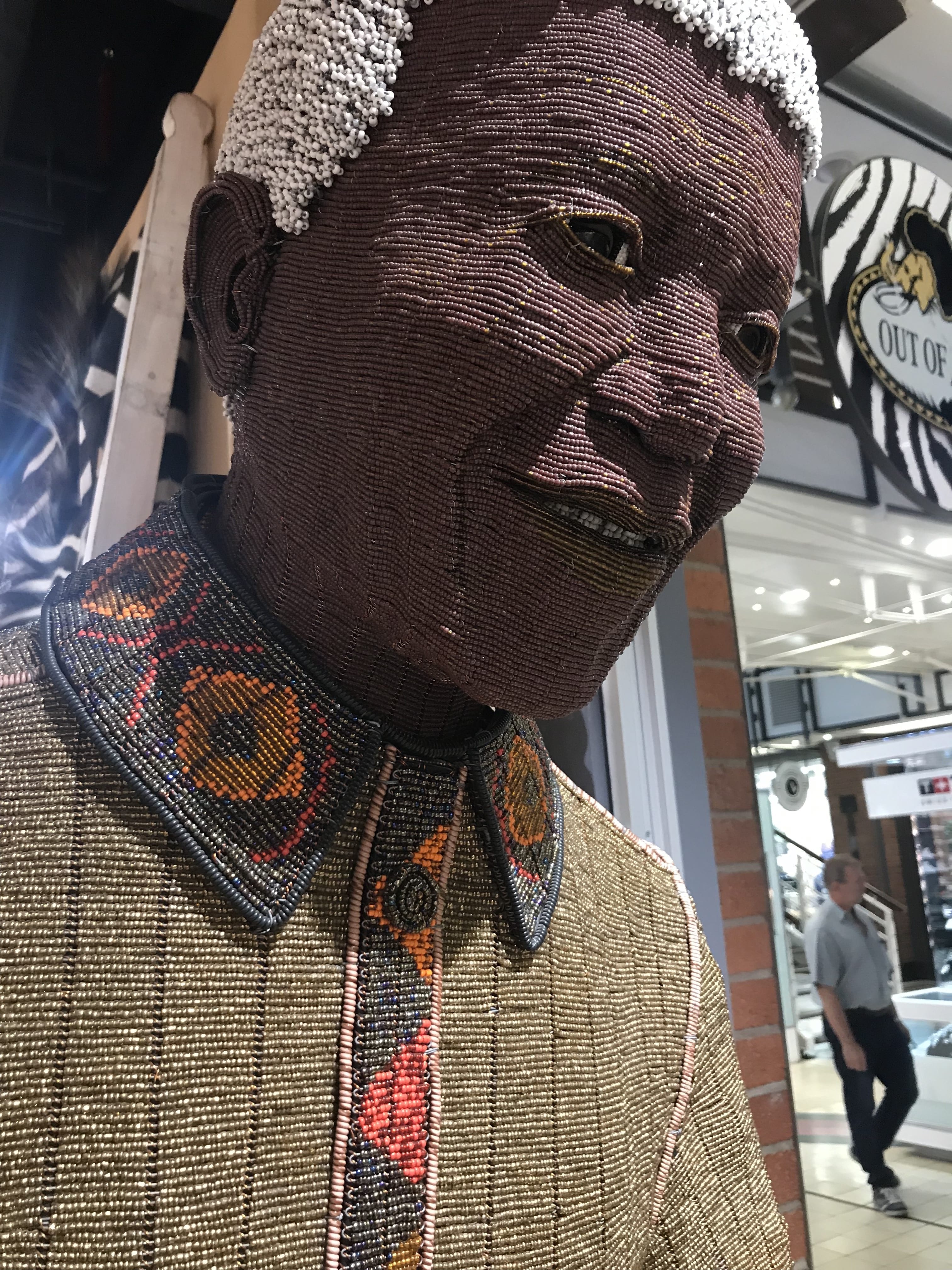
A sculpture of Mandela made of beads

Why were you visiting Capetown?

My research interests are in language and gesture, particularly in how language teachers learn to use their bodies as an integral part of language teaching when the learning context is face-to-face. There is an association called the International Society for Gesture Studies that holds a conference every two years, and this year it was held in South Africa.

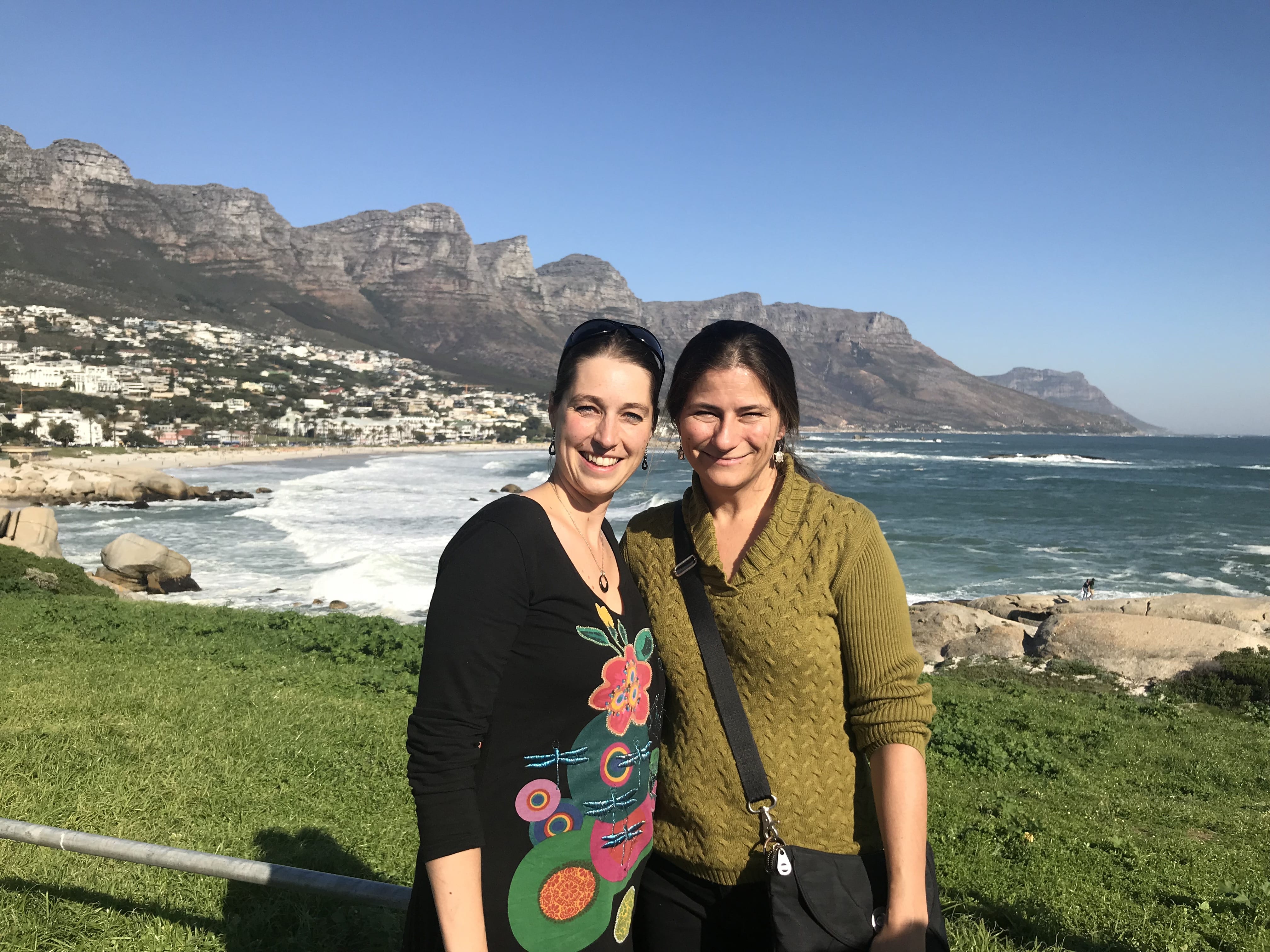
Marion and Keli

Did you present at the conference?

This time I presented with my colleague from France, Marion Tellier, which whom I am co-authoring some comparative  research studies with data from our program in LTS, and the MA teacher education program she directs in France. We are noticing some similar patterns of gesture development in both programs, as well as some contrasts that may be related to differing educational and cultural contexts. We are both very interested in how typical co-speech gesture becomes more stylized and conventionalized in specific ways when used in pedagogical situations for depicting content and for serving pragmatic purposes in interaction. Unfortunately we forgot to ask someone to take a photo of us presenting, so I can’t show one here!

Sitting at the top of Lion’s Head – what a climb!

Did you do anything else in Capetown?

For most of the conference, we were always in the same conference hotel. Breakfasts and lunches were all provided there. Unfortunately, exploring around the city after dark was not safe in the heart of the city, so we only went out to dinner in groups to nearby places. The legacy of apartheid was very apparent all around us, and safety issues were just one aspect of this. It was only about 25 years ago that explicit discrimination was ended in South Africa (people of color were denied equal rights in most imaginable ways), and one generation is not enough to change the effects of racism and unequal access to resources and opportunities. We were lucky to meet a few South Africans who talked to us quite frankly about this legacy, which we appreciated.

This is what it looked like climbing up Lion’s Head

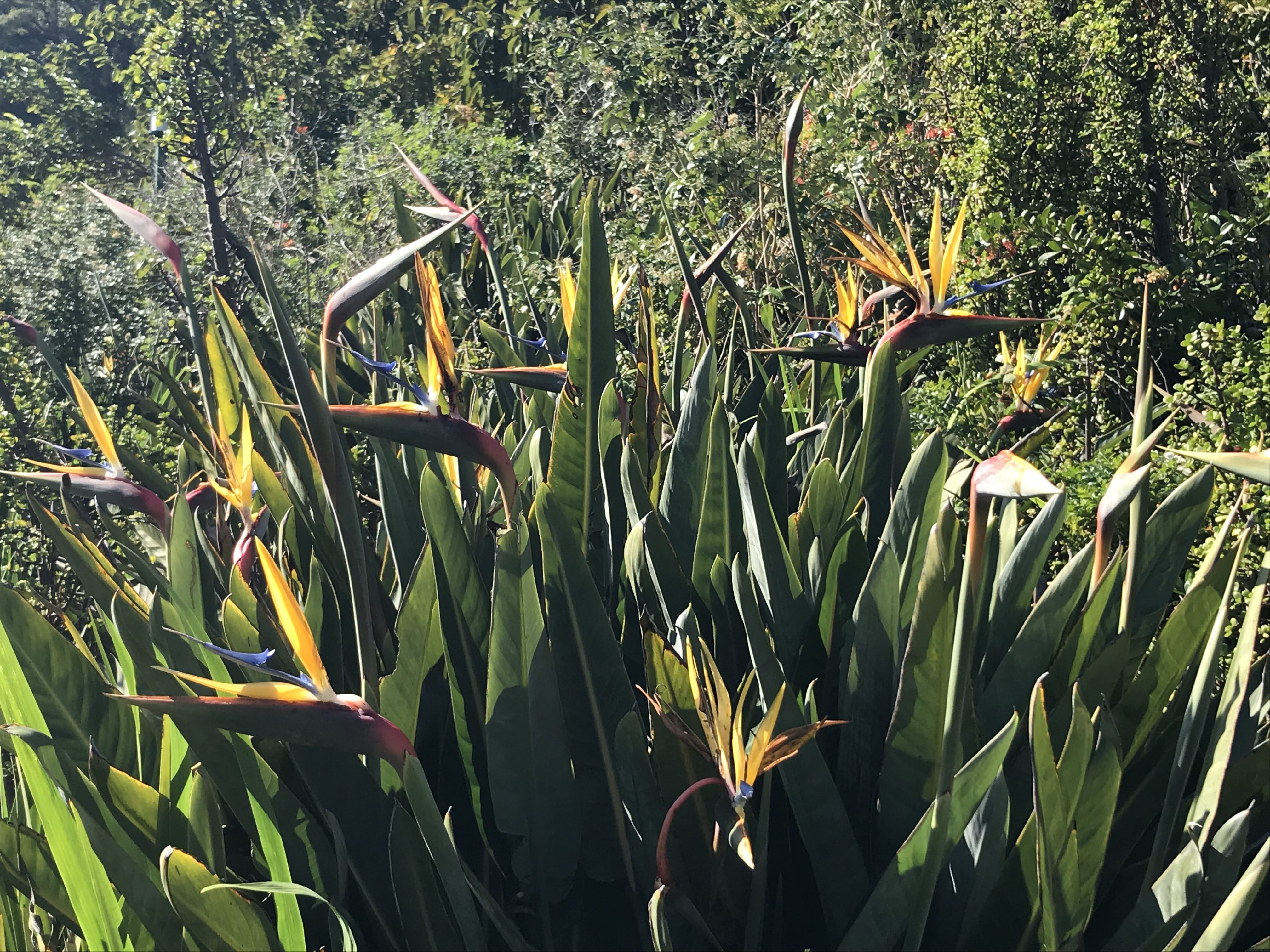
vigilant birds of paradise

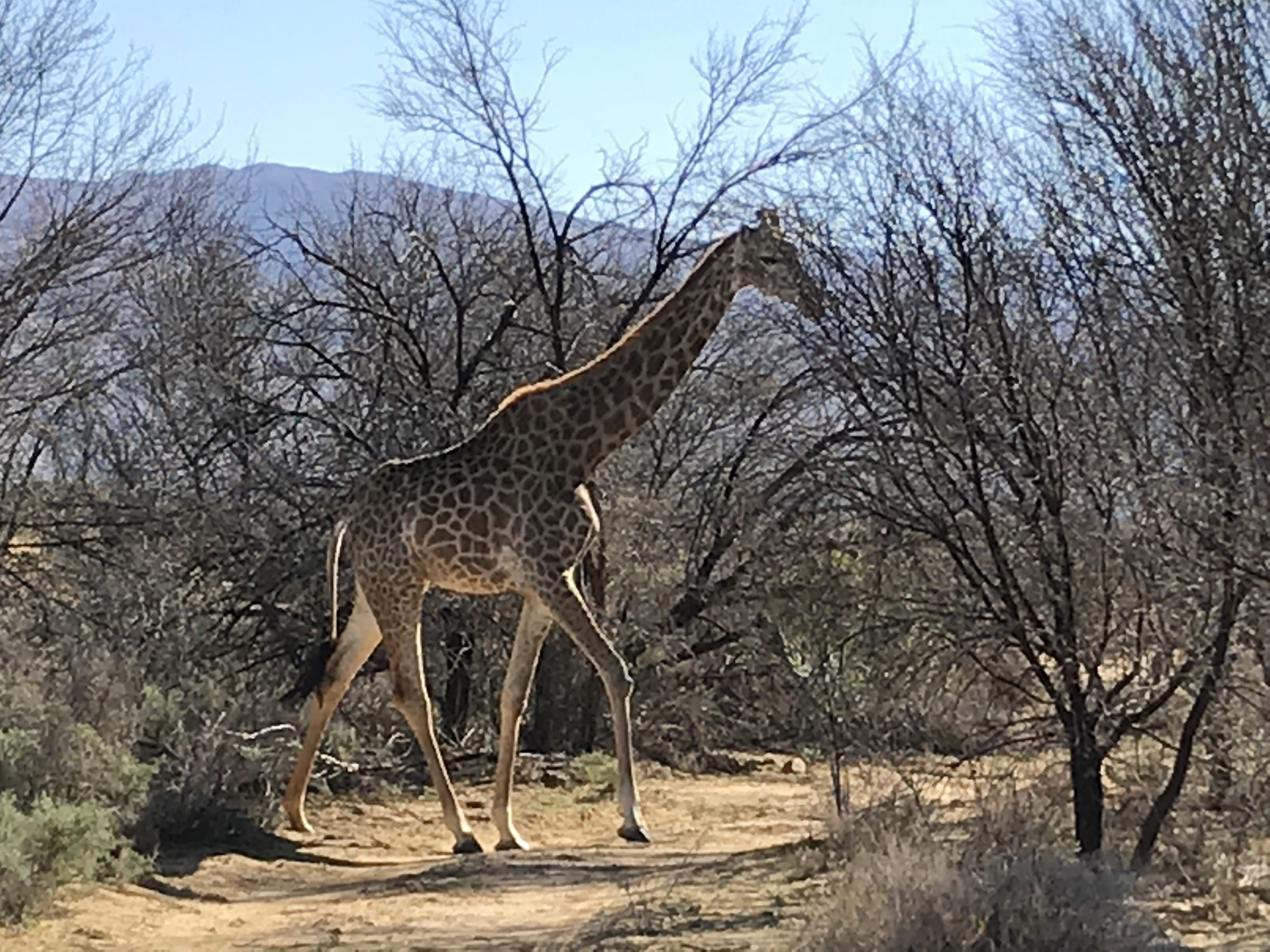
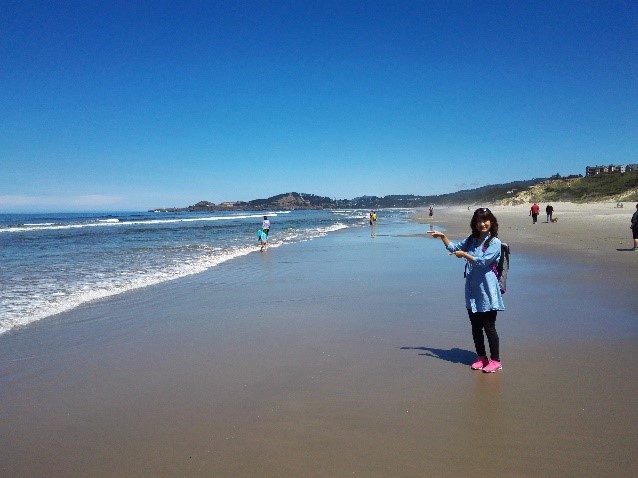
We did spend the last days combining work with fun trips. Some of us hiked to the top of Lion’s Head, which involved literally climbing up ladders built into the cliffs and pulling yourself up chains, and we visited an animal reserve where we saw lions, cheetahs, giraffes, and elephants. We also went to the very end of the cape – the tip of the continent of Africa – that was impressive! Finally, we visited the famous botanical gardens. The birds of paradise flowers looked like a flock of cranes peering out of the bushes.

It was the middle of winter there, so the weather was cool. Luckily the country had recently had some good rain; there was a water crisis before we arrived that was better by the time we were there, but we still took 30 second showers and didn’t let faucets run. It made me really appreciate the delicious water here in Eugene.

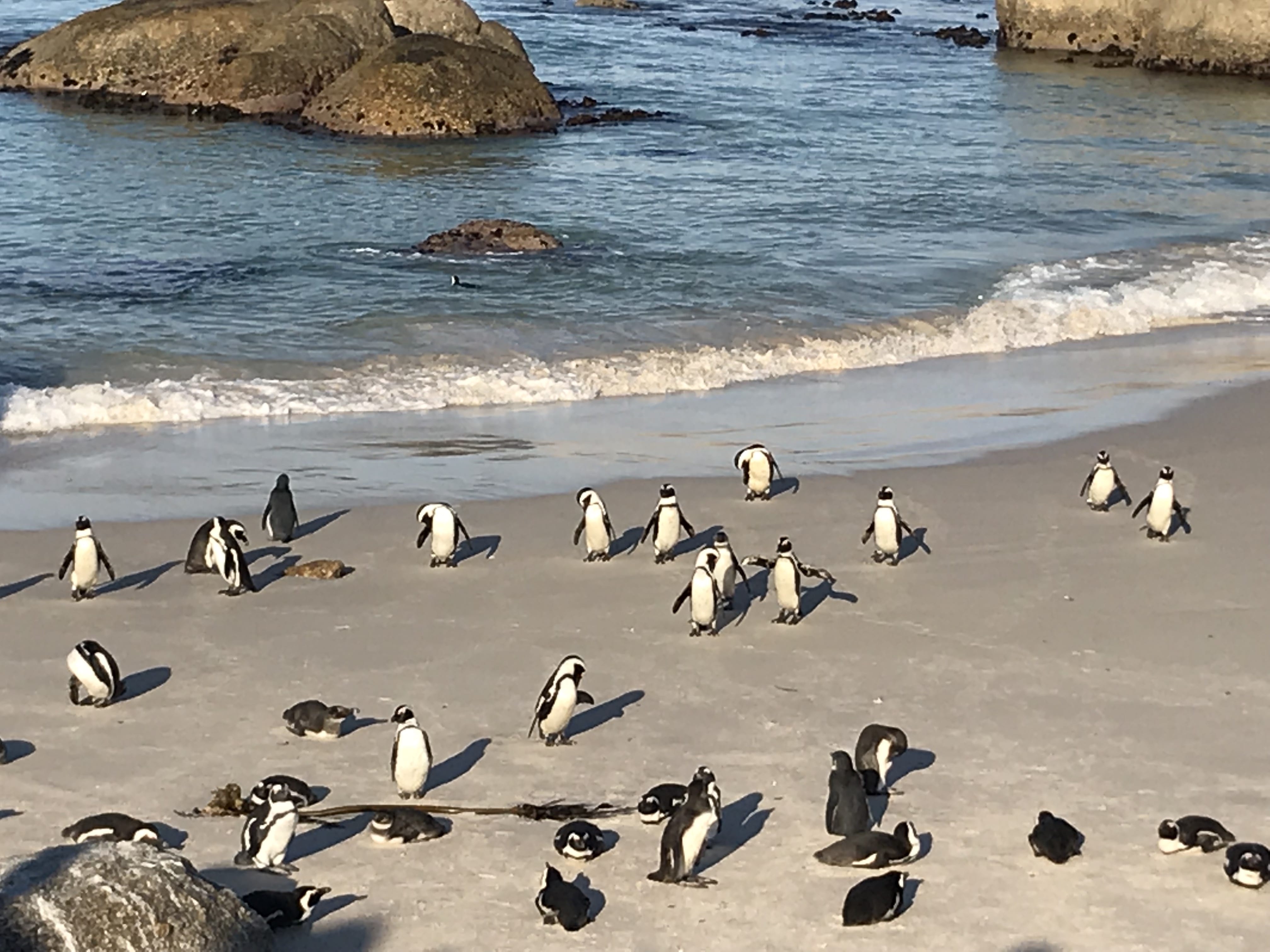
Did I mention the penguins? Yes, penguins in Africa.

I doubt I’ll ever return there, but if any of you get the chance, I recommend it!

MA Project Spotlights: Logan Matz and Ngan Vu

This summer term we are highlighting the final M.A. projects of the soon to be graduating LTS cohort members. This week we are pleased to feature Logan Matz and Ngan Vu.

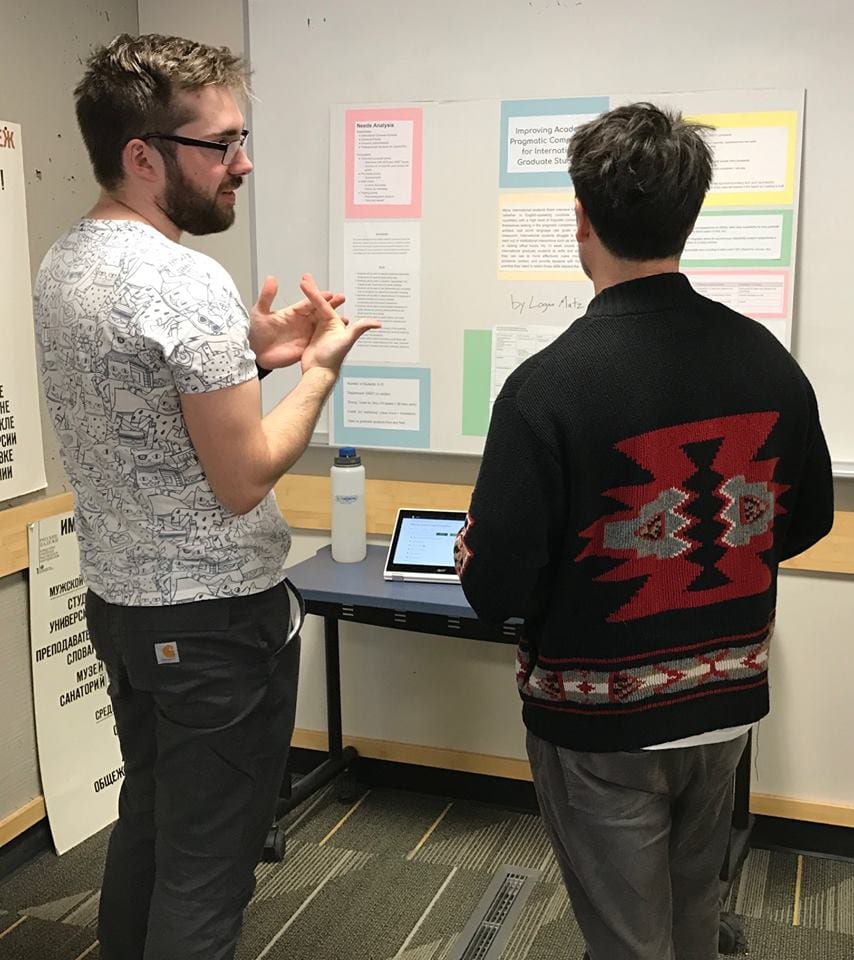
Logan Matz (left) discussing his project idea with LTS faculty Robert Elliot.

Hi Logan! What is your M.A. project about?

My project is a teaching portfolio designed to improve pragmatic competence for international graduate students studying in the US. International students have to meet a certain language proficiency level, but there’s no corresponding assessment for pragmatics in widespread use yet. Grad students have more responsibilities than undergrads, and so they deserve a correspondingly larger amount of help with adjustment to US academic life.

How did you become interested in this topic?

I’ve always been interested in how people use language, and so pragmatics was a natural fit. Several friends of mine have had experiences where they felt less-than compared to native speakers of English in an academic setting, and I don’t think anyone should have to deal with language getting in the way of expression of knowledge. If I can help people show their smarts, and not feel limited by their language skills, then I’ll consider that a success.

As LTS faculty member Jeff Magoto asks, in your opinion, what is the coolest/most interesting part about your project?

So far, I’ve been trying to put a really big focus on student-created examples for all of my activities. I think that with all the extra work and responsibilities that grad students have to do, on top of the challenge of doing graduate work in your second language, the barrier to entry for getting into the nitty gritty during my activities should be as low as possible. Additionally, the international students in this year’s LTS cohort that I’ve talked to all say that these sorts of activities would be really useful for them. If that’s not a ringing endorsement from the students who would actually benefit from a project like this, I don’t know what is!

Anything on your Eugene summer bucket list?

Try not to die of heat stroke. I’m a frail little Washingtonian. I’d love to summit South Sister before I leave, also!

Ngan presenting her MA Project idea at the graduate student poster session.

Hi Ngan! What is your M.A. project about?

My project is a teaching portfolio focusing on using extensive reading as source texts to support writing fluency.

How did you become interested in this topic?

My interest comes from my personal experiences as an international student studying overseas. I struggled considerably in an English composition class when I first came to the United States and tried hard to figure out how to adapt to the writing conventions in another language. Therefore, I would like to find a way to make writing less intimidating for ESL/EFL learners and let them know that they all have the capability to be a good writer in their own way.

As LTS faculty member Jeff Magoto asks, in your opinion, what is the coolest/most interesting part about your project?

The coolest/most interesting part… I don’t have a specific answer for this question. I just feel that I am currently working with many variables, experimenting with new concepts and trying to put those into a concrete portfolio. How my project looks like at the end is still a mystery for me at this moment but I hope it is beneficial.

Anything on your Eugene summer bucket list?

I would like to hike more and spend more time enjoying the beauty of Eugene with friends in the summer. Time flies.

MA Project Spotlights: Alexis Busso and Lee Huddleston

This summer term we are highlighting the final M.A. projects of the soon to be graduating LTS cohort members. This week we are pleased to feature Alexis Busso and Lee Huddleston.

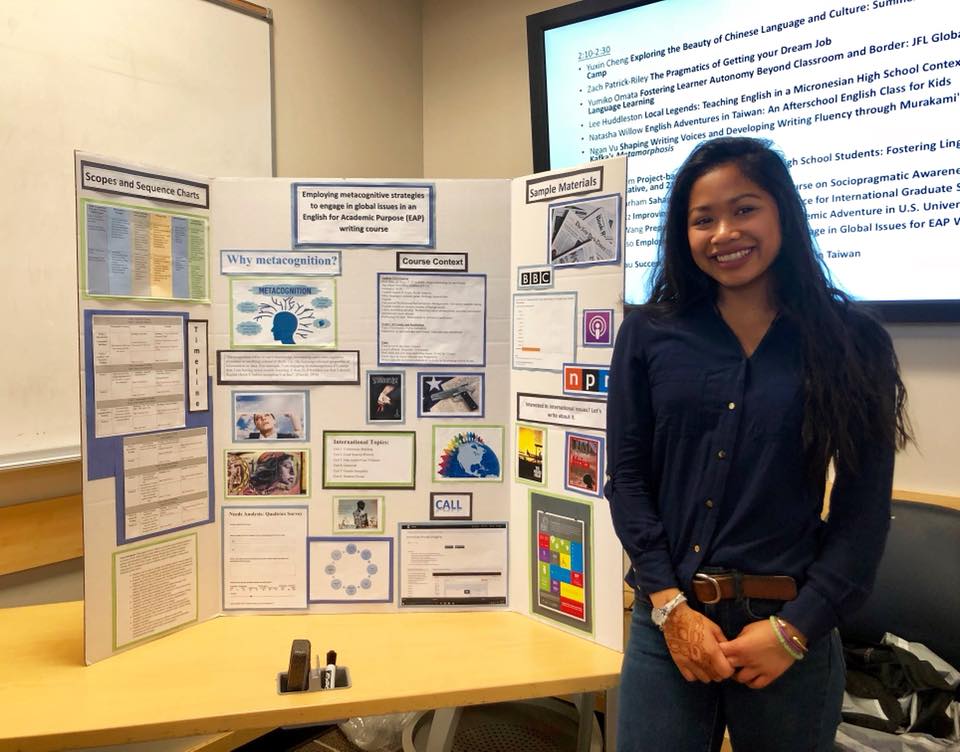
Alexis presenting her initial course design at the LTS poster session.

Hi Alexis! What is your M.A. project about?

My M.A. project is a course design about employing metacognitive strategies in a writing course. The proposed course design is an intensive writing class where writing genres are supplemented by global issues topics. The focus of the project is for students to engage in academic writing while learning about different issues both on a local and international level.

How did you become interested in this topic?

I became interested in this topic for a variety of reasons. In the lesson planning class that we took in the Fall, I wrote a research paper about metacognitive strategies and that is when I was first introduced to the study of metacognition. Furthermore, my undergraduate study was in International Studies and this field has had a profound influence in my worldview. My M.A. project is a combination of my interests and passion.

As LTS faculty member Jeff Magoto asks, in your opinion, what is the coolest/most interesting part about your project?

The most interesting part of my project is that I think it is the only project or one of the few which delves into other fields of study beyond education, foreign language learning, second language acquisition, etc. Moreover, although other students are focused on writing skill, mine is the only one that uses international topics as themes/subjects.

Anything on your Eugene summer bucket list?

Yes! Floating down the Willamette river is a must and endless hikes. I also have plans to go blueberry and strawberry picking and spending lots of time outdoors.

Lee presenting his initial project design at the LTS poster session

Hi Lee! What is your M.A. project about?

My M.A project is a teaching portfolio around the use of local legends as content in English language classrooms in a Micronesian high school context. This teaching portfolio will be designed so that the materials can be adopted or adapted to fit similar contexts. Using legends as content will provide students in isolated contexts with motivating materials that they can then connect to their own experiences, and use such texts to build their academic skills in areas of reading, writing, speaking, and listening. The activities and lesson plans in the portfolio would focus on areas of  language, culture, and experiential learning to use the materials to their fullest.

How did you become interested in this topic?

As I previously mentioned in this blog, I served in the Peace Corps as an English teacher in Micronesia for over 2 years. During my time in Micronesia, I became very interested in the local legends and stories of the islands. I also observed the challenges in education that the islanders face, and I drew the conclusion that using local legends rather than American English Language Arts textbooks would be beneficial to students in terms of utilizing their interests and prior knowledge to help them engage with English at a higher and more creative level.

As LTS faculty member Jeff Magoto asks, in your opinion, what is the coolest/most interesting part about your project?

I would say that the most interesting part of my project is the fact that it provides a bridge for learners by connecting their culture with English; giving value to their culture rather than presenting English as an identity that they must adopt in order to be speakers of the language. In the Micronesian target context, dependence on the United States is an issue that cannot be ignored, and changing pedagogy to be more empowering to students is an important first step.

Anything on your Eugene summer bucket list?

I want to take a more balanced approach to this term. Making room in my schedule to hike, exercise, and relax will all be essential as I finish this program. Maybe I’m a bit ambitious, but going to more music venues, and eating out at a few places I’ve been wanting to try are some other bucket list items. I am from Eugene, so my bucket list for my hometown is rather small at this point.

Alumni Spotlight Kai Liu

Kai Liu graduated from LTS in 2014 with an MA project titled Using Gamification in Chinese Teaching: A Gamified University Chinese Course for Advanced Students in the US.  She very quickly started working as a Chinese Instructor in an innovative program in one of the more beautiful places in the world… Hawai’i!  She recently stopped by in Eugene on her way home from a conference to say hello to her professors and friends. Read more about her path since LTS below.

Kai with some of her students

What is your position now?

I am the instructor of the Chinese Language Flagship Program at the University of Hawaiʻi at Mānoa. I develop materials and teach Flagship courses (advanced Chinese courses). I also teach beginning to intermediate-level Chinese courses at the East Asian Languages and Literatures (EALL) Department at UH.

Have you been involved in any special projects and/or conferences?

I am lucky to have been involved in the Green Ideas Simulation Project  spearheaded by the Language Flagship Technology Innovation Center (Tech Center). This project aims to prepare Flagship students for their internship during the Flagship Capstone Year abroad. I helped pilot this simulation project in one of my Flagship courses at UH. More specifically, I developed instructional materials on how to write resumes and cover letters in Chinese and how to prepare for job interviews in Chinese. I also created rubrics for various tasks in this project. In addition, I shared my instructional materials and pilot experience with the Tech Center and other Flagship programs. Now several Chinese Flagship Programs participate in this project each year. This project is expected to be piloted in more languages.

Kai knows how to enjoy teaching

Apart from the simulation project, I am also involved in revamping the beginning and intermediate Chinese curricula at UH. My colleagues and I are integrating blended learning and flipped classroom into these courses by creating more communicative activities, online instructional videos, and individualized learning materials.

Is there anything from your time in LTS that you still think about now?

Yes! The Computer Assisted Language Learning (CALL) courses are extremely useful! When I first started working at UH, I attended an online teaching orientation for faculty and I felt like I already knew how to use most of the technological tools mentioned in the orientation.

I also think about Professor Holland’s Second Language Teaching Practice class. I remember how excited both LTS students and AEI students were in a communicative class. To create the excitement I once saw in that class, I have been trying to invite more guests into my classes and provide opportunities for my students to use Chinese in local community events.

I still remember what Dr. Keli Yerian said in her commencement speech to my cohort: It is easy to fall back into traditional teaching approaches than applying what we learned in LTS to our classes. Her words serve as a daily reminder for myself to keep creating more communicative and engaging activities for my students.

How did you learn about LTS?

I first came to UO as an exchange student in the Oregon International Internship Program (OIIP). I learned about this program through Dr. Yerian and an LTS graduate Li-Hsien Yang.

Do you have any advice for current or future LTS students?

Apply what you learned in LTS program to your own classes. Challenge yourself and try new materials and new communicative activities. Do not be content with what you have.

Enjoy each other’s company and learn from each other!  I learned a great deal from other LTS students in and out of the classroom.

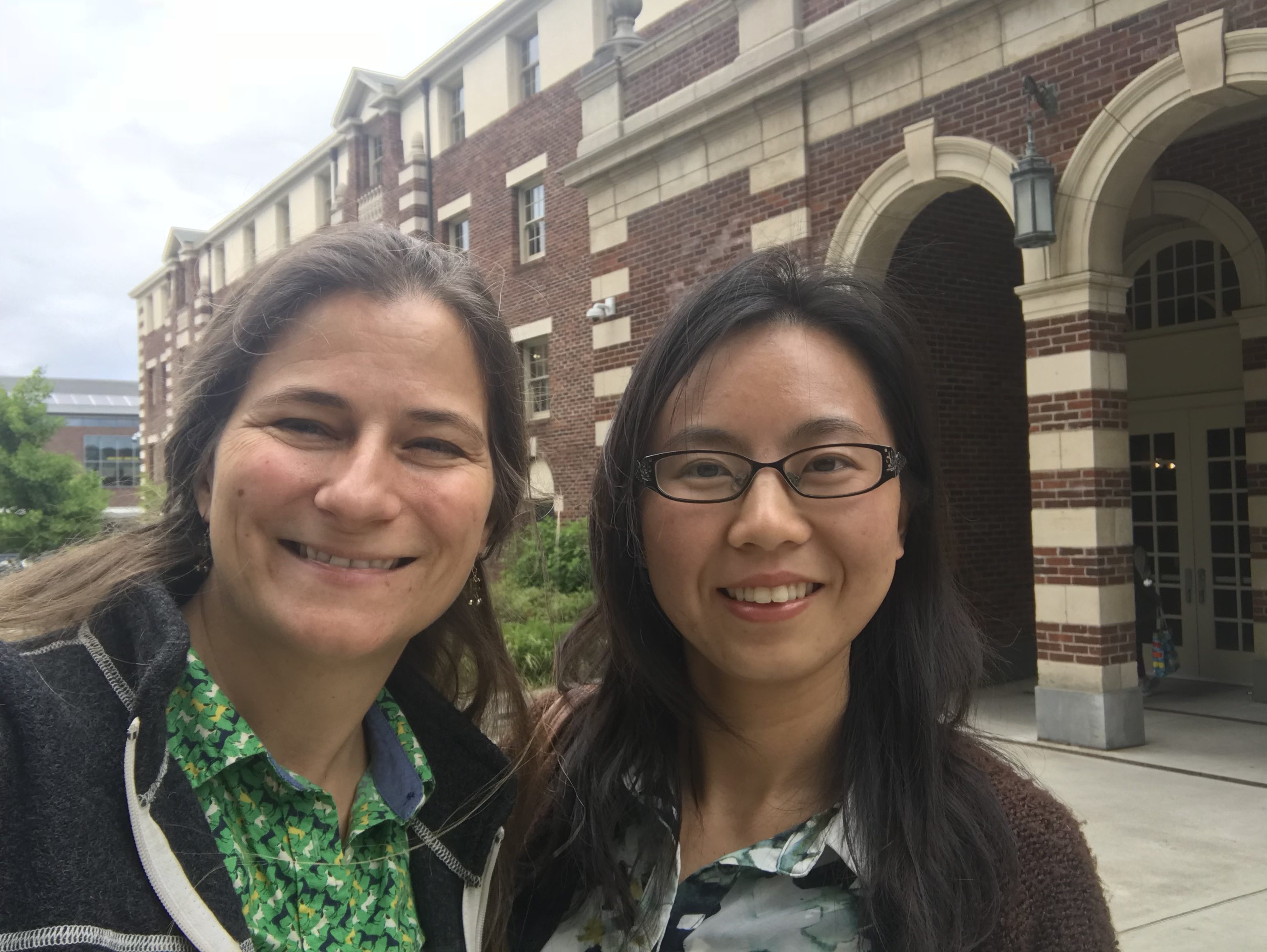
Keli and Kai outside Straub Hall in May

Faculty Spotlight – Robert Elliott in Costa Rica

In April, LTS faculty member and NILI Associate Director Robert Elliott travelled to Costa Rica to partner with the University of Costa Rica (UCR) in San José to offer 2 weeks of workshops for Indigenous language teachers.

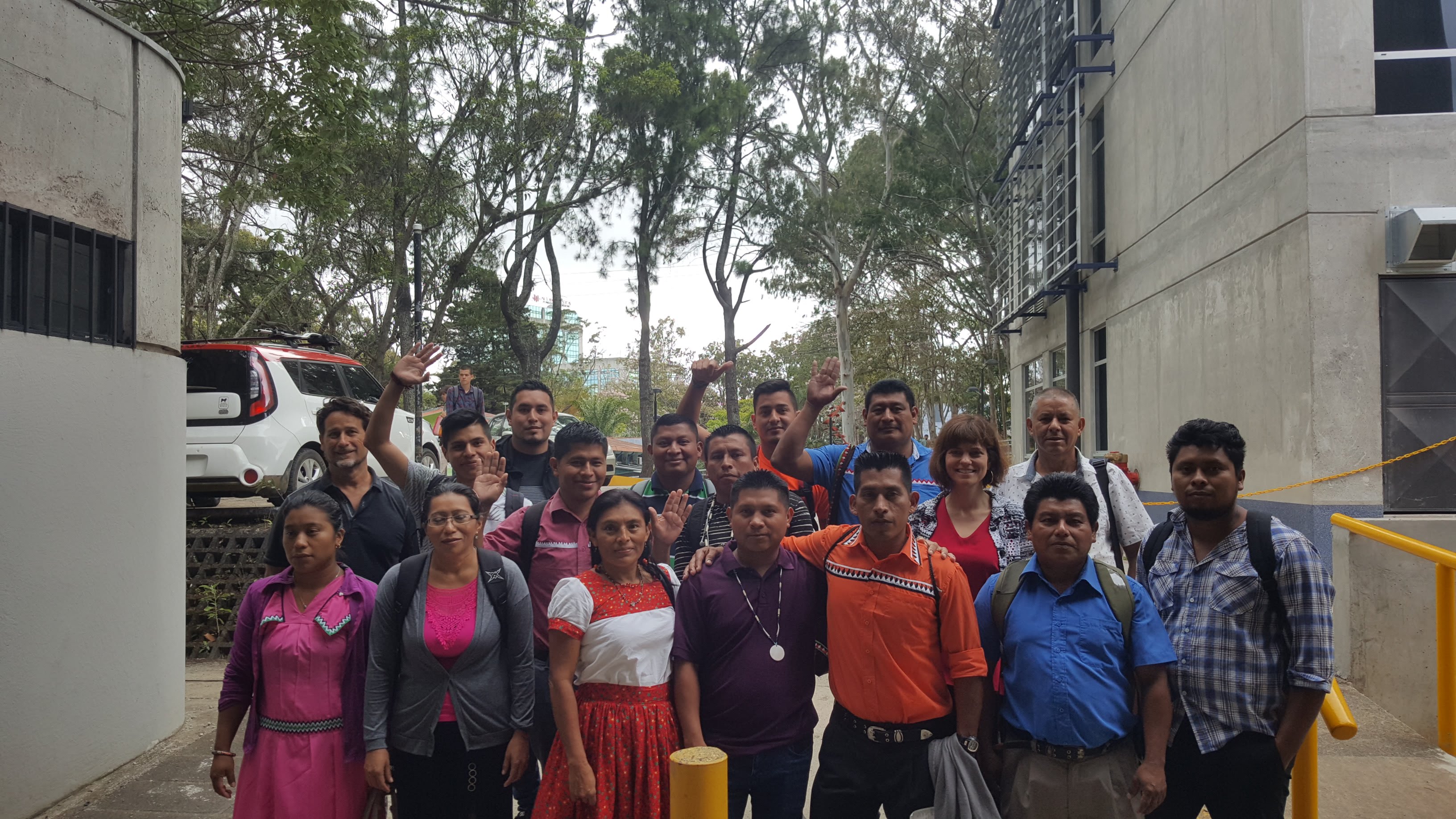
Robert (far left, back row) and the workshop participants in San José, Costa Rica

Tell us about your experience. Who did you work with in Costa Rica?

In partnership with Professor Carlos Sánchez Avendaño of the UCR linguistics department, and Kara McBride of World Learning, the workshops were developed for 15 Indigenous language and culture teachers from 7 languages throughout the country of Costa Rica.  The languages – Ngäbere, Buglere, Malecu, Bribri, Cabécar, Boruca, and Térraba – are in various states of endangerment, and the teachers work predominantly with middle-school aged children.

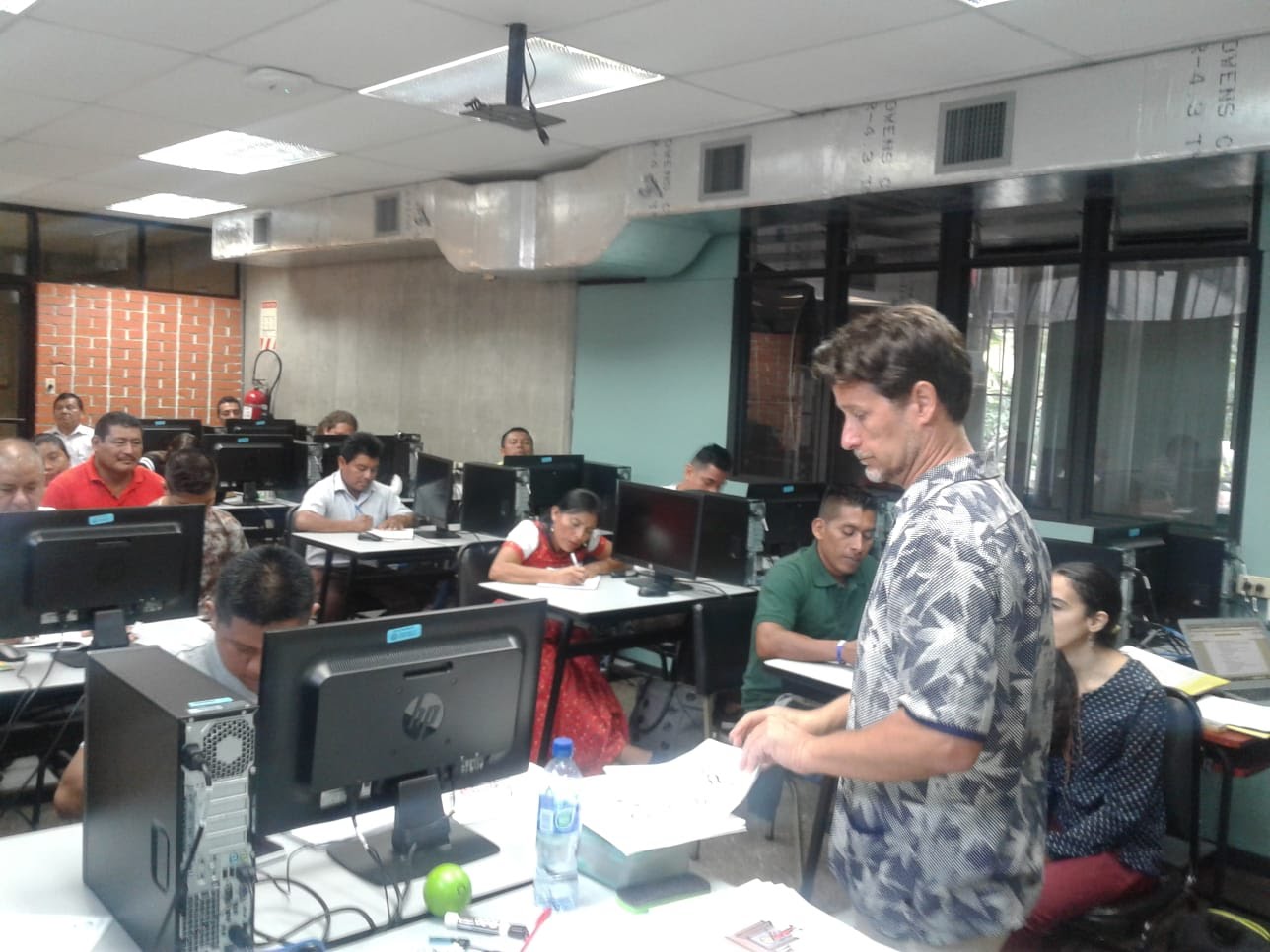
During a session about online teaching resources

How were the workshops structured?

The workshop was divided into two parts and were loosely based on the model of NILI summer institute classes. The first week, the teachers received training in pedagogy in the morning hours while the afternoon was geared towards learning to use technology tools and generating ideas for making greatly needed language learning materials for their classes. The second week was centered around giving time and support for the teachers to build materials to take home to their communities and share new ideas with other teachers. On one of the last days, the group was able to visit Carlos’ “Languages of Costa Rica” university class, and the teachers all got to use some of their new techniques to teach his class a bit of their languages.

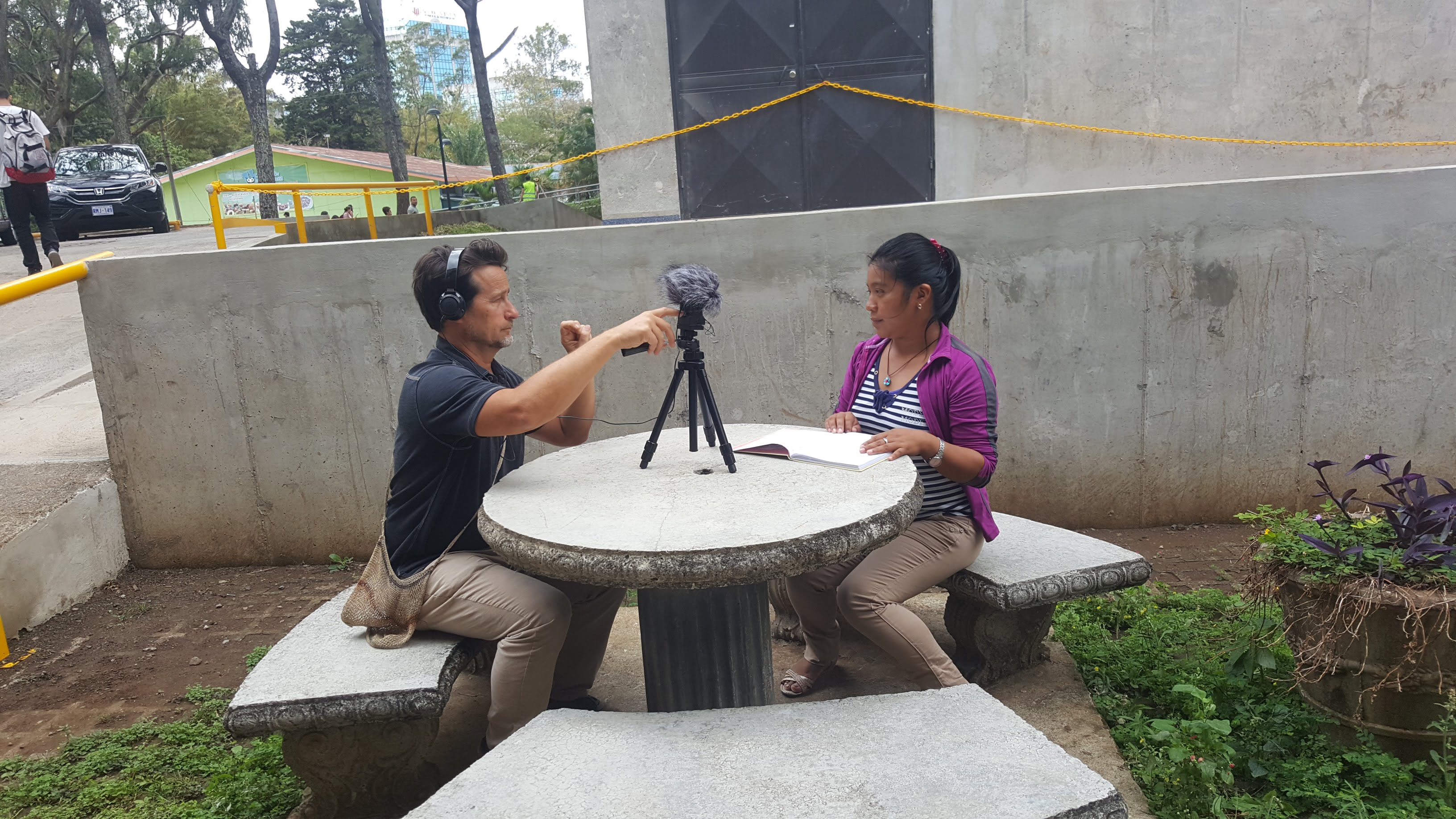
Recording the language of a participant for a teaching material

How do you think the workshop is relevant to LTS and future language teachers?

In some ways, we as language teachers are all in the same boat. We are all involved with promoting language, culture and opening people up to new world views. But having LTS faculty actively involved in minority and endangered language situations is fairly unique and adds to our program. First, we do have future teachers in the LTS program who are planning to teach less commonly taught languages and endangered languages and having faculty actively involved in these issues is important for these students. Further, all future language teachers should be aware of the effects of globalization and the extreme loss of smaller languages both in the Pacific Northwest as well as in the world at large. It is likely, for example, if you teach ESL in the US or Latin America, that you will have speakers of indigenous languages in your class and you may not even realize it. For much of the world, a language exists in a system of other languages, and while we have the ability to do much good as language teachers, opening doors to our students that would not otherwise exist, we also need to also be aware of our ability to do great harm, even unintentionally, particularly to smaller and fragile languages. We hope that all of our teachers leave the LTS program with a sensitivity towards these issues.  

What else did you do there?

While the schedule was busy, not everything was all business all the time. In the evenings and weekends the group was able to visit different venues in and around UCR, such as the Insect museum at the university and the National Museum of Pre Columbian Gold in the center of San José.

How about a snack?

The insect museum contained specimens of gigantic tropical bugs, and we were offered some freshly prepared cockroaches and larvae to sample – yum! The Pre-Columbian museum was described as bittersweet by one of the participants: very interesting but also a reminder of the difficult history indigenous people have endured in Costa Rica and the Americas. I was also able to sneak in some seriously needed beach and surfing time at one of the stellar surf spots in the country, and got lost in a tropical rain forest in the mountains one day. This was an invaluable experience, and I look forward to participating in more workshops for indigenous teachers in the future.


Student Spotlight: Sean Brennan

It is my pleasure to introduce 2016-18 LTS student Sean Brennan. Sean is one of the many students who have pursued concurrent MA degrees in LTS and East Asian Languages and Literatures (EALL)

Hi Sean! Please tell the world a little bit about yourself.

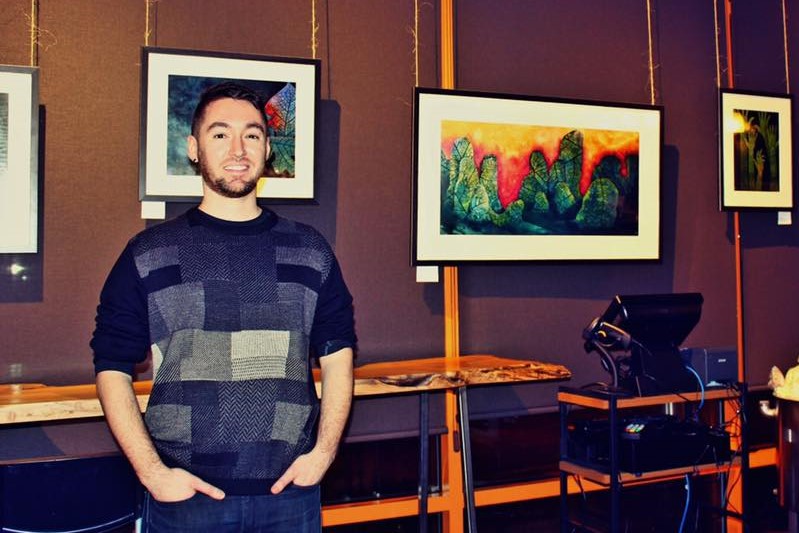
Sean at one of his art gallery shows.

I’m a Kentucky native, but my interest in Chinese carried me away from there to spend a good chunk of my twenties studying in China, and eventually here in Oregon. I remember when I was a kid, I was fascinated by the idea that different people had different ways of speaking and writing, and longed to study foreign language. In high school, I was finally able to study my first foreign language which happened to be German. I enjoyed studying German, but it was only once I was able to study Chinese as an undergraduate that I truly fell in love with another language, and I’ve never looked back. Outside of school, art and in particular, painting, has been one of my life-long passions and I’ve been fortunate to have a couple gallery shows since I moved to Eugene.

You are quite the jack of all trades! So how did you end up in the LTS program?

I believe I first heard about it from the instructor for my Chinese linguistics course here at UO.

What has been your focus in the program?

In participating in this program, my aim has been to gain the tools and knowledge to effectively utilize my experiences learning Chinese as a second language to inform my teaching of the language. I believe my project represents a culmination of this effort, as it addresses a specific need of Chinese learners that’s not accounted for in current curriculum—bridging the gap between English reading and Chinese reading—which I recognized as a problem from my own experiences.

Sounds like a great project! And you mentioned you are a GE (graduate employee) for Japanese literature, how’s that experience been?

It’s been going great. While I’m normally a GE for the Chinese department, teaching in the Japanese department is always a refreshing change of pace, and through the works we read, I get to see the cultural and linguistic exchanges between the two countries throughout history.

Sean presenting at the LTS poster session.

Are you excited to start working on your MA project?

Yes, I really feel good about my project. I’ve received some really positive feedback from Chinese department faculty about the idea, and I think it’s possible it may lead to some serious consideration for adding a Chinese extensive reading course to the curriculum.

Thanks so much for taking the time for this interview! Best of luck in the completion of the program!

LTS presents at 2018 Graduate Research Forum

Every year, the Graduate School showcases research by graduate students at the University of Oregon’s Grad Forum. This past Friday four LTS students presented their projects, alongside other MA and PhD students from various fields. It’s a great chance for LTS grads to get experience presenting their work formally to others outside of the field. All of us who visited the Forum were so impressed by the creative and attractive posters, and the professional presentations that went with them. Go LTS!

Krystal Lyau


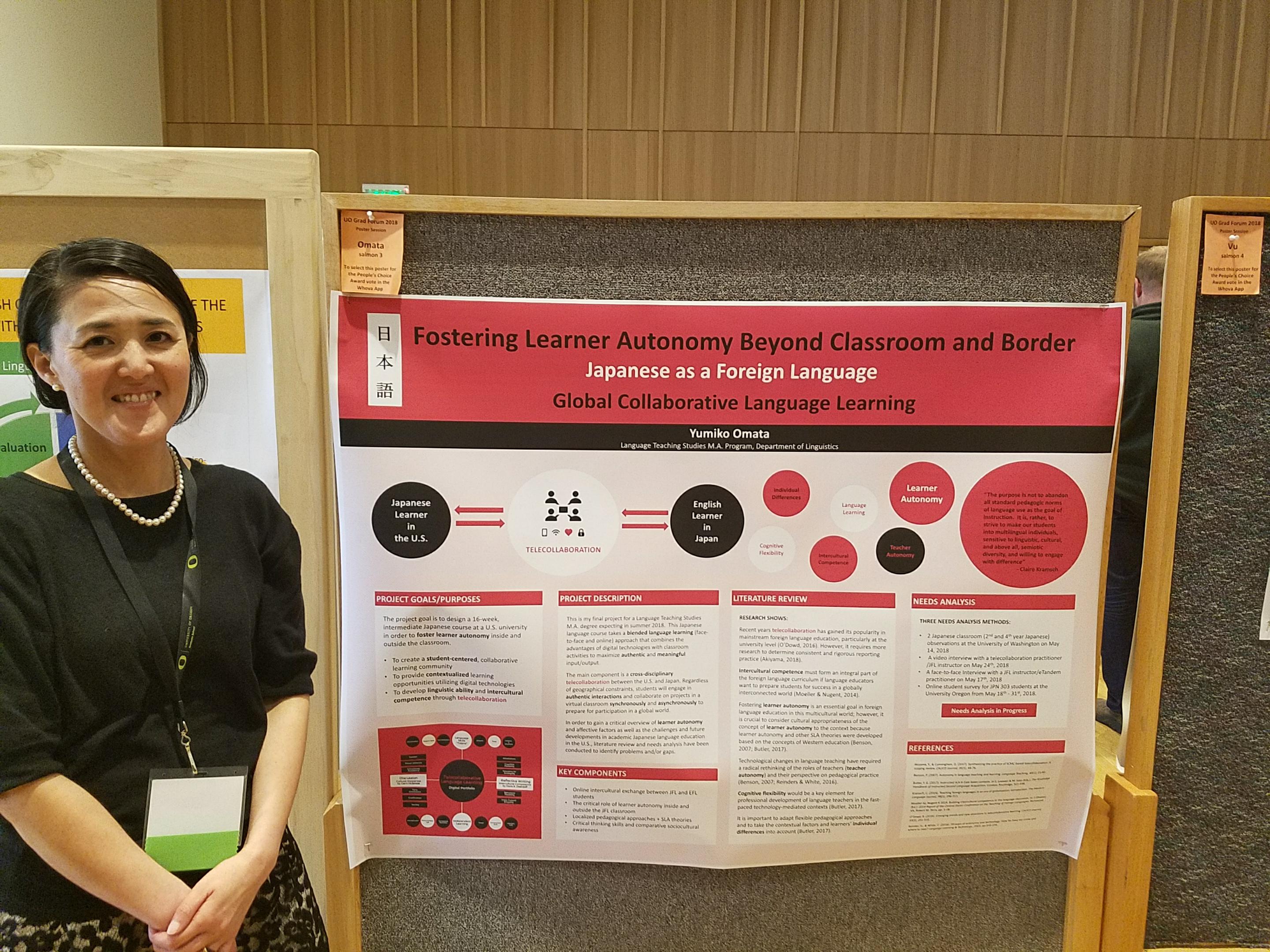
Yumiko Omata

Yuxin Cheng

Ngan Vu

Student Spotlight: Kunie Kellem

It is pleasure to introduce you to LTS student Kunie Kellem!

Kunei presenting at the LTS poster session.

Hi Kunie! Please tell the world a little bit about yourself.

Hi. I’m Kunie! I’m from Osaka, Japan. I like running, working out, playing and watching basketball, and eating delicious food!! I came to Eugene with my husband and son in August 2016. Before I came to Eugene, I taught English at Japanese high schools for 14 years. I loved my job, students, and my coworkers, but I was always struggling with this dilemma between ideals and reality of English classes in Japan. I wanted to change something. I wanted to see my students communicate in English confidently. I wanted to have confidence in my skills and knowledge to support students to realize their goals. That is why I decided to study in the LTS program!!

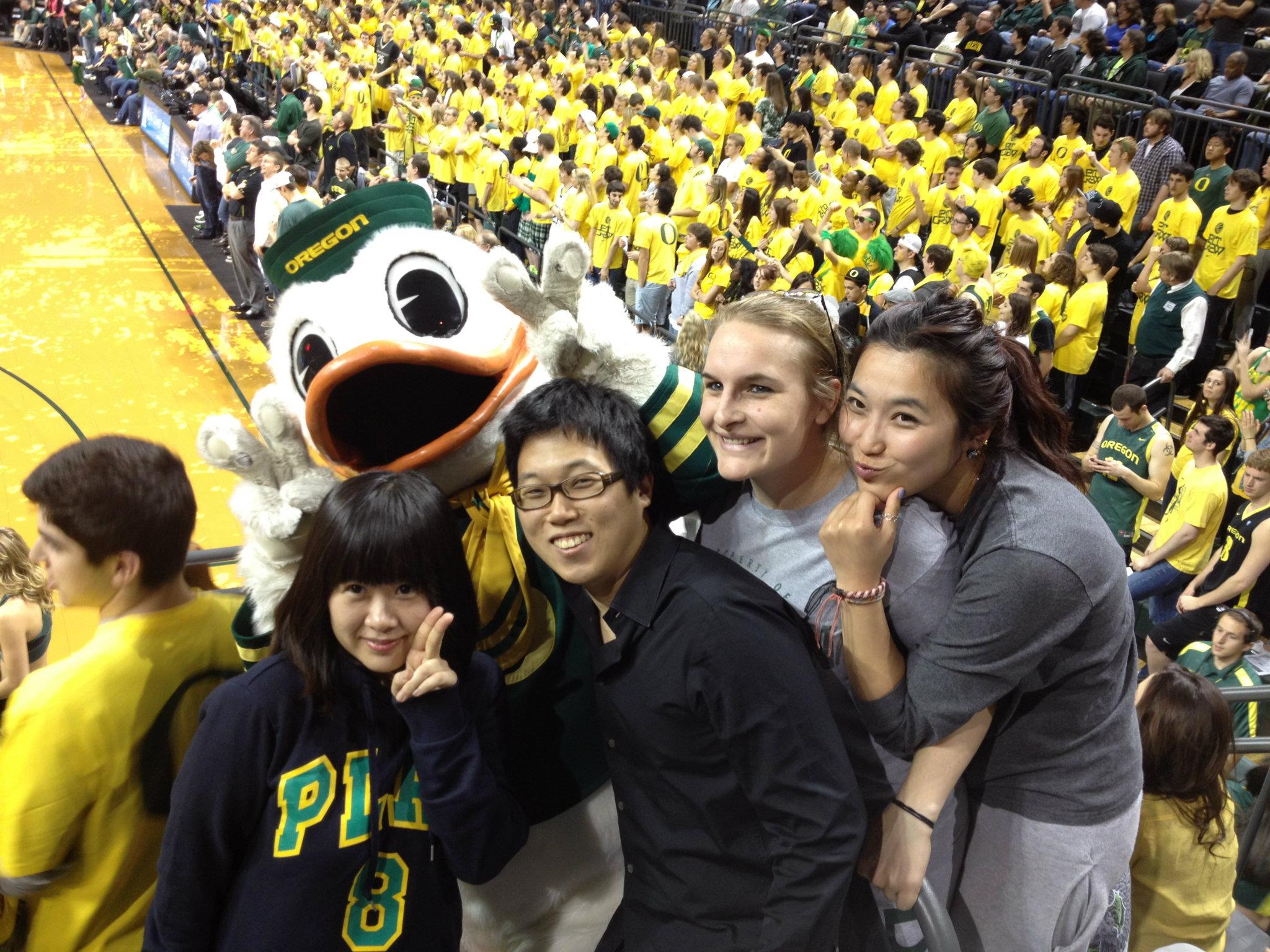
Kunie with her son and Puddles the Duck.

Well, we sure are glad you made that decision! So how has the LTS experience been for you?

It was a big decision for me to come to U of O to study since I had to leave my work, and my family had to change their life styles dramatically. What I was most worried about was my son; if he could adjust to the life in U.S., if he could get new friends, and if he could improve his English to keep up with his school work. I was not so worried about myself at the start point of my new journey. However, it turned out the first 3 months here were the hardest time in my life. Since it had been for such a long time after I graduated from university, everything was new and different. I was surrounded by young, enthusiastic students who were always actively involved in discussion in class, whereas I, who was not used to discussion style lectures, was always at a loss about what to do. Being an international student made things more difficult.

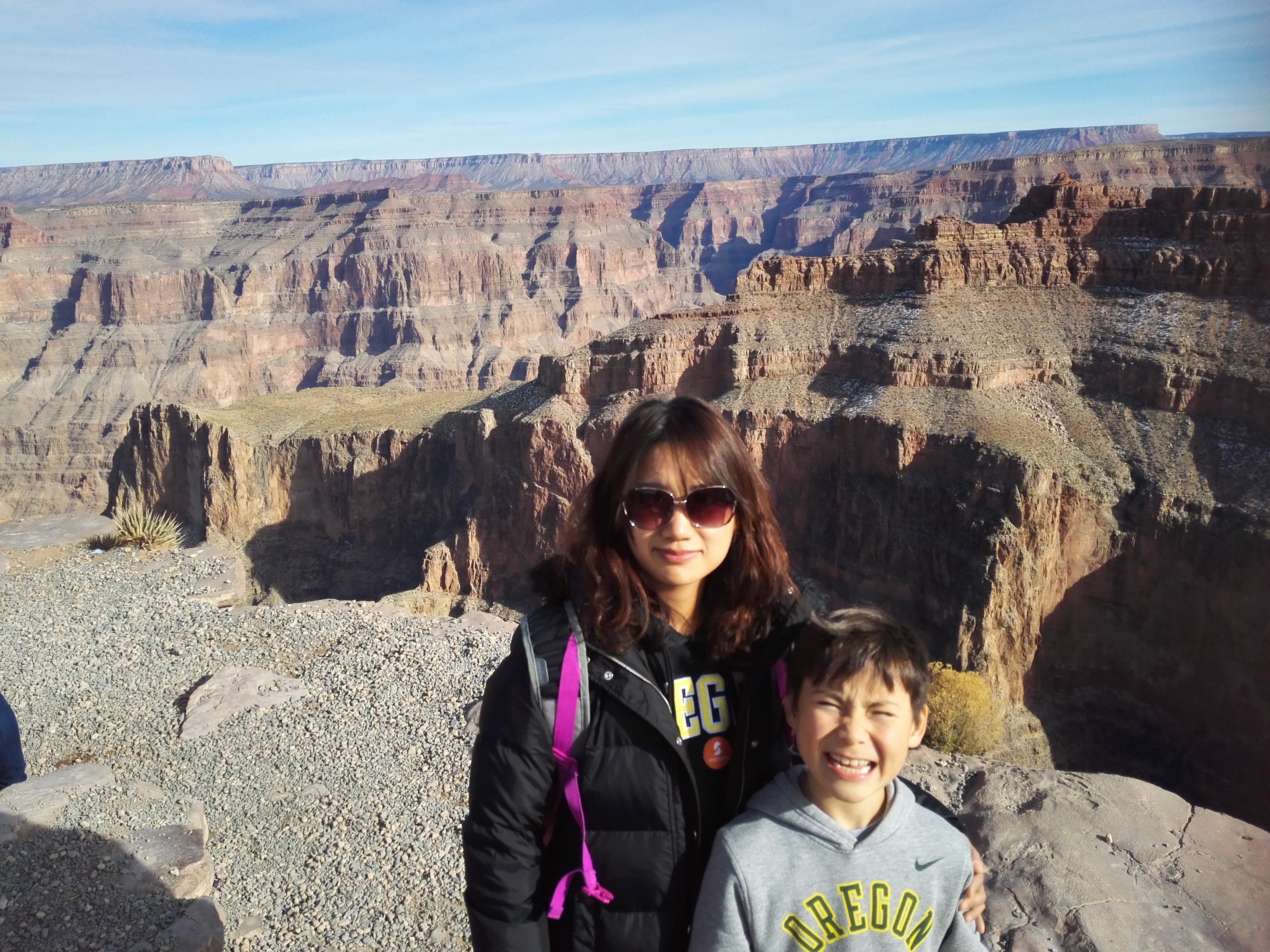
Kunie with her son at the Grand Canyon.

I still remember for the first few weeks I woke up at 4 o’clock in the morning to work on my reading, take notes, review the lecture notes, and prepare for the classes. In addition, as I had expected, my son also had a hard time at his new school because of the cultural and language issues, which made me feel terrible and responsible for taking him all the way here with me. I literally cried a lot for the first few months. However, things started to get better after 3 months. My son started to enjoy his school life and made many friends. (At first, he could not read English, but now he is in the advanced spellers group!!) My husband finally got a job here. I gradually got used to student life here. After that “dark time” passed, I started to enjoy my life here more. I started to hang out with my friends more, go hiking more, go to watch Duck’s games more, which made me realize that Eugene is such a beautiful place surrounded by great nature and great people. I don’t think I could have gone through this far without support from my family, friends and professors at U of O and I am so grateful about it!!

Kunie with LTS friends Aska (2017) and Krystal (2018).

Kunie in her UO duck gear.

Glad to hear you and your family made it through that transition period and grew from it! What are some key things you’ve learned in your time here?

Of course, I have been learning very important principles and pedagogy of language learning and teaching, but at the same time I really appreciate that I get the perspective of how it is like being a student and learning new things again; what students think, what they struggle with, and how they deal with learning. I almost forgot those perspectives, and I am sure this experience will help me to become a better teacher when I go back to my work. Also, I have learned from my professors how to create the comfortable atmosphere to learn, how to support students, and how to assess students’ learning based on objective-based assessment, which is very motivating. I would like to incorporate what I learned here into my teaching!!

And I know you have been teaching Japanese, how has that experience been?

Kunie at a beach in Newport, Oregon.

Yes. I have been working as a Japanese GE at U of O for 6 terms. I really enjoy teaching Japanese and I like when the students show me “aha! moment” expressions when they understand and use the structures well in a communicative practice. One time, at the REC center I bumped into a student whom I taught before, and he gave me a high five and talked to me in Japanese. I felt extremely happy!! I think this is one of the (rare) rewarding moments for language teachers. Teaching Japanese has also given me a great insight about language teaching. Although Japanese and English are two different languages, I am learning a lot about teaching techniques, curriculum designs, assessments, and classroom managements from Japanese instructors and actual lessons. Now I can see Japanese language and its culture from a different perspective, which I am sure will be a great asset of mine when I go back to Japan. I appreciate that I was given this opportunity to teach Japanese here.

Are you excited to have started working on your M.A. project?

Yes! Actually, I have been worried about it for a long time, but once I started writing literature review for MA project, I really enjoy it. Since I am on the two-year program, I could spend more time thinking about my project than many of my cohorts who are on the 15-month program. On my first year, I spent most of my time, energy and effort on just doing well in a class. However, after one year passed, many things I learned from each class started to make sense, and they started to be connected with each other.

Kunie with her son biking around the Golden Gate Bridge.

Now I feel like I am working on puzzles; a small puzzle for literature review and a big puzzle for MA project.  I will keep reading and learning from professors and cohorts to find the best pieces for my puzzle. I am really looking forward to seeing what kind of picture my puzzle will turn out to be.

What a nice connection between the final project and puzzles! Any final thoughts?

I know most of my LTS cohorts live busy stressful days with a lot of school work. I also feel the same way. Although it is very important to be organized and work hard on our project, sometimes it is also important to release our stress by doing/eating what we like.  We are now 4 months away from the end of our journey. I am sure it is going to be busy and hard 4 months, but we are on this together. I hope each of us can see our own beautiful picture on the puzzle at the end of this journey!!

Thanks so much for taking the time for this interview and best of luck in your completion of the program!

Alumni post Yuri Liu

Hello Yuri! Please introduce yourself to our readers.

Yuri at work

Dàjiā hǎo! 大家好!Hey everyone – this is Yuri speaking! Here comes a little story about myself!

Born in Shanghai China, I moved to the U.S. in 2010 for graduate studies at the University of Oregon. I started with a Master’s program in Educational Leadership at College of Education. After a year, I was fortunate enough to meet some friends from LTS and found that the program was a perfect continuation of my Bachelor’s study in Teaching Chinese as a Foreign language. Therefore, I decided to study two master’s programs concurrently in 2011 and was so lucky to be able to finish both by summer 2012. Generally speaking, a graduate like me can easily have wanderlust – where there’s a job, there’s a home.

Beijing Trip with Student

Not surprisingly, I moved to San Francisco for my first job, teaching Chinese in an elementary immersion program – the first one in the United States! It was a great year for me when I learned and accumulated a lot from my teaching experience. Yet, I must have became a secret Oregonian. Nostalgia brought me back to Portland in 2013. I started working for a newly established Chinese immersion program in Beaverton. It has been a good five years here. Thanks to all the useful study in LTS, I became the program director after two years of teaching at the school. Then recently I realized that wanderlust perhaps is the true me – just a month ago, I accepted a position at Singapore American School and am going to continue to devote myself to the field of Chinese immersion education. I am excited to realize that it is being a professional of foreign language education that makes us willing to ceaselessly wander the world…

My 1st Grade Science class

Can you tell us more about what you’ve been doing professionally since you graduated from LTS? 

I first worked as an associate teacher at Chinese American International School (CAIS) in San Francisco, teaching Chinese in a 1st Grade and a 5th Grade classrooms. After a year, I joined Hope Chinese Charter School (HCCS) in Beaverton and worked as a Chinese immersion teacher as well as the Chinese curriculum coordinator. In addition to developing the Chinese program benchmarks and curriculum for HCCS, I taught students all subjects areas in Chinese from 1st – 4th Grade. In my 3rd year at HCCS, I became the director of the Chinese immersion program and the lead Chinese immersion teacher. My job responsibilities range from program and curriculum development to Chinese faculty mentoring. I also wrote the STARTALK grant and got accepted for two years to implement the student and teacher training programs in Portland, which definitely helped consolidate my skills in language program development.

My 1st Grade Math

So now you are off to your next adventure in Singapore – what will you be doing there, and how does it fit with your future career goals?

I will be teaching in their newly established Chinese immersion program and hopefully make my own contribution to their Chinese teacher professional learning community. Though it seems that it was a step-down move, it will be instrumental as I have never worked at an international school and it is always a field I’d love to explore on my career course. I am always interested in educational leadership at international schools. I believe this will be a necessary transition to lead me toward that goal.

With my LTS studymates

What did focus on while you were a graduate student at UO? 

I actually had different yet later connected focuses in my two graduate programs. I focused more on comparative education in my educational leadership program, and teaching strategies for increasing language proficiency in my LTS MA project. With my post-research in Chinese immersion education after graduation, it is so apparent that language education should always be intertwined with cultural learning and studies. The teaching techniques could also be varied or fused between different educational systems. At least Chinese immersion education can speak to that – we teach American students with an American-based curriculum and certain Chinese schooling rituals. I will definitely continue with my research in this area and hope to extend my study into the impact of foreign language education on school systems.

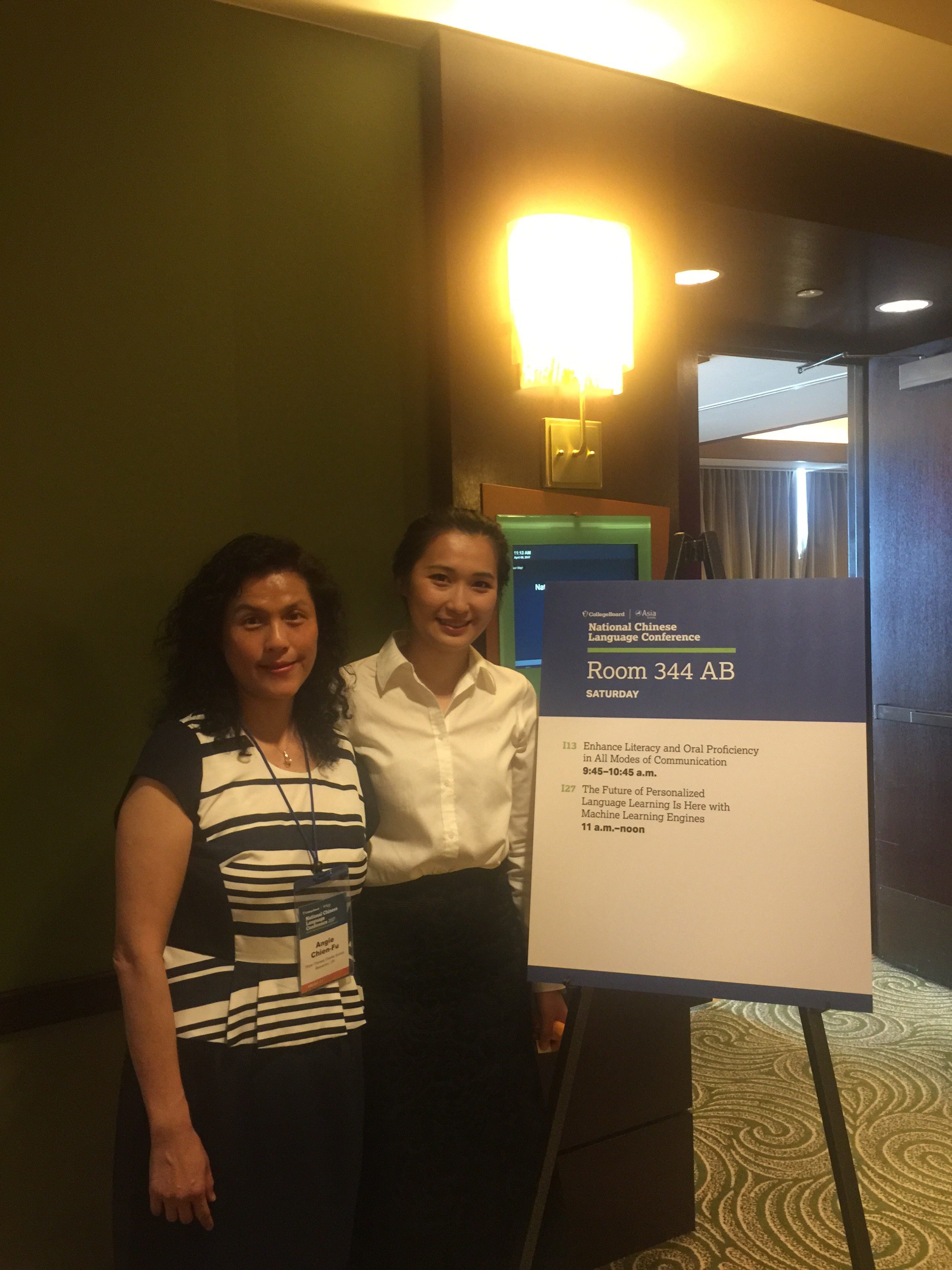
NCLC Presentation

What has ended up being most useful for you as a teacher from what you learned in LTS?

The second language teaching principles and the theories behind second language acquisition vs. language learning are really the essence to help me understand how language proficiency should be developed. I can never forget Celce-Murcia’s representation of communicative competence, which really became the theoretical basis I go by while developing my language teaching strategies. I was able to have a good understanding on the national standards for learning languages, thanks to what I have studied about Communicative Language Teaching (CLT) in some of the LTS courses. In a nutshell, the learning in LTS helped me tremendously in my language teaching career. It was my first time to trust that college/graduate studies can actually greatly benefit the career practice.

Looking back, do you have any advice to current or future LTS students?

No. 1, study well, pay attention to what you are/will be learning with LTS, because whatever you have experienced with LTS could become very instrumental to your language teaching career (if that’s what you choose ultimately).

No. 2, better not neglect the study of the theories and always pilot any strategies that you create with a real class body. I am not an empiricist, neither a rationalist. I believe we should rely on both to reflect back and forth. Sometimes theories inspire a way. Sometimes practice finds the theory. Last but never the least, enjoy what you are learning and what you will be doing as a LTS fellow!

Student Spotlight: Zach Patrick-Riley

It is my pleasure to introduce you to 2017-18 LTS student Zach Patrick-Riley.
Zach enjoying the Alaskan summer.

Hi Zach! Please tell the world a little bit about yourself.

Hi! Oi! Hola! My name is Zach Patrick-Riley and I am originally from Anchorage, Alaska. I did my undergrad at Lawrence University in Appleton, Wisconsin (Go Pack Go!) and while there I discovered the joy of traveling when I studied abroad in London, England. Since that first time abroad, 2008, I have been to 38 countries around the world. People often ask what my favorite place is and it’s an impossible question… with that being said, Brazil is like a second home to me.

Zach representing the Pernambuco, Brazil state flag.

Zach enjoying a waterfall up close at Foz de Iguazu, Brazil.

Halfway through my senior year of college, I was still deciding what to do after graduation. Fortuitously, I attended a weekend workshop that my university put on about diversity on campus. The first night I was quite tired, but I saw a group of students sitting by a fire. I decided it was as good a time as any to branch out and meet some new people. Thankfully I did because I soon started talking to a student from Northeast Brazil, Gustavo. We got along right away and he asked me what my plans were for after graduation. Long story short, he put me in touch with the owner of a school in Brazil, Junior, who invited me to come teach there after graduation. At the time, I didn’t really know anything about Brazil but it seemed like quite the adventure (I didn’t even speak any Portuguese!).

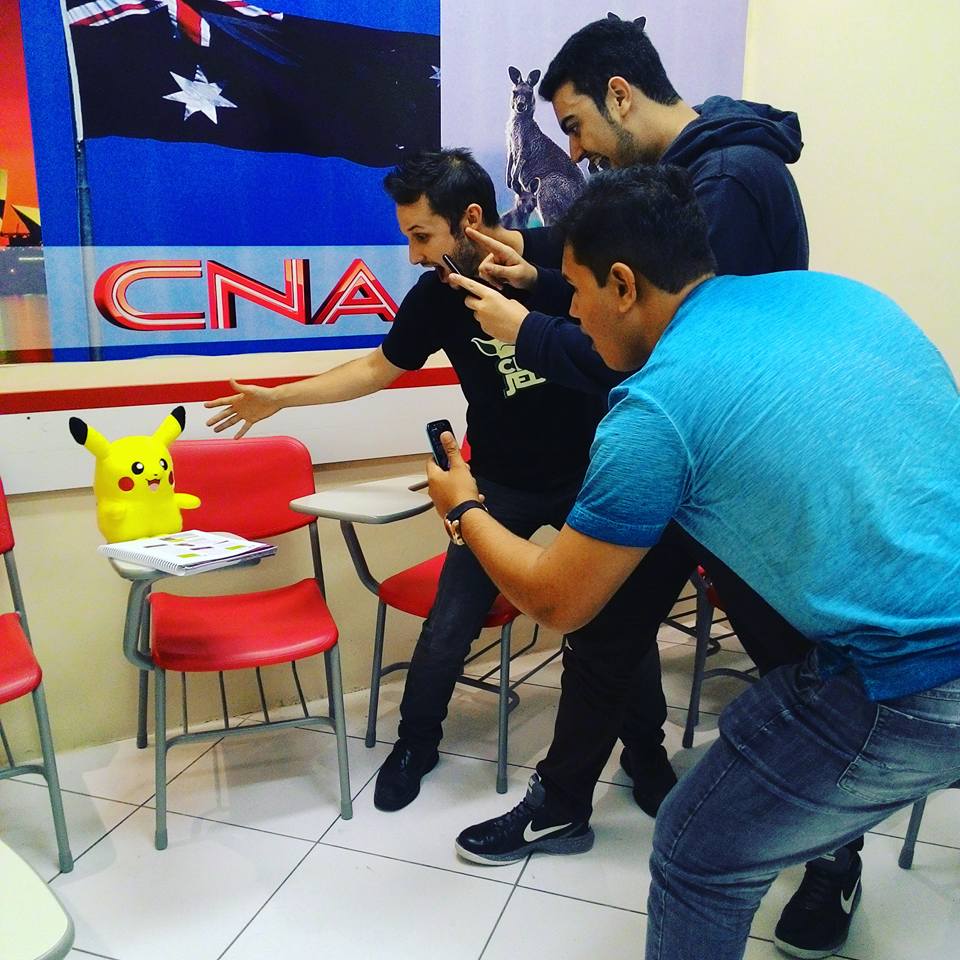
Zach with a couple Brazilian students and Pikachu.

Zach with a group of teachers/friends he trained in Brazil.

I was quite nervous before the first class and wasn’t sure if I would even enjoy teaching. That all changed the minute class started. Do you know those moments in life where something just feels right? Well that’s how I felt about teaching. On that very first day, the energy in the classroom spoke to me on such a deep level and it has continued to do so ever since.

After spending six months teaching in Brazil, I returned to Alaska and from 2010-2014 I did a combination of substitute teaching and working in the art department on various commercials and movies (e.g. Big Miracle). I loved the flexibility that the jobs provided as I could work hard for a bit and then go travel to different parts of the world. In 2014, I decided to commit even more to language teaching and got my CELTA (a TESOL teaching certificate) before returning to Brazil to teach/do teacher training for 2015-2016. My second time over there just reaffirmed my love for language teaching and Brazil.

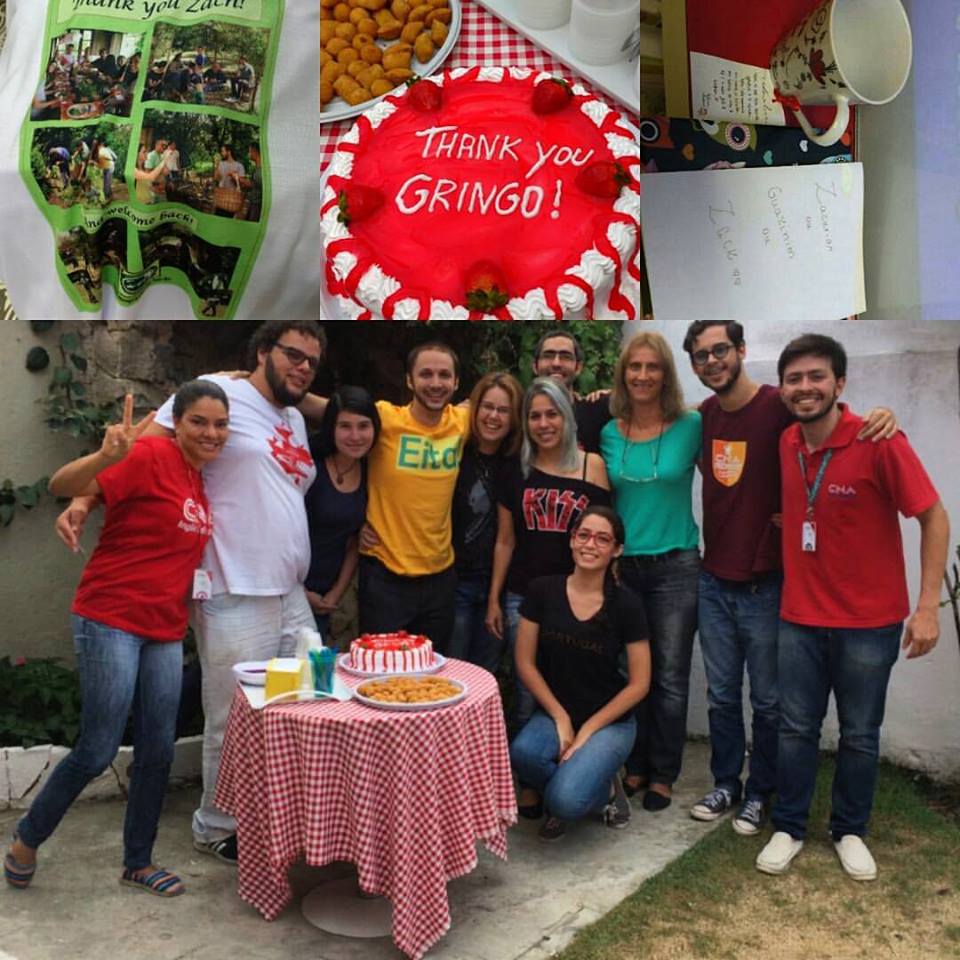
Zach at a farewell party with his fellow teacher friends in Caruaru, Brazil.

Quite the story! Was your journey to LTS as serendipitous?

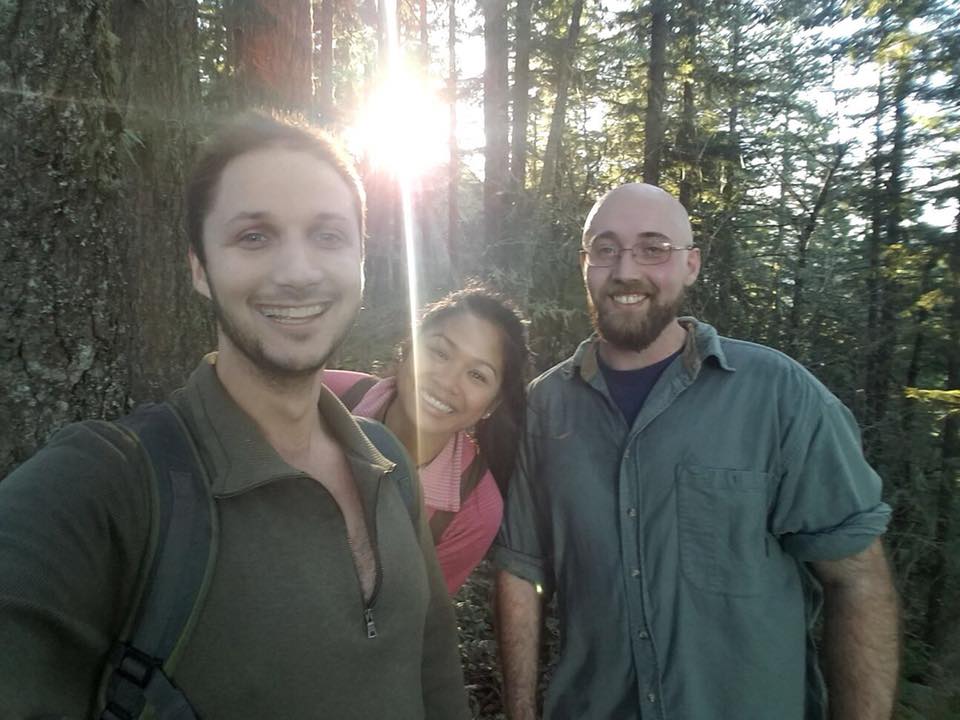
Zach hiking with LTS friends Alexis and Lee.

It’s quite the story as well, but to sum it up: After returning from 2.5 years working and traveling in South America, I went to the 2017 International TESOL conference in Seattle. During the conference it became apparent that in order to get the kind of premium jobs I wanted, a Master’s degree was essential. Right after that realization, I attended a workshop and met a graduate student in the LTS program, Devon Hughes.

She spoke highly of the program and mentioned that the director of the program, Dr. Keli Yerian, was actually downstairs. I didn’t want to impose, but am glad I got past that because talking with Keli and other LTS faculty and students who were there inspired me to apply. I got my application ready as soon as the conference ended and now here I am one year later.

So how has the LTS experience been for you?

The experience has been life-changing to say the least, both personally and professionally. Succeeding academically in this program has meant the world to me on a personal level and really built up a lot of academic confidence that before was lacking. Everything we learn in the program directly benefits our future teaching endeavors. It is very hands-on so you get to mould your learning to suit your individual interests.

Zach doing a workshop on VR/AR and language learning which fellow LTS friend Logan Matz seems to be enjoying.

For me, what really makes LTS special is the community with the cohort and the professors. Everyone is so supportive and encouraging, while also making sure we each achieve our maximum potential. The professors treat us with kindness and respect, valuing and encouraging our contributions in the classroom. The professors always take the time to talk to students after class. I am forever grateful for the guidance I have received from my fellow cohort members and professors, as well as the smiles and laughter.

I know you work as a GE (graduate employee) at CASLS. What has that been like?

I know it sounds cliché, but CASLS has been life-changing as well. Just like the LTS community, what really makes CASLS so special is the energy. Every day I am inspired by the collaborative and innovative values to which CASLS subscribes. I have the supreme pleasure of working with LTS faculty member Dr. Julie Sykes, who has shifted the way I see communication due to pragmatics, and Stephanie Knight, who has greatly enhanced my efficacy with curriculum design and article writing. The superlatives continue as the rest of the people at the CASLS office are equally amazing and brighten my every day, even in the most stressful of times.

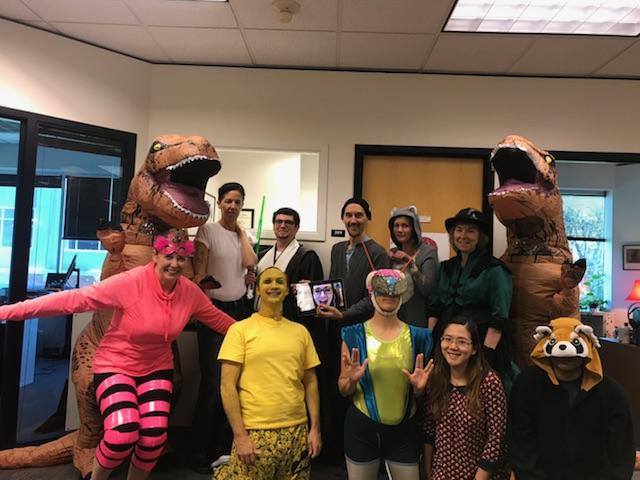
Zach with CASLS colleagues enjoying Halloween.

In terms of projects, there have been quite a few I’ve worked on. The biggest one is LingroToGo, a new Spanish language learning mobile application that promotes authentic language use, and dynamic game-based language learning. For this app, I have created a number of the animated videos, some video scripts, and done quality assurance testing. It is fantastic to be even a small part of a resource that, in my opinion, exemplifies the direction quality language teaching is heading.

Another project is writing articles for the online language learning newsletter Intercom, which offers cutting-edge research and ready-made classroom activities. This experience has allowed me to author publications that reach thousands of national and international educators.

During Winter term, I also worked with a group of visiting Japanese students from Nagoya, University, and as always, it reaffirmed just how wonderful it is to be in the classroom. I love that I get to be an integral part in the planning and implementation of all kinds of cool programs.

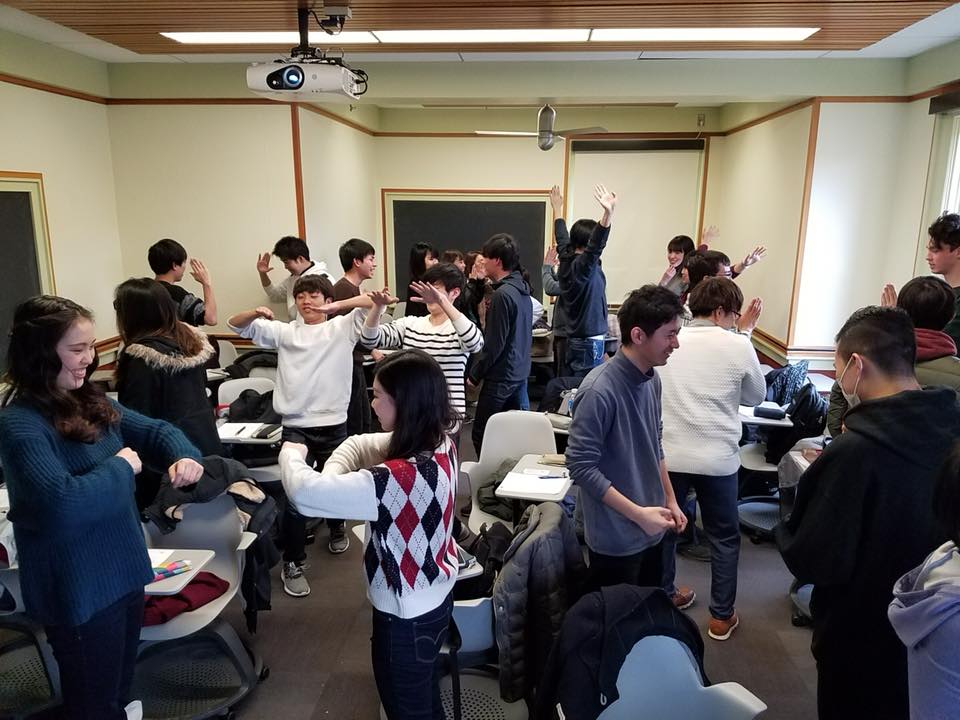
Zach doing a workshop on pragmatics with students from Nagoya University.

It sounds like it! Last question, are you excited to have started working on your final MA project?

I am indeed. It is a little daunting as time is flying by and we will be presenting before we know it… but when you love what you are studying/working on, it makes it fun and exciting.  My project involves pragmatics, pronunciation, and individualized learner instruction.

Any final thoughts?

Sim (yes in Brazilian Portuguese). The world responds when you take chances and put yourself out there. I was nervous before I talked to Gustavo at that workshop, or when I talked to Devon and subsequently Keli at the TESOL conference, and I was even nervous about applying to grad school and CASLS. As you read, they all ended up being positive life changing experiences and make me fill-up with emotion just thinking about them. Often the most rewarding experiences are intimidating at first, but just believe in yourself and you will end up in the most wonderful of places, like the LTS program.

Zach at the summit of Rainbow Mountain in Peru.
Thanks so much for taking the time for this interview! Best of luck in your completion of the program.