Student Spotlight: Heidi Shi

Biography

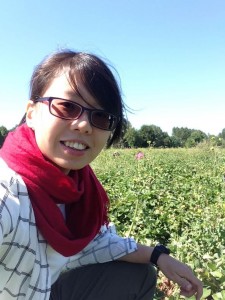
Heidi Shi (Shi Hui 石慧) is currently a second-year Ph.D. student majoring in Chinese linguistics in the EALL (East Asian Languages and Literatures) Department of UO. Besides the doctoral degree, she is also currently working on an M.A. degree in LTS (Language Teaching Specialization) in the Linguistics Department, wishing to train herself into a qualified language teacher at the college level. Heidi’s research interests include Language and Gender, Neologism, Chinese Pedagogy and so forth. She has enthusiasm and experience in teaching Mandarin Chinese at both Novice and Advanced levels.

Originally from Shanghai, China, Heidi spent 2 years living in Japan as well as 6 years studying and working in South Korea before she moved to the United States in 2015. Besides getting a Bachelor’s in Economics and a Master’s in International Studies and East Asian Studies, she has spent most of her spare time during her 20’s traveling in Europe, Asia and America. Her identity as a global citizen is her intrinsic motivation that drives her to make efforts in the field of language teaching and cross-cultural communication. She believes that Language is not merely putting sounds, symbols, and gestures in order to communicate with another community. From a cognitive perspective, language is how we present and express ourselves as individuals, communities, and nations. Heidi also believes that culture refers to a dynamic social system in which conventionalized patterns of behavior, beliefs, and values are integrated. Therefore, her teaching philosophy is: language acquisition should always be closely connected with acculturation because culture provides the environment in which a language is developed, used and interpreted. She is also firmly convinced that teaching and learning languages can promote cultural exchange and cross-cultural understanding, which in the long run, may facilitate international collaboration or even the realization of world peace.

Heidi’s Work as a GE (Graduate Employee)

Since Fall 2015, Heidi has been working as a GE at UO. Her GE work contains 4 types of assignments.

First, she has been teaching first-year Chinese at UO for 4 terms, which includes CHN 101 to 103 as well as the newly established accelerated class CHN 105. She teaches the Wednesday and Friday drill sessions for the various Chinese classes. Based on the principle of building a communicative language classroom, her lesson plans usually contain a lot of activities through which the students can have more opportunities for producing the target language, negotiating meanings and receiving authentic inputs.

Second, she also works as a tutor and disciplinary mentor for the Chinese Flagship Program undergraduate students. She has tutored over 10 Flagship students either in their Chinese-related major coursework or OPI (Oral Proficiency Interview) preparation. She likes adopting the “4-3-2” method in 1-on-1 tutoring to increase each student’s fluency. Besides that, she also cautiously provides feedbacks and corrections, aiming to improve learner accuracy.

She also works for the Chinese Flagship Program as a graduate coordinator. Cooperating with the student leader team “Banzhang,” her job is to hold weekly meetings with the Flagship students. Using only Chinese, Heidi communicates with the Banzhang team and helps them arranging termly or yearly Flagship events.

Finally, in Fall 2016, Heidi was the GE of EALL 209 (East Asian Languages and Societies). It was an undergraduate level lecture taught in English which mainly introduced Chinese, Japanese and Korean societies and their related cultural backgrounds. Heidi was the grader of EALL 209, and she also taught 2 lectures in this course the contents of which were about Chinese politeness and metaphors.

Why did you decide to join the LTS program? Is there anything you look forward to doing in the program?

The reason why I applied for LTS lies in the strong theoretical and practical professional foundation that this program can provide to its students. On the one hand, I wish to systematically study the principles and theories of language acquisition and pedagogy. I am interested in reading the most cutting-edge research articles in language teaching as well as discovering any research gaps that may occur or have appeared in teaching Chinese to L1 English speakers. On the other hand, LTS is also a valuable resource that facilitates my language teaching as a GE. I have been adopting a lot of methods and approaches I have learned in the previous LTS classes in my classes where I teach Chinese. I also wish to obtain a profound understanding of the domains of teaching method, lesson planning, curriculum development, etc.
 

Student Spotlight: Yan Deng

Student Spotlight: Yan Deng

deng-yan

  • Tell us about yourself! Where are you from? What did you do before joining the LTS program? Do you have any hobbies?

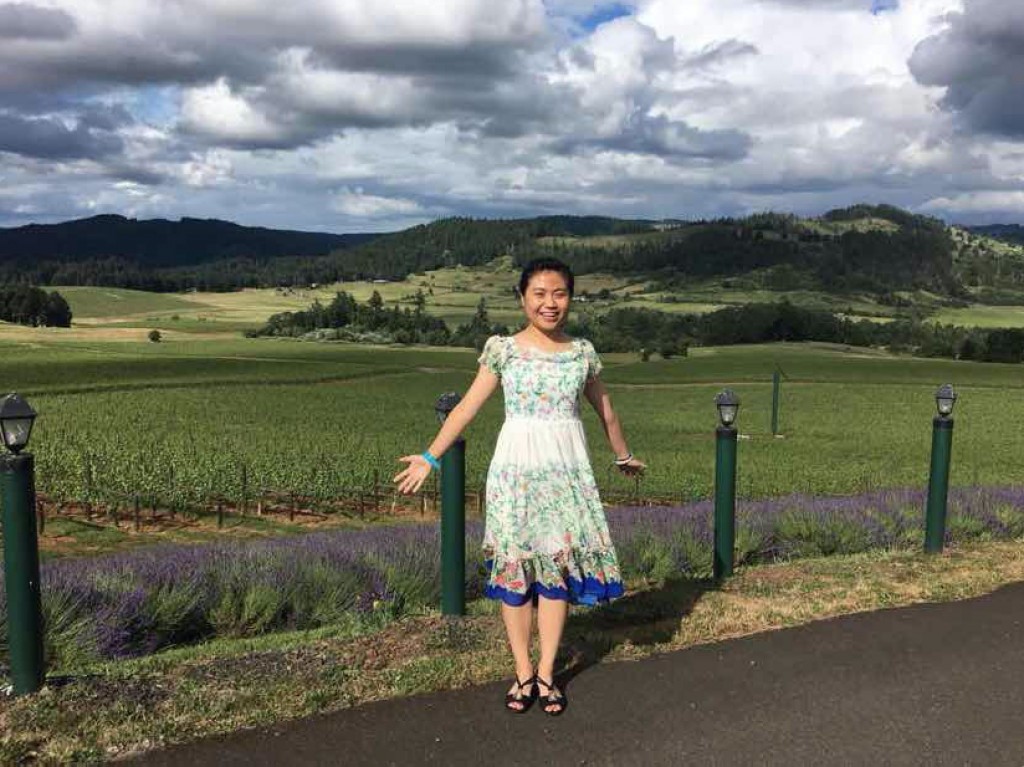
My name is Yan Deng and I come from Lanzhou, which is the capital city of northwest China’s Gansu province. The city is not very big, but there are still 2 million people who live there. My favorite food is Lanzhou beef noodles, which is a very famous food in China. Before I came to the U.S.A, I already got my bachelor’s degree at a Chinese university. My major was Chinese Education. I wanted to know about different cultures and to learn different languages, so I decided to study abroad. In 2011, I came to the University of Oregon, and my major was Educational Foundations. In class, I learned a lot about American teaching methods. Outside of class, I tried to learn more about American culture, such as how American students celebrate holidays, how they work on campus, and how they chat with their friends at cafes.

I have been in Eugene for 5 years. Eugene is a small, quiet and beautiful city, and I love living here. While I was an undergraduate student at UO, I volunteered at an American elementary school for two years. I noticed there were a lot of differences between American elementary schools and Chinese elementary schools. I have been a Chinese tutor for one-and-a-half years at UO, and I liked the job so I am still doing it now. I love to encourage American students to know more about China and to learn Chinese. I think we could all learn from each other.

Hobbies? I like swimming and reading. My favorite books are the Harry Potter series. Sometimes I like to watch American TV shows, such as CSI and Criminal Minds. To be honest, I get scared by some of the plots.

  • Tell us about Talking with Ducks. What is that experience like for you?

For me, I like the TWD class because I can learn a lot about teaching. The most important part is how the team members help each other. For example, I was a leader in week 2. I had to make sure my pronunciation was correct, and the rules of my game had to be clear. Since I am an international student, I have to worry about these things. To be honest, I wrote down every sentence of my lesson plan, and I read them to my team members, Devon and George. They helped me to edit my lesson plan. I was so glad they were so patient with me. No one loafs around on the job!

In Thursday’s class, when students came in , we didn’t feel nervous because we were ready. But there were still some situations that I hadn’t thought of before. Thus, we needed to help each other. For example, I didn’t realize students would still sit a big circle after I separated them into different groups. I didn’t know how to solve the problem, but George quickly jumped in and gave more explanation to solve the problem. When students were playing the game, I forgot to explain the game time limit, but Devon was on it. How about the other LTS Ducks? Yes, they all did very well. Sue and Maude were very creative in their groups, letting their group members use the envelopes (which were just materials from my activity) in the game. Joliene, Reeya and Juli built a great and comfortable environment for their group members to practice English. Laura, the professor of the TWD class, made sure everything was going very well. Because of this teamwork, I love the class and I enjoy every minute of it!

  • Tell us about the Chinese Club!

chiclub2chiclub1

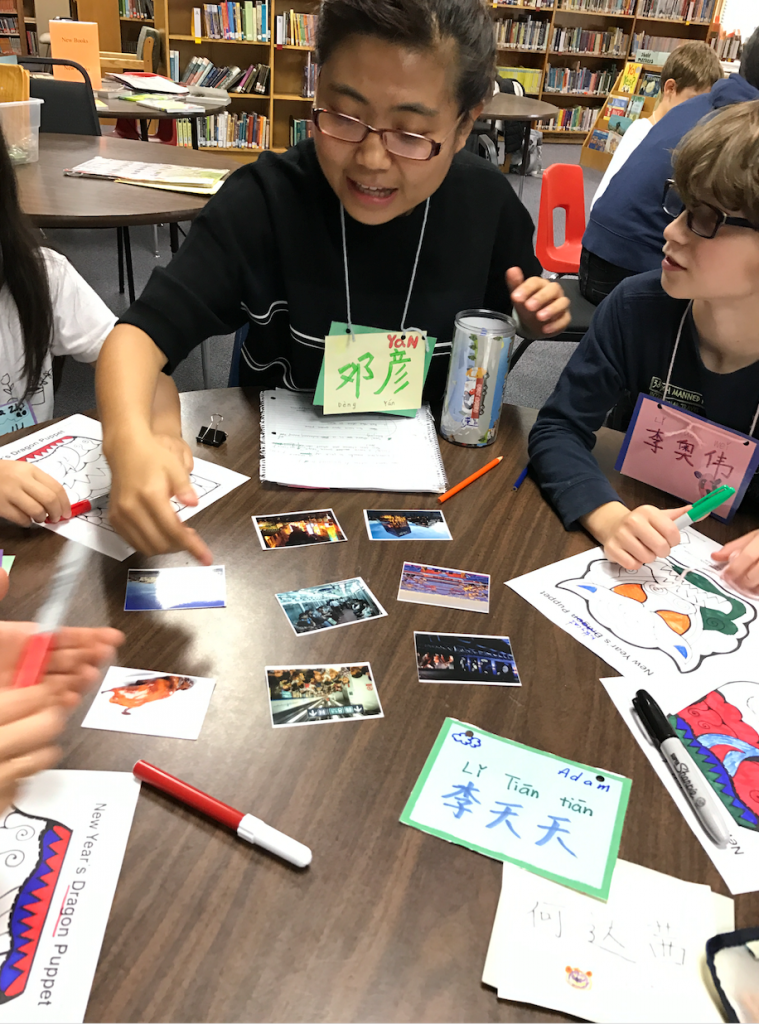
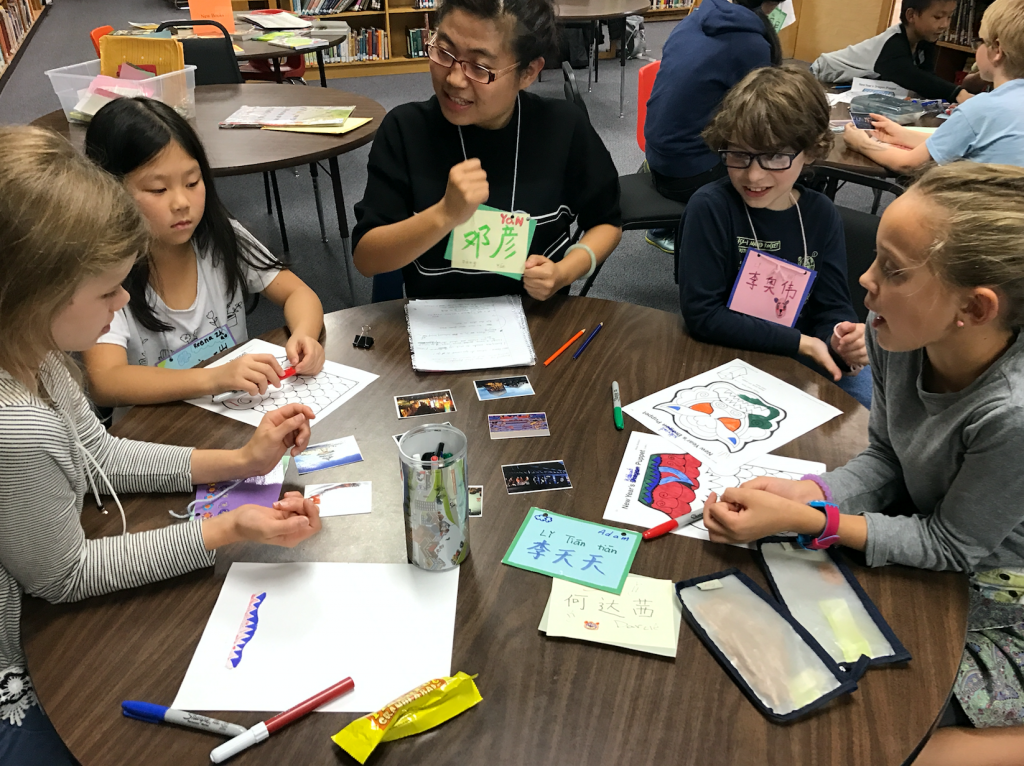
The Chinese Club is held at the Edison Elementary School, and is one of the after school clubs. In our club, we have 11 students who come from different grades. The goal of the club is to encourage students to learn about Chinese culture as well as some simple Chinese characters. We tried to build a real language environment to help students learn Chinese. Last week, our topic was “daily life in Beijing.” We created some class activities to help students know the real Beijing, such as visiting the Summer Palace and the Forbidden City, and eating Beijing duck.

  • What are you most excited to learn or do in the LTS program?

I am so excited to learn a lot of different teaching methods in LTS program. We discuss issues in class, and we solve problems together. When I am studying in every class, I know I am coming closer step-by-step to my dream. Even though I have a very full schedule, I know my friends and I are always a team. I will be brave and I will keep swimming, just like Dory! Ha ha~

Student Spotlight: Sara Li


Sara Li (Chinese name Hsin-Jung, Li) is an LTS graduate student from Taiwan. She has 3 years of high school EFL teaching experiences and 5 years of educational administrative experiences and  loves language teaching and learning. unnamed (2)

Why did you choose to come to the UO for the LTS program?
 I chose to come to the UO for the LTS program because it provides rich language learning and teaching courses for future teachers of all kinds of languages. Apart from many other TESOL programs in the United States, the LTS program stands out because it is an intense program with integrative courses in linguistics and pedagogy.
—–
Tell me about your work with the Chinese club?
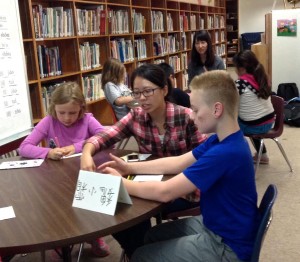
Thanks to Dr. Yerian’s suggestion, I joined the Chinese Language and Culture Club (CLCC) this term as one of the three Chinese teachers in the Chinese club. We design a Chinese course for 3-5 graders in Edison elementary school, who show interest in learning Chinese and some of whom have family members from Chinese speaking countries. The purpose of this Chinese club is for students to enjoy learning Chinese language and culture. In the fall term the theme of the course is Daily Life in China, and the topics include basic Chinese greeting, Chinese etiquette, Chinese pictographic, body parts, famous sports in China, and many useful sentence structures. Every week we co-design and co-teach a 105 minute class, and we implement many interactive group activities to facilitate students’ comprehension and learning motivation.
—-
 What has been most rewarding about working with the Chinese club?unnamed (1)
This is my first time teaching both Chinese and elementary school students, so it has been quite a special and inspiring experience. This teaching experience allows me to reexamine my understanding of Chinese language and culture, and I find students’ genuine feedback, enthusiasm and curiosity in Chinese language and culture really motivating and rewarding. I am often surprised at how much they already know about Chinese and how much more they would like to learn. It has been a blessing to be their teacher to guide and participate in their learning process.
—-
What is one thing that you’re looking forward to in your remaining time in LTS?
I would really love to spend more time with my LTS cohort, all of whom are supportive, innovative, and compassionate about language teaching. Looking back at the past 5 months, we have had so much fun in class where our ideas emerge and took off like rockets, as well as out of class where we share our beliefs, cuisine, and love for each other and language education. There are many things that I look forward to, such as intensive in-class discussion, group collaboration, useful seminars and lectures, doing the MA project, and many more times to hang out and form dreams. Coming to UO for the LTS program has been one of the wisest choices I have ever made.