Student Spotlight: Kaleb Stubbs

Kaleb Stubbs is a current LTS student who will be graduating this Summer.

– blog post by Emma Snyder, LTS student

Hi Kaleb! Tell us a bit about yourself and your background
Kaleb sitting on stone steps in front of a bamboo forest

Kaleb in a garden in Kamakura, Japan

I was born and raised in Eugene, Oregon. My father is also from Eugene while my mother is from Panama. I grew up playing baseball, basketball, and football all the way through my high school years. I ended up becoming the ASB President (all student body) of my high school at Sheldon where I gave many speeches, including one at graduation and organized the assemblies for the school. I attended Lane Community College where I received my Associate’s of Arts degree and transferred to the UO where I completed my undergrad in Linguistics and the Second Language Acquisition and Teaching (SLAT) certificate.

What brought you to language teaching? To the UO?

In high school, I always aspired to become a writer, but was unsure on how to go about it at the time. During my years at Lane, I switched my degree many times from business to music, then to EMT until I eventually found my passion in language learning. I discovered this through travelling when I was working at the airport and had the opportunity to use the free flight benefits to travel to places such as Italy, Israel, the Netherlands, Canada, Guatemala, Panama, and Japan. It wasn’t until I visited Japan that I found out what direction I wanted to go as far as higher education. I noticed that language is the key to the world and there were many job opportunities as an English teacher in Japan. When I returned to America, I immediately started studying Japanese and Linguistics at the U of O and now I am in the LTS Masters program. I also found that the passion doesn’t just stop with teaching. When we know a language and how language works, there are many opportunities that can be had in many different areas.

What have some of your past experiences been with language teaching? Do you have any specifically fond memories?

Since my time at U of O, I have had many great teaching opportunities such as working with international students from all over the world while tutoring at AEI, interning with Li-Hsien Yang at CASLS, and with the OIIP program. Classes through the LTS program offer opportunities to teach as well, such as Talking with Ducks, and the times have been unforgettable. I have met so many interesting people and was able to expand my cultural and linguistic knowledge even further by making friends and using the Japanese language and other languages every day. I have gone on many fun adventures with my international friends such as going to the coast, hiking Spencer’s Butte, snowboarding, surfing, skateboarding, and many other things. These memories I will always cherish and remember and at a time when I knew no one from Japan, I now have many friends in different places of the country so I will not be lonely and there are many opportunities to be discovered.
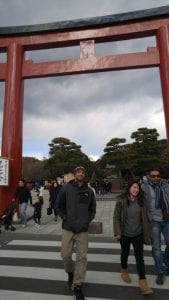
Kaleb exiting the torii gates, in front of Tsurugaoka Hachimangu shrine

Kaleb in front of torii gates in front of Tsurugaoka Hachimangu shrine

What has been the highlight of your time in the program so far?

Aside from learning the logistics of how language teaching works, the LTS program has offered so many insights that were new to me such as curriculum designing, program evaluations, creating lesson plans, learning about different modes and tactics of language teaching especially in a world where things are more digital and online, and how to optimize the experience for the students in classroom. I would have to say the highlight of the LTS program is the amount of awesome people I get to meet and work with while in the program. It’s awesome to part of a team of likeminded individuals who are bright and driven in their field. The professors in the program are all great as well and each one offers a viewpoint that is extremely beneficial in many ways.

How do you hope to work in the language teaching field in the future?

After I graduate, I plan to utilize the knowledge I have gained throughout my years at UO and the LTS program by travelling and teaching English. My main goal is to live and work in Japan while increasing my knowledge of the Japanese language, but I am always open to travelling to new places as well and learning about the languages and cultures as much as I can. I hope to work in education with students of all age ranges who are interested in learning English and to help them on their linguistic journey. Another goal is to work for an international company where I can travel and use my language ability to bridge linguistic and cultural gaps and make connections around the world.
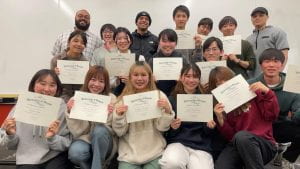
Kaleb with co-teachers and English students from Nagoya, Japan in Eugene

Kaleb (third from left in back) with co-teachers and English students from Nagoya, Japan in Eugene

What is something outside of language teaching that you are passionate about? A fun fact about yourself that others may not know?
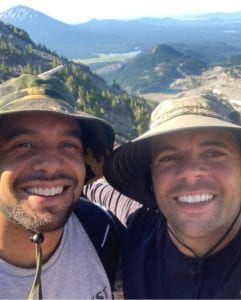
Kaleb and his brother on top of a mountain with a view of mountain ranges and rivers behind them

Kaleb (left) and his brother at the summit of the South Sister, Oregon

Outside of language teaching, I have a passion for music, photography, manga, video games, and the outdoors. I play the drums, a bit of piano, and the bass guitar on my free time and also make music on my computer. Recently, I have had the opportunity to be the drummer of a band which has always been a dream of mine. I often take photos of nature when I’m on a hike or bike ride and find it extremely grounding. I love to skateboard, mountain bike, and surf with my older brother as well who was the one who got me into outdoor sports. I also recently have reconnected with my love for writing and have began writing brief short stories and hope to eventually transfer those into short films.
Multi-level teaching internship for LTS students

This post is the 3rd of an awesome 3-part series this Spring/Summer on internship experiences in LTS (see the first here and second here). It is written by Laura Holland, faculty member in LTS and the American English Institute (AEI), and 3 of the 4 interns (Elaine Sun, Tigre Lusardi, Ellie Collins, all LTS students) who assisted her with a remote multi-level Speaking-Listening class.

Team “One-Room-Schoolhouse” rocks the house!

Laura G. Holland 

The global pandemic has taken a toll on enrollments in Intensive English Programs (IEPs) throughout the country and UO/AEI is no exception. Late in winter term we were informed that we only had enough students to offer one each of our core courses in the IEP, one Speaking-Listening, Grammar and a Reading/Writing class. Each class would serve all levels in a “one-room-schoolhouse” model. I was offered the Speaking-Listening class, my favorite to teach, but I confess I was initially skeptical of our ability to deliver a great student experience with this new constraint, and I wondered how in the world I might make successful, meaningful experiences for such a diverse level of student proficiencies.

In my heart (and teacher’s brain), I knew that the only way this might be even remotely possible would be to recruit interns. I put out the call to Keli Yerian, Director of the LTS Program and she in turn, sent out a message to the MA cohort. Within 2 days, I had four eager interns, 3 of whom I had worked with previously, and ready to take on this further experiment in online education (because teaching languages online IS still a bit experimental after only a year). I can safely say that without the interns, we would never have had the simply amazing experience that we had. Going into the term I was praying to stave off disaster; within the first week, I knew we were on to something big and by the end of term, we had delivered one of my favorite courses of my long and varied career.

Throughout the course and especially in the final weeks we requested IEP student feedback, asking what they liked, what they would like more of, which lessons and activities “stuck with them.” We asked in multi-modalities: in-class small group discussions, their weekly homework videos and writing in the chat in whole group. In each of these queries, students highlighted working with the interns, their ability to engage daily with UO students, both domestic and international. They were inspired by all and as a teacher, it was SUCH a luxury to have 4 talented and enthusiastic co-teachers to help plan ideas I never in 100 years would have thought of. The balance and variety they brought took our content over the top. Because we had “ditched” the textbooks this term (which one would we use with 6 different levels?!), we were free to develop our own passions and materials and as a result, we all thrived. Our team met weekly to plan and discuss, and to brainstorm ways to adapt all our lessons and activities to both in-person and online formats, so as to be prepared and ready for all contexts. As a teacher at the doorstep of retiring, I found this to be so inspiring and am grateful to be going out with a bang.

Our team of 4 interns included more variety than I could have hoped for: undergrad and graduate students, male and female, native and non-native speaking, novice and experienced teachers, people who had always wanted to be teachers and people who had begun careers elsewhere and found their way to teaching for a second act. From moment one, they were on it and together, we created one of the most exciting courses I’ve had the privilege to teach. They developed lessons incorporating pre-, while- and post-listening activities and discussed facing fears, and many other topics of interest; they incorporated poetry in the most successful poetry lesson I’ve seen; they compared “Bucket Lists” and they asked the students to tell stories from the past and look to the future; we discussed their hopes, fears and dreams for themselves and for the world; we watched videos and gave speeches and developed everyone’s academic discussion skills.

Thank you to the interns—I am being perfectly honest when I say this term could never have been this amazing without each of your many contributions and full-on presence. I will remember this experience forever and I’m positive our students will too.

Thank you, Gracias, Xi xie nie, Merci, Tack, Arigato, Shokran, Sulpayki!

Ellie Collins 

Though the prospect of an online speaking and listening class that spanned 6 levels was certainly intimidating, this internship ended up being one of my favorite experiences of the LTS program. During this internship, I had the opportunity to watch Laura Holland’s excellent teaching in action—I learned so much by observing her interact with students. One of the things that Laura does best is encourage her students to step outside their comfort zones to grow into better learners and speakers. At the same time, she encouraged me to step outside my comfort zone to plan and lead activities for the course. I grew as a teacher while learning to plan out lessons as well as teach lessons that were planned by someone else. Throughout this internship, I learned more about how to manage a classroom and differentiate lessons between many different proficiency levels and interests. I am so grateful for the opportunity to intern in this course, and I look forward to implementing the many things I’ve learned into my own classroom in the future!

Elaine Sun

I feel glad to work with Laura and the other three interns during this past Spring term. Also, working with students from all over the world was a precious experience. It was a wonderful chance for me to test the materials I designed for language teaching in a real language classroom. Ten weeks passed much faster than I thought. As an intern, I really enjoyed working with the students. While they were practicing English, they were also sharing their personal stories and some fun facts about their culture. Some of the stories were truly touching and made me think deeper about the target topic. It was also the first time for me to lead an English class as the main teacher. I feel grateful for Laura giving us this chance. This intern experience gave me the courage and helped me to get ready for being an L2 teacher. Finally, I just want to say “thank you” to everyone I met in this class. It wouldn’t be a wonderful trip without each of you.

Tigre Lusardi 

Interning with Laura’s multi-level Speaking and Listening class this spring was a seriously fun and wild ride! As a new teacher I really appreciated getting a glimpse of how a veteran teacher like Laura approached planning and executing a class for learners who varied so widely in their previous English language study and in their comfort and proficiency levels with speaking. Balancing every learner’s needs and goals and making sure that they were all participating and progressing was no small feat! One of the most delightful things to observe was how the learners’ comfort with expressing their ideas grew by leaps and bounds throughout the term. By far one of my favorite parts of this experience was noticing when learners felt confident enough both with their English and with us, the teaching team, to crack jokes or to tease us gently. Expressing humor in a second language is sophisticated both linguistically and inter-personally, especially given the idiosyncrasies of Zoom and online classes. I only wish I had had more than 10 weeks to spend learning alongside Laura and such an engaged and engaging group of learners!

Alumni Spotlight- Sothy

Sothy Kea graduated from LTS as a Fulbright awardee in 2014 and is now a TESOL language teacher educator and English Center Director in Cambodia. His particular passion for teaching pronunciation led to his MA project, titled “Integrated Oral Skills English Pronunciation Course for Cambodian College Students”.

Sothy at Angkor Wat, Cambodia

What have you been up to since you graduated in 2014?

Since my graduation, I have come back to work as a university lecturer at Institute of Foreign Languages, Royal University of Phnom Penh. I have been teaching in MA in TESOL Program and supervising MA students’ theses. In addition, I have taken a management and leadership position at CIA FIRST International School. I am currently a director of CIA FIRST English Center, which offers general English programs to students of various ages.

What have been the most rewarding aspects of your work in the past few years? Have you had any particular challenges?

Having set up CIA FIRST English Center for CIA FIRST International School has been one of the biggest milestones in my career for the last few years. It used to be only a general English program with approximately 80 students. It has now become a center offering separate English programs to approximately 500 children, teenagers, and adults. In addition, I feel blessed to have formed a dynamic dedicated team in this center, who have been working extremely hard and collaboratively to make today’s success possible. Without them, little would have been achieved! Getting to where we currently are has been quite a challenge though. Transforming an entire organization with a limited budget and human resources was never an easy task. Revamping the curriculum, growing the student number, setting new business strategies, and making other organizational changes were all what we had to do, but these required a lot of patience, dedication, and collaboration among all of the stake holders.

Do you feel that your MA project on integrating pronunciation instruction into the curriculum has been useful to you, directly or indirectly?

with a group of colleagues at CIA FIRST English Center

I believe that my MA project has definitely been useful for my career in two distinctive ways. The overall concepts and hands-on experience of this course development project have tremendously helped me with the curriculum revamping project at CIA FIRST English Center. When we revamped our whole curriculum, I could apply a lot of what I had learned from my MA project into this to make it successful. Also, in MA in TESOL Program at IFL, I have been assigned to teach curriculum and syllabus design in language teaching course in which a great deal of notions from my previous project are practical and relevant, making the teaching even more effective.

Do you stay in touch with any of your cohort members from 2013-14?

After I have graduated, I have been completely occupied with work and family. However, I have been keeping in touch with some friends and professors through email and social media. Last year, I got a chance to attend a conference in Nashville, Tennessee but could not manage to fly to Eugene to visit my professors and friends there. Hopefully, I can do so next time.

Is there any advice you would give to current or future LTS students now in (almost) 2020?

Based on my experience, I am humbled to share a few words with the current and future LTS students. Firstly, knowing your own pace is important. It would be great if you possess all the necessary skills and knowledge to deal with all assigned work in the program. However, if you realize that you usually spend a lot of time to get particular assignment satisfactorily done, then perhaps you might need a different approach. You might need to handle your class assignment as early as possible. The program is quite demanding. It requires a lot of intensive reading, research, and assignment. If you postpone all your assignment, it will build up which you might eventually find it overwhelming to meet all the deadlines. In addition, you could examine whether you lack certain background knowledge or skills to complete the assignment. If so, you might want to take further self-study to build up the necessary background.  Secondly, you should seek help when needed. Inevitably at a particular moment in the program, you will go through a tough time when you feel overwhelmed, stressed, and perplexed. As a matter of fact, this is only seasonal and more importantly, you have a full support system. You could always seek consultation from your course instructors, the program director, and/or the relevant administrative staff. They are unbelievably supportive and approachable! Lastly, you should approach every of your academic course and assignment with utmost care and effort. With time and other constraints, it might be easy to compromise the quality of your works; nevertheless, this academic experience, though somehow challenging at times, will be one in a life time and rewarding in the future. Therefore, it is vital to produce the academic works or results that you are proud to show to your younger generation. Hopefully, my sharing will make a positive difference in your academic journey!


Student Spotlight Shiyun (Jasmine) Li

Jasmine Li is a current LTS student who is graduating this Summer 2019. She has focused on English materials and teaching in the program, and is completing her project on a topic she loves: stimulating English learners’ interest in authentic literature  through the the careful integration of both modified and authentic texts.

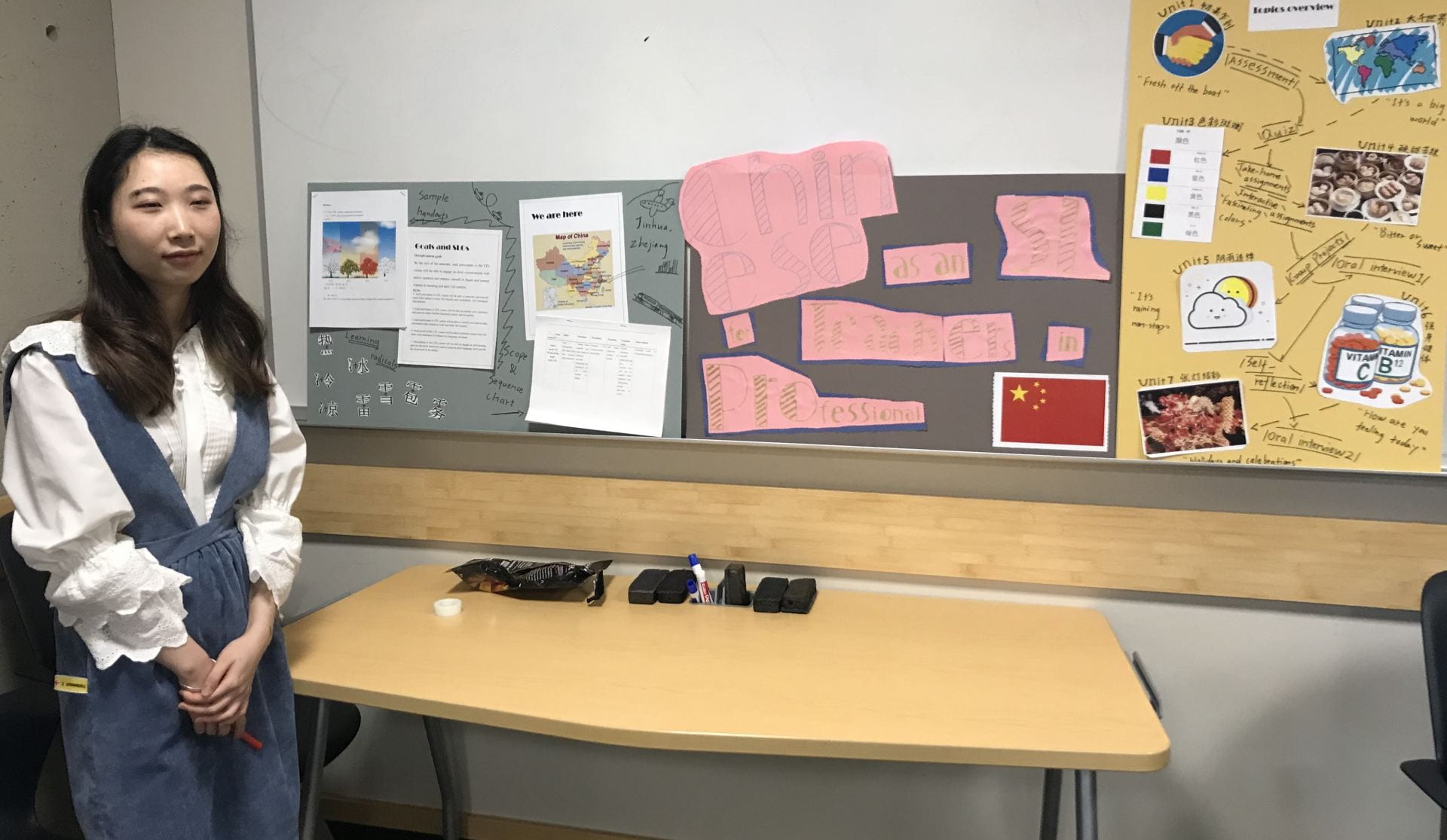
Jasmine with some poster materials in her curriculum class winter term

Could you tell us a little about yourself?

My name is Shiyun Li, but everyone just calls me Jasmine. I’m from China, but I’ve spent most of my undergraduate and graduate years in the US. I have a BA in English Literature and I went back to China and taught English for a year before coming to Eugene to continue my studies. I’m always enthusiastic about short stories and detective novels. And traveling by myself is what I like to do the most in my spare time outside the school. I love to meet with different people along the way and listen to their stories, which to me is even more exciting than travel itself. The counties that are still on my travel list are: Japan, Italy and Jamaica. I hope I can visit these countries in the near future and have more exciting adventures along the way.

What are you working on in your MA project, and how are you feeling about it now that you are halfway done?

I’m currently working on the topic of use extensive reading approach in EFL context and integrating modified and authentic materials to teach reading for adult and young adult English learners. I feel like everything I’ve been creating for the project is finally coming together now. It is never easy when you are writing, but at the same time you are looking forward to write more about it. And I really like how my perspective has changed during the process of writing and how much I’ve learned so far by working on my project.

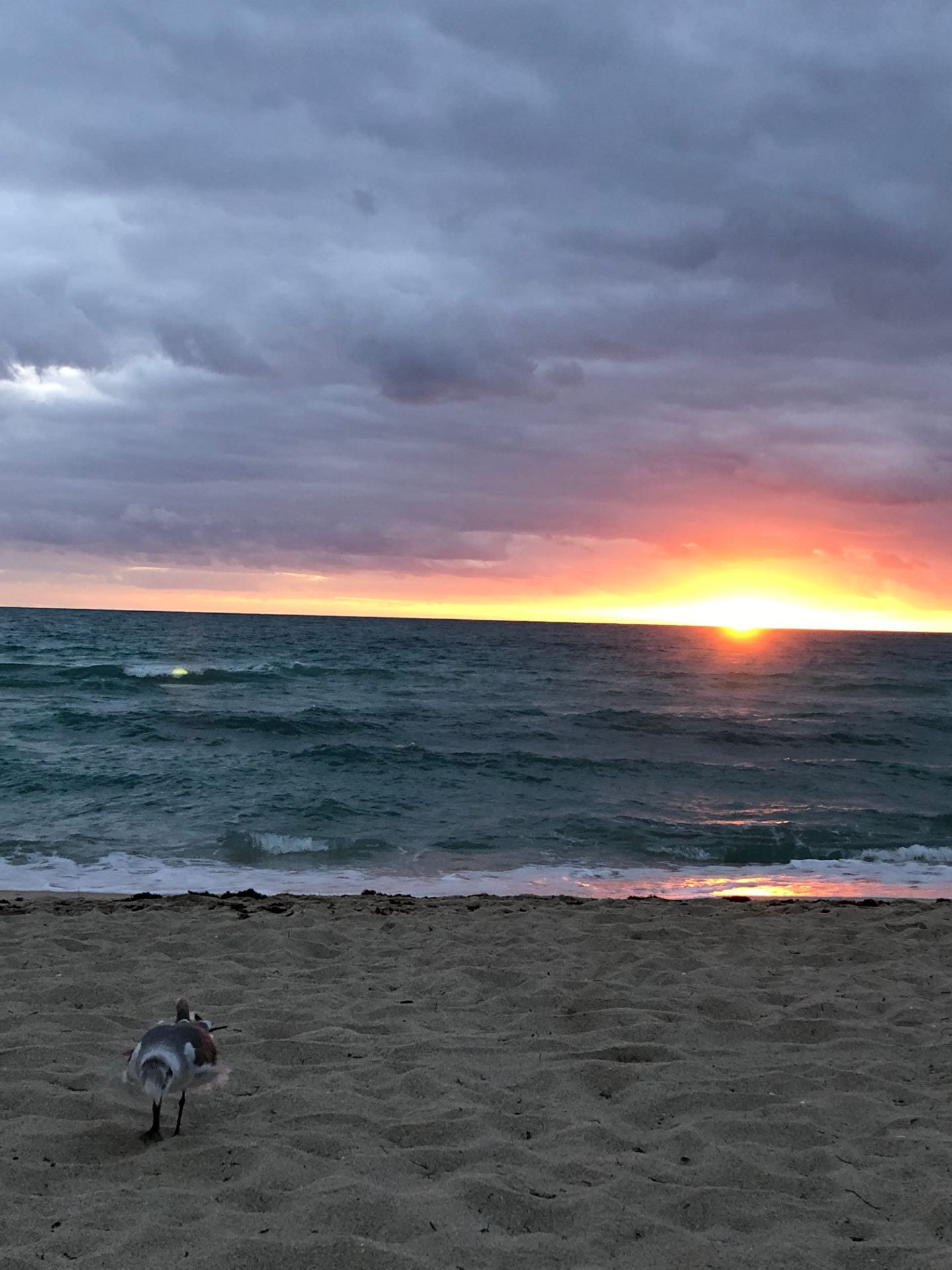
Sunrise at Miami Beach

What was most interesting for you in your English and Chinese language teaching internship experiences this past term?

The most memorable part about my internships is the teaching I did in AEIS (Academic English for International Students) because it was the first time I taught a cross-cultural language class at the university level. In the program I’ve learned how to plan a lesson and create materials according to learners’ needs and abilities, so it was a great opportunity for me to put what I’ve learned in practice. It is really rewarding to see students are doing a good job and learning new things from what I’ve prepared for them.

What are you hoping to do after LTS?

After what I’ve learned in the LTS, I’m hoping that I could be given an opportunity to continue my education and doing research in the language teaching field. I’d like to pursue a PhD in Second Language Acquisition and put my focus on bilingualism and second language learning process. But still, I wish to always be a good language teacher in my students’ perspective.

Alumni Spotlight- Lee and Zach

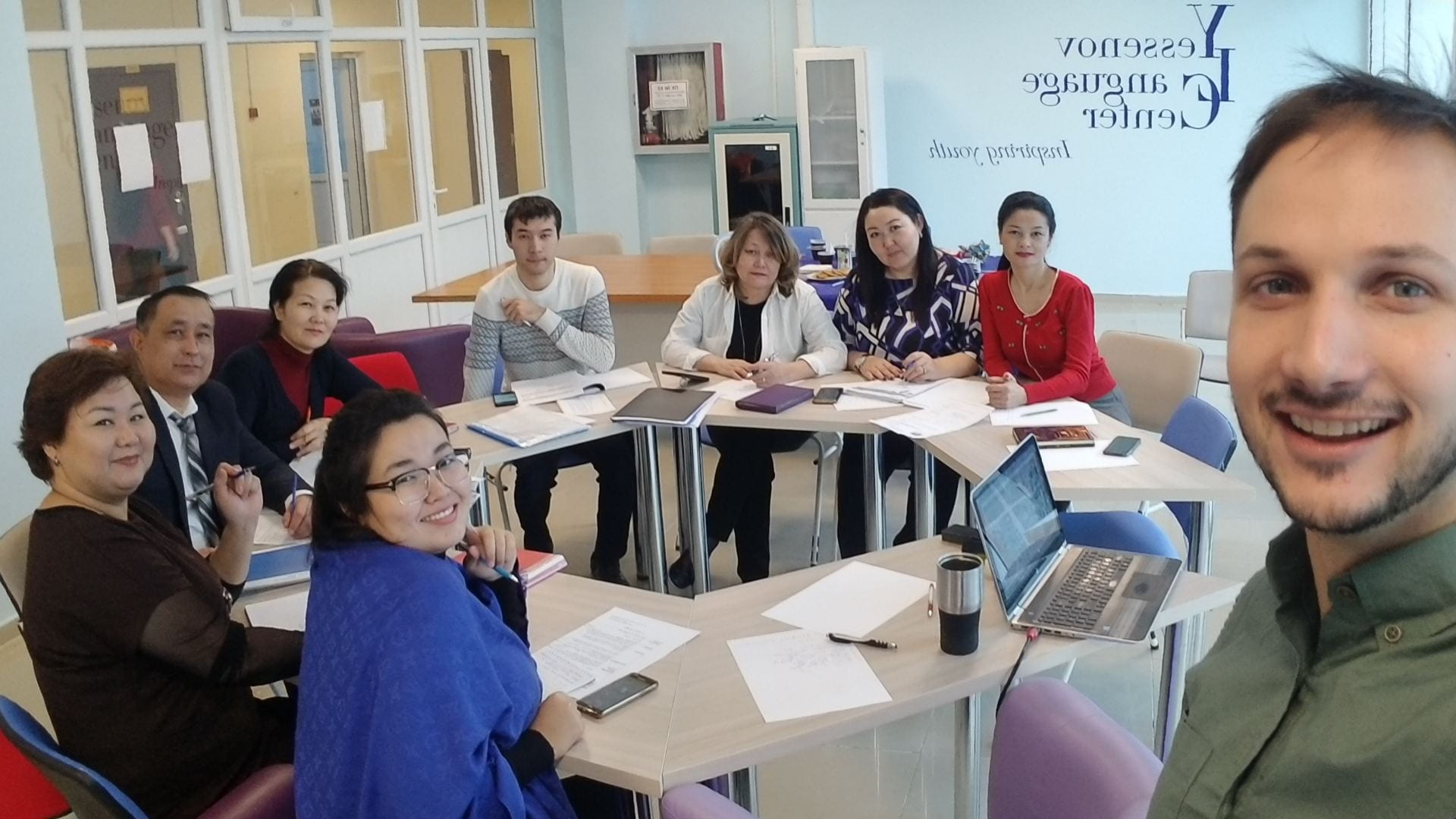
Zach Patrick-Riley and Lee Huddleston both earned their MA degrees in LTS in 2018, and are now spending some time as teacher-trainers at Yessenov University in Kazakhstan. Below is the story of their lives so far in this new area and new job!

Zach and Lee

What are you both up to in Kazakhstan?

[Lee and Zach]: We chose to answer this question together because almost all of our professional and personal days are spent together. We are both currently Teacher Trainers here at Yessenov University, in Aktau, Kazakhstan. However, the term teacher trainer only begins to describe the variety of hats we wear on a daily basis. The Yessenov Language Center is a pilot project that started fall of 2018, so we’ve been involved in every aspect of integrating English language learning into the university curriculum. Speaking of, one of our primary tasks has been to design curriculum for A2-B2 classes. We have quite a bit of flexibility in designing the curriculum, yet at the same time, we must be conscious of all relevant stakeholders needs (i.e. a very diverse student body, teachers, administrators, our department, and more). With the help of the World Languages Department and English Philology Department, we also have designed and teach a continuing professional development course (CPD) for the Top Managers of the University that ultimately prepares them with 21st century skills and to succeed in taking the IELTS.

One of the most fun aspects of our job is being able to continue teaching in the classroom! We lead interactive teacher training workshops twice a week for two departments in which we focus on English language teaching methodological approaches. Our topics in these workshops range from Flipped Learning to the use of the L1 in the language classroom. Additionally, we also have an English Speaking Club once a week in which we lead students in fun activities while practicing functional English. Just last week we lead a great club which had the students running around the school on a scavenger hunt and creating hashtags for a few of their pictures.

Zach guest teaching the CPD course

To build capacity at the university among the teachers of two departments, we conduct weekly observations of teachers in both university and CPD courses. During these observations we offer suggestions for continuing their growth as professionals, as well as alternative ways of conducting the lessons. The teachers are generally very open to feedback and appreciate the suggestions and advice that we offer.

Finally, we serve as cultural ambassadors every day at the university. Usually we promote in an informal sense through everyday interactions with students and staff at the university. While other times we fill this role in a more formal way by speaking with media outlets and visiting government officials such as the mayor, governor, embassy officials, ministers, and even the acting president of Kazakhstan.

How did you find this position at the university?

[Lee]: My journey to Kazakhstan began when I first met Yelena Feoktistova in my LTS courses. Yelena was a Fulbright Scholar at the American English Institute at the UO in 2017-18. She observed, participated in, and presented at a variety of our classes over the year-long program. She was impressed by the strong focus our program had on language teaching methods and approaches as well as how to apply those in a real context. When she first told us about teaching in Kazakhstan, and her purpose of bringing new teaching methods to her country and university, that I might one day end up in Kazakhstan was the furthest thing from my mind. But many conversations later, I learned that Yelena would be the head of a new English language center project in Aktau and she was looking for teacher trainers to help her jump-start the program. The idea of doing teacher training and curriculum design work straight out of graduate school to me seemed like too good of an idea to pass up, I wanted to really hit the ground running in terms of applying what I learned in the LTS program. I was certainly not wrong, everyday teaching here has been full of the rewards and challenges that make teaching such a dynamic field.

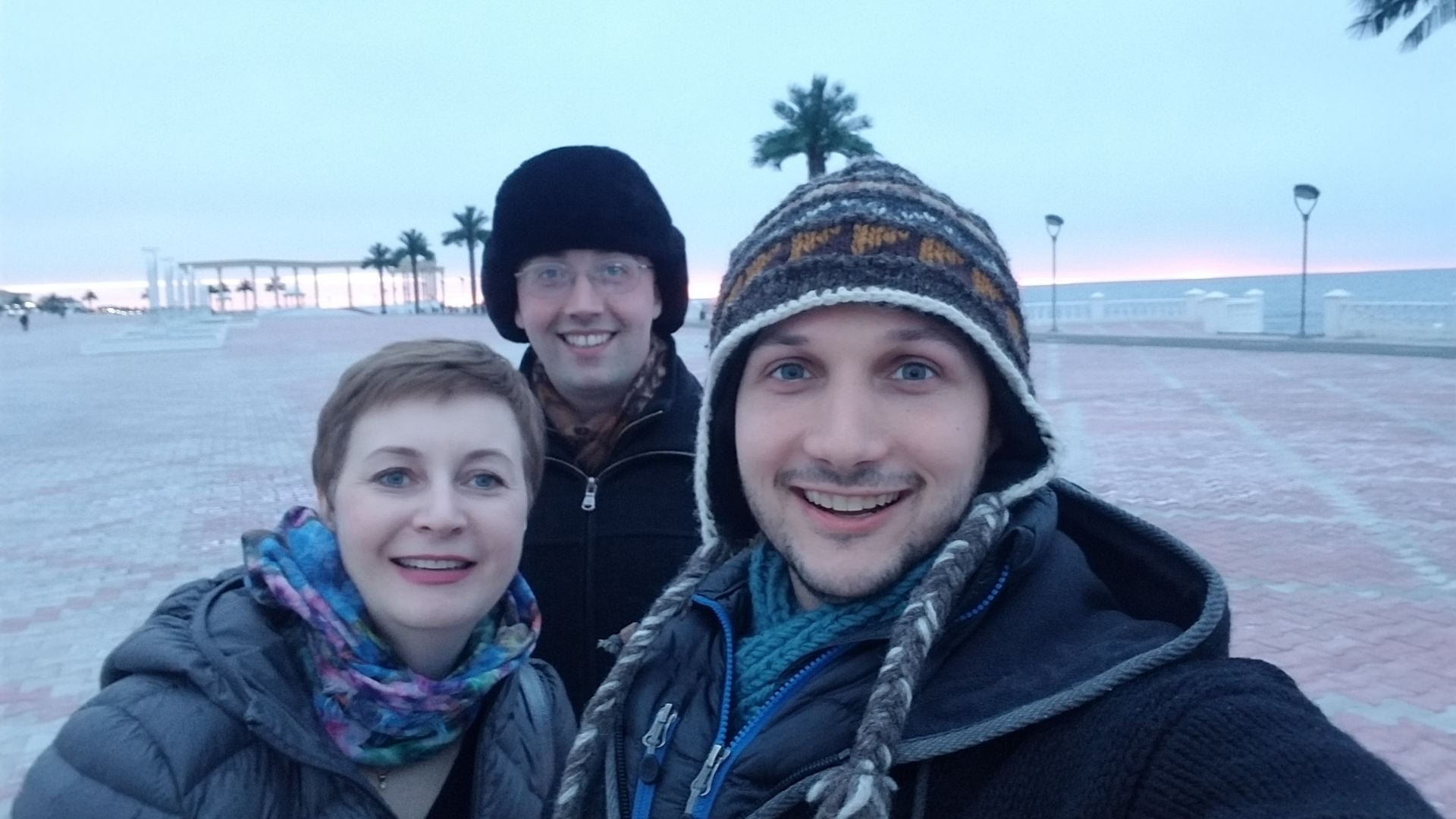
Lee, Yelena, and Zach walking by the Caspian Sea

[Zach]: I first met Yelena at a CASLS meeting halfway through the LTS program. As she was a visiting Fulbright scholar, she occasionally attended CASLS curriculum meetings to learn about the innovative projects CASLS does. To be honest, when Yelena said she was from Kazakhstan, I had to check my mental world map to know exactly where that was. Needless to say, the world traveler in me was intrigued from the get-go about a region I had never been to before. As the months went on, I got to know Yelena better and learned more about the Yessenov Language Center project. My excitement about a rich cultural and professional opportunity grew and grew. I also loved the flexibility around the contract start time. Because of it, after graduating last fall I was able to go to a family reunion in the USA and backpack around Nepal and India for a couple months before starting the job. Having that time to recover after the program helped a lot in feeling ready to work hard again.

 What is a special thing or place you have discovered there?

[Lee and Zach]: THE CASPIAN SEA!!! Our Pacific Northwest Roots absolutely love it, especially as a way to relax on the weekends. We also both love the proximity of nearby countries. While here, Lee has visited Turkey, Azerbaijan, and will soon visit Georgia. Zach has visited Georgia twice (yes, he loves it there!).

Sunset photo of the Caspian Sea

[Lee]: I’ll share two things I have discovered, one is more significant, and one is more of a simple pleasure. I’ll begin with the simple one.  During my first couple of months in Kazakhstan, I experienced a sudden coffee drought. Tea is far more popular in Kazakhstan than coffee, so coffee is just less accessible here, what coffee I did find here was always instant coffee, which can still be great, but it could not fully satisfy my Oregon coffee tastes. So, what I discovered was, a particular store that sold great coffee, and I also learned how to recognize coffee as it was sold/packaged here. To my embarrassment, I quickly realized that lots of real coffee had been sitting under my nose the whole time. This leads me to my second discovery, which is that you can get around and function with a surprisingly low amount of language. I have been amazed about how quickly I have been able to read most signs in Cyrillic now, and how much I can get done while speaking little Russian. I admit that this is probably due in large part to technology like maps/google translate, but it is still fascinating to realize how much top-down understanding helps when you speak very little of the language and don’t read the script. As someone who studies language this has been a fascinating experience in a linguistic and of course a personal and professional sense.

[Zach]: One of the most special things about Kazakhstan is its diverse population and spoken languages. We interact with people originally from Kazakhstan, Russia, Turkmenistan, Turkey, Azerbaijan, Uzbekistan, Armenia, Korea, and even more nationalities on any given day. Consequently, we hear a variety of languages being spoken in the hallways. As language lovers, this is very cool! It’s also special to learn additional languages ourselves. I have focused more on learning Russian as I plan on working digitally from Russia and Georgia this fall. But learning at least some phrases in Kazakh has been a sure way to bring a smile to anyone’s face, as the language is a source of national pride, particularly in the Mangystau region.

What has been most useful from LTS while teaching there?

Lee showing his enthusiasm for teaching during a speaking club

[Lee]: I mean, honestly everything that we learned in LTS has been so useful in this context. In this job we have really been practicing each part of language teaching developed in our courses from curriculum design, to creating assessments, to teaching in our own classroom, to training others in the use of a variety of teaching approaches. Resources that we created and/or encountered during our various classes, internships and graduate employee positions have also proven invaluable as we seek to give quality materials to our teachers. Though I have not directly implemented my masters project here in this context, I have used resources from that project, and approaches that I developed in the project to help create the curriculum and design workshops for the teachers.

[Zach]: I completely agree with Lee. The breadth of skills you learn while in the LTS program have all proven extremely useful. We have used knowledge gained from every class we took and our respective Graduate Positions (Lee, AEI, and me, CASLS). Lee and I often even chat about how cool it would be to take part in those priceless LTS discussions with the experiences we’ve had here.

Any advice for current LTS students?

[Lee]: I would advise current LTS students to always be thinking about making resources/projects that are highly adaptable or appropriate for a variety of contexts, these can be resources that you can easily implement in work outside of the program. Also, though I think I said something similar in a previous blog I think it bears repeating, really do as much as you can while you are in LTS, take advantage of all the development opportunities that you can, really give your all for every project and every assignment because all of that can be directly applied in your future experiences.

[Zach]: A year ago we were in your shoes really getting into the final Master’s project, so we know how tough and challenging it is. Stay strong and believe in yourselves. You are even more capable than you believe, and you should be very proud of how much you’ve already learned and accomplished. If you ever have more specific questions, please feel free to get in touch with us directly. #LTSforlife

Yessenov University

Alumni spotlight – Kelsey

Kelsey Hertal graduated from LTS in 2015. Her project was designed with the intention of heading to Latin America, which she did but not for her expected reasons as you will see below!  The project was titled, Integrating American English Pragmatic Instruction in Tourism Training Programs in Latin America: A Materials Portfolio.

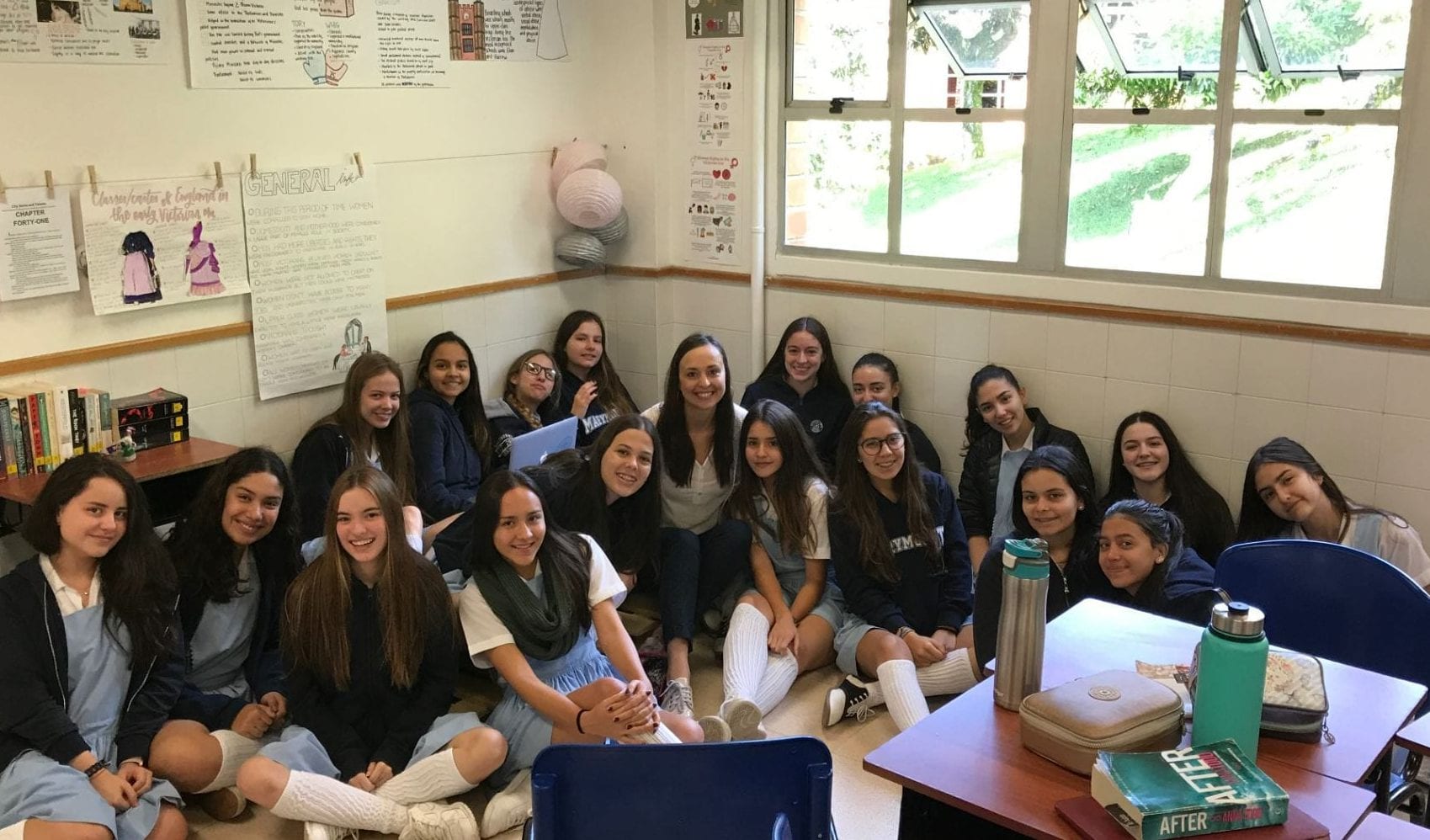
Kelsey (middle) with one of her classes in Columbia

Hi Kelsey! What have you been doing since you graduated from LTS?

My story is about how to stay patient when at first you don’t succeed, and always remember that something good might be just around the corner!

When I graduated from LTS, it took about 4 months for me to find a job. I looked everywhere (and I mean EVERYWHERE) to find a job and no language school, international school, university, or community college was ready to hire me. I remember it was incredibly discouraging and I felt that all my hard work in LTS was useless!

In November of 2015, Keli emailed me about an immediate job opening at INTO Oregon State University. They urgently needed extra teachers because of their high enrollment numbers that term. I applied and immediately received a call asking for an interview. The following day I drove to Corvallis, interviewed, got hired on the spot, and was scheduled to start teaching the next morning. The only word I have to describe that morning was chaos, as they gave me my teaching material 15 minutes before the class started. However, with my adrenaline running off the charts and my heart beating a thousand times per minute, it was one of the most amazing teaching moments of my life. LTS prepared me 110% for jumping into a teaching environment with no plan and coming up with material on the spot.

My contract at Oregon State was supposed to last 6 weeks, but at the end of the term, the students wrote a letter of recommendation to the INTO OSU administration team begging for them to keep me on the teaching staff. To my surprise, OSU offered me a contract for the next term because I “impressed” them so much with my rapport with the students. I worked as an adjunct at OSU for a year and a half, and it was more exciting and fun than any teaching job I could have imagined.

At the end of my first year, I happened to meet a Colombian recruiter at an INTO OSU end-of-year work event. To make a long story short, we fell in love (yes, I know that took you off guard!), I quit my job at OSU, and I moved to Colombia in April of 2017. As soon as I arrived in Colombia, I had an interview at Marymount School Medellin and I was hired immediately as a High School English teacher.

I started the job in the middle of the school year, and once again, had very little preparation for what I would be teaching. I truly feel like LTS prepared me to hop right in to a teaching job that I wasn’t necessarily prepared for.

We got married this past July and we’re loving the newlywed life. I’m still working at the same school and I absolutely love my job as a High School English teacher. Although I never expected to teach high school, I wouldn’t change it for the world and I am so thankful for my students, the great teaching environment, and the classes I get to teach.

What a story! What have you enjoyed most (and least) about teaching so far?

My favorite thing about teaching is being with the students. I love seeing the “lightbulbs” turn on in the students’ minds and I love seeing learning actually take place.

I have the freedom to create all my materials, lesson plans, and activities for all my classes. And not only that, each class is based on a novel. So far, I have created units on the following books: Jane Eyre (Charlotte Bronte), The Book Thief (Markus Zusak), Fahrenheit 451 (Ray Bradbury), Romeo and Juliet (William Shakespeare), What I Saw and How I Lied (Judy Blundell), My Sister’s Keeper (Jodi Picoult), and To Kill a Mockingbird (Harper Lee). I can definitely say that teaching English through literature is the most fun thing in the entire world.

The thing I like least about teaching is dealing with unmotivated students who don’t want to learn, and as expected, I don’t love grading! 🙂

What has been something you learned while in the LTS program that you apply to your teaching now?

I learned so much in LTS that I apply to my teaching now.

  • The course on Culture, Language, and Literature (LT 528) helped me tremendously as, in my context, I teach English through literature on a daily basis in all my classes. While I was taking this class in LTS, I thought it would be really cool to teach English through literature but never thought it would be a reality for me. You never know where you’ll end up and what will actually come in handy in the future!
  • Learning how to truly write well. I can say I really learned how to write academically through completing the Master’s project. In my classes now, I teach my students academic writing, how to research, how to cite with APA format, etc. Without having put so much effort and attention to detail in my Master’s Project, I wouldn’t have been so equipped to teach this. Again, I didn’t necessarily expect that it would come in handy, but it did!
  • Like I mentioned before, through LTS, I learned how to jump into a teaching situation and figure out what to do on the spot. My teaching practicum (LT 537 Talking with Ducks) helped me with this greatly. It certainly helped me have confidence in front of a class and how to be creative without time to think.
  • Time management! As I’m sure with any Master’s program, you learn time management. However, if you don’t have time management skills, you will not survive as a teacher.

What are your hopes or plans for the future?

To be honest, I am incredibly happy where I am right now. I would like to stay here for at least two or three more years. I actually have fell in love with teaching high school English and literature, and I think maybe someday I would like to teach literature in an American high school. So far, life keeps throwing me surprises and each opportunity keeps getting better.

Do you have any advice for current and future LTS students?

To any current and future LTS students, my advice would be:

  • You may think you have an idea of what you want to teach, but life may throw you something different, and it will probably end up being better than what you could have imagined for yourself.
  • Don’t give up if you can’t find a job right after finishing your degree. Be open to any job opportunity that life may give you and when the right opportunity comes, you won’t be disappointed.
  • Be truly grateful in the workplace. I have experienced working with many grumpy and unhappy teachers. Although teaching is a hard job, if you want to survive, you have to stay positive, be thankful for the job you have, and remember the difference you are making in your students’ lives.
  • Try your best in each class in the LTS program. The topics in each class will come in handy in the future whether you can see it or not.
  • The Master’s project is a life lesson; it gives you valuable skills for life. It teaches you how to be disciplined and how to manage your time. It teaches you how to give your best when you’re exhausted and feel like you can’t keep going. These skills will help you more than you can imagine in your teaching career (and in your personal life).
  • The Master’s project gives you the opportunity to enter into the world of academia and it teaches you how to become a writer and find your voice. Recognize the importance of this and how you will use these skills in your future career.


Student spotlight – Jesus

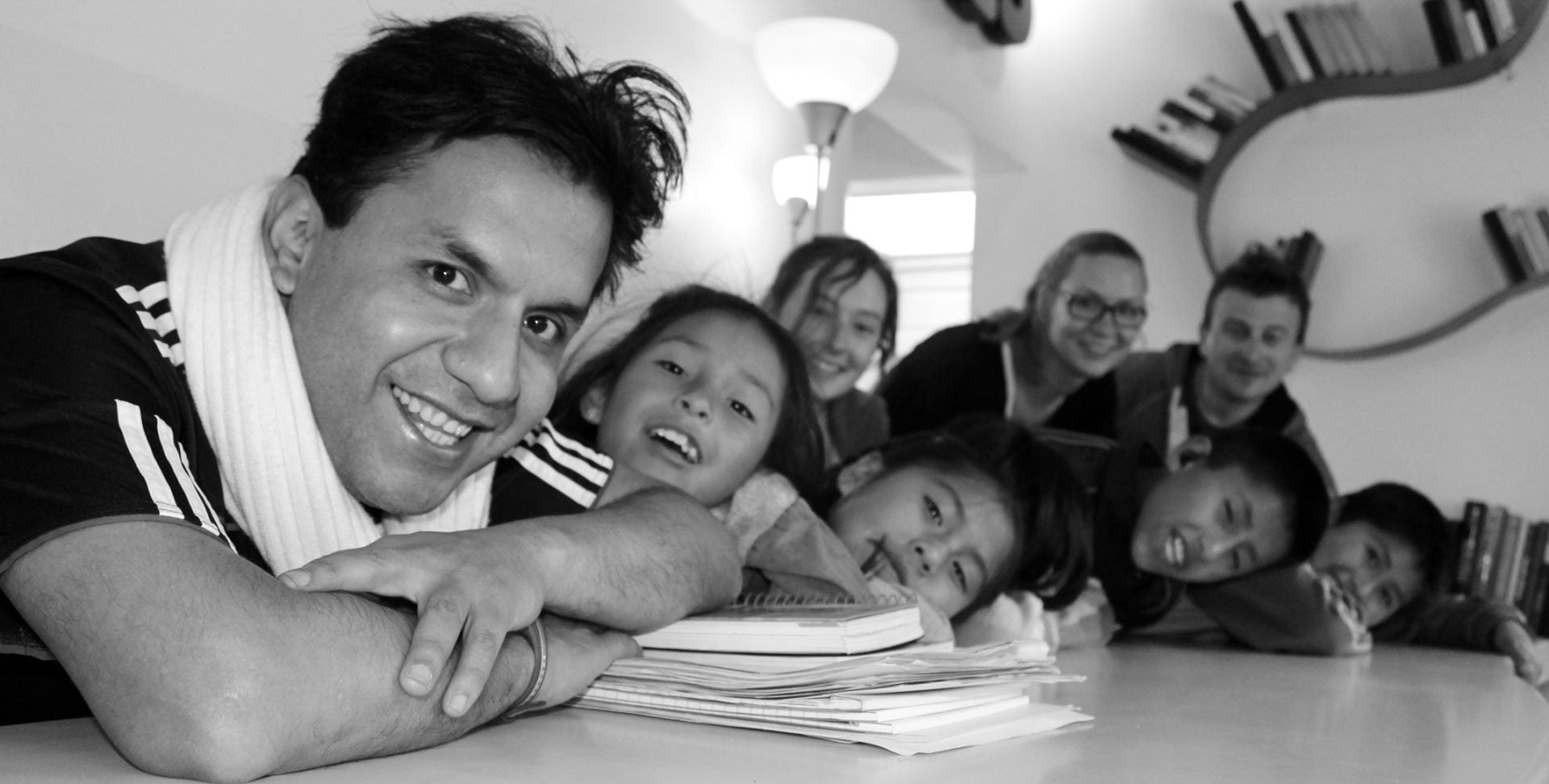
Jesus with some of his students in Cusco, Peru

Jesus Napancca Herrera is a current LTS student from Peru, now in his 2nd of 5 terms in the LTS Master’s program. Here he tells us a little about his past, present, and future.

Tell us a little about yourself – where are you from? Where have you traveled?

I am from Peru and lived in Cusco for many years. I was born in Lima, but since I was learning languages I thought I should move to Cusco, the city of the Incas and one of the largest tourist destinations in South America.

Tell us about your background in teaching and how you got the idea to start a language school.

I started teaching Spanish in 1997 and English in 1998. I was a private Spanish teacher for foreign visitors who were interested in taking intensive courses in Spanish. I was also teaching English to underprivileged kids from Cusco to contribute to my community. In 2000 I created a little cozy school for foreigners as well as for young Cusquenias who could not afford to pay for learning English. In April 2002 I opened Amigos Spanish School. In the same building we had foreigners learning Spanish and local young adults learning English. Both inspired each other and interacted on a daily basis.

The Amigos Language School that Jesus founded in Cusco, Peru

Another view of the Amigos Language School

What is your life like now here in Eugene? Is it very different?

My personal life hasn’t changed much. I am used to being busy every day and I even used to work on Sundays. The difference lies in the dynamic of my tasks. I used to be in charge of my work and have a group of staff working for me. Now I am working for the American English Institute at UO and I feel really fantastic! It is for me a great opportunity to grow as a person. I really appreciate my colleagues at work and my supervisors are amazing. While in Peru, I felt somehow lost and lonely because most of my compatriots thought I was busy for no reason, in a hurry and pathetically organized. Here in Eugene it is normal. So, I feel I am in my element now and don’t feel so lonely anymore. 🙂

You are teaching at the American English Institute as a GE (Graduate Employee teaching assistant) this term. What have you learned from this experience so far?

I have been learning many things, like how to work in a team. I have adjusted myself to following the new rules of this new job in a new country. My colleagues are supportive and always give me a hand at any time. There are great materials for teaching/learning English as well as new methods of teaching languages. Added to this, there is great infrastructure in the classrooms and at our offices. My supervisors and coordinator trust me in my skills as a teacher and allow me to adjust my class as I suggest. I feel privileged and for me, this experience is priceless.

What are some possibilities for your MA project at this point?

Day by day, the idea of my MA project is getting clearer in my mind. After all these months I have learned a lot in my classes in LTS and that helps me to have a better idea of what I would like to pursue in my MA project and my future career. I would like to specialize in LSP (Language for Specific Purposes) and for my future career I would like to work for companies that might need tutors or teachers for LSP.

What do you want to be sure to do during the rest of your year here? Do you have any specific goals or interests?

I would like to connect (which is already happening) the courses with my future career. I would also like to start my own consulting company to empower all kinds of schools that teaches languages.

Impressions of an International Student at the UO and the LTS Program

Post by Leila Tamini-Lichai, 2018-19 cohort

This post will NOT give you the typical information that you can easily find online about the LTS program or the University of Oregon. For me, as a current international graduate student in the LTS program, what I have experienced in the last month has been very different from what I thought it would be like.

I remember the time before I joined the LTS program. I had read about the program. I had checked the social media, LTS blog, and the website. I had also seen pictures and videos of the campus online, but I admit none of them did full justice to how beautiful it truly is. When I visited the university campus for the first time I was wowed by how amazing it looked. I am very happy that I got the chance to be in this program and at the University of Oregon. Therefore, I want to share my experience with you, and I hope it will help you know this beautiful university and this unique program better.

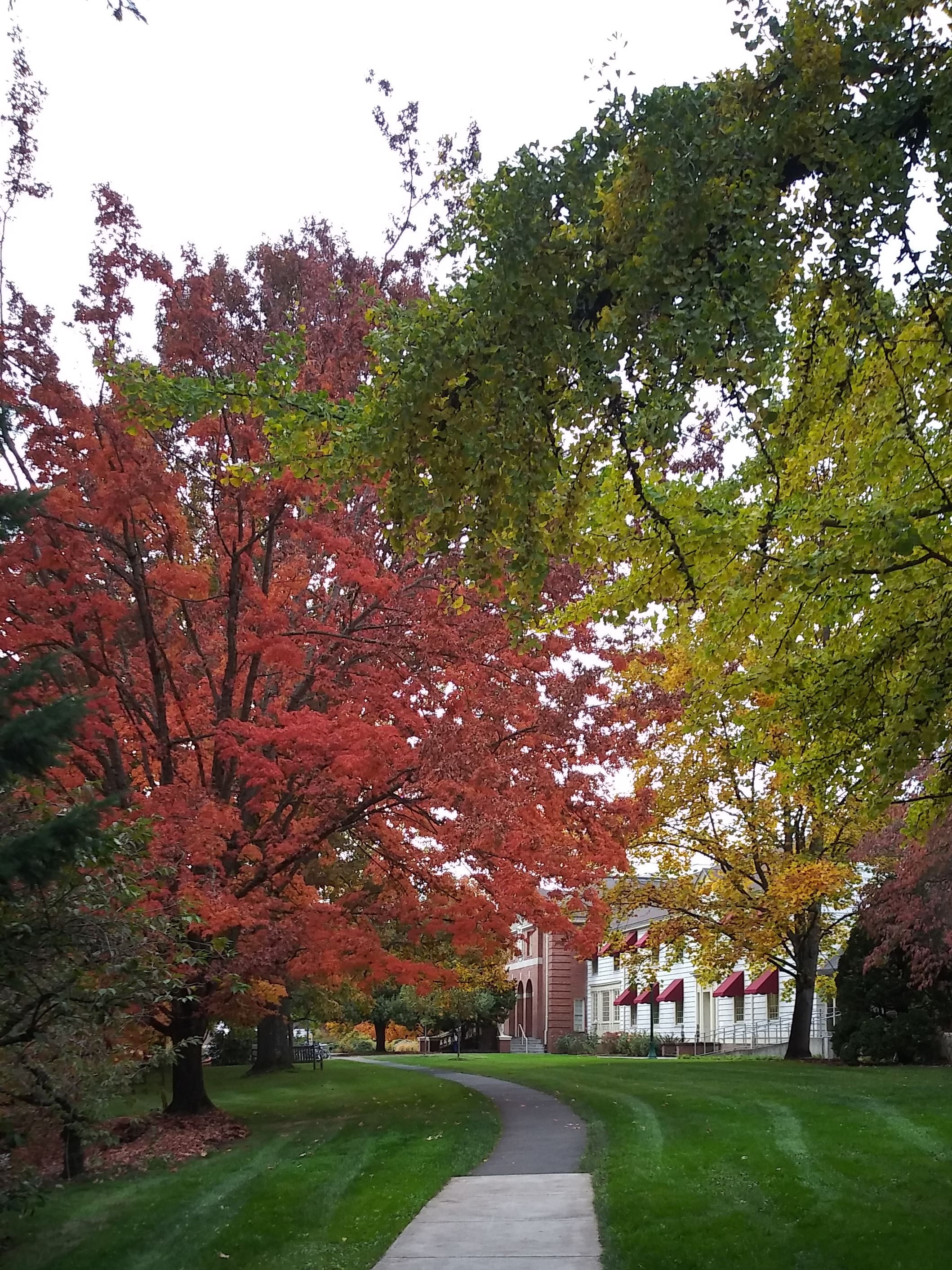
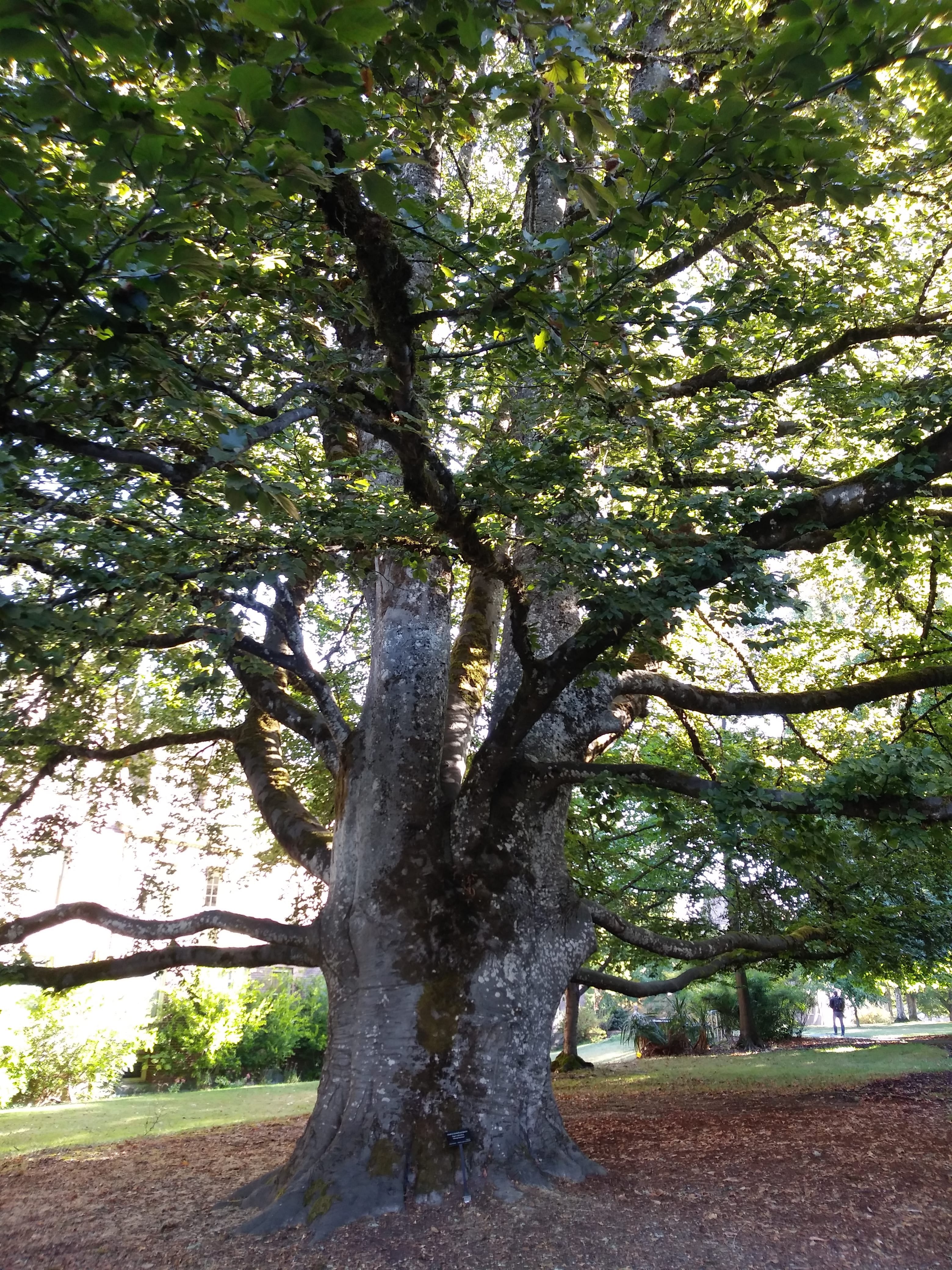
Trees 

The first thing you will notice on the campus is the variety of trees and their beautiful colors in the fall season. There are lots and lots of trees such as: oak trees, hazelnut trees, walnut trees, and many trees I don’t know the names of.


Other than trees there are also a lot of friendly squirrels that live on the campus and sometimes peek into your classes. There is a friendly one living around Friendly Hall where the LTS classes are usually held and according to one of our professors, he is named Harry! The picture below was taken outside our class at Friendly Hall. I usually spend my class breaks sitting on those benches and enjoying the sun. These benches can be found all over the campus.

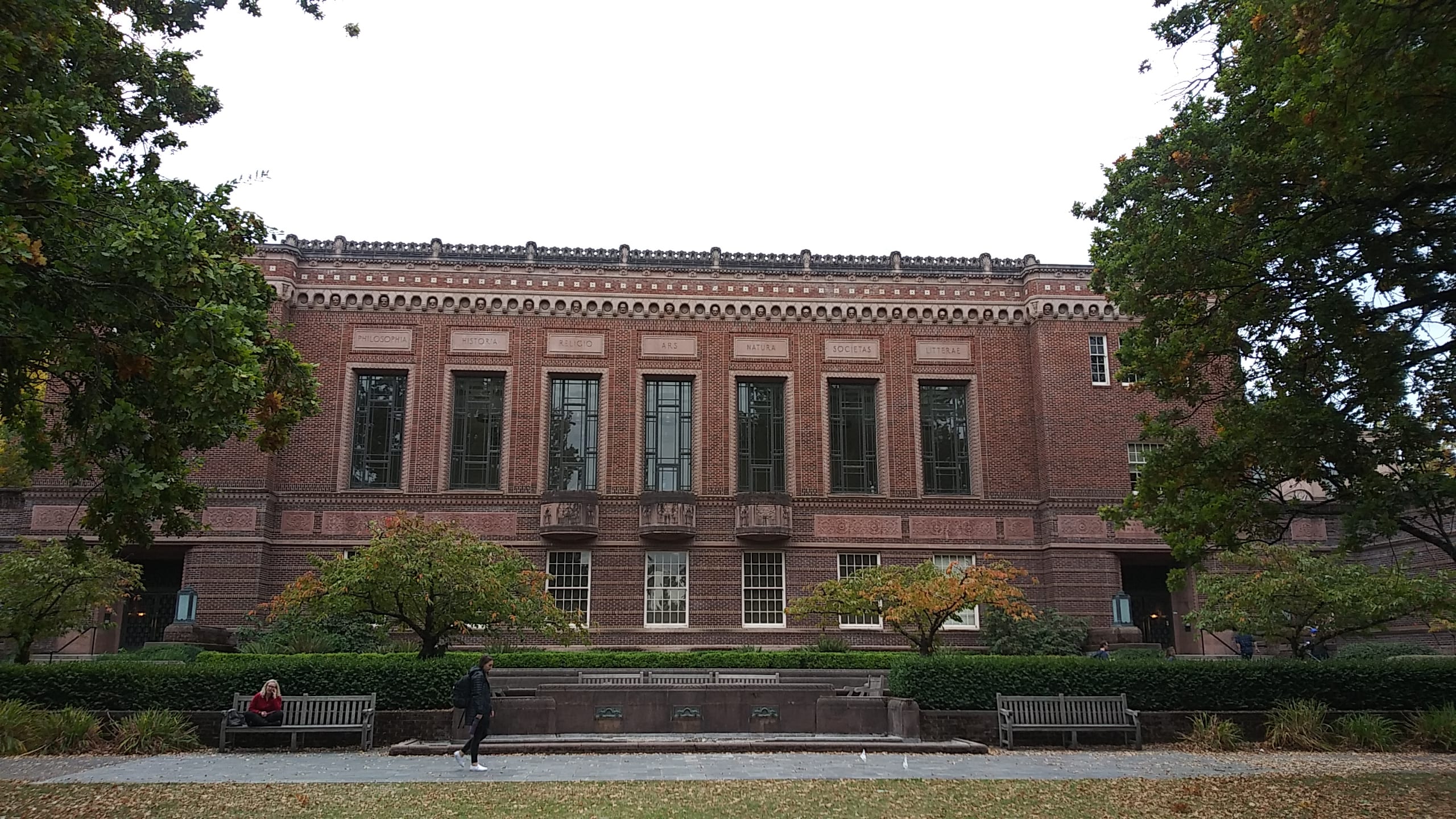
Knight Library

Another great thing about the University of Oregon is its library. It is a great library for nerds like me. There is a huge sitting area on the first floor where you have access to computers, printers, scanners, and reference books. There is also free internet access. There are literally millions of books available to read, and there are also plenty of sitting areas provided. In the basement there’s a café, so you don’t have to go without your caffeine. I personally like the UO library very much. In the picture you can see how big the building is. The library also has a website where you can find almost any book or article you are looking for.


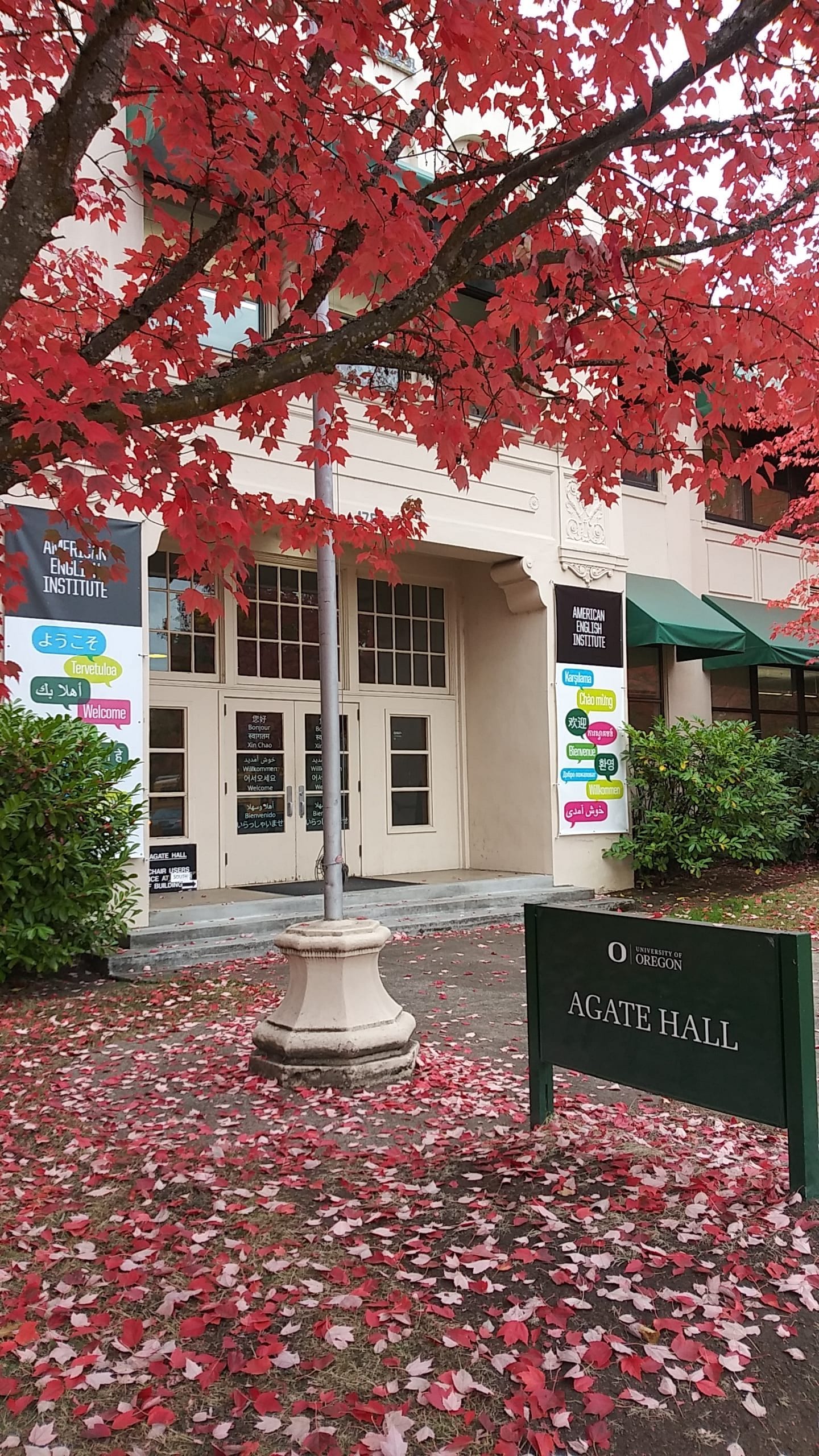
Agate Hall

Agate Hall is home to the American English Institute (AEI) and where some of our classes are held. It is a beautiful building surrounded by beautiful trees. It truly is a hall for languages. When you go in, you see students from many different nationalities and can hear very different languages spoken. Sometimes I just go there, sit in one of the study areas provided for the students, and just enjoy the environment. If you are an international student and need to improve your English, AEI can help you.

Yamada Language Center

Fortunately, we have one of our classes at the Yamada Language Center (YLC) this term. In this center, languages other than English are taught. It is a very welcoming environment for students to learn other languages. The Center is located in Mckenzie Hall and has very high tech classes. The Yamada Language Center works with a number of language departments at the University of Oregon and also has classes for less commonly taught languages such as Russian, Arabic, Persian, and Swahili.

The Faculty

Last but not least, I would like to talk about the academic aspect of the LTS program and its faculty at the Department of Linguistics. While you are in the LTS program, you will benefit from the great LTS program curriculum. You will study about the theoretical aspects of language teaching and ways of putting them into practice. From the beginning, you will participate in teaching and will have many opportunities to observe language classes. Also, the LTS faculty are very knowledgeable, kind, patient, and open minded individuals. They have always answered my questions and have gone out of their way to help me with my problems. I personally am very proud and happy to be part of this wonderful academic community.


Alumni spotlight: Liatris Myers

LTS students can publish too!

Lia Myers graduated from LTS in 2015 and recently published her MA project in the ORTESOL Journal. Her project title was Integrating Instruction on Pragmatically Appropriate English Oral Requests into IEP Courses in the U.S. 

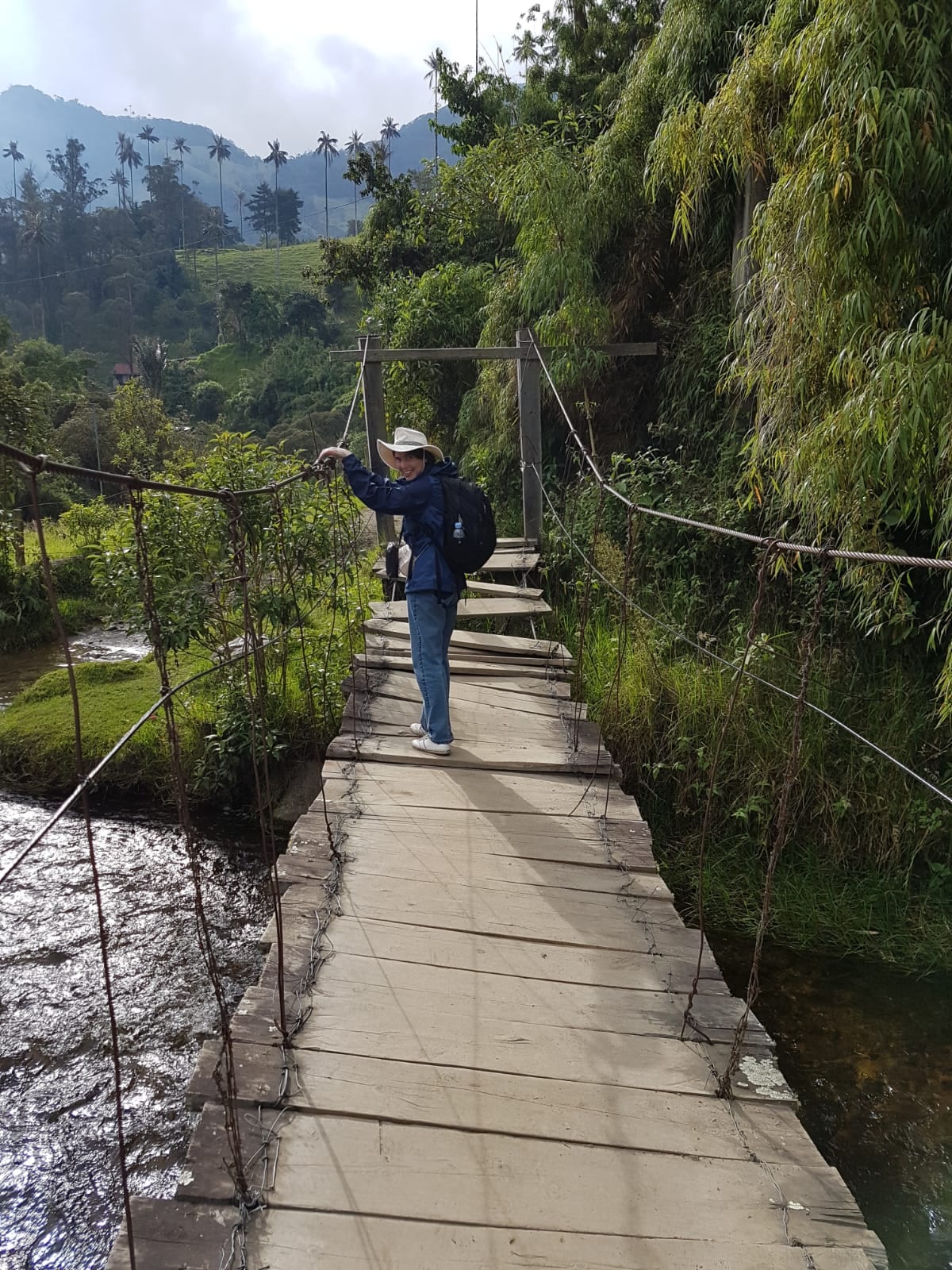
Me hiking in Cocora Valley in the department of Quindío, Colombia.

What was your project about, and what prompted you to consider publishing it?

My project was about teaching pragmatically appropriate English oral requests to adult ESL learners studying English in the United States. Working in the American English Institute at the University of Oregon, I had observed that there was a strong tendency for ESL learners at all language proficiency levels to make oral requests that sounded rude to Americans and that this caused social problems for the learners who did not intend to be rude. I wanted to understand why this situation existed and how it might be resolved. It was Keli Yerian (the LTS Program Director) who suggested publishing the project. She had just read for the first time the chapters where I explained my conclusions from my research and what I was proposing to do, and also my initial draft of pedagogical solutions. Going to meet with her to discuss it, I was really nervous because what I was proposing was very unconventional – I felt it was what my data said needed to be done but I’d never heard of anything like it – and I was worried she would say it was no good. Instead, she said I really had something to contribute to the field and I should publish it. It was one of the proudest moments of my life!

Lia’s article. It is noteworthy that in the same issue another article by LTS faculty Andy Halvorsen and LTS 2018 student Kunie Kellem is also published.

What was the process?

From the time Keli told me I should publish I intended to do it, but after graduation life was very busy starting my teaching career and I didn’t complete the first draft of the manuscript for publication until after my first school year of teaching. However, I’m glad it happened that way because in the intervening time I had the opportunity to gain more practical teaching experience including with some of the techniques I discussed in my project, which enabled me to improve my manuscript with examples and suggestions from the classes I had taught. I first submitted the manuscript to the TESOL Journal, but they rejected it because it didn’t have the type of research they were looking for. I used their feedback to rewrite it and submitted it to the ORTESOL Journal. They responded that it was interesting but they thought it would be more appropriate as an extended teaching note rather than a full-length feature article (the category for which it was submitted) and invited me to rewrite it for the extended teaching note category. So I rewrote and resubmitted it, and the paper was finally published in the 2018 edition of the ORTESOL Journal (available here: https://ortesol.wildapricot.org/Journal2018). So that was three drafts of the manuscript for publication with each draft being reviewed by some combination of Keli Yerian, Linda Wesley (my project advisor), Jim Myers (my dad who has always edited my work), as well as TESOL and ORTESOL reviewers, all of whom gave me feedback to use to revise and improve the manuscript.

How much does your published article resemble your project – what had to change?

The biggest change was I had to make it a LOT shorter. The original project is 143 pages including end materials, but what was finally published is only 10 pages. This meant I had to really distill the project down to the essential points. I also added examples and suggestions from my post-graduation teaching experience and made many changes to both the writing and the content of the manuscript for publication based on feedback from TESOL, ORTESOL, Keli Yerian, Linda Wesley, and my dad, though the core ideas remained the same.

What have you been doing since you graduated from LTS, and what are your future plans?

Oh gosh, I’ve done so many things since I graduated from LTS. Besides getting my MA project published, I taught ESL/ESOL at INTO OSU (Corvallis, Oregon) for several months, then at Chemeketa Community College (Salem, Oregon) for seven terms. While at Chemeketa I wrote and piloted the entire curriculum for a new course on basic computer skills for learners who don’t know how to use a computer or who have a low level of English language proficiency or both. It has since been used by several other teachers in Chemeketa’s ESOL program and I’ve had really positive feedback on it. I also presented on integrating instruction of digital literacy skills into ESOL courses focused on other topics such as reading and writing, listening and speaking, etc. at the Fall 2017 ORTESOL Conference. This year at the beginning of January I travelled to Medellín, Colombia to have the experience of moving to a new country where I didn’t really know the language to look for a job. Seven months later I know Spanish well enough to manage my own affairs in the language, have worked at a private school (preschool through high school) in the Medellín area for a few months, and learned to dance (Colombian salsa). In September I’m headed to Japan to teach at a university there until late January. After that, who knows? There’s a whole world of possibilities out there…

The goodbye message, card, and food from the goodbye party that one of my groups of 5th graders gave me on my last day at the school I worked at in Colombia

Any advice you have for current or future LTS students?

In terms of choosing a topic for the project, I recommend identifying a problem in which you are interested, then figuring out why it exists and how to solve it. Later, if you want to publish, have practical experience with your solutions before you write it up for publication and draw on those when writing your manuscript. Be prepared to do much revision and have people around who can read the manuscript and give you good feedback to help you make it better. When you submit it, choose a journal and category that really fits what you have. Finally, don’t be afraid to pursue an unconventional idea that really seems right. It may be the novel approach that’s needed.

Student Spotlight: Lee Huddleston (2017-18)

It is my pleasure to introduce 2017-18 LTS MA student Lee Huddleston

Lee at Lago Querococha near Huaraz in the Andes Mountains of Peru

Hi Lee! Please tell the world a little bit about yourself.

Hello, my name is Lee and I am a student in the Language Teaching Studies Master’s Degree Program at the University of Oregon. I was born in Ketchikan, Alaska where my Dad worked in a logging camp, but I was raised in Oregon. I love the outdoors: Hiking and camping are major hobbies of mine. I also really enjoy reading (particularly non-fiction history, as well as a variety of fiction books). I received my Bachelor of Arts degree in International Studies and Spanish at the University of Oregon. My first experience abroad was with a high school exchange program in Costa Rica. Then as a senior in college, I studied abroad for a semester in Peru, working simultaneously as a volunteer with at-risk youth in Pachacamac, Peru.

And I know you were in the Peace Corps–how was that experience?

Lee on the picnic island Aferen with his host family taking a rest in between hauling rocks for a project on Moch Island

I served for two years (2014-2016) in the Federated States of Micronesia. My permanent site was Moch Island, a small outer island in the Mortlock island group. Looking back now, I was rather cavalier in my decision to accept that two-year placement after only a brief google search of my future home, but I have never regretted that decision. It turned out to be one of the most amazing experiences of my life.

The impact of this decision hit me the moment I found myself waving good-bye to my new friends from the shore of the mile-long island that would be my home for the next two years. As the motorboat carrying staff members and the other volunteers departed for the next island, I could not help but think about how I was 250 miles away from the nearest place I had ever heard of.

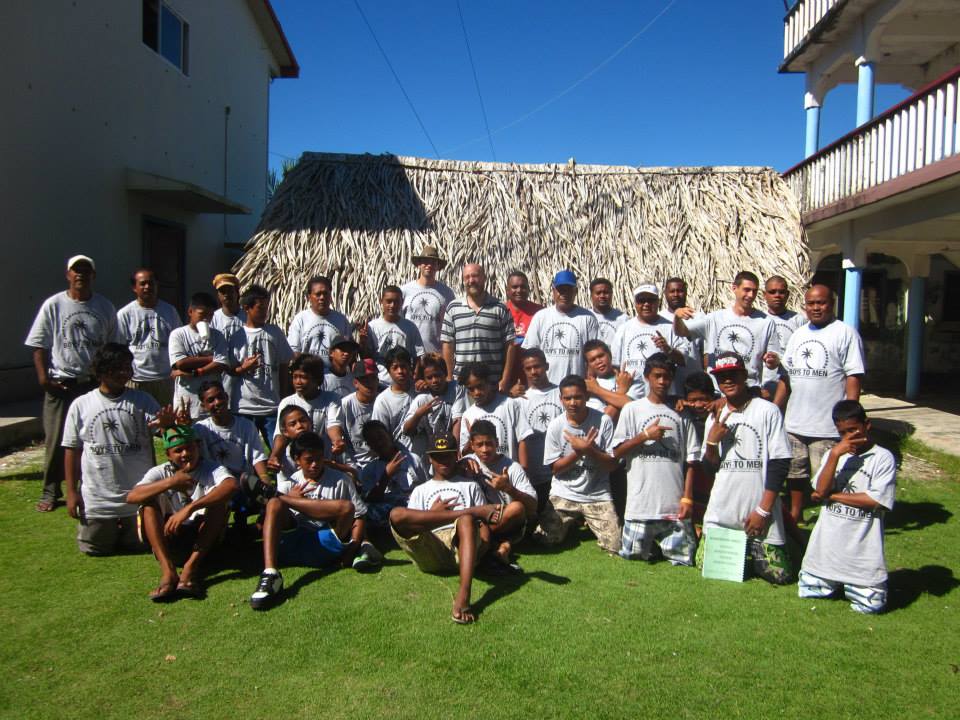
Lee with other Peace Corps volunteers and community leaders conducting a “Camp Boys to Men” summer camp

The Peace Corps was an eye-opening experience in many ways. It allowed me the chance to take on responsibilities, deal with challenges, and learn from mistakes and successes. On the whole, I loved my experiences on the island–they have left me with friends and family who I will treasure for the rest of my life. The skills I learned were equally formative as I navigated challenges of integrating myself into a community, learning skills for the workplace, defining my place in the culture and adapting to the idea that the borders between those things are not always so well defined in small communities.

My job on the island was as a co-teacher, teaching full-time with a local partner. This aspect was a great strength of the program mission as it allowed for mutual learning and cross-cultural dialogue between myself and my local counterpart. As a Peace Corps volunteer I also engaged in a number of secondary projects on my island, including teacher workshops, two summer camps for which I wrote up grants and helped conduct. I also helped conduct student study sessions after school for college entrance exams, and helped with the preliminary stages of building a basketball court for youth development on Moch. It was this experience teaching that stoked my passion for education, bringing me to the point of entering this master’s degree program at UO.

Wow, very cool! And how has the LTS experience been treating you?

LTS has been great so far! My fellow cohort members, the staff, and the courses have been sources of knowledge, wisdom, and enjoyment beyond my expectations.  My favorite aspect of this program is how I am able to put into action what I am learning through my work as a graduate employee at the AEI, and other professional development experiences.

What are you hoping to learn/gain from the program?

I joined this program hoping to build a theoretical foundation in current Second Language Acquisition pedagogy and put that into practice with a strong hands-on application of what I learned. While the Peace Corps was a valuable experience, I feel like before continuing on as an English teacher, it is essential that I gain the knowledge, skills, and legitimacy as a teacher that a Master’s degree in the field will give me. This will help me along the way to becoming a better, more prepared, and more qualified teacher. The way I see it, I owe it to my future students to be the best teacher that I can be.

So you mentioned you are a GE (graduate employee) at the American English Institute–what is that like?

Lee with his AEI Discussion 5 class

Yes, working as a GE at the AEI has been a great experience. Last term I taught a Discussion 5 course. Being able to apply what I learned in my courses to an actual teaching context and vice versa was extremely beneficial. I had never before worked in a university-level context, so to be able to do so in an environment as supportive as the AEI has been a real privilege. Being able to bounce ideas off of colleagues, having a supportive supervisor,  and having all of the AEI resources and facilities available to me are all great benefits of this experience. There have also been challenges, for example implementing a brand-new curriculum that was just developed by the AEI, as well as navigating the ins and outs of teaching a discussion course.

What are your goals for teaching at the AEI this term?

This term I will be teaching a new class, Listening 4, and this should bring with it new challenges that will dictate my goals for this term. One of my goals will be to better utilize Canvas and computer assisted learning to make my course more useful and engaging for my students. Another goal of mine is to try new things in the classroom, varieties of activities, and strategies to address student motivation and communicative competence. After all, one of the great aspects of this opportunity is the chance to try new things, develop myself as a teacher, and learn from these experiences.

Any final thoughts?

I am very thankful for this opportunity to be once again at the University of Oregon to continue my education. I feel like this program is very unique as it focuses on the teaching of not just English, but other languages as well. This brings a diversity to the program that makes it a pleasure to participate in.

Thanks so much for taking the time for this interview! Hope you have a great Winter term!