Student Spotlight: Siri

Meet Sirilak Sitthiwong, or Siri. After working as an English teacher/military officer at the Royal Thai Armed Forces Language Institute, Thailand, for 3 years, she got a scholarship from the Armed Forces to pursue her master’s degree. After graduation, she will go back there to resume her job. Currently, she is working as a Thai teacher at the Yamada Language Center, where there are currently 7 students in the community.
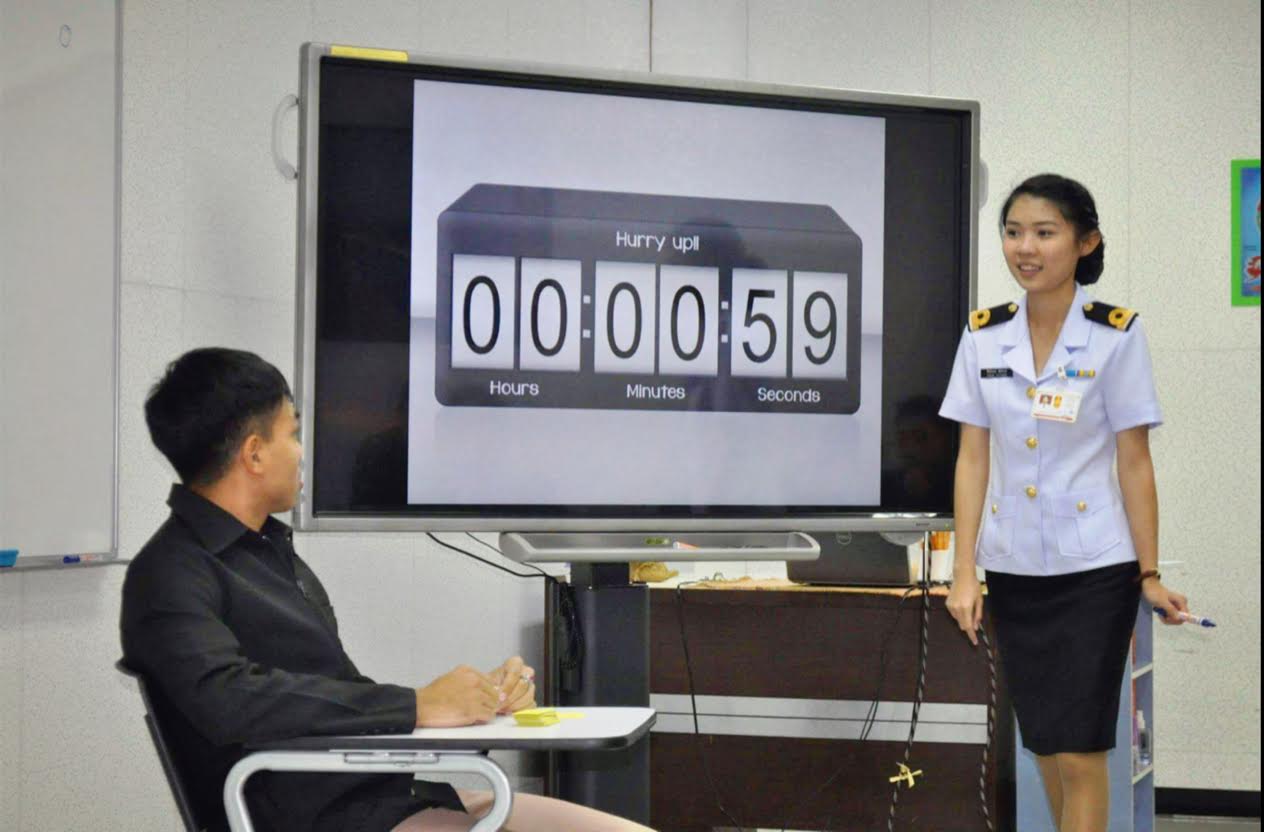
siri

Why did you come to the LTS program?

After having taught English in Thailand for quite some time and learned how to teach mostly by doing and trying things out, I got a great opportunity to come here and acquire knowledge and experience through more principled approaches. When I was looking for an MA program and university, the LTS program stood out as it suits my needs and interests. One of the planned missions that I will have to do is to teach Thai to military personnel from ASEAN countries and the program offers a flexibility to focus on any and more than one language. Fortunately, I have not only developed Thai lessons for some LTS courses but also have a chance to really teach Thai for the first time at the Yamada Language Center through Keli’s recommendation. The fact that LTS is an intensive and comprehensive program also allows me to go back and resume my job in a timely manner.


What is it like participating in the LTS program as an international student?

Being an international student who learns English and how to teach English at the same time is a very rewarding experience. While gaining more in-depth theoretical and methodological foundation, I’m learn other interesting aspects of American English and am amazed by how little I know about American pragmatics. I feel so lucky to be among friends who are very supportive and understanding and whom I can ask many questions about their language, no matter how small it is.  I was quite prepared for the cultural difference and how I should handle that before I came here, but I did not expect the difference to be this much valued by friends and teachers in terms of language acquisition. Having a culturally different context from many others helps me reflect on what I think will work and what will not for my students when I develop lesson plans, course design, and currently my MA project.


Tell me about your work with the Yamada Language Center. What has been most rewarding about working in the YLC?

Teaching Thai at the YLC gives me opportunities to put what I learn from the LTS program into practice almost immediately. As part of my teaching, I tell my students what I’m working on this term and ask them if they are interested in doing what I come up with. They are quite happy to be my guinea pig and give me valuable feedback. Fall term was my first time teaching Thai and since then I have learned a lot about my own language. To plan my lessons, I don’t have any textbook to follow and if I had it, it would not help me much anyway because my students (initially as small as five) have their own individual goals and needs which are very different from each other. I learned about backward design from my working experience here and that happened even before I knew it was called ‘backward design’. Creating materials and activities from scratch is what I find the most enjoyable and the ones that the students helped me create in turn engaged them the most.

I have total beginners and some intermediate students who have been to Thailand before. At first, I hesitated to put them together because I did not know how to manage a mixed-level class effectively, but Jeff recommended it so that I had more time to do my regular LTS studying. I was struggling with the differentiation at first and I felt it was too cumbersome that I decided to separate them according to their levels. I was lucky that I had a Thai friend to help me out. After giving it many tries and finally hearing from the students that they learned a lot from working across levels, I felt a lot more confident and keep this practice. Being in a friendly environment with a very supportive boss like Jeff and nice colleagues, I have discovered a great deal about language teaching, which is different but complementary to my role as an English teacher back in Thailand.


What is your MA project about, and why did you choose this topic?

My project is about using films and TV series to develop oral skills proficiency. This type of materials is always of my interest and passion because they are what I learned English from. I remembered dreaming about studying abroad, seeing what I saw in the movies and talking to the people I heard from the movies . It was this dream that drove me to put more effort when it came to studying English. While many people think of films as materials for practicing vocabulary and listening skills, which can be done at home, I see them as contextually rich resources for speaking skills as well. Especially with some careful guidance, films can be triggers for various conversations. I’m also interested in cultural/pragmatic aspects that students can learn from watching films. Many of them reflect real life that has not been very well presented in textbooks.

Faculty Research Spotlight: Anna Mikhaylova

Anna Mikhaylova is faculty in the Linguistics Department whose research focuses on second and heritage language acquisition and bilingualism. She is teaching LT 611 MA Project I this term.

Anna.LTSblog


How are you connected to the LTS program?

My biggest connection to the LTS program is through the projects that LTS students develop as a capstone of their degree. In the past four years I have taught the first of the MA Project (LT 611) course series. It has been exciting and rewarding to watch each student develop their ideas into a well-developed and well-researched argument and create a foundation for their final product (teaching or materials portfolio, course design, or an action research project, which they would be developing in the second course of the series). I have also enjoyed teaching Second Language Teaching Planning (LT 536) and serving as advisor and reader for several MA projects.

What other classes do you teach?

The Second Language Acquisition courses (LING 544 and LING 644) and graduate seminars on Bilingualism and Heritage Language Acquisition, which I teach for the General Linguistics MA and PhD program, have also been open to LTS students. It certainly has been a privilege to have LTS students provide a language teacher’s perspective and insight the theoretical discussions we have had in the LING classes. And I also pride myself in the fact that several MA projects were supported by the readings or even grounded in the research projects LTS students developed in those Linguistics classes.

What is your research about?

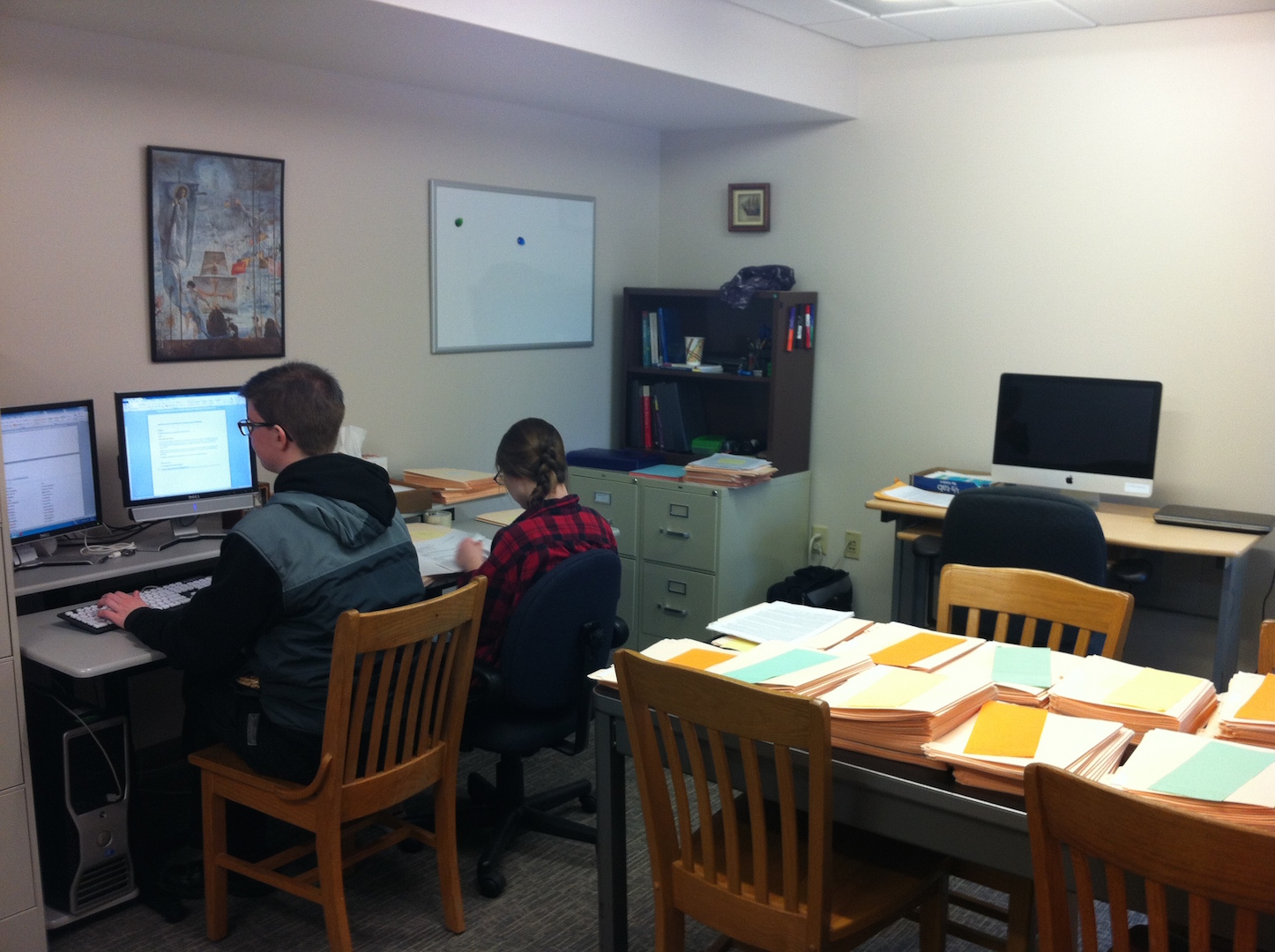
Much of my work has tackled finding an empirical and theory-based explanation to the observation that both foreign (FL) and heritage language (HL) speakers have a particularly difficult time with target-like use and successful comprehension of functional morphology. A recent exciting project bridges an important gap in research by focusing on K-12 rather than college-level FL and HL learners. This study of oral narratives collected at the beginning and end of an intensive Russian dual immersion program throws light on language maintenance and effects of re-exposure in international adoptees. My latest project, still in progress, has involved by far the most participants and has the most immediate implications for instruction. We have so far tested 314 FL learners and 35 HL learners of Spanish to see whether low-intermediate learners are able to fully comprehend meaning of a text while attending to grammatical form (or whether such a task is too taxing). In the photo, are my research assistants in the Second Language Acquisition and Bilingualism Lab, Joana Kraski and Aleya Elkins, working through the hundreds of test packets.

Research Assistants busy at work.

Research Assistants busy at work.

LTS Faculty Spotlight Belinda Young-Davy

Belinda Young-Davy has been teaching in the LTS Program since it began in 2004. She is also faculty in the American English Institute (AEI).

How are you connected to the LTS program?

I teach the Second Language Teaching Methods class (LT 435/535), and have also taught the Assessment class (LT 549). I really enjoy teaching methods because it gives students who are about to embark on a language teaching career a sense of the history of the field. It also introduces them to the complexity of language learning in a way they may not have thought of before.  The assessment class in also an eye opening experience. Most academic classes, including language classes, still rely heavily on traditional testing such as multiple choice, fill-in the blanks, etc. The assessment course illustrates how to think outside the box when assessing students, and come up with effective, interesting and even fun ways to assess students. The class is also an opportunity to get ideas about how to include students’ input in the assessment process.

What other classes do you teach?

I teach academic writing and oral discourse for the AEIS (Academic English for International Students), which is an English language support program for matriculated students. I find teaching writing very interesting because students are not just learning techniques. They are learning how to examine and explore other people’s ideas in a way that may give them insights into other cultures, their own culture, and themselves. In fact, it is not unusual to find that the shy, quiet student who sits in the back of the classroom and is cautious about sharing ideas publicly comes out of his/her shell — on paper, at least — by the end of the term.

What projects have you been involved in?

I have also been a student advisor for AEIS students. Being an advisor gave me a new perspective on international students, which is the students’ own perspective. As an advisor, I have gotten a look at the ‘bigger picture’, which includes how they are adjusting to a different culture, a new educational environment and teachers who have very different expectations of them than they have faced before. That information gives me more information I can use to make my students comfortable in my class, and across campus, so that they can succeed in their goals.

How do you balance your life as a teacher with other activities you care about?

That’s hard. Teaching takes a lot of planning, which means it take a lot of time outside the classroom. In the past I tended to let my teaching responsibilities dominate my “leisure” time such as looking for interesting articles/podcasts, trying to create activities that address different learning styles, and reworking things that didn’t work as well as I had hoped in the previous term. The result is that I found I was spending too much time at the computer on weekends. Now, I schedule “down time” for myself so that I don’t forget to have fun.

What do you think is most important for new language teachers to learn or experience?

Patience. Sometimes in our haste to give our students the skills they need we can overwhelm them by going too fast or trying to do in the first weeks of a class. We have so many ideas and activities we can’t wait to bring to the classroom. That means that our good intentions can result in overwhelming our students or failing to get a good idea of who they are as individuals, and listening to their voices. However, if we slow down and take a couple of weeks to get to know who our students are as individuals, we can be much more effective teachers. We might find out, for example, that some of the activities we had planned would be more suitable for a more out-going class, or that they need to be more challenging for a highly motivated group. So, I believe focusing first on who our students are and what they need makes us better language facilitators.

What advice do you have for graduate students coming into the MA program?

Student Spotlight: Kateland

Kateland Johnson is a native Eugenian who loves the rain. She also loves the German language and culture, and plans on teaching in Germany after completion of her degree. When she’s not doing grad-studenty things, you can find her sipping coffee and reading German literature, learning about other languages, or spending time with her cats.

1929944_1085686918138597_3716093897916296634_n

Why did you choose the LTS program?
I was a double major at the University of Oregon in Linguistics and German Language, Literature, and Culture; originally, I was only interested in the SLAT certification, but after taking a few courses (particularly Patricia Pashby’s English Pronunciation course), I knew both the instructors in the program and the LTS program itself was a perfect fit for my professional goals.

Tell me about Talking with Ducks II.
Talking with Ducks II is a conversation elective course that the American English Institute offers to international students. There are four of us from the LTS program that are co-teaching under the supervision of an AEI instructor. Each week we have different topics, some of which are chosen by the students, and we design activities around those topics that target oral skills. My favorite aspect of this course are the students themselves; I really enjoy hearing about their home cultures and their interests. The increase in teaching-time between Talking with Ducks I and Talking with Ducks II has made me feel like the relationships between my students and I are much stronger.

What other elective are you taking this term, and how does it complement the rest of the program?
I am taking a course in the College of Education that focuses on making grade-level content more comprehensible for English Language Learners in the K-5 classroom using the Sheltered Instruction Observation Protocol (SIOP) Model. My original MA project idea was targeted toward this age group, but with refugee and immigrant students in Germany learning both German and English in school. Even though my MA project topic no longer matches up with this course, I have found the features of the SIOP Model to be applicable to any type of lesson, any type of learners, and in any context.

What advice would you give about choosing electives in the program?
I think the most obvious advice is to choose electives that have some relation to your MA project topic. You can use the content from these courses to inform your research and ideas. But I think another good reason for choosing an elective is personal interest.

Grad Forum Reactions

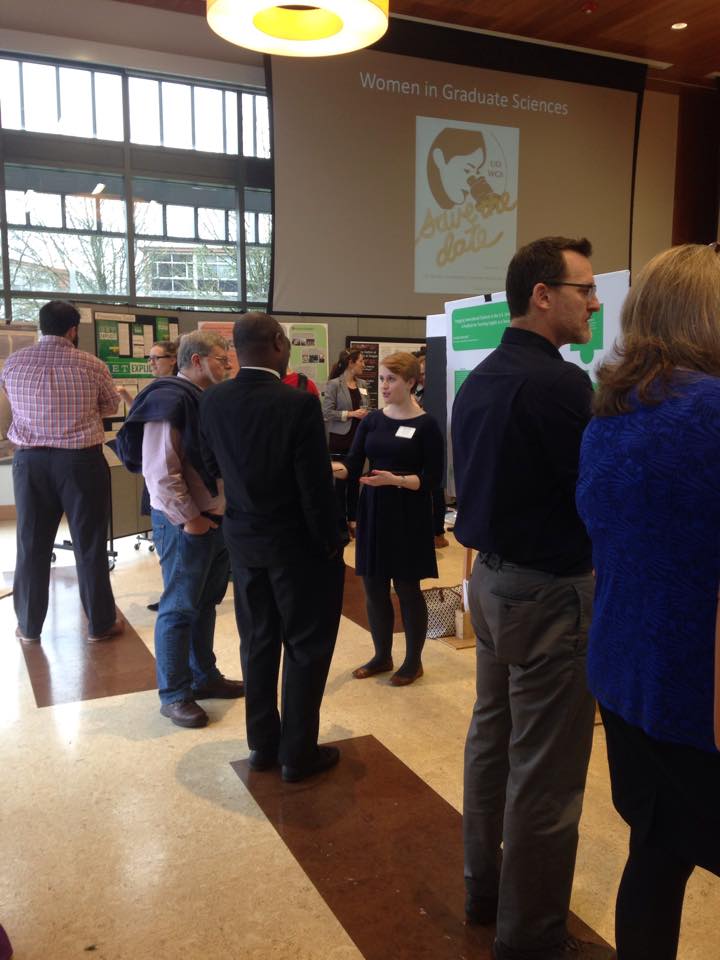
Last Thursday four LTS students presented at the Grad Student Research Forum, sharing their MA projects with the U of O community. 

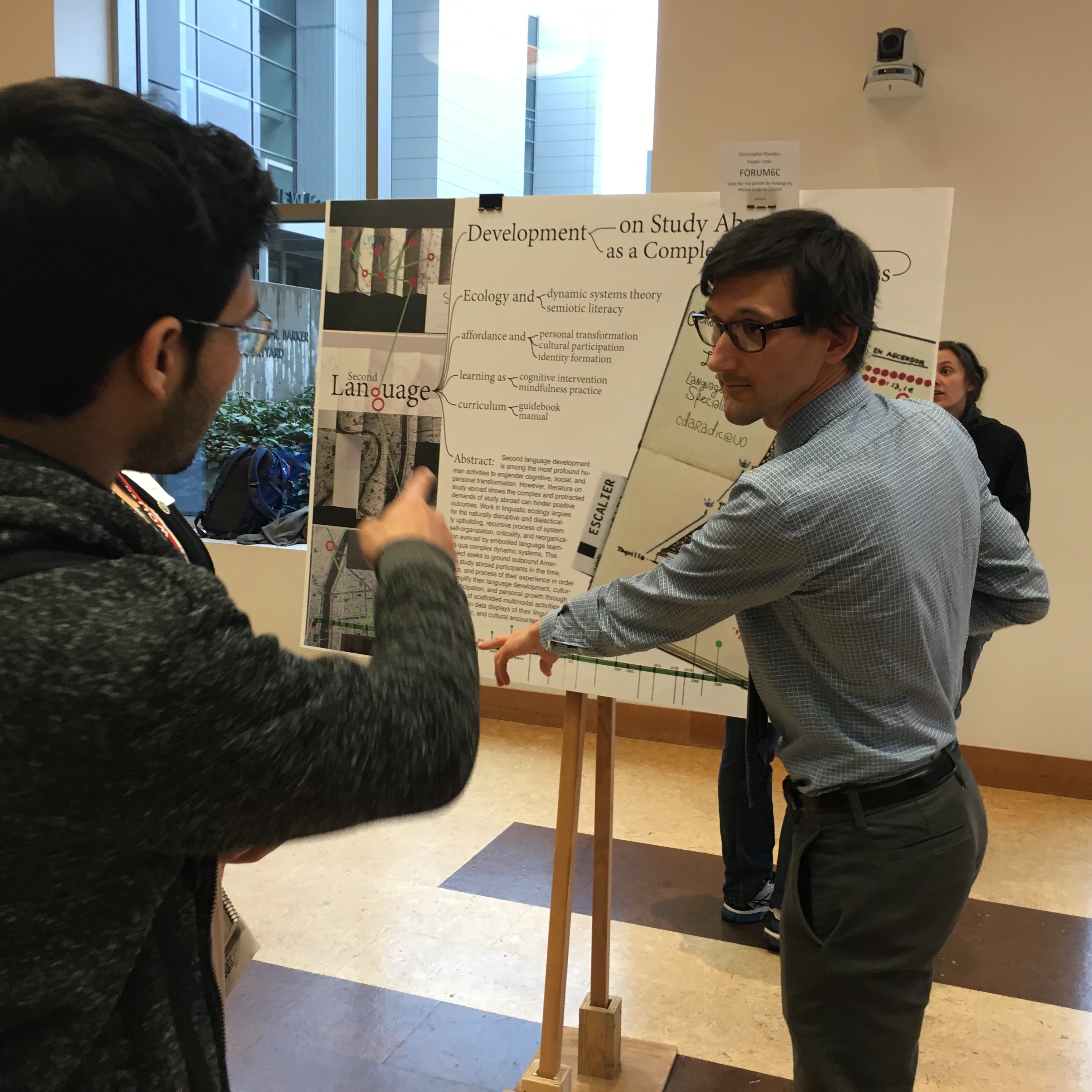
12787211_10208679962455920_902268026_o“I presented a poster on my capstone project teaching portfolio. Not only did preparing for the poster help me organize my thoughts and clarify my overall project, but the poster presentation session also contributed to the development of my project. I received a lot of positive feedback and interesting inquiries, and the criticism I received and doubts that some people had were helpful too, as they will inform how I ultimately present the project in its final stage. While preparing this poster while still in the midst of research was nerve-wracking, I think my overall project will be better for it, since I am treating the research forum as a feedback session. The experience itself of preparing and presenting a poster was eye-opening as well, and I believe I will be glad for it when I present in the future in higher stakes environments. I would recommend that anyone with ongoing or finished research try out a research forum; it’s definitely worth it.”–Kathryn


“Grad forum helped me achieve three strategic objectives that were essential for IMG_0988me at this stage in the game. It forced me to 1) bring my capstone ideas together into a coherent (enough) set of ideas to 2) have the chance to share my project with others, and 3) reevaluate, in light of my interactions with others the aspects of the project that seemed sticky and the parts that seemed flat. For me, when doing this kind of work it’s really important to air the idea out. Talking to people about what I’m working on is a super productive way to process my own ideas, as if from another person’s perspective, and reach the next level of clarity.”–Christopher


12800194_10105953647105371_7697730782973052671_n“Grad Forum takes place during the early stages of working on our final projects. I’ve been thinking about my topic since about last August, but I still have a lot of work to do in the next two terms, so it was challenging to create a full poster presentation. However, it was really valuable to do this while I still have time to adjust certain parts of my project. My project focuses on ESL university students at the U of O, so I was able to talk to a lot of people who aren’t in the field but have experience working with international students, or who have studied abroad, and I got a lot of interesting feedback. It was also a positive challenge to have to explain my whole project in brief conversations, and to explain it in a way that was accessible to people not in the field.” –Annelise


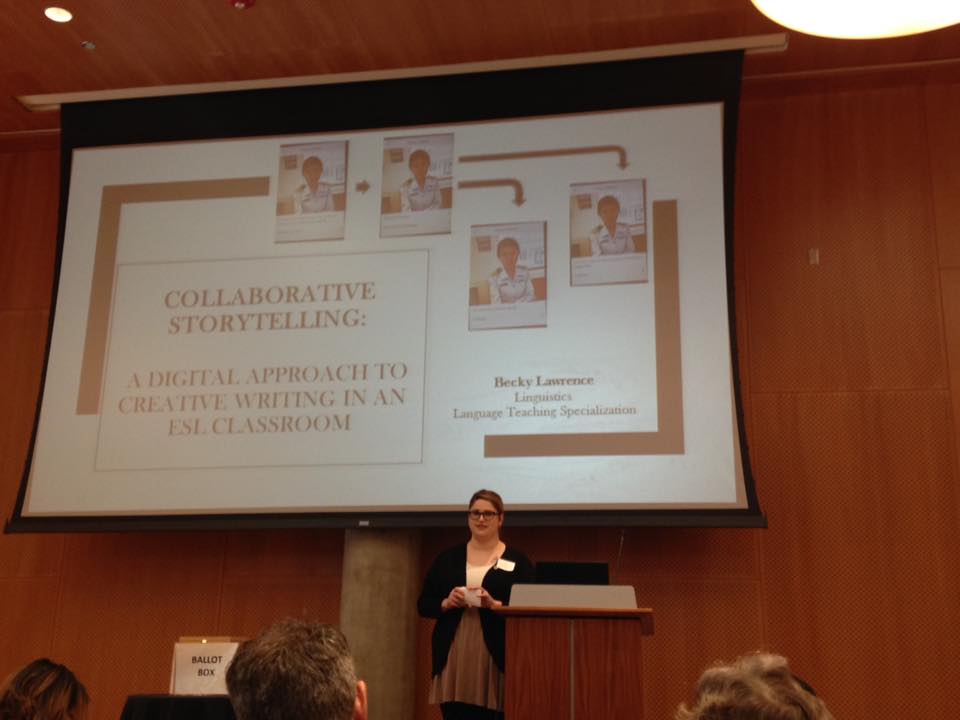
“Presenting at the Grad Forum was scary, stressful, intimidating, and one of the most fun experiences I’ve had! It was great to be able to represent LTS, showcase the awesome stuff I get to do in the program, and get recognized for my hard work. Summing 12472542_482724448580119_6165892594019670247_nup an entire year of effort into five short minutes and three PowerPoint slides was a really intense experience. However, it was really great practice for me, as a language teacher, to be able to talk about a topic unfamiliar to the audience as concisely and articulately as possible, while keeping them engaged and staying within the set time frame of five minutes. It was also great to have a day set aside to connect with other graduate students and learn about their work, get feedback from faculty in other departments, and be a part of the larger culture of graduate school. I’m doing the program in two years, so I’ll get another chance next year… and honestly, I’m already looking forward to it!”–Becky

LTS Staff Spotlight: Meg Taggart

Meg Taggart joined the Linguistics Department in December 2015, as a Graduate Coordinator. She was born and raised in Far East Russia, and enjoys the multilingual and cultural environment of University of Oregon campus.

IMG_8584

What is your background, and what attracted you to a position in a Linguistics Department?

As a recent graduate in Liberal Arts (with an emphasis in business) from Utah State University and as a transplant to Oregon, I am still rejuvenated by the campus environment. Following my graduation, my first official job was in the design industry as an Account Manager. I loved it! It exposed me to a professional field and gave me opportunities to work with a diversity of people from all over the globe. Making the transition from Utah to Oregon and to working on campus, it only made sense to jump into the internationally-minded Linguistics Department.

What are some of the things that you do in your position, especially as they relate to graduate students?

As a Graduate Coordinator I wear many hats! Being in the admissions season now I usually start off my day by answering inquiries regarding the LTS MA program from potential candidates, or even mail out the letters of admission (which is kind of my favorite!). Updating our social media platforms also plays a big role in my position. As our faculty and graduate students get opportunities to travel I prepare and educate them pre-trip, and take care of their documentation when they return. Working alongside with the best faculty and staff on campus makes my job serving the students of the Linguistics Department a great thing to do.

What has been the most interesting part of your job so far?

Becoming a part of the University of Oregon culture has been the most interesting part of my job. Everyone has a lot of school spirit on campus and it is definitely contagious. From athletics to academics there is a lot of passion when it comes to UO. I am now a proud owner of multiple pieces of ‘duck’ gear, rubber ducks for my puppy, and only enjoy orange on Halloween 😉 .

What do you like to do for fun when you’re not in the Department?

When I am not in Straub Hall, I can be found playing with my puppy (Ash) and husband (Sean). We love exploring the beautiful outdoors of Oregon. We love hiking and visiting the coast, and are always looking for a new lighthouse to learn about. I also enjoy experimenting in the kitchen and finding new bakeries/dessert places in Eugene.

IMG_9247

Meg and her family hiking in the Silver Falls State Park.

Faculty Spotlight Julie Sykes

Julie M. Sykes is the Director of the Center for Applied Second Language Studies (casls.uoregon.edu) at the University of Oregon. In the LTS program, she teaches courses on the teaching and learning of second language pragmatics and technology and language learning.

How are you connected to LTS?


For this post, I thought it would be fun to play some word association to start.

Language: people, the world, communication

Teaching: fun, rewarding, challenging

LTS: amazing students and colleagues, fostering amazing teachers

CASLS: great place to work

UO: beautiful, outdoors, green, Go Ducks!

Innovation: important, exciting, whiteboards are critical!

What are you teaching?

In Winter, I typically teach LT610: Second Language Pragmatics, a course in which we explore the ways meaning is communicated through language. In doing so, we examine our own communication practices as well as ways to help learners build their communication skills through the interpretation and expression of intended meaning. For example, did you know speakers of Spanish typically refuse an invitation three times or that the expression “Hey, we should have coffee sometime.” Isn’t typically intended as an invitation.


How does what you teach connect to your research?

My research examines the ways we can utilize innovative tools and techniques to foster second language pragmatic development. Our (and by our, I mean the amazing team of people I get to work with on a daily basis) two most recent projects have examined the impact of using synthetic immersive environments and place-based augmented reality games for the learning and teaching of L2 pragmatics. You can check out more about some of these projects through Mentira (http://www.mentira.org/the-game), Ecopod (https://casls.uoregon.edu/student-programs/residential-immersion/) and Games2Tach (games2teach.uoregon.edu).


What do you like about working with graduate students?

Pretty much everything. They are passionate, interesting, dedicated, and focused on the goal at hand. The classroom (used to mean buildings, neighborhoods, offices, coffee shops) is one of my favorite places to be. I am really grateful for a job I love. Students are a huge part of that!

Student Spotlight: Annelise

Annelise Marshall is interested in student life and learner engagement. When she’s not in class or working with ESL students she enjoys rock climbing, hiking, reading, and cooking.

581

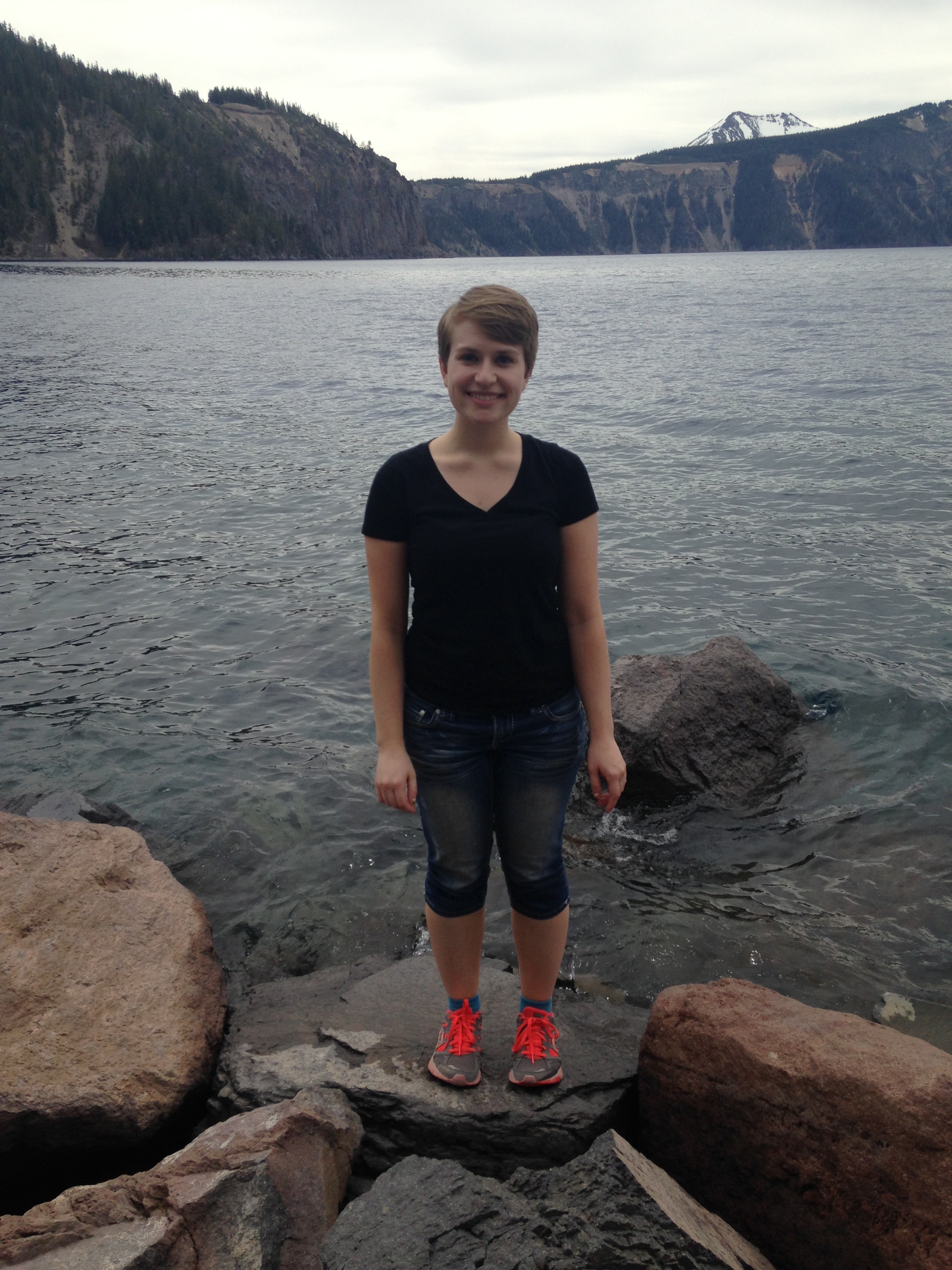
Annelise at Oregon’s famous Crater Lake

What is your internship context?

This term I’m working with a beginning ESL class at Lane Community College. I’ve spent some time with various classes at the AEI, so it’s been really interesting to be in an environment that’s so different.

What is most challenging about your internship?

This is my first time working with complete beginners, and it can be very different from working with more advanced students. I’m often able to answer student questions in Spanish, but I’ve had to learn new strategies for communicating with students who speak a language I don’t share. Luckily I’m working with an experienced teacher who is great at working with beginning students, so it’s really been a great learning opportunity for me.

What has been most rewarding about your internship?

Getting to know the students and seeing them progress. It’s an evening class, so many of the students are older or have full time jobs. They are working really hard just to make it to class, so it’s really exciting to see their work pay off.

What are you most looking forward to in your remaining time in LTS?

The class of 2016 turned in our proposals earlier this month, so soon we’ll be able to get into the thick of it. I’m looking forward to digging deeper into my topic, and also hearing more about everyone else’s projects.


LTS Alumni Spotlight: Lindsay DeLand

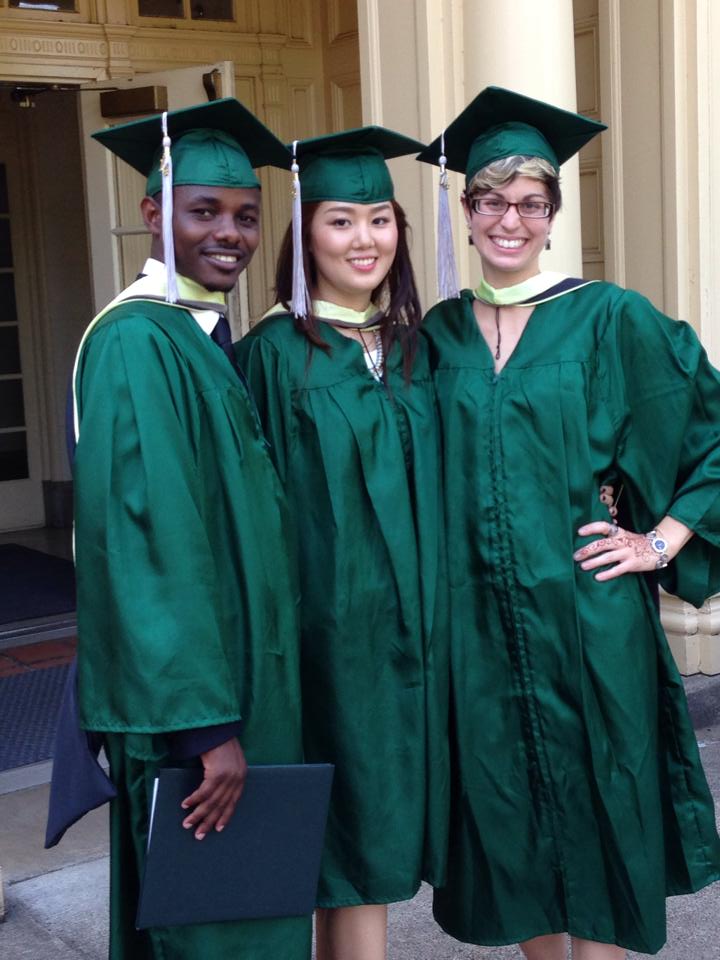
Lindsay DeLand graduated from the LTS Program in 2014 and immediately began teaching in Japan. Her MA project was titled “Graphic Novels as Motivating Authentic Texts for Adult English Language Learners”.

Graduation Lindsay DeLand

Lindsay (on right) on commencement day 2014 at the University of Oregon with cohort members Richard Niyibigira and Sejin Kim.

Where are you working now, and what are you teaching?

I work at Tokyo International University in Kawagoe, Japan. I teach mostly speaking and listening skills to Japanese undergraduate students, but I also teach an academic composition class to international undergraduates from a number of different countries. It’s a blast!

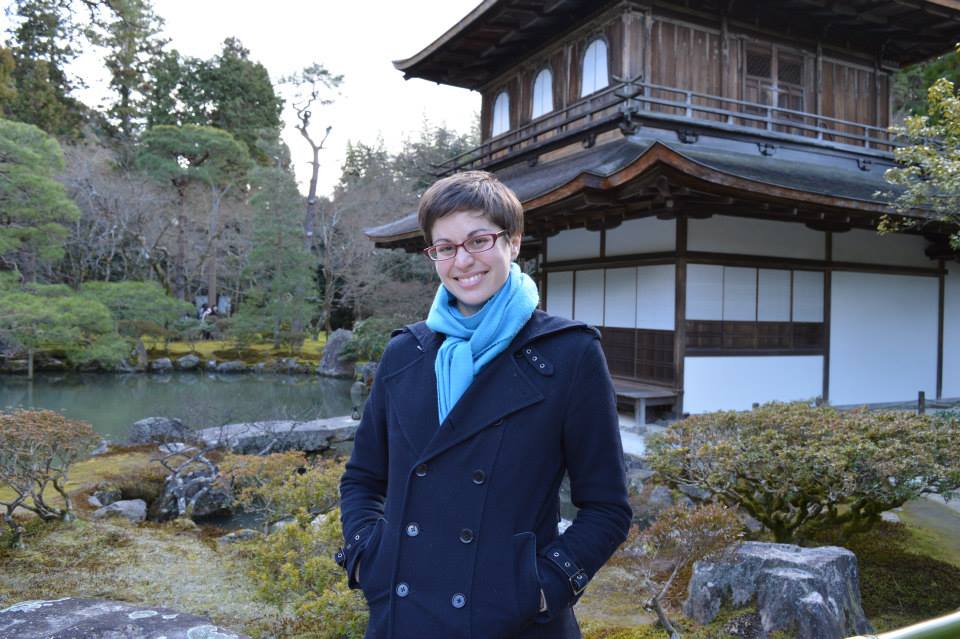
Kyoto Lindsay DeLand

Lindsay in Japan

What do you like best about what you do?

I love that I get to make so many meaningful relationships with so many amazing students. For me, all the interaction with different people is the best part of the teaching job. I’ve learned a lot from my students, and I’ve gotten to watch them learn and grow a lot as well.

What is something you learned while in LTS that you use in your teaching (or life) now?

I learned how to design a curriculum, which has been invaluable to me since starting at TIU. Before the LTS program, I wouldn’t have had any idea how to go about planning a class when you’re just given a textbook and total freedom! It’s still a challenge for me, but I’m improving with practice, and I’m grateful for the foundation in curriculum design I got at Oregon.

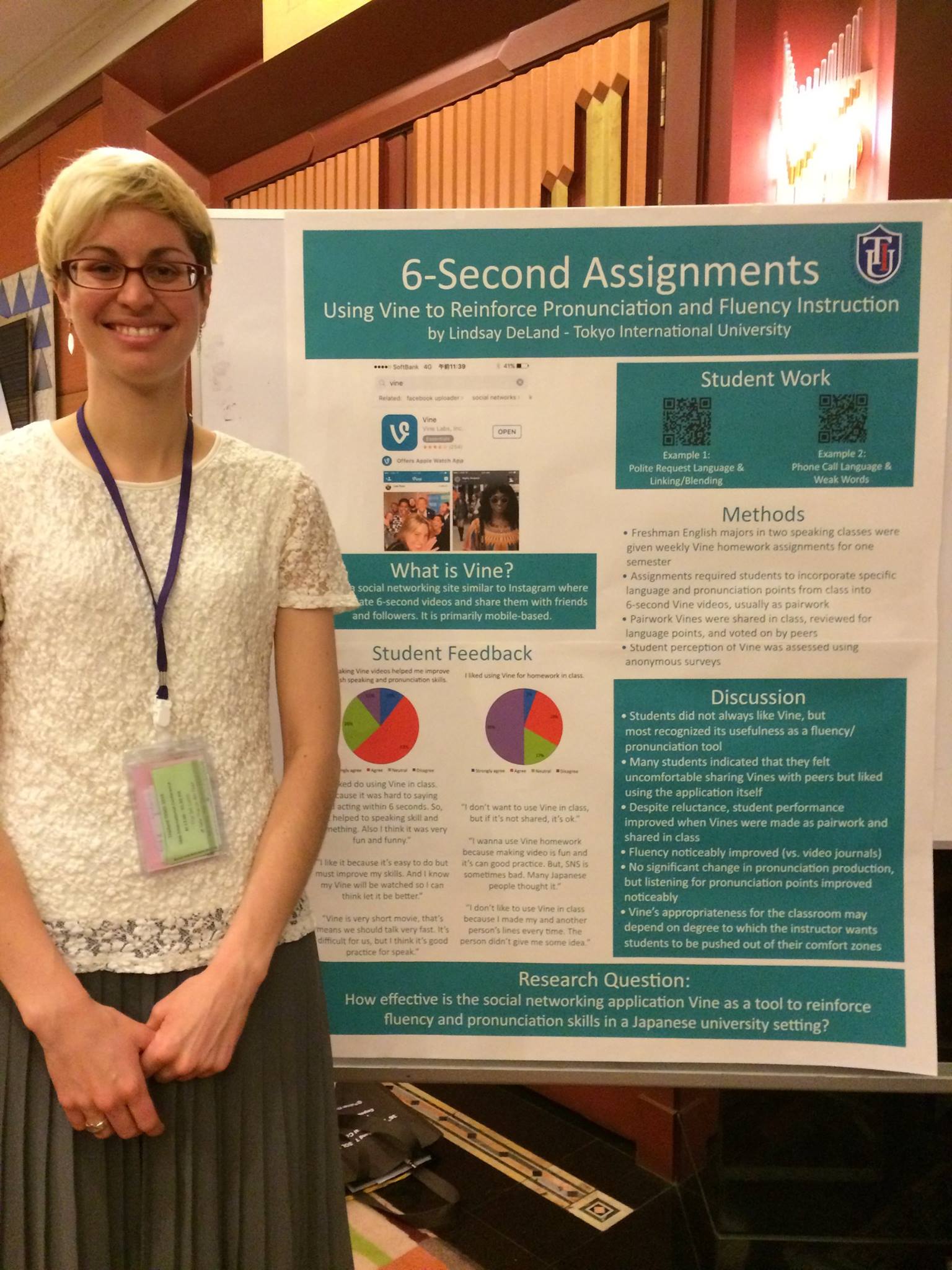
Poster Presentation Lindsay DeLand

Lindsay presenting her action research at Thailand TESOL International this year.

Looking back, what advice would you give current or future LTS students?

Both while you’re a graduate student and when you become a full-time teacher, remember to make time for yourself on top of your work and studies. Teaching is a great job but it’s also very stressful and can be all-consuming. If you don’t find a way to balance a healthy and happy personal life on top of your work life, work will feel a lot harder! When I was an LTS student, I often studied with friends from my cohort to make the workload feel easier, and we regularly got together for fun to keep each other sane. Now, even when my semesters are busy, I make sure to do at least one fun and rewarding activity a week, like exploring a new part of Tokyo or just spending time with friends. It helps me refresh my brain so I can better tackle my job!