Faculty Spotlight: Joana Jansen

joanaOlallie2016 (002)

What is the nature of your work at the University of Oregon? 

I am the Associate Director of the Northwest Indian Language Institute (NILI) which is one of the research institutes and centers on campus. I am privileged to be able to support projects focused on revitalization and linguistic description of Native American languages, and students and community members working on these projects. In the part of the world that we now know as the state of Oregon, there were once 18-25 languages, many with multiple dialects. Most are not spoken today by elders who grew up speaking the language, but more and more are being spoken by language learners. There is so much interest in passion in returning the languages to daily use – it is inspiring!

My work at NILI is quite varied. There is not ‘typical’ day or week. I could be drafting a grant proposal, working on a research project with tribal partners, supervising GRFs to disseminate information and products via NILI’s website, meeting with Linguistics students, planning for NILI’s Summer Institute, and/or delivering online workshops and trainings to Native language teachers.

How are you associated with LTS?

I have worked with a number of LTS students, particularly those working on Native American language projects. Their work and ideas strengthen NILI. I have also been a reader for LTS Masters projects. I have not taught in LTS classes regularly, but this term I am teaching Linguistic Principles and Second Language Acquisition.

What is your favorite language of those that are taught at UO? 

The Ichishkíin language is spoken by elders of several tribes in Oregon and Washington. Most of the work I have done on documentation and curriculum has been focused on Ichishkíin – we’ve been teaching it at UO since Yakama Elder Virginia Beavert came here to get her PhD in 2007. LTS students and grads have been key to the class. In the early years of the class, LTS student Roger Jacob developed course materials and co-taught with me and Virginia. Now, LTS grad Regan Anderson is teaching it with Virginia, and other students are involved building and enhancing curriculum, which is shared with teachers at the tribes. The language is also taught at NILI Summer Institute and that brings together students and teachers of Ichishkiin from across the region, including UO students.

What do you enjoy most about working with language educators?

It’s a cliché but – I learn so much from the teachers I work with! Their love for their students is inspiring. Because I work in many different communities, I can facilitate connections between people and help to share ideas and inspiration.

You are teaching one of the first classes our cohort is taking – do you have any words of wisdom or advice for them as they continue in the program?

I’ve seen a lot of students grow in skills and confidence during the LTS program, and the relationships built in the cohort are really important. As a group, you hold a lot of knowledge: help and learn from one another. Also, even though you are in graduate school, take time for yourself and your family, keep a balance in your lives. Exercise, play, relax, go outside!

Faculty Post: Laura Holland

Author’s Note: I have used films in my classes since I began teaching English Language in the 1980s. I use and have developed materials for both film clips and whole movies with great success. This teaching tip focuses on using film clips to spark discussion, study grammar, prepare debates, and practice pronunciation, stress and intonation and more.

Film clip + storytelling + chanting = engaged listening/speaking practice

Laura G. Holland

lgh@uoregon.edu

Laura_Parque de Amor_Lima (002)

 Teachers have at their disposal now a myriad of authentic materials from which to develop interesting and engaging integrated activities for their students. The briefest film clip can be developed into hours of meaningful classroom lessons that allow students to share their personal stories and hear those of their peers, all the while developing higher order thinking skills. Transcripts from the film clips can be used to focus on grammar, vocabulary, and all areas of pronunciation and stress in addition to content. They can also be used to develop extended chants that weave together focused fun-drill practice and employ techniques described by Charles Curran and Jennybelle Rardin and more recently Scott Thornbury as “Backwards Build-Up” and “Back Chaining” respectively, in addition to other traditional and non-traditional drilling practices that highlight message shift through varying intonation.

Whether you are responsible for your entire curriculum or simply want to supplement the curriculum you are required to teach, try some of the following ways to engage and motivate your students both in and out of class

•••••••••••••••••••••••••••••••••••••••••••••••••••••••••••••••••••••••••••••••••••••••••••••••••••••

« Show a film clip »

Choose a film clip appropriate for your level and age of students. Keep it short, 5 minutes or less. Use the theme as a “springboard” for discussion. You can use discussion cards, questions posed on a PowerPoint slide, bag strip questions, questions posed orally or written on the board, whatever is most appropriate to your Student Leaning Outcomes (SLOs). Get students telling their stories and talking about their own life experiences. They can discuss situations about people they know or have heard of, anything to spark their engagement. Spend less time on comprehension questions and go directly to higher order thinking questions and tasks, incorporating activities that assume comprehension but create more meaningful communication right from the start.

« Discussions and Story-Telling »

Topics that my students enjoy discussing and sharing their opinions about: Food, Sports, Dance, Music, Movies and TV, Superstitions and Luck, Scars (every scar has a story), Tattoos and Plastic Surgery, Outdoor activities, Friendship, Family, Controversial Topics, Travel, Holidays, Pastimes, and so on. Discussions can be standing or seated, in pairs or small groups. You can use any of the methods noted above for posing the discussion questions (DQs).

« Debates and Discussions »

Choose a topic from the film, your textbook, the news or other medium. Have Ss sit in groups, fluency circles, standing or seated face-to-face or other. Assign roles so that Ss argue points of view (POVs) that may not be their own, working in pairs to create the most valid arguments.

 « Chanting »

Create your own chants using sentences from the film/video clips, sentences from the textbook, and so on. Add in extended practice and variations highlighting them in bold to show they are not from the original “text.” Give your students practice with the differing messages that changes in intonation create, as well as the ability to “feel” how stress works in English.

« Transcripts »

Use transcripts from the films (create them yourself for better quality and number each line for easier reference), and do grammar transformations, for example: take all the present tense verbs and put them in past tense, making all necessary time marker changes; change all negative lines into positive and vice versa, all statements into questions and vice versa, note synonyms and antonyms, find more formal/informal ways to express line “12,” and so on. Have students practice pronunciation and intonation using “Creative Computer” as described by Rardin et. al. Ask Ss to paraphrase, summarize, give a title to the scene, choose a different ending, etc. Ask students to look at line “7” (for example), and discuss with a partner why the speaker used that verb form to express her ideas or to state his opinion. This helps students understand the meaning of the grammatical forms and why native speakers chose specific ones to express their ideas.

Moonstruck movie poster

Citations

Curran, Charles, A. (1976). Counseling-learning in Second Language Teaching. U.S. Apple River Press.

Rardin, Jennybelle P.; Tranel, Daniel D.; Tirone, Patricia L.; Green Bernard D. (1988). Education in a New Dimension: The Counseling-Learning Approach to Community Language Learning, U.S. Counseling-Learning Publications.

Thornbury, Scott. (1997). About Language. New York. Cambridge University Press.

Thornbury, Scott. (2005). How to teach speaking. Harlow, England: Longman.

Faculty Research Spotlight: Anna Mikhaylova

Anna Mikhaylova is faculty in the Linguistics Department whose research focuses on second and heritage language acquisition and bilingualism. She is teaching LT 611 MA Project I this term.

Anna.LTSblog


How are you connected to the LTS program?

My biggest connection to the LTS program is through the projects that LTS students develop as a capstone of their degree. In the past four years I have taught the first of the MA Project (LT 611) course series. It has been exciting and rewarding to watch each student develop their ideas into a well-developed and well-researched argument and create a foundation for their final product (teaching or materials portfolio, course design, or an action research project, which they would be developing in the second course of the series). I have also enjoyed teaching Second Language Teaching Planning (LT 536) and serving as advisor and reader for several MA projects.

What other classes do you teach?

The Second Language Acquisition courses (LING 544 and LING 644) and graduate seminars on Bilingualism and Heritage Language Acquisition, which I teach for the General Linguistics MA and PhD program, have also been open to LTS students. It certainly has been a privilege to have LTS students provide a language teacher’s perspective and insight the theoretical discussions we have had in the LING classes. And I also pride myself in the fact that several MA projects were supported by the readings or even grounded in the research projects LTS students developed in those Linguistics classes.

What is your research about?

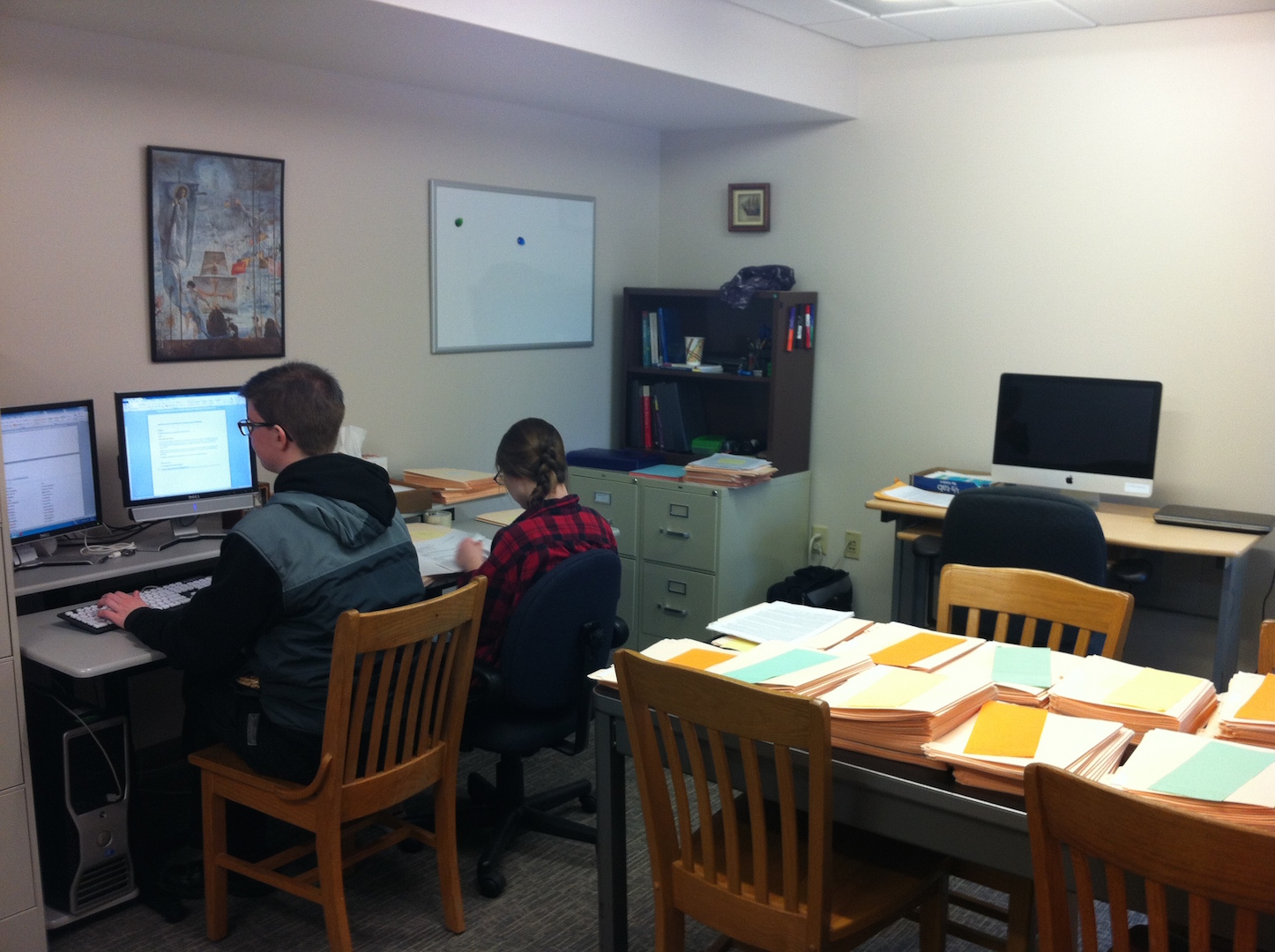
Much of my work has tackled finding an empirical and theory-based explanation to the observation that both foreign (FL) and heritage language (HL) speakers have a particularly difficult time with target-like use and successful comprehension of functional morphology. A recent exciting project bridges an important gap in research by focusing on K-12 rather than college-level FL and HL learners. This study of oral narratives collected at the beginning and end of an intensive Russian dual immersion program throws light on language maintenance and effects of re-exposure in international adoptees. My latest project, still in progress, has involved by far the most participants and has the most immediate implications for instruction. We have so far tested 314 FL learners and 35 HL learners of Spanish to see whether low-intermediate learners are able to fully comprehend meaning of a text while attending to grammatical form (or whether such a task is too taxing). In the photo, are my research assistants in the Second Language Acquisition and Bilingualism Lab, Joana Kraski and Aleya Elkins, working through the hundreds of test packets.

Research Assistants busy at work.

Research Assistants busy at work.

LTS Staff Spotlight: Meg Taggart

Meg Taggart joined the Linguistics Department in December 2015, as a Graduate Coordinator. She was born and raised in Far East Russia, and enjoys the multilingual and cultural environment of University of Oregon campus.

IMG_8584

What is your background, and what attracted you to a position in a Linguistics Department?

As a recent graduate in Liberal Arts (with an emphasis in business) from Utah State University and as a transplant to Oregon, I am still rejuvenated by the campus environment. Following my graduation, my first official job was in the design industry as an Account Manager. I loved it! It exposed me to a professional field and gave me opportunities to work with a diversity of people from all over the globe. Making the transition from Utah to Oregon and to working on campus, it only made sense to jump into the internationally-minded Linguistics Department.

What are some of the things that you do in your position, especially as they relate to graduate students?

As a Graduate Coordinator I wear many hats! Being in the admissions season now I usually start off my day by answering inquiries regarding the LTS MA program from potential candidates, or even mail out the letters of admission (which is kind of my favorite!). Updating our social media platforms also plays a big role in my position. As our faculty and graduate students get opportunities to travel I prepare and educate them pre-trip, and take care of their documentation when they return. Working alongside with the best faculty and staff on campus makes my job serving the students of the Linguistics Department a great thing to do.

What has been the most interesting part of your job so far?

Becoming a part of the University of Oregon culture has been the most interesting part of my job. Everyone has a lot of school spirit on campus and it is definitely contagious. From athletics to academics there is a lot of passion when it comes to UO. I am now a proud owner of multiple pieces of ‘duck’ gear, rubber ducks for my puppy, and only enjoy orange on Halloween 😉 .

What do you like to do for fun when you’re not in the Department?

When I am not in Straub Hall, I can be found playing with my puppy (Ash) and husband (Sean). We love exploring the beautiful outdoors of Oregon. We love hiking and visiting the coast, and are always looking for a new lighthouse to learn about. I also enjoy experimenting in the kitchen and finding new bakeries/dessert places in Eugene.

IMG_9247

Meg and her family hiking in the Silver Falls State Park.

LTS Alumni Spotlight: Lindsay DeLand

Lindsay DeLand graduated from the LTS Program in 2014 and immediately began teaching in Japan. Her MA project was titled “Graphic Novels as Motivating Authentic Texts for Adult English Language Learners”.

Graduation Lindsay DeLand

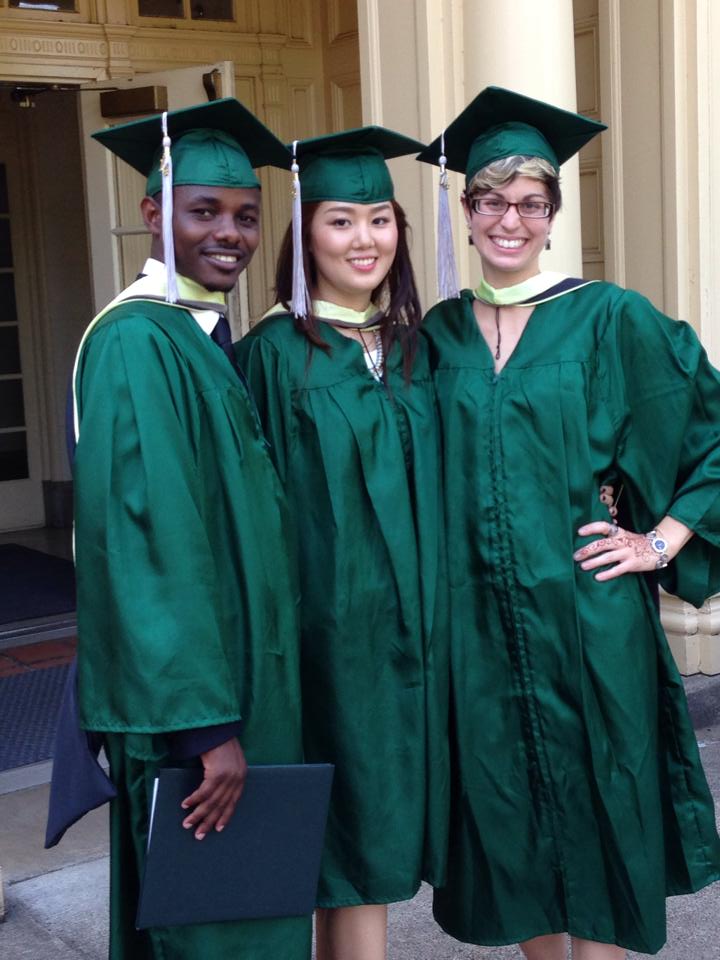
Lindsay (on right) on commencement day 2014 at the University of Oregon with cohort members Richard Niyibigira and Sejin Kim.

Where are you working now, and what are you teaching?

I work at Tokyo International University in Kawagoe, Japan. I teach mostly speaking and listening skills to Japanese undergraduate students, but I also teach an academic composition class to international undergraduates from a number of different countries. It’s a blast!

Kyoto Lindsay DeLand

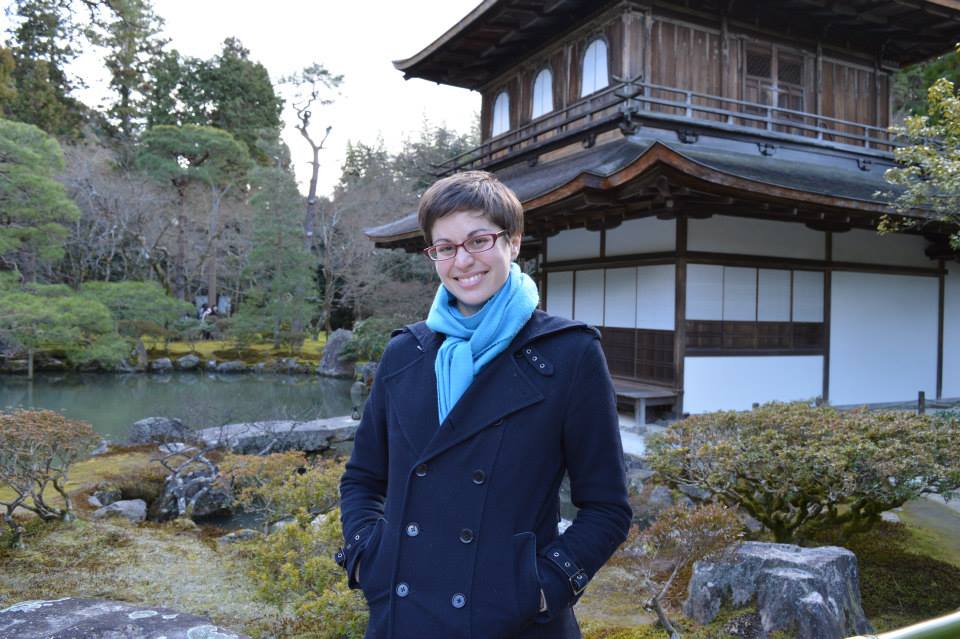
Lindsay in Japan

What do you like best about what you do?

I love that I get to make so many meaningful relationships with so many amazing students. For me, all the interaction with different people is the best part of the teaching job. I’ve learned a lot from my students, and I’ve gotten to watch them learn and grow a lot as well.

What is something you learned while in LTS that you use in your teaching (or life) now?

I learned how to design a curriculum, which has been invaluable to me since starting at TIU. Before the LTS program, I wouldn’t have had any idea how to go about planning a class when you’re just given a textbook and total freedom! It’s still a challenge for me, but I’m improving with practice, and I’m grateful for the foundation in curriculum design I got at Oregon.

Poster Presentation Lindsay DeLand

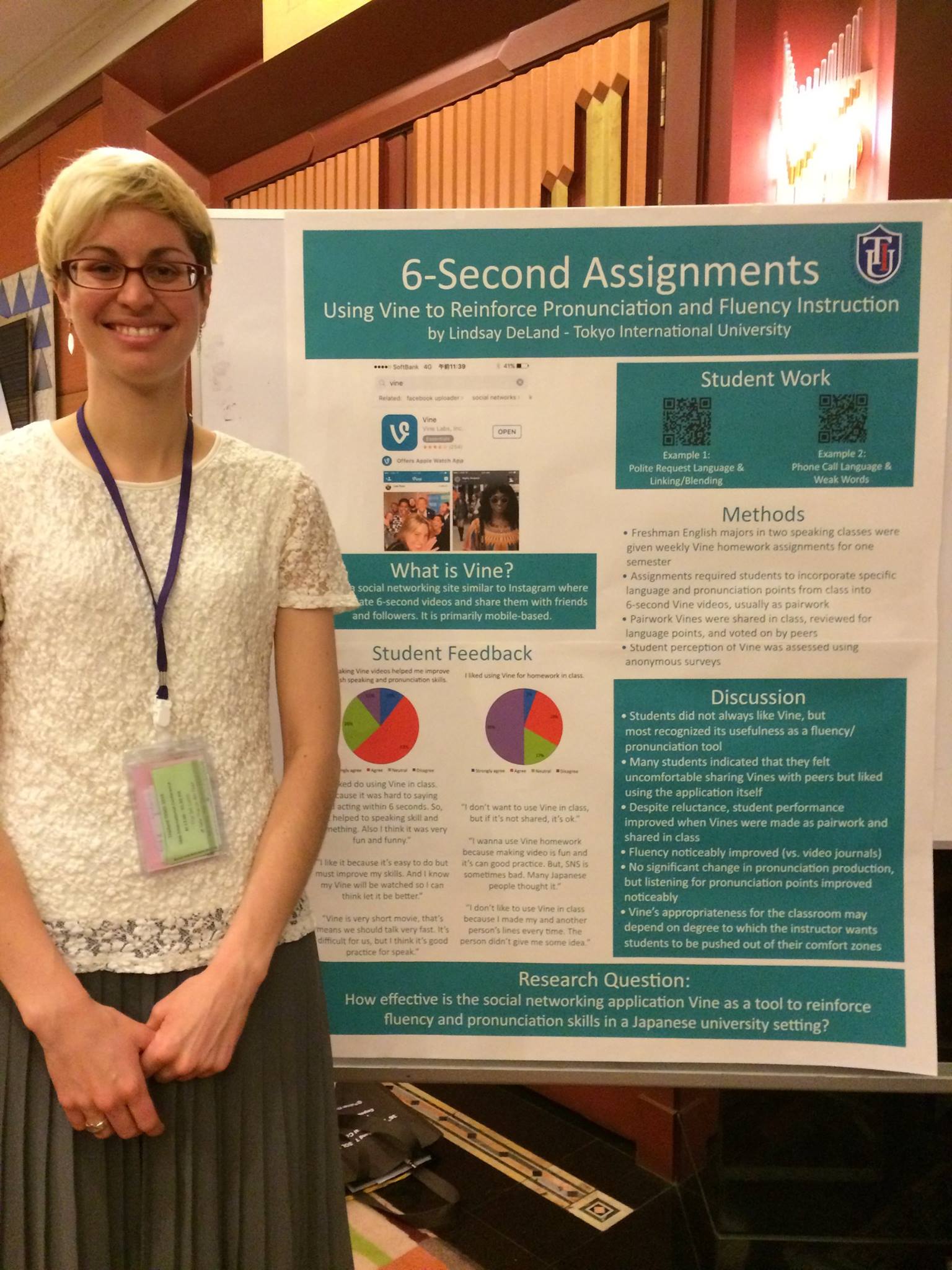
Lindsay presenting her action research at Thailand TESOL International this year.

Looking back, what advice would you give current or future LTS students?

Both while you’re a graduate student and when you become a full-time teacher, remember to make time for yourself on top of your work and studies. Teaching is a great job but it’s also very stressful and can be all-consuming. If you don’t find a way to balance a healthy and happy personal life on top of your work life, work will feel a lot harder! When I was an LTS student, I often studied with friends from my cohort to make the workload feel easier, and we regularly got together for fun to keep each other sane. Now, even when my semesters are busy, I make sure to do at least one fun and rewarding activity a week, like exploring a new part of Tokyo or just spending time with friends. It helps me refresh my brain so I can better tackle my job!

LTS faculty friend spotlight: Ted Adamson, American English Institute

Ted Adamson is an instructor at the American English Institute who is supervising a small group of LTS students this Winter term who are co-teaching a class for international students at the AEI. He observes every class and provides guidance and feedback.

What is most interesting about supervising this course for you as a teacher-educator?

One of the brilliant features of this practicum is that regularly scheduled reflection is designed right into it. When you’re in the field and you’re teaching a full course load, you’re not always doing as much reflection as you would like. So for me, having the chance to observe four highly motivated teachers in action has been a catalyst for my own reflection. We all need to revisit those old assumptions and shake up our patterns and habits.

What other things do you do as faculty in the American English Institute?

I’ve been lucky enough to serve on the Intensive English Program (IEP) Assessment Subcommittee (ASC) with Tom Delaney, Nancy Elliott and many others. The ASC attempts to help ensure that assessment practices in the IEP are valid and reliable. I’ve worked as the lead teacher for English-Prep Oral Skills many times since 2012. In that time, I’ve been lucky enough to have a robust LTS graduate student presence in the class: both long and short-term observers and a wonderful intern in Fall 2015. More recently, I’ve designed and taught an AEI elective course called Teaching Vocabulary From Movies for lower level students in the IEP. The course meets for 2 hours per week, during which time we use entire motion pictures as primary texts for the purpose of developing language.

What was your own path to the UO?

I got my start in ESL through a series of volunteer opportunities and jobs in K-12 education in my hometown of Minneapolis, Minnesota. In that time, I worked extensively with immigrant and refugee populations in high school, junior high and adult education settings. I worked as a technology proctor, a substitute teacher, a tutor and an unlicensed social studies teacher before going back to get my M.Ed. I did a working summer in New York City in 2006. This was my introduction to the world of the language institute. I then spent 4 years teaching at Global Language Institute, a wonderful IEP in St. Paul, MN. My wife and I relocated to Eugene in 2011, at which time I began my work at the AEI.

What do you think is most important for new language teachers to learn or experience?

Having the chance to conduct classroom observations came immediately to mind. I’d advise new language teachers to visit as many different classrooms as possible. Seeing different instructors implementing different objectives with different learners is an absolute boon. I never pass up the chance to observe another teacher. There’s never an instance where I fail to come away with one or two nuggets of insight. It could be something as straightforward as an idea for classroom systems or a lesson plan. More often than not, I leave an observation with a basketful of ideas. And sometimes, you come away thinking, “Wow, I feel like I really got a sense of what this person stands for, as an educator.” This is one of the things that I love about our profession: that a profound experience like that can come out of a simple classroom visit.

LTS Alumni Spotlight: Daniel Chen-Mao Wang

Daniel Chen-Mao Wang graduated from the LTS program in 2008. His project was titled “Rethinking the Teaching of Beginning Reading: The Role of Reader’s Theater in the Taiwanese EFL Curriculum”.
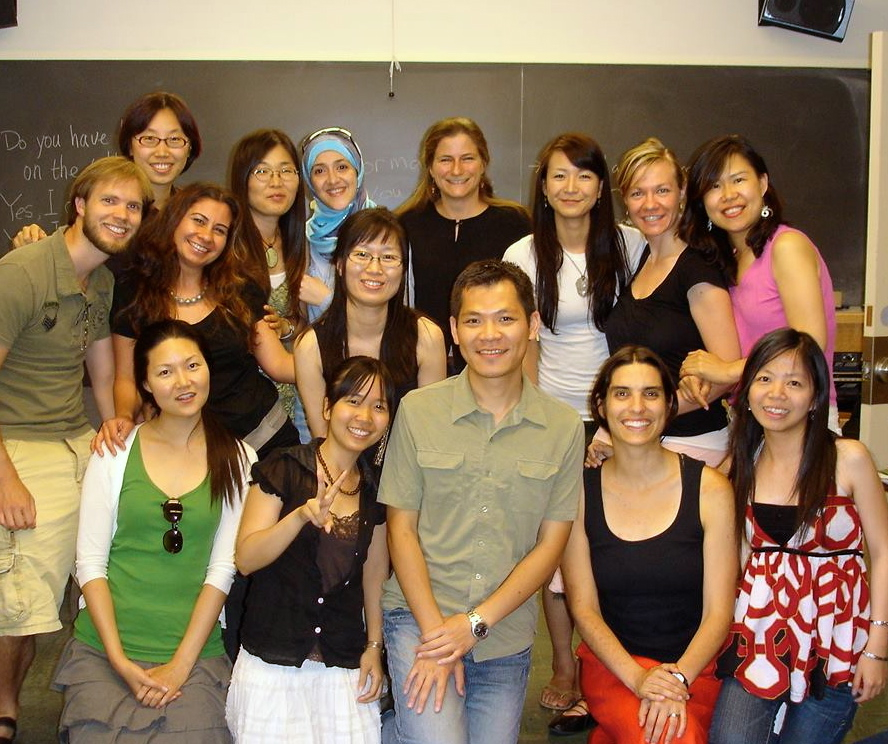
Daniel (center) with his cohort in 2008

Why did you originally decide to study in the US?

Before I applied to the LTS program in 2008, I had been teaching in a public elementary school for a few years with a BA degree in Language and Literature Education in Taiwan. After a few years of mundane teaching that literally drained my inspiration, I started to look for graduate studies to both enrich my teaching career and energize my life of learning as a practicing teacher. The LTS program at the UO stood out as one of few programs that catered to my needs. The quarterly system guaranteed me very intensive five-term solid training and studying that my home country could never offer. When I read and compared many graduate programs, few addressed both the pedagogical and theoretical issues at the same time in their plan of graduate studies. While the course titles of many distinguished TESOL programs mostly featured on the theoretical issues, few stressed the pedagogical phase of language learning. With an educational background, I was certain that I wanted to be a practitioner but yet undecided for a theoretical route. Therefore, the LTS program gave me greater flexibility to take the courses I was interested in as a language trainer. Meanwhile, as LTS was in a Linguistics Department, this enabled me to associate with PhD students and participate in Professor Susan Guion Anderson’s advanced second language acquisition class. Although the LTS program was not fully research-based, the practical but research-oriented program design laid the groundwork for later research-based projects and presented me with opportunities to observe, learn, and experience a “scaffolded, elicited, and formative” language learning class. This helped me a great deal in my current job as an EFL elementary school teacher and adjunct assistant professor at the National Kaohsiung Normal University.

Where and what are you teaching now?

Less than half a year after graduating from the UO, I began the journey of being a full-time teacher and doctoral student at National Kaohsiung Normal University. I was fortunate enough to establish all the ground work at the UO with LTS and LING, and this experience has made me who I am now. My doctoral dissertation, titled “Effectiveness of a Reader’s Theater Project on English Silent Reading and Prosodic Reading Performance of Sixth-graders in Southern Taiwan”, took root in the framework of the project I did in the LTS program and used the phonetic analysis tool, Praat, that Dr. Pashby introduced in her pronunciation class.
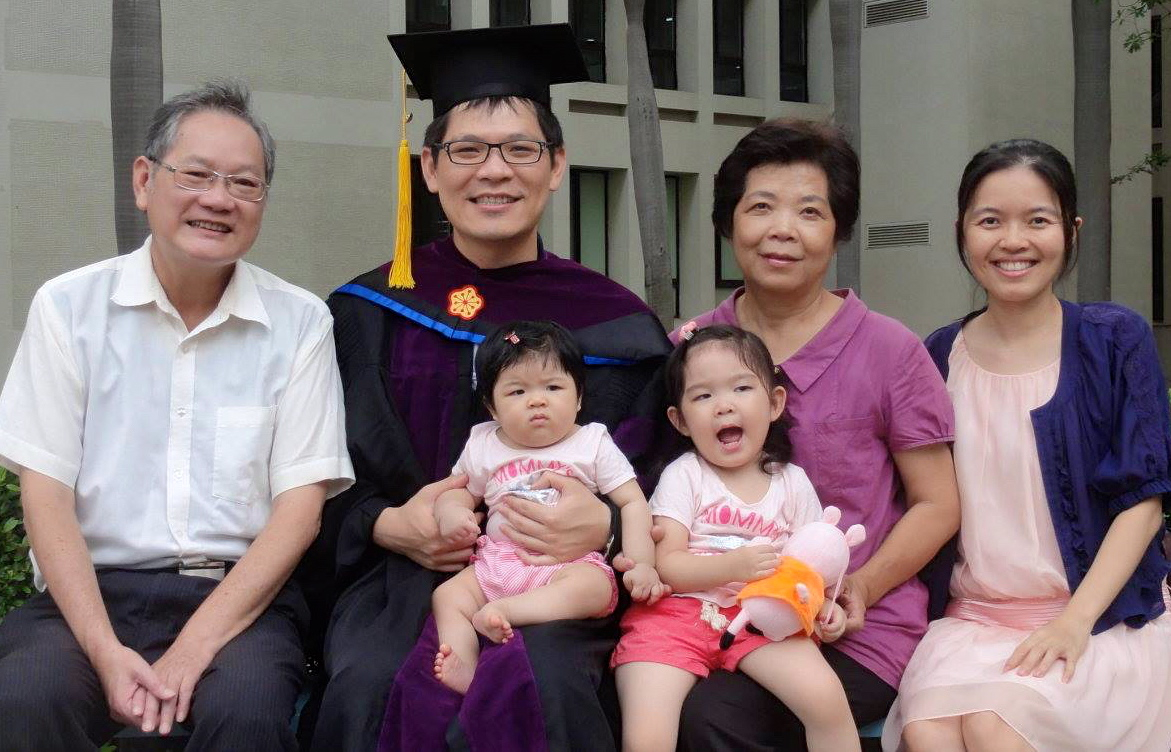
Daniel in a recent photo with his family

Currently, with a PhD in TESOL, I also work with Taiwanese local college students teaching them Freshman English. The days nourished by the LTS program become the nutrients. The LTS program gave students the open space to develop and experiment with their teaching ideas, innovative or extended. In addition, the cohort format made us learn from each other, brainstorm many great ideas, and work all angles to possibly solve the issues language teachers faced on a day-to-day basis. Serving as a teacher of college students, I now still go back to my graduate assignment work to seek inspiration and I still keep in mind the very lesson that LTS taught me so well—analyzing students’ learning needs. Without the nourishment of LTS, I cannot imagine being the person I am now.

What do you enjoy most about your work?

I enjoy the pleasure of teaching because I like to associate with people and especially with students. Many people regarded teaching jobs as repetitious and laborious, while I appreciate the beauty of individual difference and students’ willingness to learn and improve. Last year, I had classes with first-graders up to college freshmen. They were a huge range in population, but I experience the fun and joy to see the spark in their eyes when they find language learning interesting and are willing to go the extra mile to learn with the teacher. As a language teacher, I can always practice what I believe, and experiment with all kinds of variables to motivate my students and enhance their proficiency in English as a global language.

Looking back, what do you think was most valuable about your time in Oregon and LTS?

Three things stick to my mind during the days I was in Oregon: a) the live language teaching observations, b) the freedom to choose interesting courses from other departments, and c) the supportive learning and advising atmosphere.

To begin with, I benefited so much by writing observation journals about many language teaching classes. Given the privilege to sit in class and observe what the teacher did, I witnessed how language teachers deal with the teaching issues with students at different language levels and with different language backgrounds. I ended up observing very diverse types of language classes: Howard Elementary School’s reading class, a South Eugene High School’s English literature class, and a college-level CFL (Chinese as a Foreign Language) class. It was as good as I could wish for—to see what is demonstrated in a real class—more effective than any workshop or lecture could have been.

Secondly, I adored being given a few flexible time slots to take courses from other departments. I remembered that I attended a pedagogical grammar class, a culture diversity class, and a statistics class offered by the School of Education. Those classes required me to interact with the native speaking college students on education-related issues and develop educational professionalism. This experience enriched my career path and helped me become not only a professional “language teacher” but also a professional “educator”.

Lastly, the supportive learning environment in UO and LTS has made this adventure rewarding and worth admiring. Looking back, I enjoyed the time to work with the international cohort and hang out with each other outside the campus. The combination of students in LTS was like no other on campus. It was made up of experienced teachers, students with language learning interests, and ESL teacher wanna-bes, NNS or NS alike. Because of this mix, a lot of negotiation was involved. You needed to pay attention to listen, mentally process, comprehend, clarify, and then react to others in the classes because they were from all different backgrounds. Each person interpreted things in a different way. To be participatory, you had to put yourself into their shoes, consider from their perspectives to understand what they were trying to express, and then provide your own opinions. But the beautiful thing was: the more positively you interacted with one another, the better and closer relationship you built with your cohort. We felt like a family in this foreign country and the camaraderie support brought us together. A similar positive atmosphere was also between the teachers and the students. I always valued, although scared to death at that moment, the advisory office hours with each faculty member. The teachers did feel distant and authoritative; they were actually very helpful and considerate. They offered academic advice, helped clarify some thoughts on studies, suggested directions to do a term paper, etc. I talked to most of the teachers privately in office hours and I guaranteed what I say is true. The friendliness and thoughtfulness was not something you could only find in your imagination. It was genuinely felt.

What advice would you give to current or future LTS students?

LTS seems to be a program that is too good to be true. However, you have to keep in mind that this is a five-quarter program. Basically, you will have to squeeze the length and endure the intensity of five semesters into 15 months in order to fulfill all the requirements. Some take longer than 15 months to accomplish it. In order to make the most of your time and enjoy the intensity, my suggestions are:

  1. Start early to collect research literature that interests you.
  2. Frequent the library and establish your personal teacher resource library.
  3. Read the assigned readings and be a productive contributor in classes.
  4. Take advantage of every opportunity to make friends (or to know more people).
  5. Experiment with what you believe is feasible in your future language classes and explore it with back up literature.

With all these things to do in fifteen months, this short journey is going to be like a sealed time capsule—it will store valuable and memorable events and keep you rejuvenated every time you look back!
MA Project Spotlight Rich Houle

Rich Houle blog photo

Rich Houle just graduated from the LTS Program in December 2015. His capstone MA project was “Agency and Autonomy In English Academic Vocabulary Learning: A Student Centered Teaching Portfolio”.

What is your MA project?

My project is a teaching portfolio of activities to support learning the English Academic Word List. The emphasis of the portfolio is vocabulary learning, rather than vocabulary teaching, through strategy instruction and incorporating newer computer technologies such as vocabulary profiling, concordancing, and wikis.

Why did you choose this topic?

After a slight gap (24 years) between my graduate and undergraduate career, I started taking classes in the LTS program part time as a non-matriculating student.  The first class I took in the program was English Grammar, where I developed an interest in vocabulary  due to my attempts to read the notices in French posted in the hall outside the classroom. It seemed to me that meaning was primarily embedded and carried by words, and then shaped by morphology and syntax. In the Language Teaching Methods class I chose vocabulary acquisition as topic for the research paper, and I discovered a whole world I never knew existed! When I started the LTS program as a full time student I wanted to choose a topic that would use the research I had already done (having no wish to do much more work than I had to) as well as reflect the experiences I would have as a student in the program.

What advice would you give to new LTS students about their MA projects?

By the time you have completed your second term you will have (hopefully!) completed a research paper and a project or two.  Mine these for ideas for a project.  That way you will have some concept for a topic by the end of fall term, and you don’t have to research a whole new area from scratch.  You want to do as much reading as possible by the time Spring term starts. Also talk to your professors: they are very nice and they schedule time in their week just for this purpose.  As soon as you have a committee, schedule time with them.  They are there for you. Lastly I will quote the Hitchhiker’s Guide to the Galaxy (a project from my cohort): DON’T PANIC.