Student Spotlight: Kaleb Stubbs

Kaleb Stubbs is a current LTS student who will be graduating this Summer.

– blog post by Emma Snyder, LTS student

Hi Kaleb! Tell us a bit about yourself and your background

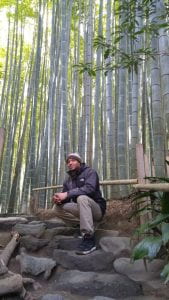
Kaleb sitting on stone steps in front of a bamboo forest

Kaleb in a garden in Kamakura, Japan

I was born and raised in Eugene, Oregon. My father is also from Eugene while my mother is from Panama. I grew up playing baseball, basketball, and football all the way through my high school years. I ended up becoming the ASB President (all student body) of my high school at Sheldon where I gave many speeches, including one at graduation and organized the assemblies for the school. I attended Lane Community College where I received my Associate’s of Arts degree and transferred to the UO where I completed my undergrad in Linguistics and the Second Language Acquisition and Teaching (SLAT) certificate.

What brought you to language teaching? To the UO?

In high school, I always aspired to become a writer, but was unsure on how to go about it at the time. During my years at Lane, I switched my degree many times from business to music, then to EMT until I eventually found my passion in language learning. I discovered this through travelling when I was working at the airport and had the opportunity to use the free flight benefits to travel to places such as Italy, Israel, the Netherlands, Canada, Guatemala, Panama, and Japan. It wasn’t until I visited Japan that I found out what direction I wanted to go as far as higher education. I noticed that language is the key to the world and there were many job opportunities as an English teacher in Japan. When I returned to America, I immediately started studying Japanese and Linguistics at the U of O and now I am in the LTS Masters program. I also found that the passion doesn’t just stop with teaching. When we know a language and how language works, there are many opportunities that can be had in many different areas.

What have some of your past experiences been with language teaching? Do you have any specifically fond memories?

Since my time at U of O, I have had many great teaching opportunities such as working with international students from all over the world while tutoring at AEI, interning with Li-Hsien Yang at CASLS, and with the OIIP program. Classes through the LTS program offer opportunities to teach as well, such as Talking with Ducks, and the times have been unforgettable. I have met so many interesting people and was able to expand my cultural and linguistic knowledge even further by making friends and using the Japanese language and other languages every day. I have gone on many fun adventures with my international friends such as going to the coast, hiking Spencer’s Butte, snowboarding, surfing, skateboarding, and many other things. These memories I will always cherish and remember and at a time when I knew no one from Japan, I now have many friends in different places of the country so I will not be lonely and there are many opportunities to be discovered.

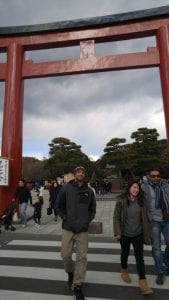
Kaleb exiting the torii gates, in front of Tsurugaoka Hachimangu shrine

Kaleb in front of torii gates in front of Tsurugaoka Hachimangu shrine

What has been the highlight of your time in the program so far?

Aside from learning the logistics of how language teaching works, the LTS program has offered so many insights that were new to me such as curriculum designing, program evaluations, creating lesson plans, learning about different modes and tactics of language teaching especially in a world where things are more digital and online, and how to optimize the experience for the students in classroom. I would have to say the highlight of the LTS program is the amount of awesome people I get to meet and work with while in the program. It’s awesome to part of a team of likeminded individuals who are bright and driven in their field. The professors in the program are all great as well and each one offers a viewpoint that is extremely beneficial in many ways.

How do you hope to work in the language teaching field in the future?

After I graduate, I plan to utilize the knowledge I have gained throughout my years at UO and the LTS program by travelling and teaching English. My main goal is to live and work in Japan while increasing my knowledge of the Japanese language, but I am always open to travelling to new places as well and learning about the languages and cultures as much as I can. I hope to work in education with students of all age ranges who are interested in learning English and to help them on their linguistic journey. Another goal is to work for an international company where I can travel and use my language ability to bridge linguistic and cultural gaps and make connections around the world.

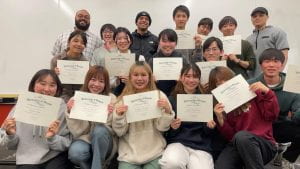
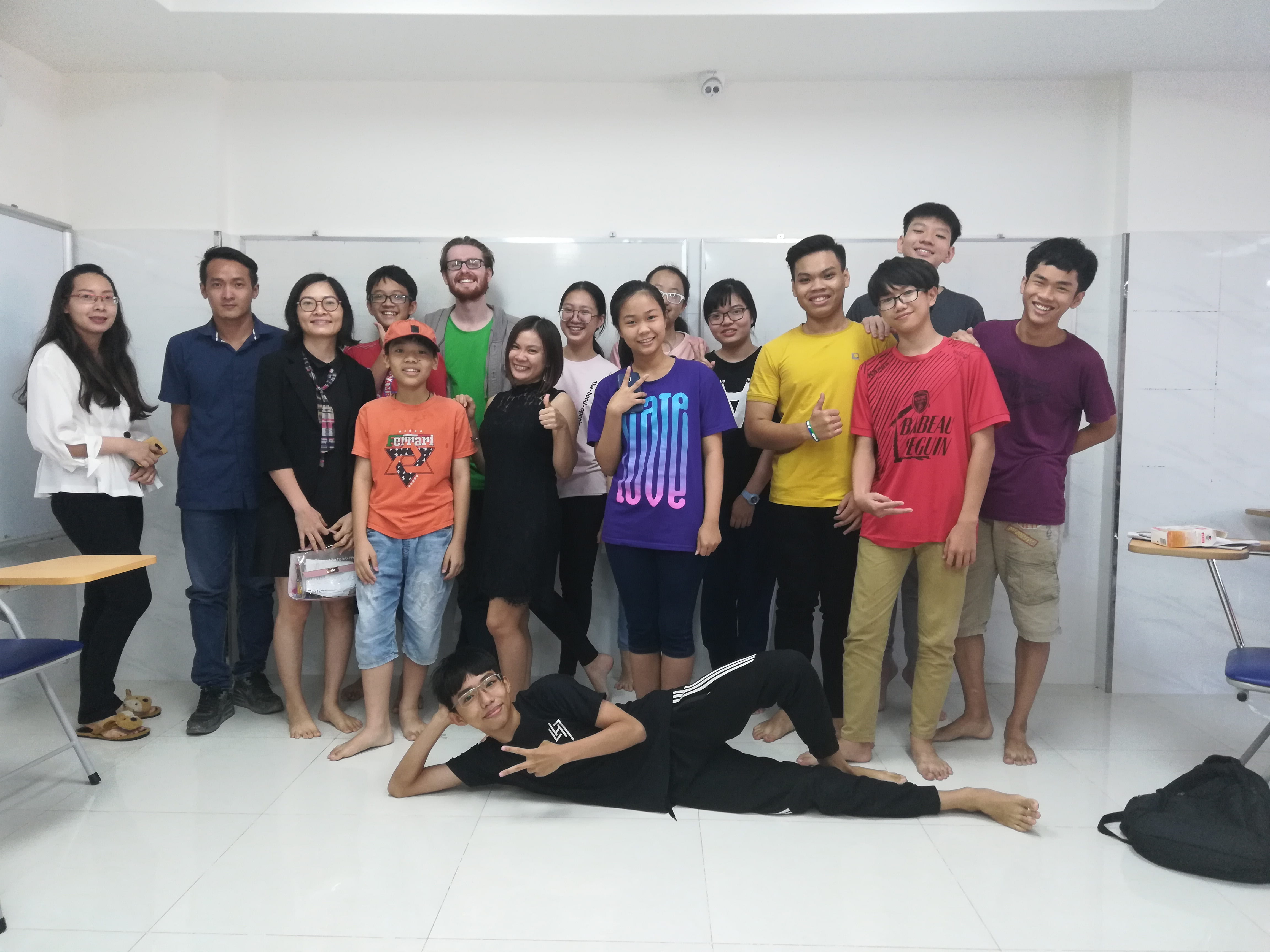
Kaleb with co-teachers and English students from Nagoya, Japan in Eugene

Kaleb (third from left in back) with co-teachers and English students from Nagoya, Japan in Eugene

What is something outside of language teaching that you are passionate about? A fun fact about yourself that others may not know?

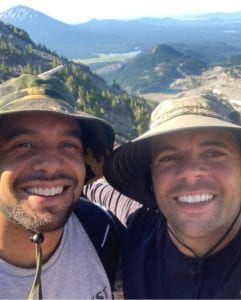
Kaleb and his brother on top of a mountain with a view of mountain ranges and rivers behind them

Kaleb (left) and his brother at the summit of the South Sister, Oregon

Outside of language teaching, I have a passion for music, photography, manga, video games, and the outdoors. I play the drums, a bit of piano, and the bass guitar on my free time and also make music on my computer. Recently, I have had the opportunity to be the drummer of a band which has always been a dream of mine. I often take photos of nature when I’m on a hike or bike ride and find it extremely grounding. I love to skateboard, mountain bike, and surf with my older brother as well who was the one who got me into outdoor sports. I also recently have reconnected with my love for writing and have began writing brief short stories and hope to eventually transfer those into short films.

Student spotlight Taysiki Allyson Alvarado

Hello Allyson! You are our final cohort of 2022 student spotlight! Thank you for sharing with us. First, could you introduce yourself?

Ink nash waníksha Taysíki ku suḵaputɨmtki Allyson Alvarado. My name is Taysíki and in English my name is Allyson Alvarado. I am Yakama and I’m from Wapato, Washington.

What has been the focus of your work during the LTS program? What makes this work meaningful to you?

Throughout LTS I have been working with the Ichishkíin language and exploring how best to teach and learn it. At first, I was really focused on incorporating language use and cooking together. Eventually, I came to focus on family language learning and meal-time ended up being a component of that. Family language learning is special to me because I’ve been learning Ichishkíin with my own family, especially my younger siblings so I wanted to create something that would make that easier/accessible for not only myself, but other Ichishkíin learners who want to speak with their families.

You had a very special living arrangement and housemate this year. Could you tell us more about that?

I have been living with Tuxámshish, my elder, my teacher and my inspiration! She has accomplished many things not only for the Ichishkíin language, but just in general! She is 100 years old and an L1 Ichishkíin speaker, she has taught me so much that I’m extremely grateful for. I didn’t grow up with an L1 speaker in my home, so I’m glad that I was able to experience this with her. She has also helped me many times translating my lesson plans, shared a whole bunch of good stories with me, and made me laugh a lot throughout my time here so living with her has been my home away from home.

What are you doing after LTS? Do you think you’ll miss Eugene?

After I graduate, I’ll immediately start preparing to teach Ichishkíin to 5th-8th graders in the district I went to school at! I’m really excited because there has never been a 5th or 6th program for Ichishkíin until now and since I have a lot of flexibility in the curriculum creation, I’m happy I’ll be able to use some of the lessons I’ve created throughout LTS.

I will miss Eugene! This is my 5th year being in this city so it’s emotional to be ending my time here. I’m going to miss food delivery 🙁 and even though I’ve complained many times about my wet socks, I will miss the rain. I do hope to come back for NILI Summer Institute as a chaperone for my future Ichishkíin students who could be possible LTS recruits 👀

What has been most important to you in LTS?

Most important to me in LTS has been the relationships that have come out of it. It takes me a long time to come out of my shell and make friends with people, so when I do make them the relationships are very precious to me 🙂 I’ve learned sooo much from everybody within the program and I just feel very privileged to have learned from everyone’s experience and expertise!

What is a fun fact about you that we may not know?

One fun fact about me is that I weave baskets. I use contemporary materials like yarn and cord to weave traditional Columbia plateau baskets and when I go home, I hope to gather and learn about more traditional materials to make baskets with those. I also love to watch tv!

Student spotlight Niki

This week’s student spotlight is on Niki, a current student in LTS getting ready to graduate in about a month!

Hello Niki! Tell us a little bit about yourself, your background, and how your path brought you to LTS

It’s great to think about what brought me to the LTS program—it’s been a long road! I graduated with a double major in History and Government, and thought I’d wind up going to law school or teaching history, but I’d always loved and studied languages. I kept feeling drawn to that. After a few years working in university administration, I went  back to school and earned a BA in French—a language I’d studied off and on since I was 12. I completed a K-12 teacher prep program in Languages Other Than English at the University of Texas, and had plans to teach French in middle or high school. My trajectory changed in 2018. I’d started volunteering to teach ESL to adults at my local library, and fell in love with the work! After two years of that, I started researching MA programs, and was so intrigued by the LTS program. A big part of that was the multilingual environment and approach you have here. I liked that I could learn about TESOL, but could also work with French and be in a multicultural community of polyglots.

Niki (center) with cohort members Allyson (left) and Nicole (right) and Niki’s project advisor Trish Pashby (in softball gear) and LTS director Keli Yerian at a local softball game.

You have had some varied teaching experiences by now. What experiences or themes in your teaching have stood out for you over time?

A long time ago, someone told me one of the most important qualities a teacher can have is to be flexible. Now that I’ve taught in a variety of contexts with students from 8 to 75 years old, I can say the need to be flexible has been an overarching theme. Every school is different, every class is different, and the needs of students are always changing. That’s one thing I love about teaching—it is never boring! And teachers can spend hours planning a lesson, only to have it flop. (I might be speaking from experience here, ha ha!). On the other hand, a teacher can invent an activity on the fly and have it turn into a huge success. Another theme is that it’s important to learn the fundamentals of pedagogy and then ground yourself in those principles as you figure out how you want to layer your own unique style on top. Figuring out who you are as a teacher, and figuring out who your students are, and what they need, is a beautiful thing, because that is how you co-create learning. Finally, I will say, it is very important to get to know your students so that you can respond to them appropriately. It’s sort of like choosing a gift for someone— it’s best to figure out exactly what fits that person, rather than picking randomly or focusing on what you would prefer to give them, if that makes sense.

I worked at Services for Student Athletes, which was such a unique and rewarding experience. I mainly tutored international athletes who were taking courses at the American English Institute here at UO. I also tutored athletes in a few other subjects I know well, like History, Art, and Linguistics. The most important thing I learned was about the unique academic needs of student athletes. These folks have very demanding travel schedules and sometimes feel a lot of pressure to perform in their sport. I viewed my role as helping them create space for an academic self, and helping them forge a path to academic success in the midst of their other responsibilities. I had a few students for three terms in a row, and it was amazing to watch their English proficiency grow. I’m so proud of them!

What are your next steps on your path after LTS?

I’m moving back to Los Angeles and will look for a job. (Hi, recruiters!)

What is a fun fact about yourself that others may not know yet?

I have raised several salamanders, including axolotls! Aren’t they cute?

Multi-level teaching internship for LTS students

This post is the 3rd of an awesome 3-part series this Spring/Summer on internship experiences in LTS (see the first here and second here). It is written by Laura Holland, faculty member in LTS and the American English Institute (AEI), and 3 of the 4 interns (Elaine Sun, Tigre Lusardi, Ellie Collins, all LTS students) who assisted her with a remote multi-level Speaking-Listening class.

Team “One-Room-Schoolhouse” rocks the house!

Laura G. Holland 

The global pandemic has taken a toll on enrollments in Intensive English Programs (IEPs) throughout the country and UO/AEI is no exception. Late in winter term we were informed that we only had enough students to offer one each of our core courses in the IEP, one Speaking-Listening, Grammar and a Reading/Writing class. Each class would serve all levels in a “one-room-schoolhouse” model. I was offered the Speaking-Listening class, my favorite to teach, but I confess I was initially skeptical of our ability to deliver a great student experience with this new constraint, and I wondered how in the world I might make successful, meaningful experiences for such a diverse level of student proficiencies.

In my heart (and teacher’s brain), I knew that the only way this might be even remotely possible would be to recruit interns. I put out the call to Keli Yerian, Director of the LTS Program and she in turn, sent out a message to the MA cohort. Within 2 days, I had four eager interns, 3 of whom I had worked with previously, and ready to take on this further experiment in online education (because teaching languages online IS still a bit experimental after only a year). I can safely say that without the interns, we would never have had the simply amazing experience that we had. Going into the term I was praying to stave off disaster; within the first week, I knew we were on to something big and by the end of term, we had delivered one of my favorite courses of my long and varied career.

Throughout the course and especially in the final weeks we requested IEP student feedback, asking what they liked, what they would like more of, which lessons and activities “stuck with them.” We asked in multi-modalities: in-class small group discussions, their weekly homework videos and writing in the chat in whole group. In each of these queries, students highlighted working with the interns, their ability to engage daily with UO students, both domestic and international. They were inspired by all and as a teacher, it was SUCH a luxury to have 4 talented and enthusiastic co-teachers to help plan ideas I never in 100 years would have thought of. The balance and variety they brought took our content over the top. Because we had “ditched” the textbooks this term (which one would we use with 6 different levels?!), we were free to develop our own passions and materials and as a result, we all thrived. Our team met weekly to plan and discuss, and to brainstorm ways to adapt all our lessons and activities to both in-person and online formats, so as to be prepared and ready for all contexts. As a teacher at the doorstep of retiring, I found this to be so inspiring and am grateful to be going out with a bang.

Our team of 4 interns included more variety than I could have hoped for: undergrad and graduate students, male and female, native and non-native speaking, novice and experienced teachers, people who had always wanted to be teachers and people who had begun careers elsewhere and found their way to teaching for a second act. From moment one, they were on it and together, we created one of the most exciting courses I’ve had the privilege to teach. They developed lessons incorporating pre-, while- and post-listening activities and discussed facing fears, and many other topics of interest; they incorporated poetry in the most successful poetry lesson I’ve seen; they compared “Bucket Lists” and they asked the students to tell stories from the past and look to the future; we discussed their hopes, fears and dreams for themselves and for the world; we watched videos and gave speeches and developed everyone’s academic discussion skills.

Thank you to the interns—I am being perfectly honest when I say this term could never have been this amazing without each of your many contributions and full-on presence. I will remember this experience forever and I’m positive our students will too.

Thank you, Gracias, Xi xie nie, Merci, Tack, Arigato, Shokran, Sulpayki!

Ellie Collins 

Though the prospect of an online speaking and listening class that spanned 6 levels was certainly intimidating, this internship ended up being one of my favorite experiences of the LTS program. During this internship, I had the opportunity to watch Laura Holland’s excellent teaching in action—I learned so much by observing her interact with students. One of the things that Laura does best is encourage her students to step outside their comfort zones to grow into better learners and speakers. At the same time, she encouraged me to step outside my comfort zone to plan and lead activities for the course. I grew as a teacher while learning to plan out lessons as well as teach lessons that were planned by someone else. Throughout this internship, I learned more about how to manage a classroom and differentiate lessons between many different proficiency levels and interests. I am so grateful for the opportunity to intern in this course, and I look forward to implementing the many things I’ve learned into my own classroom in the future!

Elaine Sun

I feel glad to work with Laura and the other three interns during this past Spring term. Also, working with students from all over the world was a precious experience. It was a wonderful chance for me to test the materials I designed for language teaching in a real language classroom. Ten weeks passed much faster than I thought. As an intern, I really enjoyed working with the students. While they were practicing English, they were also sharing their personal stories and some fun facts about their culture. Some of the stories were truly touching and made me think deeper about the target topic. It was also the first time for me to lead an English class as the main teacher. I feel grateful for Laura giving us this chance. This intern experience gave me the courage and helped me to get ready for being an L2 teacher. Finally, I just want to say “thank you” to everyone I met in this class. It wouldn’t be a wonderful trip without each of you.

Tigre Lusardi 

Interning with Laura’s multi-level Speaking and Listening class this spring was a seriously fun and wild ride! As a new teacher I really appreciated getting a glimpse of how a veteran teacher like Laura approached planning and executing a class for learners who varied so widely in their previous English language study and in their comfort and proficiency levels with speaking. Balancing every learner’s needs and goals and making sure that they were all participating and progressing was no small feat! One of the most delightful things to observe was how the learners’ comfort with expressing their ideas grew by leaps and bounds throughout the term. By far one of my favorite parts of this experience was noticing when learners felt confident enough both with their English and with us, the teaching team, to crack jokes or to tease us gently. Expressing humor in a second language is sophisticated both linguistically and inter-personally, especially given the idiosyncrasies of Zoom and online classes. I only wish I had had more than 10 weeks to spend learning alongside Laura and such an engaged and engaging group of learners!

LTS internships at Oak Hill School

LTS students who are proficient in Mandarin have the opportunity to assist in language classes at Oak Hill School, thanks to the welcoming instructors there, Li-Hsien Yang and Sophie Wang. Li-Hsien Yang is in fact a graduate of the LTS program herself! (See her 2018 blog post here). She worked as part of the CASLS team for many years.

Photo from Oak Hill School website

Oak Hill School is an independent, non-religious, non-profit K-12 school in Eugene. It offers 3 languages: Mandarin, Spanish, and French.

Two LTS students, Andrew and Ailsa, give us their reflections below on their experiences at Oak Hill this past Winter and Spring terms teaching Mandarin and ESL at the high school level.

Andrew Stevens

           Recently I had the opportunity to dip my toes back into teaching waters during my internship at Oak Hill high school. I worked with an ESL class and a Mandarin class where I got to implement many of the skills and techniques I have learned in the LTS program. Leading the weekly ESL group in discussions about Tom Sawyer allowed me to find ways to relate the material to the modern day lives of the students (often resulting in some memorable and hilarious stories from all). Designing my comprehension questions for each chapter of the book also helped me to incorporate elements of project-based language teaching, an important element of my master’s project. Our main instructor Li-Hsien Yang was incredibly helpful during both classes, especially as I eased my way into creating review materials and leading sessions for our Mandarin 2 class. Her scaffolding and encouragement helped me adjust to the experience of teaching Chinese while better understanding which aspects of my teaching translate well to this context and which ones I still need to work on. 

Aside from the memorable stories and interactions with all my students (including Yu’s insightful social commentary, Tommy’s Hong Kong adventures, Lalo’s musical experiences and Walker’s Bolivian football parties) my most important take-away from this internship was the chance to experience distance-teaching. Coping with the challenges of the pandemic has been especially difficult for the high school students I was teaching and interacting with them on a weekly basis gave me a realistic perspective of teaching as it exists outside of the ideal circumstances often assumed in the pedagogical theory classroom. Supporting students with encouragement and empathy is more important than ever in the current climate and this internship helped me solidify my teaching beliefs with regards to these principles. Distance teaching was far from just doom and gloom however, and with the challenges of distance teaching come the affordances as well. Zoom classes allowed for turn taking, chat bombs, and breakout rooms giving students opportunities to speak and interact that would have been very different in a traditional classroom (most of these techniques I copy/pasted straight from our LTS instructors’ classrooms). In all I can say that I am incredibly grateful for the experience and it has made me excited to dive-in to a full time teaching position after I finish my time with the LTS program. 

Ailsa Li 

I’m thankful for the LTS program to provide a wonderful chance for an internship.  I’m glad to have this opportunity to actually practically implement my learning into teaching. This was a term-long internship for teaching intermediate level Chinese in Oak Hill High School, I was teaching a special class called Chinese Honors which is for learners who have learned Chinese previously and decided to continue learning from the middle of the path. In Spring term the class had only one student, Anna, who was a very thoughtful student who always liked to engage in class activities and spontaneously ask questions. I was co-teaching with instructors Li-Hsien Yang and Sophie Wang. Even though we met on Zoom each week, the class atmosphere was super welcoming and warm. The instructors and students were more like family who could share thoughts freely without the constraints of large-sized class.  

Beyond the great experience in all the class sessions I joined, my major take-away from the internship is how to be a motivational teacher. Novice teachers need to develop their own teaching philosophies that accommodate the students’ interests and teaching objectives. An experienced teacher knows how to encourage students to use the target language spontaneously, whether it be a small chat about personal issues, the weather, or school life with friends, while still focusing on using the grammar etc. from the textbook. All current pedagogies in language teaching promote authentic context and natural language use, so educators cannot only rely on textbooks. Actually, both educators and students notice that textbooks are sometimes out-of-date and are not well-suited for real-word contexts. For us as future instructors in a new era in education, the most essential job is integrating content into context, from textbooks to the real world. 

Thriving in 2020: Suggestions for Self-Care

In this week before the 2020 elections, the LT 436/536 Language Teaching Planning class wrote this blog post together about self-care during challenging times. Each participant in the class wrote a suggestion or idea based on their own experiences. Most of them are about what we can do even when we don’t have access to much in-person contact with others. We hope this can give you some ideas for taking care of yourself now too. – Keli Yerian

Ideas that you can do spontaneously!

Reading helps me escape my problems in the real world. Especially with sci-fi or fantasy, I am able to escape for a little bit to a world that is different from mine. When I am feeling anxious, I like to take a good book and read in a cozy place. – Alexis

Walking around my neighborhood has been my go-to form of self care recently. It gives me a change of scenery, fresh air, and is easy to do safely with covid. Sometimes I will go by myself and listen to music, sometimes I walk my dog, and sometimes I invite a friend. This has been a good way for me to destress and take my mind off of everything that is going on. – Sydney

What I like to do to take care of myself to allow myself some time away from the world and escape into sleep. Whether I am physically tired, emotionally drained, or mentally maxed-out, sleep always helps me relax, reset, and refresh my mind. I have used sleep to organize my thoughts while studying or making a big decision (“sleep on it” is real for me!). I also use it as a way to escape the reality of a stressful time and allow my body to take care of what it needs to while it’s “turned off”. – Arika

You can do dancing self-care anywhere! Sometimes I dance around when I get ready for the day or need to get away from my workspace. My only priorities for that two minutes and thirty seconds are to get on my feet and elevate my heart rate. Consideration of looking foolish has to go out the window or you won’t get the full effect! Physical activity releases happy hormones in your body and it’s a good excuse to explore funky dance music like disco or musical theatre dance break songs. – Kyra

During these trying times of not being able to go outside, you could get into the hobby of playing video games. You can play single player games if you feel like a place to escape to, or to enjoy exploring the story and/or the world that the game has provided (ex. Zelda games). But if you want to interact with other people there is also the option of multiplayer games that are free as well (ex. Among us). – Ken

My topic is dancing. This specific self-care is great because it promotes a healthy lifestyle as well as stress relief. I mostly dance to kpop music because the songs come with set dances, so it’s fun to learn them plus you get exercise as well. I think this is better than some other self-care things like video games and whatnot, (which are still good self-care things, don’t get me wrong) dancing just has the added benefit of exercise. – Laurel

One of the most enjoyable things for me is taking a bubble bath. Personally, I would consider it as a useful aid for someone in need of self-care. You can purchase bubble bath bombs from cosmetic store like Lush, or you could DIY some personalized bath bombs by using your favorite colors and essential oils. There are many tutorial videos on YouTube. When you are done your work for the whole day, just imagine you lying in your bath surrounded with warm water and a nice scent, you will get relief immediately after that. I would highly recommend lavender scented bath bombs since this fragrance is commonly helps relieve anxiety, depression and stress. Beyond that, tea tree essential oils are another great choice if you like a more neutral scent and help to heal acne. – Ailsa

When it comes to self-care during this pandemic, one thing I do the most is listening to music.

Not only any type of music but BTS music. If you don’t know who BTS is, they’re a Korean boy group from South Korea who are currently the biggest band in the world. BTS’s music mostly revolves around social issues and mental issues. During this time, during the pandemic, I’ve always listened to their music as it helps me relax, release any feelings I have inside like sadness, and even gives me hope that life will be better after this or during this pandemic. As Dynamite has said, find your spark and light even though you are locked in one certain place. Their music really gives hope even though their lyrics are in Korean, and it also proves that music also transcends languages and people. – Yacki


Ideas that encourage some planning and commitment

Meal preparation has been one of the most delicious and efficient forms of self care that I have been using for several weeks now. Every Sunday I take a trip to the store and cash in my meager earnings for some decadent protein, carbohydrates and copious amounts of vegetables that will help me in fulfilling my weekly ritual. Upon returning home I tend to get violent with the salt and pepper, seasoning the hell out of all my ingredients and prepping them for their inevitable fate on the smoker. After all the work is done and my meals are ready for consumption I tend to indulge in an after meal-prep brew and plan out the rest of my week. Eating clean and healthy has given me the energy of Arnold Schwarzenegger (in his earlier films) along with the focus I need to barely hang on during grad school. Overall I can’t recommend meal prep enough and if you run out of ideas the internet has a plethora of recipes and indulgent entrees that will allow you to switch things up and keep your taste buds on their toes. – Andrew

Self-Care: Therapy. I have been going to therapy for the past three years and it’s been the most successful self care I’ve ever experienced. It’s helped me not only with the maladaptive coping mechanisms I had, avoidance being a big one, but it also helped me manage everyday life. I also struggle with social anxiety, so restructuring my thought process when interacting with people has given me more self-confidence and has allowed me to pursue my goals. Having a therapist means being able to discuss these issues you have and work towards resolving them, without feeling like you’re burdening your friends or just ranting without actually seeking a solution. Therapy doesn’t just work for big issues, it’s for anything that you might want to work on in your life. – Ryane

I love to play golf when I need to escape. Sometimes I need to be alone and go by myself, sometimes I bring a partner to play alongside me. It is peaceful on the golf course. There are numerous trees and wide open spaces. There are few other individuals around at any given time. Birds can be heard chirping or water flowing. Smells of fresh cut grass fill the air. As long as I am out on the course it is difficult for me to focus on anything outside of my next shot and the world that is immediately at hand. Good shots come and poor ones follow, but that is the nature of the game. Even when my level of play is sub-par it is difficult for myself to become overly discouraged while I am on the golf course. – Willis

Sleep is very essential for all of us. Bad sleep can cause problems in energy, mood, shape, and everything else, you name it. I’ve been having sleep problems for years, and it got worse under the pandemic, which I think is the same to everybody. I tried every method and prescripted, unprescripted meds to help, but none of them worked, until recently I tried Natural Melatonin. It works like a charm, and even I fall asleep in 10 mins after taking it and wake up fresh without any hangover. Highly recommended to anyone who suffers from sleep problems. – William

During times of great stress it is easy to shut down, to want to numb ourselves to our stresses through watching tv and other mind numbing activities. While these are great in small instances, it is important to keep our mind active and keep our brains healthy. I have found that playing music is a fantastic way to do this. It is a creative output for our emotions and stresses that is still simple and relaxing. Playing music increases blood flow to the brain, reduces stress and depression, and strengthens the brains executive function among so many other things! So go down to that pawn shop and buy the $50 guitar you’ve had your eye on, start making EDM music with that free app, your mind and your brain will thank you for it! – Sarah

Gardening, whether cultivating a large vegetable or flower garden or growing a couple of plants in pots on a windowsill indoors, can be a way to help oneself slow down, connect to nature, and build new skills. Growing plants of all kinds is an act of looking towards the future optimistically, imagining the eventual flower or fruit that plant might produce in the weeks or months ahead. The planning and regular care required to nurture a plant from seed to flower or fruit requires one to build skills in noticing changes and problem solving as issues arise. Spending time with plants, both indoors and out, can be calming for the mind and a key reminder of the seasonal cycles of nature and our place, as humans, within those cycles. – Tigre

For my self-care I would like to expand my hobbies and get some more exercise by learning more about mushroom hunting. I have only been able to go out once so far, but the Pacific Northwest is an ideal mushroom hunting ground because it is warm and wet. Being out in the woods allows me the chance to breathe in fresh air, stretch my legs and see the beautiful countryside. The only thing that would make it better is finding beautiful, nutritious and delicious mushrooms to bring back with me! – Beka

Feeling overwhelmed and maybe sad? These are the things I personally did for my own self-care summer of 2019! Feel free to take them and try them for yourself! During a time that I considered very dark for me, I would start my week with going to therapy and literally crying it out. While I expressed with words, I would accept any emotions that came my way. After I was done, it felt incomplete to just go home so I walked into the building next door and scheduled a message. For the following two months I would schedule my weekly therapy appointments and my massage appointments back to back so that after I let out all the sad emotions in my body, I could feel my stress and anxiety literally go away. Although a little spendy, I did this because I liked walking out of my massage appointments with more relief than stress. After getting a massage, my masseuse recommended that I drink extra water because of all the muscles being squished around. For me, the crying out the negative feelings and washing my internal organs out with water truly represented a cleansing of my body, mind, and soul. I hope my experience motivates you to try it out for yourself too! – Vanessa

Do you do work that you find time-consuming, stressful, and/or unfulfilling? Schedule a time to not do that work. Scheduling is important because it helps create a routine, which creates a certain sense of security that is especially helpful given the current state of affaires. Try to aim for at least an hour of time of non-work, probably before your work or in the middle. Waiting until after your work could leave you too tired to benefit from disconnecting from work. – Jalin
 

LTS students think back on the remote term

Our remote Spring term is now over, a much-awaited break is here, and LTS students are free to … well, they are still free just to mostly stay at home!

LTS students are also teachers, even when they are not teaching. They are always thinking about their own (future or current) students as they consider what learning and teaching means to them. Some of the LTS students share their thoughts below on what they have learned from this remote learning term.

LTS students together on campus, following the motto ‘hang out but space out’

I’ve learned that language classes can be done online and there are so many ways to interact with students, even young students! However, I think face to face classes won’t be replaced by online classes. Students still need in-class time to learn languages and practice in an environment. In this term, the micro-teaching workshops gave me lots of ideas for teaching online and I’ve learned lots of strategies for class management. Although this term was hard, I learned some new things and adjusted to the new life.  —Lily

I learned that it’s very important to set boundaries especially during trying times. Early on in the quarter, I noticed myself working long hours for my GE and for school simply because there was no separation between my work and home. I think, especially as teachers, we are prone to overworking and to keep working even when we should be done. This term really demonstrated to me how that is not a sustainable option and that we as teachers and students need to take a break so, when we come back to our work, we can do our best. — Johanna

 Over the past 2.5 months working and studying from home, I have learned that creating spaces that have specific purposes is very important. In general when a grad student, it can be difficult to take breaks, especially if you have work and other life obligations as well, let alone adding a global pandemic to the equation. I see just how resilient we have all been in creating community online and being supportive of each other. There is a definite fatigue that goes along with getting all of your input online; however, I think that there are extraordinary opportunities with integrating it with traditional classroom learning. — Leigh

 Last term’s social-distance was not easy being a student and having a GE teaching position. On the other hand, it was a valuable experience to be in a virtual educational space. I tried to adjust and enjoy myself in the new technological teaching & learning environment because these new unexpected situations, combined with the somewhat expected trends, were inevitable. This new technologically-driven style was expected to happen eventually. However, the sudden happening of COVID-19 may have pushed towards us to a new lifestyle a little earlier than expected. — Cathy

I learned so many things!! As a GE for Japanese department, at first it was so hard to connect with students online without face to face connections. At the same time, I was able to explore many online teaching ideas and strategies! These experiences will definitely help me teach languages in the future. As for learning, it did not stop me from enjoying LTS courses. However, I missed my classmates and playing sports together (I hope we can gather sometime soon!)… — Yoshi

While I haven’t had to teach any classes during this transition to remote learning, I have been a student throughout it, and it has taught me many things about myself as a learner, and also about our educators, and the work they do for us.

Learning online, exclusively, has been very challenging, and it’s shocking how draining it can be, despite hardly moving. Balancing my screen time with other activities has been an important step for me to maintain my ability to function during all of this! Reaching out and benefitting from the cohort has also been one of the things that has kept me sane. Leaning on those relationships that we have built in the previous terms has been really helpful in dealing with the stress of the new learning environment, and the uncertainty of the near future.

Lastly, just from the (relatively) small amount of work that I have had to do through Zoom and other remote learning platforms, I can really see how hard our instructors must be working to continue to provide us with our education. We are all in this together, and I am really grateful for what all of the LTS faculty have been able to do to be there for us, and try to make the best of this situation. Between the cohort and the faculty, I have never once felt like I was completely lost or without someone to talk to.  — Dustin

The presence of COVID-19 was a major challenge as a graduate student. The constant health concerns for myself and my loved ones was overwhelming. I could not escape from those stresses. The necessary implementation of social distancing made this experience more taxing. However, there were goals and deadlines to be met for the term. These may have been what kept structure in my life, outside of online synchronous zoom classes, and ultimately aided me in this time. Yet the standard student stresses (e.g., academics, work, social inequality, etc.) were ever present. There was fatigue, much more than expected or planned for.

Zoom sessions became more therapeutic in a sense. Teaching and learning through zoom were a near daily highlight for me. My screen time grew exponentially, possibly greater than my “gamer junkie” years. The complete online system was not without some problems. There were occasional technical issues that would prevent learning for those unfortunate enough to have them happen. As a personal side, my eyesight has worsened. However, having practice teaching and learning in the complete online synchronous format allowed us to experiment with teaching strategies and materials (online and from in our own respective spaces). — Tommy

This pandemic has presented a new set of challenges for us all. Being a graduate student and GE is a challenge in itself. Not having to go to class freed up some time from not having to physically travel to the classroom, but it also caused a lot of mental fatigue from having to sit in the same spot most of the day and be on zoom calls. What helped me was scheduling physical activity into my daily routine as well as making sure to give myself a break when getting mentally burned out from school or work. — Connor

Teaching online during the COVID 19 crisis has been a totally new experience. It is challenging: in almost every session, we would meet a different issue. However, by solving these issues together with the students, we also generate interesting teaching and learning opportunities. Eventually, we were able to get used to the online model and get the most out of it. I didn’t expect the knowledge of teaching with technology that we learned in LTS would be applied so soon, but it is definitely a good thing to always be ready. I think online teaching is absolutely a viable way of teaching, if enough structure is put into it, we can benefit it even after COVID 19.  — Reagan


Alumni Spotlight- Sothy

Sothy Kea graduated from LTS as a Fulbright awardee in 2014 and is now a TESOL language teacher educator and English Center Director in Cambodia. His particular passion for teaching pronunciation led to his MA project, titled “Integrated Oral Skills English Pronunciation Course for Cambodian College Students”.

Sothy at Angkor Wat, Cambodia

What have you been up to since you graduated in 2014?

Since my graduation, I have come back to work as a university lecturer at Institute of Foreign Languages, Royal University of Phnom Penh. I have been teaching in MA in TESOL Program and supervising MA students’ theses. In addition, I have taken a management and leadership position at CIA FIRST International School. I am currently a director of CIA FIRST English Center, which offers general English programs to students of various ages.

What have been the most rewarding aspects of your work in the past few years? Have you had any particular challenges?

Having set up CIA FIRST English Center for CIA FIRST International School has been one of the biggest milestones in my career for the last few years. It used to be only a general English program with approximately 80 students. It has now become a center offering separate English programs to approximately 500 children, teenagers, and adults. In addition, I feel blessed to have formed a dynamic dedicated team in this center, who have been working extremely hard and collaboratively to make today’s success possible. Without them, little would have been achieved! Getting to where we currently are has been quite a challenge though. Transforming an entire organization with a limited budget and human resources was never an easy task. Revamping the curriculum, growing the student number, setting new business strategies, and making other organizational changes were all what we had to do, but these required a lot of patience, dedication, and collaboration among all of the stake holders.

Do you feel that your MA project on integrating pronunciation instruction into the curriculum has been useful to you, directly or indirectly?

with a group of colleagues at CIA FIRST English Center

I believe that my MA project has definitely been useful for my career in two distinctive ways. The overall concepts and hands-on experience of this course development project have tremendously helped me with the curriculum revamping project at CIA FIRST English Center. When we revamped our whole curriculum, I could apply a lot of what I had learned from my MA project into this to make it successful. Also, in MA in TESOL Program at IFL, I have been assigned to teach curriculum and syllabus design in language teaching course in which a great deal of notions from my previous project are practical and relevant, making the teaching even more effective.

Do you stay in touch with any of your cohort members from 2013-14?

After I have graduated, I have been completely occupied with work and family. However, I have been keeping in touch with some friends and professors through email and social media. Last year, I got a chance to attend a conference in Nashville, Tennessee but could not manage to fly to Eugene to visit my professors and friends there. Hopefully, I can do so next time.

Is there any advice you would give to current or future LTS students now in (almost) 2020?

Based on my experience, I am humbled to share a few words with the current and future LTS students. Firstly, knowing your own pace is important. It would be great if you possess all the necessary skills and knowledge to deal with all assigned work in the program. However, if you realize that you usually spend a lot of time to get particular assignment satisfactorily done, then perhaps you might need a different approach. You might need to handle your class assignment as early as possible. The program is quite demanding. It requires a lot of intensive reading, research, and assignment. If you postpone all your assignment, it will build up which you might eventually find it overwhelming to meet all the deadlines. In addition, you could examine whether you lack certain background knowledge or skills to complete the assignment. If so, you might want to take further self-study to build up the necessary background.  Secondly, you should seek help when needed. Inevitably at a particular moment in the program, you will go through a tough time when you feel overwhelmed, stressed, and perplexed. As a matter of fact, this is only seasonal and more importantly, you have a full support system. You could always seek consultation from your course instructors, the program director, and/or the relevant administrative staff. They are unbelievably supportive and approachable! Lastly, you should approach every of your academic course and assignment with utmost care and effort. With time and other constraints, it might be easy to compromise the quality of your works; nevertheless, this academic experience, though somehow challenging at times, will be one in a life time and rewarding in the future. Therefore, it is vital to produce the academic works or results that you are proud to show to your younger generation. Hopefully, my sharing will make a positive difference in your academic journey!


Student spotlight with Dustin! (& ORTESOL 2019)

Dustin Robson is a current LTS student from right here in Eugene, Oregon. He is currently in the 2nd term of the program, and is here today to tell us a bit about himself, how he’s doing in LTS so far, and what his plans for the future are!

Tell us a little about yourself – where are you from? Where have you traveled?

While originally from Long Beach, California, I’ve actually lived in Eugene for most of my life. My family moved up to Oregon when I was pretty young, so I like to consider myself a real Oregonian! I haven’t traveled as extensively as some of our cohort, but I’ve been all over the West and Midwest parts of the US (including parts of Canada and Mexico), as well as Japan and Vietnam.

Dustin (in red, standing) with friends and current/past LTS students Reagan Yu, Ngan Vu, Alina Chen, and former FLTA Amna Hassan

What made you want to join the LTS program?

 Having lived in Eugene before, I also attended the University of Oregon for my undergraduate years. I majored in Japanese, and I also earned the SLAT (Second Language Acquisition and Teaching) certificate for English. Many of those courses overlap with the LTS program, so I had the pleasure of taking courses taught by LTS faculty, and working alongside the 2017-18 cohort. I made friends with several members of that cohort, and also FLTAs (Fulbright Foreign Language Teaching Assistants) from that year, and their praise for the program and its faculty were a major factor for my decision to apply to it as well.

Between graduation and beginning the LTS program, what were you up to?

After graduating from the UO, I left to go to teach English in Vietnam, in a small town called Vũng Tàu.

Vũng Tàu

It’s a coastal city about 70 miles east of Ho Chi Minh City, known for its tourism and beaches. I chose Vung Tau to teach in as opposed to Ho Chi Minh City, because I liked the idea of working in a smaller town, and one without a large surplus of foreigners and expats teaching English. I felt that I would have more opportunities for leading my own classes, and really getting to stretch all my teaching muscles, and I also felt I would be filling a great need for the school I worked at.

The initial couple of months were very difficult getting adjusted to life in a new country, and there were many things that were quite scary at first (motorbikes and the traffic!), but I eventually was able to get into a groove with both living and teaching there. From all the chaos of those early days there, I was really able to learn a lot about myself as a teacher and as a person. Being able to work with learners as young as five years old, all the way up to 18 years old (and a few adults as well) was a terrific chance for me to develop so many skills as a teacher, and also learn lots about what I don’t know, and need to improve. Overall, the experience was absolutely essential, and a very formative journey for me.

One of Dustin’s classes

You’re in the second term of the LTS program — how has it been going so far? What have been some of the highlights up until this point?

Everything has been going well! Having lived in Eugene for years, there isn’t really any living adjustments for me, but for those in our cohort (and the FLTAs) who are new to Eugene, it has been great getting to show them around town, and see what it’s like for someone to experience life in Oregon for the first time! Recently some of us were able to get together and carve some pumpkins for Halloween, which was a wonderful (and messy) experience to share with all who were able to attend.

Aside from life in Eugene, Oregon, one of my absolute highlights from this past Summer was helping out with the Fulbright Orientation that was hosted by the UO this past August. From August 18-22 63 Fulbrighters came to Eugene to prepare for a year abroad in the US. The event had a little of everything, from panel discussions on life as an international student in the US, to games and recreation, and even a bit of microteaching! Yamada Language Center’s Jeff Magoto (and his wonderful team) helped coordinate the event, along with the assistance of many LTS faculty, and current/past members of LTS. It was a great privilege to be able to help, even in a small way, with this wonderful event, that brought people from all parts of the world together in Eugene. Many friendships were made that week, before 59 of those Fulbrighters left to other schools across the country. Four Fulbrighters stayed at UO for the year, and are in classes with many of the current LTS cohort right now. You can learn more about them here: https://babel.uoregon.edu/meet-uos-fltas

63 Fulbrighters from around the world gathered at the UO this Summer

In addition to helping with the Fulbright event, I have also been working at Yamada Language Center helping in any way that I can. I have had the pleasure of helping Director Jeff Magoto present ANVILL at two conferences so far, COFLT and recently, ORTESOL. I’m also helping run the Yamada Language Center Language Exchange program, which serves as a way for students to find others to meet up with, and share each others languages! More information on that can be found here: https://babel.uoregon.edu/language-programs/language-exchange

You mentioned ORTESOL. Could you tell us more about what that is? 

Sure! ORTESOL is a conference that was held on November 15th and 16th up in Clackamas, Oregon. As the name implies, ORTESOL is the Oregon chapter of TESOL, and the conferences have many wonderful people presenting on topics in the world of English language teaching. At this most recent conference, there were presenters from past LTS alum, teachers at AEI, and LTS faculty. I was up there helping Jeff Magoto give a presentation on interactive video (housed within ANVILL, an education platform created by an LTS alum — Norman Kerr), and its many uses within a language classroom.

Jeff Magoto, LTS faculty member and YLC Director, at ORTESOL

Any ideas on what your MA final project may look like?

 It’s still really early, we only just turned in our practice proposals! However, working with Jeff on ANVILL over the past several months, I am interested in further pursuing the idea of transforming traditional language classrooms through the use of technology. It’s still the very early stages, but that’s currently the thread that I’m pulling on the most! Ask me again in two months — my answer may have changed!

Lastly, any plans for the holidays?

 Lots of much needed rest, and time spent with friends and family. I wasn’t around for the holidays last year, so I’m looking forward to making up for lost time this year!

Student spotlight – Jesus

Jesus with some of his students in Cusco, Peru

Jesus Napancca Herrera is a current LTS student from Peru, now in his 2nd of 5 terms in the LTS Master’s program. Here he tells us a little about his past, present, and future.

Tell us a little about yourself – where are you from? Where have you traveled?

I am from Peru and lived in Cusco for many years. I was born in Lima, but since I was learning languages I thought I should move to Cusco, the city of the Incas and one of the largest tourist destinations in South America.

Tell us about your background in teaching and how you got the idea to start a language school.

I started teaching Spanish in 1997 and English in 1998. I was a private Spanish teacher for foreign visitors who were interested in taking intensive courses in Spanish. I was also teaching English to underprivileged kids from Cusco to contribute to my community. In 2000 I created a little cozy school for foreigners as well as for young Cusquenias who could not afford to pay for learning English. In April 2002 I opened Amigos Spanish School. In the same building we had foreigners learning Spanish and local young adults learning English. Both inspired each other and interacted on a daily basis.

The Amigos Language School that Jesus founded in Cusco, Peru

Another view of the Amigos Language School

What is your life like now here in Eugene? Is it very different?

My personal life hasn’t changed much. I am used to being busy every day and I even used to work on Sundays. The difference lies in the dynamic of my tasks. I used to be in charge of my work and have a group of staff working for me. Now I am working for the American English Institute at UO and I feel really fantastic! It is for me a great opportunity to grow as a person. I really appreciate my colleagues at work and my supervisors are amazing. While in Peru, I felt somehow lost and lonely because most of my compatriots thought I was busy for no reason, in a hurry and pathetically organized. Here in Eugene it is normal. So, I feel I am in my element now and don’t feel so lonely anymore. 🙂

You are teaching at the American English Institute as a GE (Graduate Employee teaching assistant) this term. What have you learned from this experience so far?

I have been learning many things, like how to work in a team. I have adjusted myself to following the new rules of this new job in a new country. My colleagues are supportive and always give me a hand at any time. There are great materials for teaching/learning English as well as new methods of teaching languages. Added to this, there is great infrastructure in the classrooms and at our offices. My supervisors and coordinator trust me in my skills as a teacher and allow me to adjust my class as I suggest. I feel privileged and for me, this experience is priceless.

What are some possibilities for your MA project at this point?

Day by day, the idea of my MA project is getting clearer in my mind. After all these months I have learned a lot in my classes in LTS and that helps me to have a better idea of what I would like to pursue in my MA project and my future career. I would like to specialize in LSP (Language for Specific Purposes) and for my future career I would like to work for companies that might need tutors or teachers for LSP.

What do you want to be sure to do during the rest of your year here? Do you have any specific goals or interests?

I would like to connect (which is already happening) the courses with my future career. I would also like to start my own consulting company to empower all kinds of schools that teaches languages.