Student spotlight Taysiki Allyson Alvarado

Hello Allyson! You are our final cohort of 2022 student spotlight! Thank you for sharing with us. First, could you introduce yourself?

Ink nash waníksha Taysíki ku suḵaputɨmtki Allyson Alvarado. My name is Taysíki and in English my name is Allyson Alvarado. I am Yakama and I’m from Wapato, Washington.

What has been the focus of your work during the LTS program? What makes this work meaningful to you?

Throughout LTS I have been working with the Ichishkíin language and exploring how best to teach and learn it. At first, I was really focused on incorporating language use and cooking together. Eventually, I came to focus on family language learning and meal-time ended up being a component of that. Family language learning is special to me because I’ve been learning Ichishkíin with my own family, especially my younger siblings so I wanted to create something that would make that easier/accessible for not only myself, but other Ichishkíin learners who want to speak with their families.

You had a very special living arrangement and housemate this year. Could you tell us more about that?

I have been living with Tuxámshish, my elder, my teacher and my inspiration! She has accomplished many things not only for the Ichishkíin language, but just in general! She is 100 years old and an L1 Ichishkíin speaker, she has taught me so much that I’m extremely grateful for. I didn’t grow up with an L1 speaker in my home, so I’m glad that I was able to experience this with her. She has also helped me many times translating my lesson plans, shared a whole bunch of good stories with me, and made me laugh a lot throughout my time here so living with her has been my home away from home.

What are you doing after LTS? Do you think you’ll miss Eugene?

After I graduate, I’ll immediately start preparing to teach Ichishkíin to 5th-8th graders in the district I went to school at! I’m really excited because there has never been a 5th or 6th program for Ichishkíin until now and since I have a lot of flexibility in the curriculum creation, I’m happy I’ll be able to use some of the lessons I’ve created throughout LTS.

I will miss Eugene! This is my 5th year being in this city so it’s emotional to be ending my time here. I’m going to miss food delivery 🙁 and even though I’ve complained many times about my wet socks, I will miss the rain. I do hope to come back for NILI Summer Institute as a chaperone for my future Ichishkíin students who could be possible LTS recruits 👀

What has been most important to you in LTS?

Most important to me in LTS has been the relationships that have come out of it. It takes me a long time to come out of my shell and make friends with people, so when I do make them the relationships are very precious to me 🙂 I’ve learned sooo much from everybody within the program and I just feel very privileged to have learned from everyone’s experience and expertise!

What is a fun fact about you that we may not know?

One fun fact about me is that I weave baskets. I use contemporary materials like yarn and cord to weave traditional Columbia plateau baskets and when I go home, I hope to gather and learn about more traditional materials to make baskets with those. I also love to watch tv!

Student spotlight Niki

This week’s student spotlight is on Niki, a current student in LTS getting ready to graduate in about a month!

Hello Niki! Tell us a little bit about yourself, your background, and how your path brought you to LTS

It’s great to think about what brought me to the LTS program—it’s been a long road! I graduated with a double major in History and Government, and thought I’d wind up going to law school or teaching history, but I’d always loved and studied languages. I kept feeling drawn to that. After a few years working in university administration, I went  back to school and earned a BA in French—a language I’d studied off and on since I was 12. I completed a K-12 teacher prep program in Languages Other Than English at the University of Texas, and had plans to teach French in middle or high school. My trajectory changed in 2018. I’d started volunteering to teach ESL to adults at my local library, and fell in love with the work! After two years of that, I started researching MA programs, and was so intrigued by the LTS program. A big part of that was the multilingual environment and approach you have here. I liked that I could learn about TESOL, but could also work with French and be in a multicultural community of polyglots.

Niki (center) with cohort members Allyson (left) and Nicole (right) and Niki’s project advisor Trish Pashby (in softball gear) and LTS director Keli Yerian at a local softball game.

You have had some varied teaching experiences by now. What experiences or themes in your teaching have stood out for you over time?

A long time ago, someone told me one of the most important qualities a teacher can have is to be flexible. Now that I’ve taught in a variety of contexts with students from 8 to 75 years old, I can say the need to be flexible has been an overarching theme. Every school is different, every class is different, and the needs of students are always changing. That’s one thing I love about teaching—it is never boring! And teachers can spend hours planning a lesson, only to have it flop. (I might be speaking from experience here, ha ha!). On the other hand, a teacher can invent an activity on the fly and have it turn into a huge success. Another theme is that it’s important to learn the fundamentals of pedagogy and then ground yourself in those principles as you figure out how you want to layer your own unique style on top. Figuring out who you are as a teacher, and figuring out who your students are, and what they need, is a beautiful thing, because that is how you co-create learning. Finally, I will say, it is very important to get to know your students so that you can respond to them appropriately. It’s sort of like choosing a gift for someone— it’s best to figure out exactly what fits that person, rather than picking randomly or focusing on what you would prefer to give them, if that makes sense.

I worked at Services for Student Athletes, which was such a unique and rewarding experience. I mainly tutored international athletes who were taking courses at the American English Institute here at UO. I also tutored athletes in a few other subjects I know well, like History, Art, and Linguistics. The most important thing I learned was about the unique academic needs of student athletes. These folks have very demanding travel schedules and sometimes feel a lot of pressure to perform in their sport. I viewed my role as helping them create space for an academic self, and helping them forge a path to academic success in the midst of their other responsibilities. I had a few students for three terms in a row, and it was amazing to watch their English proficiency grow. I’m so proud of them!

What are your next steps on your path after LTS?

I’m moving back to Los Angeles and will look for a job. (Hi, recruiters!)

What is a fun fact about yourself that others may not know yet?

I have raised several salamanders, including axolotls! Aren’t they cute?

Celebrating Summer & Welcoming Fall

As we all know worldwide, this has been a very strange year (!) full of adaptations, concern, discovery-through-necessity, and for many, resolve to make the best of it.

LTS Summer term cohorts

All of this was true for the students and faculty in the LTS program this Summer term. For our graduating MA students, the summer term focused on designing and writing a rigorous capstone project. We’re incredibly proud of what they were able to accomplish while isolating at home… with none of our normal summer in-person gatherings! For our incoming students, the summer term meant adapting to a new intensive graduate program during a spreading pandemic, trying to focus on our love of all-things-language while speaking through a mask or a screen.

Living with Loss

https://kwso.org/2020/02/arlita-rhoan-ichishkin-fluent-speaker/

For some of our students and faculty in the department, this was a heart-wrenching time as family or community members were driven from their homes by the threat of wildfire or witnessed loved ones become sick or pass away. We mourned, for example, the passing of Arlita Rhoan, an elder and fluent speaker of the endangered language Ichishkin from the Confederated Tribes of Warm Springs. Arlita had an enormous positive impact on revitalization efforts of this Pacific Northwest indigenous language through her mentorship in her community and her decades of participation in

events at the University of Oregon such as the Northwest Indian Language Summer Institutes. She will be deeply missed.

Fulbright FLTA and ETA Teacher Training

Not all of the summer was difficult news, thankfully! LTS students were successful in their classes and showed true grit in their studies and in their enthusiasm for our connections in the program. Many LTS faculty and some alumni also participated in two very successful pedagogical training events in August and September for individuals in the US and worldwide who were awarded the Fulbright Foreign Language Teaching Assistantship (FLTA) award or the Fulbright English Teaching Assistantship (ETA) award. Organized by Jeff Magoto in the Yamada Language Center (YLC), these events allowed over 150 awardees to join us remotely for intensive work on language teaching and curriculum development. It was a truly inspiring experience to see the energy that these future language teachers were bringing to the goal of sharing their languages and cultures with others internationally. In fact, we are thrilled to have three new FLTA awardees with us at the University of Oregon this Fall, and look forward to getting to know them as they take classes and share their languages with us this term and beyond (keep an eye out for a blog post about them soon!).

A screenshot from the FLTA Fulbright Canvas Welcome page in August, 2020

Looking ahead to Fall term

Now we are starting our Fall term with a little more experience under our belts about what we can gain from remote and online teaching and learning. We are all exploring how to make this experience the best it can be, and how to take advantage of the fact that a world that expects remote connection is a world that can more easily share the benefits of language. There are actually many advantages to extensive online teaching that we are just beginning to understand. Let’s go, LTS – let’s keep talking!

Student spotlight Yoshihisa

こんにちは! Hi, I’m Yoshi from Japan. You might be imagining a green monster in Mario brothers and you are maybe right! Actually, I am very good at jumping. In fact, I was able to jump higher than my apartment (Oh my apartment does not jump at all…). Anyway, I’d love to answer some questions!

Thank you Yoshi! First, how are you doing during this very unusual term?

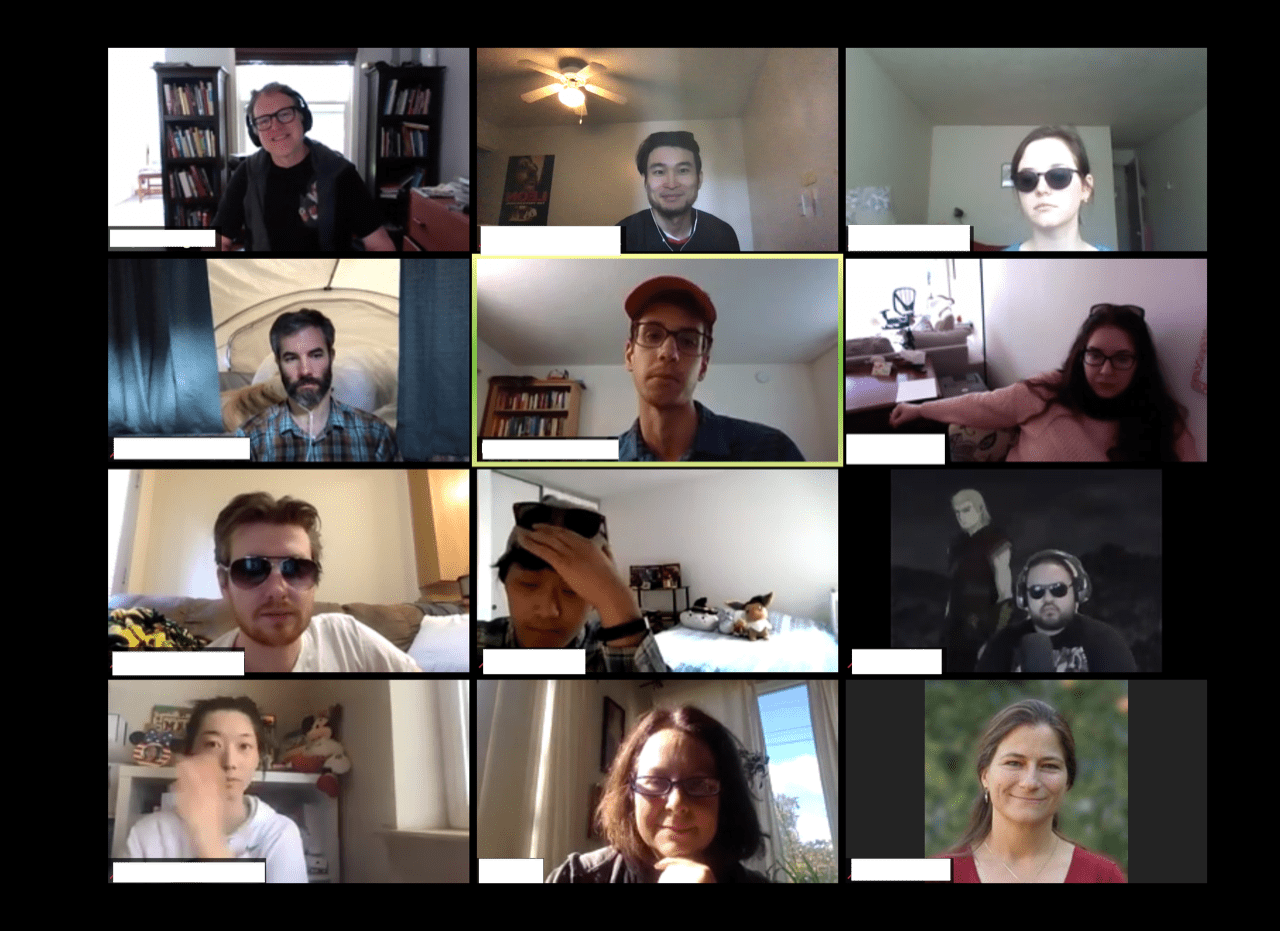
I am doing ok! I guess this term is tough for everyone since we cannot go to coffee shops, meet friends, take classes on campus, and so on. However, we can meet classmates and professors online! (The picture below seems many students felt the computer screen was bright.) I also learned so many online materials and ways for language teaching. I believe this experience will allow me to help students better!

Shades day in an early Zoom meeting

What did you decide to focus on during your time in the LTS program?

I am interested in Task-Based Language Teaching (TBLT) because TBLT has potential for meeting each student’s needs and giving many opportunities for students to practice real-life communicative situations.

From my experience of studying English and teaching junior high and high school students in Japan, I found out that students are diverse in so many ways and we must meet each student’s needs. In addition, when people around the world can communicate anywhere and anytime, it is crucial to support students to be ready for successful communication with people around the world who may have different native languages, different cultures, religions, and so on.

I believe TBLT is a great solution to address these goals. There are different definitions of TBLT, but everyone agrees that it utilizes tasks at the core of the language teaching. The emphasis is on the completion of the tasks instead of students’ accuracy such as their grammatical mistakes. I found it similar to a real-world situation! Students usually try the tasks at the beginning of the lesson without learning grammar and vocabulary beforehand. By the end of the task, each student has discovered what they can do and what they cannot do. Here, each student learns and practices what they need with differentiation techniques.

I am writing my final project about TBLT and Differentiated Instruction, and now I am putting together a literature review, surveys from teachers and students in Japan, and document analyses. I am really looking forward to the completed final project!

Congratulations on your project so far! As someone who is close to finishing the program, do you have any words of advice for future LTS students?

Yes!! But first, I’d like to say you made the right decision, future LTS students!! This is a wonderful place where people love language teaching, people love helping each other, and people love hanging out outside the school.

First advice: Please take a break! Hang out with your colleagues.

This is graduate school and you will have so many things to do. You might need to read many articles or write a long essay in one day. Some of you might have a GE position and need to work for about 20 hours a week in addition to your study. It is a lot… There is no time to do something other than studying… Oh, that is not true!! Taking a rest from study will help you work better! Eugene has many good restaurants, coffee shops, and nature. Go outside!!

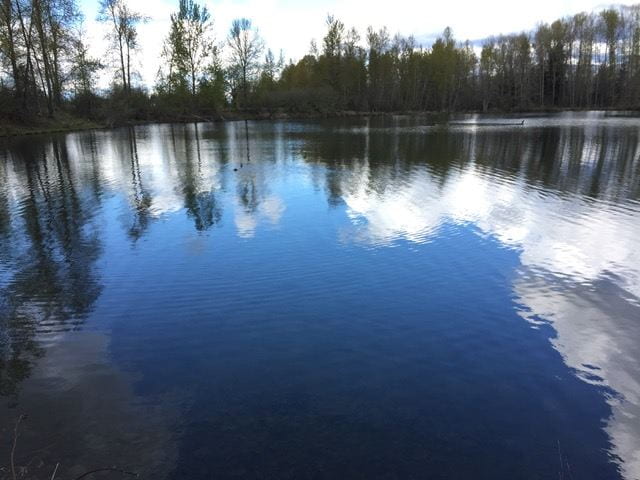
Alton Baker Park

I run around Alton Baker park every day. I saw Keli and Robert kayaking there once.

On Spencer Butte, the air is really delicious! On the summit, you will have a magnificent view!

Spencer Butte

Spencer Butte from a different angle


Second advice: Talk to your professors!

You will learn so many new things and some of them will be hard to understand. The theories and the practices are different, and you might need to know the first-hand experiences. Ask your professors! They always welcome your questions and love helping their students.

Student Spotlight Shiyun (Jasmine) Li

Jasmine Li is a current LTS student who is graduating this Summer 2019. She has focused on English materials and teaching in the program, and is completing her project on a topic she loves: stimulating English learners’ interest in authentic literature  through the the careful integration of both modified and authentic texts.

Jasmine with some poster materials in her curriculum class winter term

Could you tell us a little about yourself?

My name is Shiyun Li, but everyone just calls me Jasmine. I’m from China, but I’ve spent most of my undergraduate and graduate years in the US. I have a BA in English Literature and I went back to China and taught English for a year before coming to Eugene to continue my studies. I’m always enthusiastic about short stories and detective novels. And traveling by myself is what I like to do the most in my spare time outside the school. I love to meet with different people along the way and listen to their stories, which to me is even more exciting than travel itself. The counties that are still on my travel list are: Japan, Italy and Jamaica. I hope I can visit these countries in the near future and have more exciting adventures along the way.

What are you working on in your MA project, and how are you feeling about it now that you are halfway done?

I’m currently working on the topic of use extensive reading approach in EFL context and integrating modified and authentic materials to teach reading for adult and young adult English learners. I feel like everything I’ve been creating for the project is finally coming together now. It is never easy when you are writing, but at the same time you are looking forward to write more about it. And I really like how my perspective has changed during the process of writing and how much I’ve learned so far by working on my project.

Sunrise at Miami Beach

What was most interesting for you in your English and Chinese language teaching internship experiences this past term?

The most memorable part about my internships is the teaching I did in AEIS (Academic English for International Students) because it was the first time I taught a cross-cultural language class at the university level. In the program I’ve learned how to plan a lesson and create materials according to learners’ needs and abilities, so it was a great opportunity for me to put what I’ve learned in practice. It is really rewarding to see students are doing a good job and learning new things from what I’ve prepared for them.

What are you hoping to do after LTS?

After what I’ve learned in the LTS, I’m hoping that I could be given an opportunity to continue my education and doing research in the language teaching field. I’d like to pursue a PhD in Second Language Acquisition and put my focus on bilingualism and second language learning process. But still, I wish to always be a good language teacher in my students’ perspective.

Alumni spotlight – Kelsey

Kelsey Hertal graduated from LTS in 2015. Her project was designed with the intention of heading to Latin America, which she did but not for her expected reasons as you will see below!  The project was titled, Integrating American English Pragmatic Instruction in Tourism Training Programs in Latin America: A Materials Portfolio.

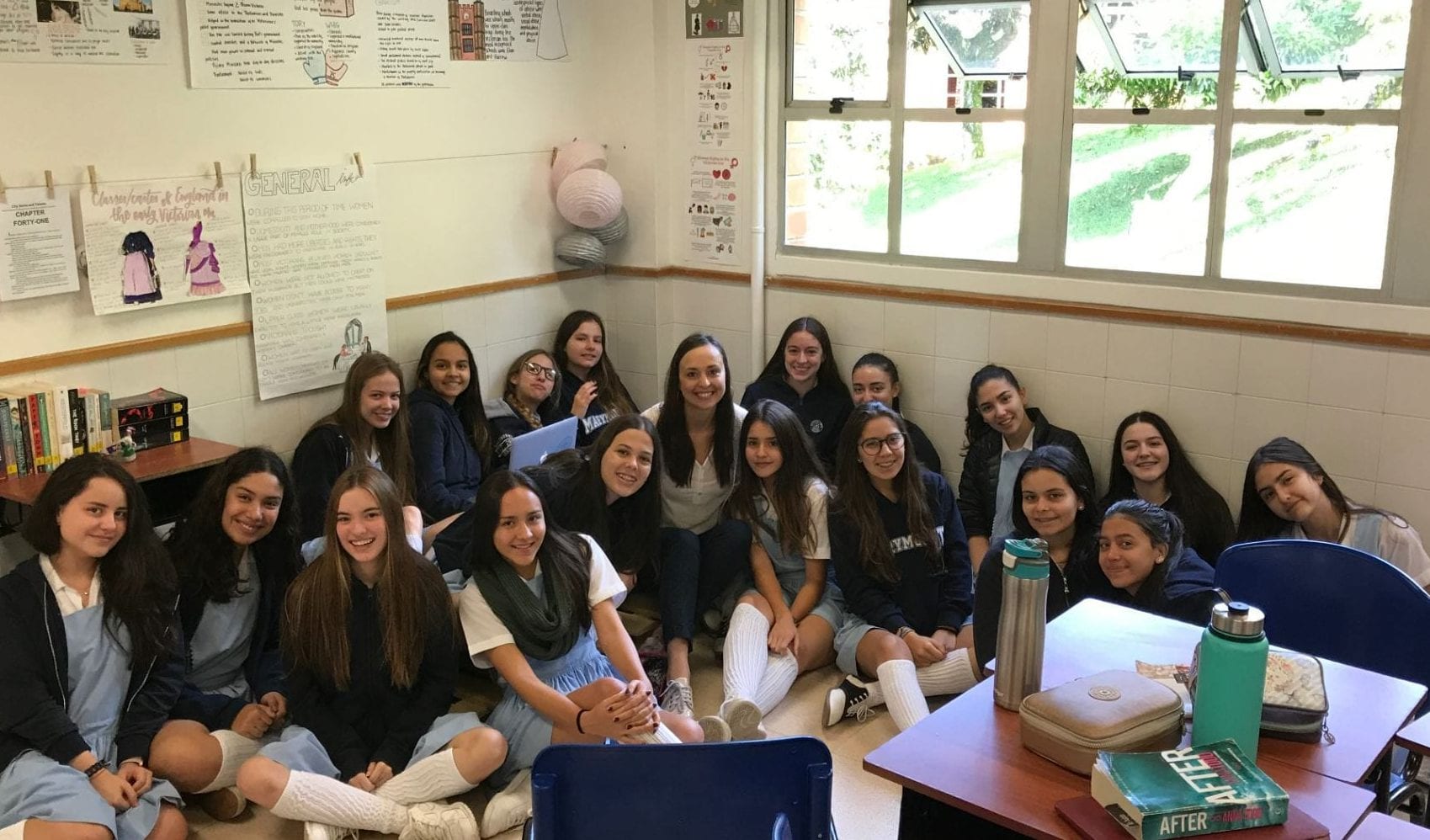
Kelsey (middle) with one of her classes in Columbia

Hi Kelsey! What have you been doing since you graduated from LTS?

My story is about how to stay patient when at first you don’t succeed, and always remember that something good might be just around the corner!

When I graduated from LTS, it took about 4 months for me to find a job. I looked everywhere (and I mean EVERYWHERE) to find a job and no language school, international school, university, or community college was ready to hire me. I remember it was incredibly discouraging and I felt that all my hard work in LTS was useless!

In November of 2015, Keli emailed me about an immediate job opening at INTO Oregon State University. They urgently needed extra teachers because of their high enrollment numbers that term. I applied and immediately received a call asking for an interview. The following day I drove to Corvallis, interviewed, got hired on the spot, and was scheduled to start teaching the next morning. The only word I have to describe that morning was chaos, as they gave me my teaching material 15 minutes before the class started. However, with my adrenaline running off the charts and my heart beating a thousand times per minute, it was one of the most amazing teaching moments of my life. LTS prepared me 110% for jumping into a teaching environment with no plan and coming up with material on the spot.

My contract at Oregon State was supposed to last 6 weeks, but at the end of the term, the students wrote a letter of recommendation to the INTO OSU administration team begging for them to keep me on the teaching staff. To my surprise, OSU offered me a contract for the next term because I “impressed” them so much with my rapport with the students. I worked as an adjunct at OSU for a year and a half, and it was more exciting and fun than any teaching job I could have imagined.

At the end of my first year, I happened to meet a Colombian recruiter at an INTO OSU end-of-year work event. To make a long story short, we fell in love (yes, I know that took you off guard!), I quit my job at OSU, and I moved to Colombia in April of 2017. As soon as I arrived in Colombia, I had an interview at Marymount School Medellin and I was hired immediately as a High School English teacher.

I started the job in the middle of the school year, and once again, had very little preparation for what I would be teaching. I truly feel like LTS prepared me to hop right in to a teaching job that I wasn’t necessarily prepared for.

We got married this past July and we’re loving the newlywed life. I’m still working at the same school and I absolutely love my job as a High School English teacher. Although I never expected to teach high school, I wouldn’t change it for the world and I am so thankful for my students, the great teaching environment, and the classes I get to teach.

What a story! What have you enjoyed most (and least) about teaching so far?

My favorite thing about teaching is being with the students. I love seeing the “lightbulbs” turn on in the students’ minds and I love seeing learning actually take place.

I have the freedom to create all my materials, lesson plans, and activities for all my classes. And not only that, each class is based on a novel. So far, I have created units on the following books: Jane Eyre (Charlotte Bronte), The Book Thief (Markus Zusak), Fahrenheit 451 (Ray Bradbury), Romeo and Juliet (William Shakespeare), What I Saw and How I Lied (Judy Blundell), My Sister’s Keeper (Jodi Picoult), and To Kill a Mockingbird (Harper Lee). I can definitely say that teaching English through literature is the most fun thing in the entire world.

The thing I like least about teaching is dealing with unmotivated students who don’t want to learn, and as expected, I don’t love grading! 🙂

What has been something you learned while in the LTS program that you apply to your teaching now?

I learned so much in LTS that I apply to my teaching now.

  • The course on Culture, Language, and Literature (LT 528) helped me tremendously as, in my context, I teach English through literature on a daily basis in all my classes. While I was taking this class in LTS, I thought it would be really cool to teach English through literature but never thought it would be a reality for me. You never know where you’ll end up and what will actually come in handy in the future!
  • Learning how to truly write well. I can say I really learned how to write academically through completing the Master’s project. In my classes now, I teach my students academic writing, how to research, how to cite with APA format, etc. Without having put so much effort and attention to detail in my Master’s Project, I wouldn’t have been so equipped to teach this. Again, I didn’t necessarily expect that it would come in handy, but it did!
  • Like I mentioned before, through LTS, I learned how to jump into a teaching situation and figure out what to do on the spot. My teaching practicum (LT 537 Talking with Ducks) helped me with this greatly. It certainly helped me have confidence in front of a class and how to be creative without time to think.
  • Time management! As I’m sure with any Master’s program, you learn time management. However, if you don’t have time management skills, you will not survive as a teacher.

What are your hopes or plans for the future?

To be honest, I am incredibly happy where I am right now. I would like to stay here for at least two or three more years. I actually have fell in love with teaching high school English and literature, and I think maybe someday I would like to teach literature in an American high school. So far, life keeps throwing me surprises and each opportunity keeps getting better.

Do you have any advice for current and future LTS students?

To any current and future LTS students, my advice would be:

  • You may think you have an idea of what you want to teach, but life may throw you something different, and it will probably end up being better than what you could have imagined for yourself.
  • Don’t give up if you can’t find a job right after finishing your degree. Be open to any job opportunity that life may give you and when the right opportunity comes, you won’t be disappointed.
  • Be truly grateful in the workplace. I have experienced working with many grumpy and unhappy teachers. Although teaching is a hard job, if you want to survive, you have to stay positive, be thankful for the job you have, and remember the difference you are making in your students’ lives.
  • Try your best in each class in the LTS program. The topics in each class will come in handy in the future whether you can see it or not.
  • The Master’s project is a life lesson; it gives you valuable skills for life. It teaches you how to be disciplined and how to manage your time. It teaches you how to give your best when you’re exhausted and feel like you can’t keep going. These skills will help you more than you can imagine in your teaching career (and in your personal life).
  • The Master’s project gives you the opportunity to enter into the world of academia and it teaches you how to become a writer and find your voice. Recognize the importance of this and how you will use these skills in your future career.


MA Project Spotlights: Yumiko Omata and Zach Patrick-Riley

Yumiko exploring the University of Washington campus before presenting at the Third Northwest Conference on Japanese Pedagogy.

This summer term we are highlighting the final M.A. projects of the soon to be graduating LTS cohort on the blog. For this week’s post, we are pleased to feature Yumiko Omata and Zach Patrick-Riley.

Hi Yumiko! What is your M.A. project about?

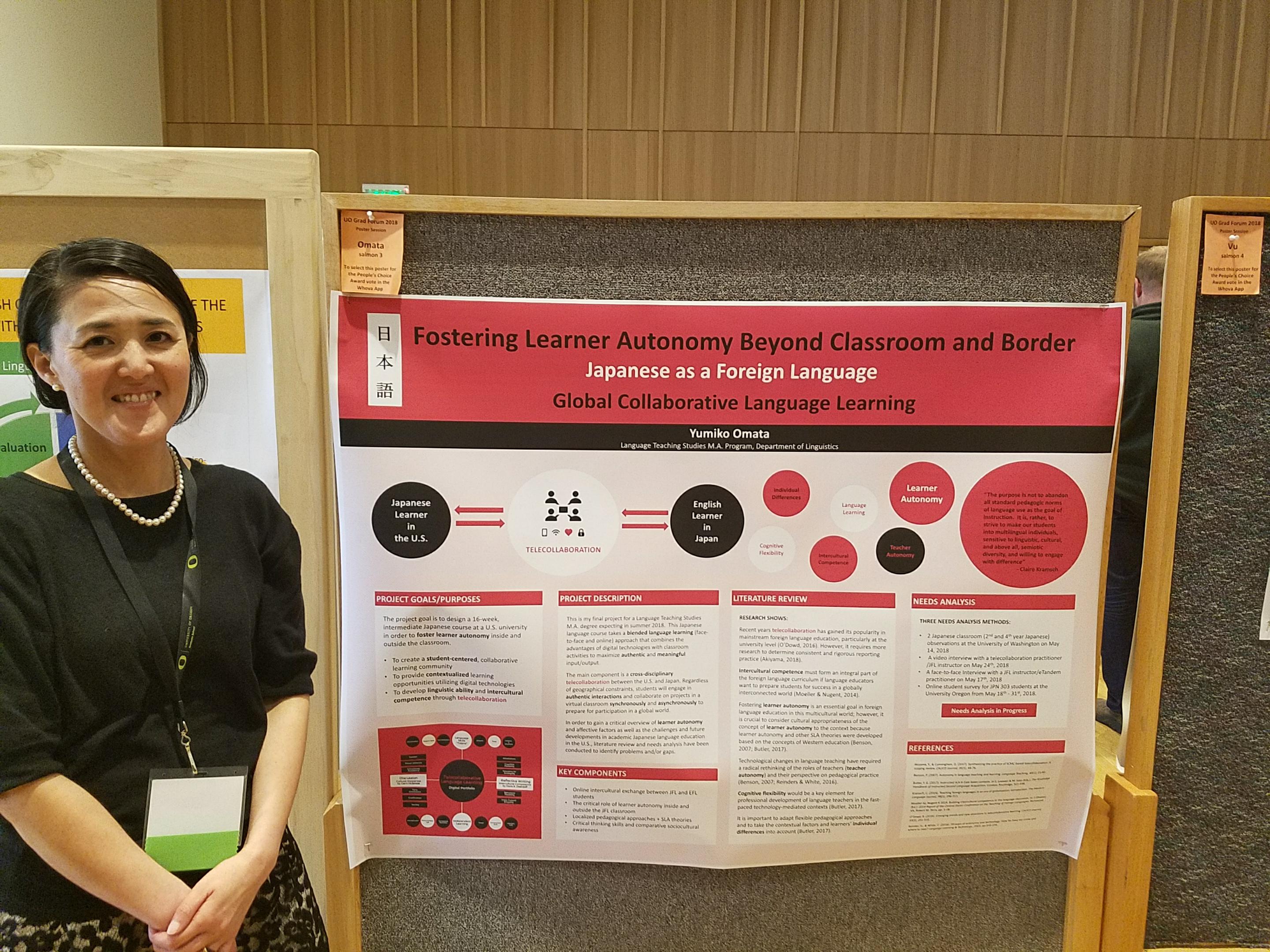
My project is to develop an interactive Japanese course for intermediate-level students in a US university in order to foster learner autonomy and intercultural competence. The highlight of the course is telecollaborative language learning between university students in the US and Japan.

How did you become interested in this topic?

I wanted to provide students contextualized learning opportunities. Telecollaboration has great potential to allow students collaborate in a virtual space and engage in interactions with native speakers regardless of geographical constraints.

As LTS faculty member Jeff Magoto asks, in your opinion, what is the coolest/most interesting part about your project?

I am excited about integrating flipped learning into a blended language learning environment (face-to-face classroom + virtual classroom) using multimodal technologies. Thank you for inspiring me, Jeff!

Anything on your Eugene summer bucket list?

  1. Enjoying nature – Hiking and camping
  2. Back to the studio — Taking ceramic classes would be delightful.


Zach enjoying the view on top of Spencer’s Butte in Eugene.

Hi Zach! What is your M.A. project about?

My project is a teaching portfolio focused on improving Brazilian English language learners’ phonological competence in preparation for the Cambridge FCE Speaking Exam (and beyond). The activities I have created help students better produce and interpret English prosody, which has been shown to affect perceptions of intelligibility and meaning.

How did you become interested in this topic?

I’ve always loved teaching English pronunciation, probably due to my background in singing and acting. One of my biggest takeaways from the LTS program has been the importance of developing learners’ pragmatic competence in conjunction with any skill. In doing research, I discovered English language learners often have a difficult time interpreting and producing prosodic features such as intonation and pitch variation, which can cause negative perceptions/communicative issues. I saw the opportunity to connect this phonological training to the FCE speaking exam, a high-stakes proficiency test in Brazil and around the world. Quality exam preparation materials already exist, so my goal has been to consider dynamic approaches in designing the materials I offer.

As LTS faculty member Jeff Magoto asks, in your opinion, what is the coolest/most interesting part about your project?

I think the coolest thing about my project is how it empowers learners to improve their phonological competence more autonomously and feel more confident in their own style of communicating.

Anything on your Eugene summer bucket list?

I just want to make the most out of my final month living here in Eugene. I will really miss the friends I have made, so my main priority is to treasure the remaining moments together (for now at least). Besides that, I want to continue exploring Oregon’s beautiful landscapes.

MA Project Spotlights: Logan Matz and Ngan Vu

This summer term we are highlighting the final M.A. projects of the soon to be graduating LTS cohort members. This week we are pleased to feature Logan Matz and Ngan Vu.

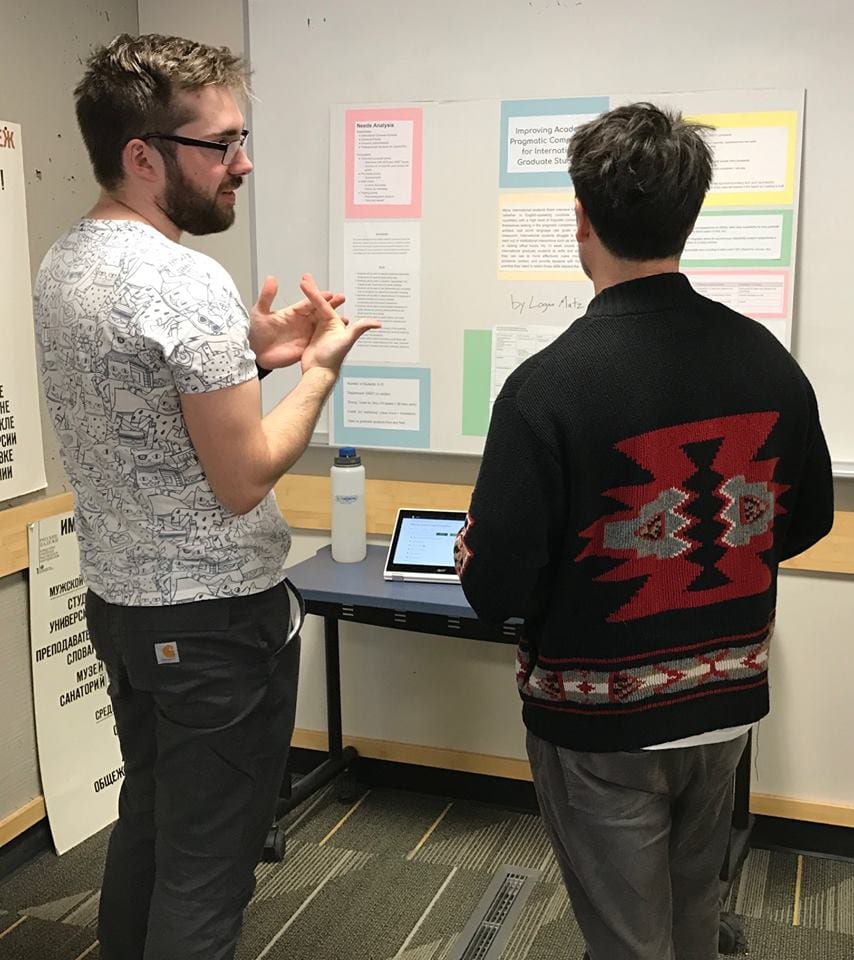
Logan Matz (left) discussing his project idea with LTS faculty Robert Elliot.

Hi Logan! What is your M.A. project about?

My project is a teaching portfolio designed to improve pragmatic competence for international graduate students studying in the US. International students have to meet a certain language proficiency level, but there’s no corresponding assessment for pragmatics in widespread use yet. Grad students have more responsibilities than undergrads, and so they deserve a correspondingly larger amount of help with adjustment to US academic life.

How did you become interested in this topic?

I’ve always been interested in how people use language, and so pragmatics was a natural fit. Several friends of mine have had experiences where they felt less-than compared to native speakers of English in an academic setting, and I don’t think anyone should have to deal with language getting in the way of expression of knowledge. If I can help people show their smarts, and not feel limited by their language skills, then I’ll consider that a success.

As LTS faculty member Jeff Magoto asks, in your opinion, what is the coolest/most interesting part about your project?

So far, I’ve been trying to put a really big focus on student-created examples for all of my activities. I think that with all the extra work and responsibilities that grad students have to do, on top of the challenge of doing graduate work in your second language, the barrier to entry for getting into the nitty gritty during my activities should be as low as possible. Additionally, the international students in this year’s LTS cohort that I’ve talked to all say that these sorts of activities would be really useful for them. If that’s not a ringing endorsement from the students who would actually benefit from a project like this, I don’t know what is!

Anything on your Eugene summer bucket list?

Try not to die of heat stroke. I’m a frail little Washingtonian. I’d love to summit South Sister before I leave, also!

Ngan presenting her MA Project idea at the graduate student poster session.

Hi Ngan! What is your M.A. project about?

My project is a teaching portfolio focusing on using extensive reading as source texts to support writing fluency.

How did you become interested in this topic?

My interest comes from my personal experiences as an international student studying overseas. I struggled considerably in an English composition class when I first came to the United States and tried hard to figure out how to adapt to the writing conventions in another language. Therefore, I would like to find a way to make writing less intimidating for ESL/EFL learners and let them know that they all have the capability to be a good writer in their own way.

As LTS faculty member Jeff Magoto asks, in your opinion, what is the coolest/most interesting part about your project?

The coolest/most interesting part… I don’t have a specific answer for this question. I just feel that I am currently working with many variables, experimenting with new concepts and trying to put those into a concrete portfolio. How my project looks like at the end is still a mystery for me at this moment but I hope it is beneficial.

Anything on your Eugene summer bucket list?

I would like to hike more and spend more time enjoying the beauty of Eugene with friends in the summer. Time flies.

MA Project Spotlights: Alexis Busso and Lee Huddleston

This summer term we are highlighting the final M.A. projects of the soon to be graduating LTS cohort members. This week we are pleased to feature Alexis Busso and Lee Huddleston.

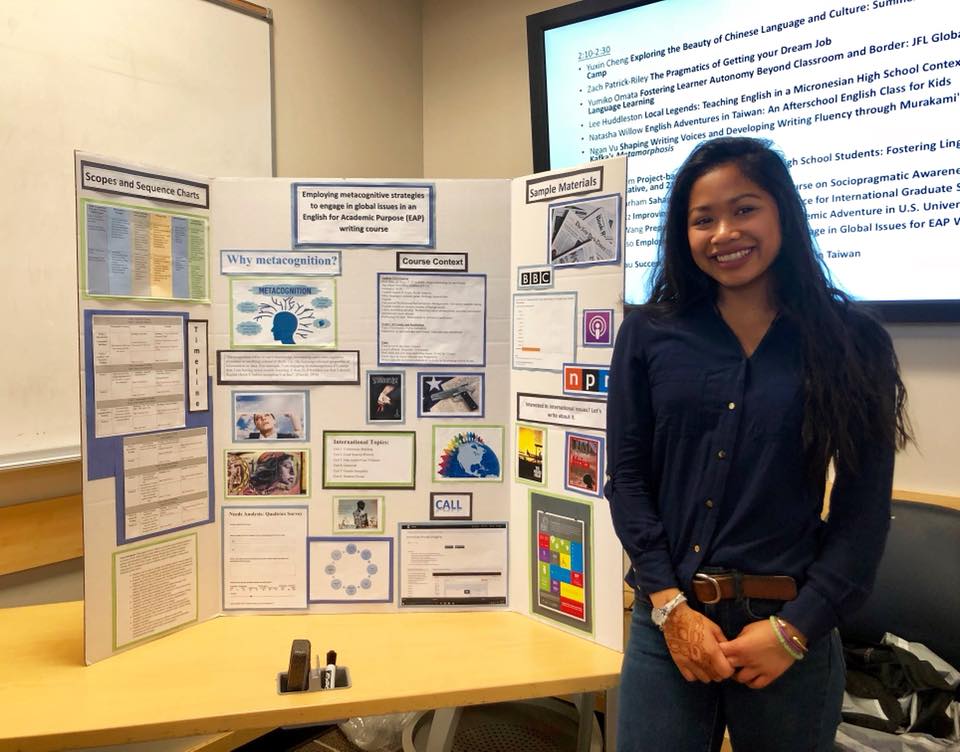
Alexis presenting her initial course design at the LTS poster session.

Hi Alexis! What is your M.A. project about?

My M.A. project is a course design about employing metacognitive strategies in a writing course. The proposed course design is an intensive writing class where writing genres are supplemented by global issues topics. The focus of the project is for students to engage in academic writing while learning about different issues both on a local and international level.

How did you become interested in this topic?

I became interested in this topic for a variety of reasons. In the lesson planning class that we took in the Fall, I wrote a research paper about metacognitive strategies and that is when I was first introduced to the study of metacognition. Furthermore, my undergraduate study was in International Studies and this field has had a profound influence in my worldview. My M.A. project is a combination of my interests and passion.

As LTS faculty member Jeff Magoto asks, in your opinion, what is the coolest/most interesting part about your project?

The most interesting part of my project is that I think it is the only project or one of the few which delves into other fields of study beyond education, foreign language learning, second language acquisition, etc. Moreover, although other students are focused on writing skill, mine is the only one that uses international topics as themes/subjects.

Anything on your Eugene summer bucket list?

Yes! Floating down the Willamette river is a must and endless hikes. I also have plans to go blueberry and strawberry picking and spending lots of time outdoors.

Lee presenting his initial project design at the LTS poster session

Hi Lee! What is your M.A. project about?

My M.A project is a teaching portfolio around the use of local legends as content in English language classrooms in a Micronesian high school context. This teaching portfolio will be designed so that the materials can be adopted or adapted to fit similar contexts. Using legends as content will provide students in isolated contexts with motivating materials that they can then connect to their own experiences, and use such texts to build their academic skills in areas of reading, writing, speaking, and listening. The activities and lesson plans in the portfolio would focus on areas of  language, culture, and experiential learning to use the materials to their fullest.

How did you become interested in this topic?

As I previously mentioned in this blog, I served in the Peace Corps as an English teacher in Micronesia for over 2 years. During my time in Micronesia, I became very interested in the local legends and stories of the islands. I also observed the challenges in education that the islanders face, and I drew the conclusion that using local legends rather than American English Language Arts textbooks would be beneficial to students in terms of utilizing their interests and prior knowledge to help them engage with English at a higher and more creative level.

As LTS faculty member Jeff Magoto asks, in your opinion, what is the coolest/most interesting part about your project?

I would say that the most interesting part of my project is the fact that it provides a bridge for learners by connecting their culture with English; giving value to their culture rather than presenting English as an identity that they must adopt in order to be speakers of the language. In the Micronesian target context, dependence on the United States is an issue that cannot be ignored, and changing pedagogy to be more empowering to students is an important first step.

Anything on your Eugene summer bucket list?

I want to take a more balanced approach to this term. Making room in my schedule to hike, exercise, and relax will all be essential as I finish this program. Maybe I’m a bit ambitious, but going to more music venues, and eating out at a few places I’ve been wanting to try are some other bucket list items. I am from Eugene, so my bucket list for my hometown is rather small at this point.

LTS presents at 2018 Graduate Research Forum

Every year, the Graduate School showcases research by graduate students at the University of Oregon’s Grad Forum. This past Friday four LTS students presented their projects, alongside other MA and PhD students from various fields. It’s a great chance for LTS grads to get experience presenting their work formally to others outside of the field. All of us who visited the Forum were so impressed by the creative and attractive posters, and the professional presentations that went with them. Go LTS!

Krystal Lyau


Yumiko Omata

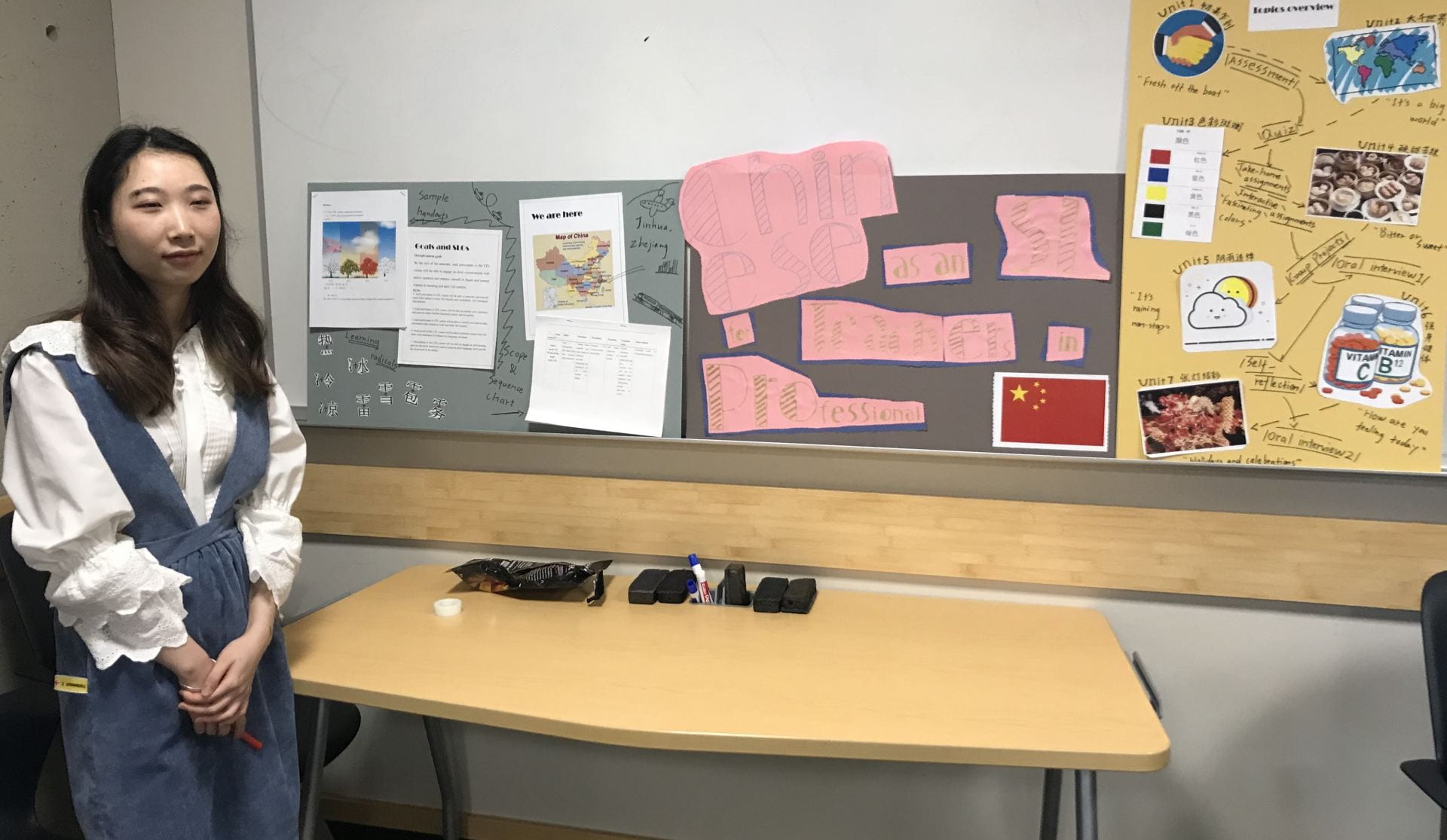
Yuxin Cheng

Ngan Vu