 Good luck to Paul Plassmeyer as he defends his thesis for his PhD in Chemistry!
Tuesday, November 22, 2016
3:30 PM in 331 Klamath Hall
The title of his thesis is “Metal-Oxide Thin Films: The Role of Cation/Water Interactions”

Good luck to Paul Plassmeyer as he defends his thesis for his PhD in Chemistry!
Tuesday, November 22, 2016
3:30 PM in 331 Klamath Hall
The title of his thesis is “Metal-Oxide Thin Films: The Role of Cation/Water Interactions”

Chemical Society Reviews – 21 November 2016, Issue 22
A practical guide to working with H2S at the interface of chemistry and biology
Authors: Matthew Hartle, Michael Pluth
Sustainable Chemistry & Engineering – November 7, 2016, Volume 4, Issue 11
Green Chemistry Education: 25 Years of Progress and 25 Years Ahead
Authors: Julie Haack, James Hutchison
The Road to Sustainable Nanotechnology: Challenges, Progress and Opportunities
Author: James Hutchison
Angewandte Chemie International Edition – 24 October 2016, Volume 55, Issue 44
Hydrogen Sulfide Donors Activated by Reactive Oxygen Species
Authors: Dr. Yu Zhao, Prof. Michael D. Pluth
Chemistry of Materials – September 8, 2016
Measurement Techniques for the Study of Thin Film Heterogeneous Water Oxidation Electrocatalysts
Authors: Michaela Burke Stevens, Lisa J. Enman, Adam S. Batchellor, Monty R. Cosby, Ashlee E. Vise, Christina D. M. Trang, and Shannon W. Boettcher
A $500 million gift from longtime UO supporters Penny and Phil Knight will be used to create the Phil and Penny Knight Campus for Accelerating Scientific Impact. The one-of-a-kind center will be dedicated to the translation of laboratory discoveries into tangible innovations that improve lives and advance society.
To be known as the Knight Campus, the initiative will be one of the first public university initiatives to bring researchers together with entrepreneurial specialists for the primary purpose of finding new and transformative ways of turning research into everyday products, technologies and services to aid society at large.
Read the full article in AroundtheO
In June 2016, the UO chapter of the Student Affiliates of the American Chemical Society (SAACS) presented Summer Research Awards to biochemistry majors Sam Prakel and Carson Adams. The SAACS awards are designed to support chemistry and biochemistry majors’ ability to conduct summer research in a UO research lab, or elsewhere in an REU summer program. Two research awards have been awarded each year since the program began in 2015, using funds the organization raises through its T-shirt sales. We asked Sam and Carson to share a little about themselves and their science.
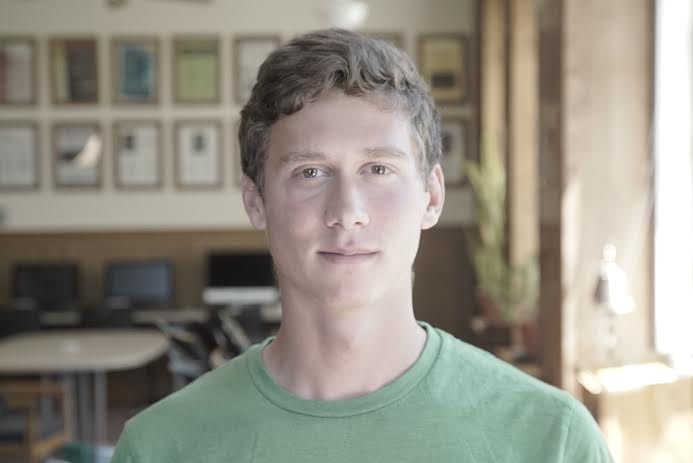 Sam Prakel came to the UO in 2013 from Versailles, Ohio, attracted by the balance between the small, liberal arts feel of the Clark Honors College and the qualities of a large, research institution – as well as the desire to run for the Oregon track and cross country teams. Now in his senior year, Sam has made the most of his opportunities in the classroom, on the field, and in the laboratory.
The SAACS Summer Research Award motivated Sam to put continuous work into his research projects year-round. Working in both the Mike Pluth and Darren Johnson labs, his research seeks to find new ways to detect biological hydrogen sulfide, an important physiological mediator and signaling agent whose functions play a role in diabetes, hypertension, heart failure, inflammation, and neurodegeneration.
Sam finds inspiration in the complexity and open-ended nature of science. “The intricacies in the scientific field keep pushing me to learn,” he explains, “and the endless possibility of discovery keeps pushing me to think.” He plans to continue that push through grad school, furthering his studies in chemistry and biochemistry.
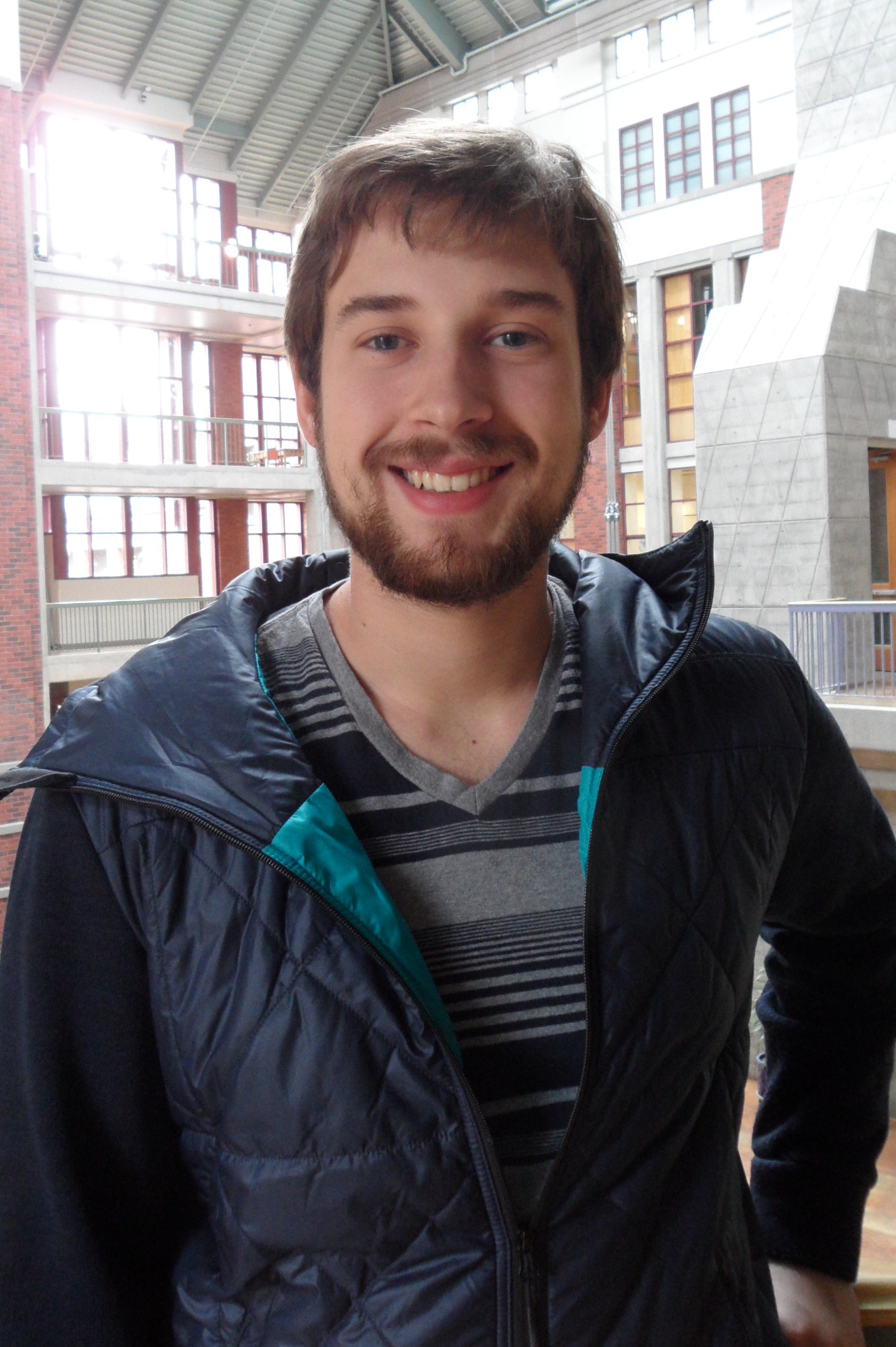 Carson Adams grew up in Salem, Oregon, close enough to hear about some of the research coming out of the University of Oregon Chemistry department and to know that he wanted to be a part of it. And he has certainly done just that – joining the Andy Marcus lab at the beginning of his sophomore year. He has continued his research work right up through his current and senior year, studying the ways in which DNA strands interact and how these interactions affect DNA replication.
“We use special molecules called fluorophores which release light when light is shined on them,” Carson explains. “The released light is of a different color than the light projected onto these molecules, so we can use special machines and apparatuses to measure the emitted light. We can then use this information to conclude things about how the DNA molecules are interacting and how their bases are positioned.”
Carson says his inspiration to be a scientist stems from the inventiveness of the process – seeing the creativity and incredible discoveries of the past, and looking forward to similar discoveries in the future. He also enjoys the challenge involved in finding a viable and unique way to solve a problem. His SAACS award has helped him to pursue his research goals, and affirmed the importance of his studies. He plans to earn his PhD in biochemistry and conduct biochemical research at a professional level, perhaps eventually teaching what he learns to the next generation of undergraduate students.
by Leah O’Brien
 The Fall 2016 edition of the UO’s Cascade magazine includes an article about alum Ian Rinehart‘s research in the Tyler lab.
Rinehart, a Presidential Undergrad Research Scholar and recipient of a 2015 SAACS Undergraduate Research Award, graduated in spring 2016 with a B.S. degree in Chemistry.
Read about his energy-related research at http://bit.ly/2dPULzA
Learn how making things small has led to breakthroughs at Aug 11 pub talk on nanotechnology with Dave Johnson
Details at http://bit.ly/2apjh7f

UO Chemistry and Biochemistry doctoral student Gabe Rudebusch has built a stable carbon-based molecule that offers properties that have been sought by scientists for a century, and has potential applications for devices such as transistors and solar cells.
Read more at AroundtheO, Nature World News and Phys.Org

The UO’s Undergraduate Research Opportunity Program caught up with biochemistry major and soon-to-be-graduate Erik Burlingame for its ongoing series, Modus Operandi.
Read about Erik’s research and more at http://bit.ly/1U2RZXS

A project co-directed by UO Chemistry and Biochemistry faculty Andrew Marcus and UO Physic’s Michael Raymer has received a 3.6 million dollar award from the John Templeton Foundation. Read more in AroundtheO.
Great video on SupraSensor, the start-up that came out of Darren Johnson and Mike Haley‘s labs. Look for a lot of familiar faces!
Read more at: