Program Spotlight: Talking with Ducks

Blog post by Emma Snyder, LTS student

The month is drawing to a close, and it’s time for another spotlight!  This time we are looking at one of the teaching practicum opportunities for students in LTS. We turn our focus to the American English Institute (AEI), a provider of English language instruction to our university’s international students, as well as home to the “Talking with Ducks” class. 

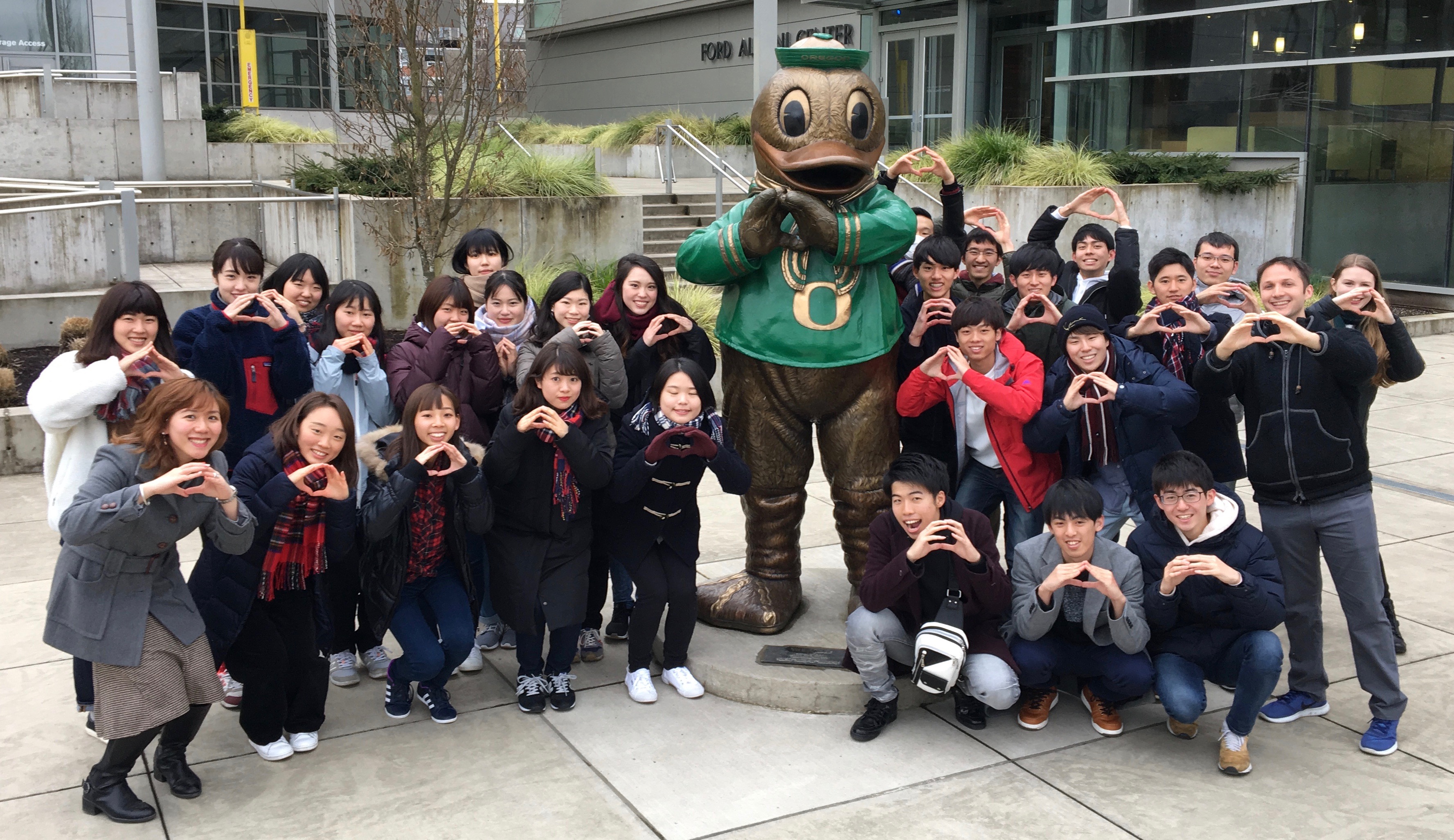
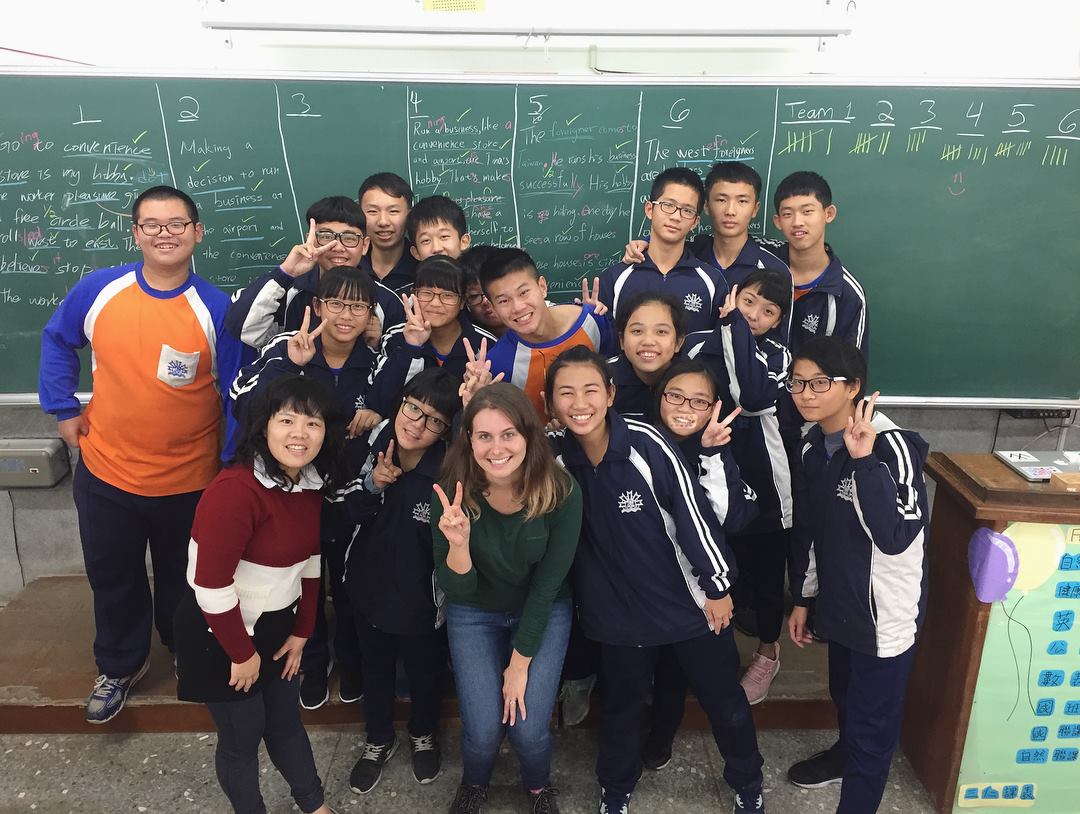
The Talking with Ducks participants on their last day of the term

“Talking with Ducks” is a conversational elective for international English learners at the AEI  that is collaboratively taught by some of the university’s “Ducks”: students in LTS MA program and the Second Language Acquisition and Teaching (SLAT) undergraduate certificate program. Supervised by LTS faculty Dr. Patricia Pashby, this class allows AEI students to practice speaking English with their peers while giving the LTS and SLAT students important time to practice developing classroom materials, leading lessons, and gaining comfort in front of a class. This program is a symbiotic relationship at its finest – wonderfully beneficial to both students seeking to practice their conversational skills and future educators seeking teaching experience. 

Four of our current Ducks, LTS graduate students Aissa Canteras, Kaleb Stubbs, Nicolas Vassilenko, and Ryan Wozniak, were happy to share their experiences with the program.

What was your past teaching experience before Talking with Ducks?

Aissa: I was an English teacher in Japan. I taught novice learners, around three to seven years old.

Kaleb: I had teaching experience from interning with CASLS. I mainly had taught students that were from Japan and China

Nicolas: My past teaching experience came from participating in Talking with Ducks in my undergrad years, personal tutoring, and large-scale class assistance. This class has always had a special place in my heart for the genuine connection you make with the students and your peers.

Ryan: Before Talking with Ducks, I had tutoring positions at the University of Montana, and had spent about three years teaching English in Japan.

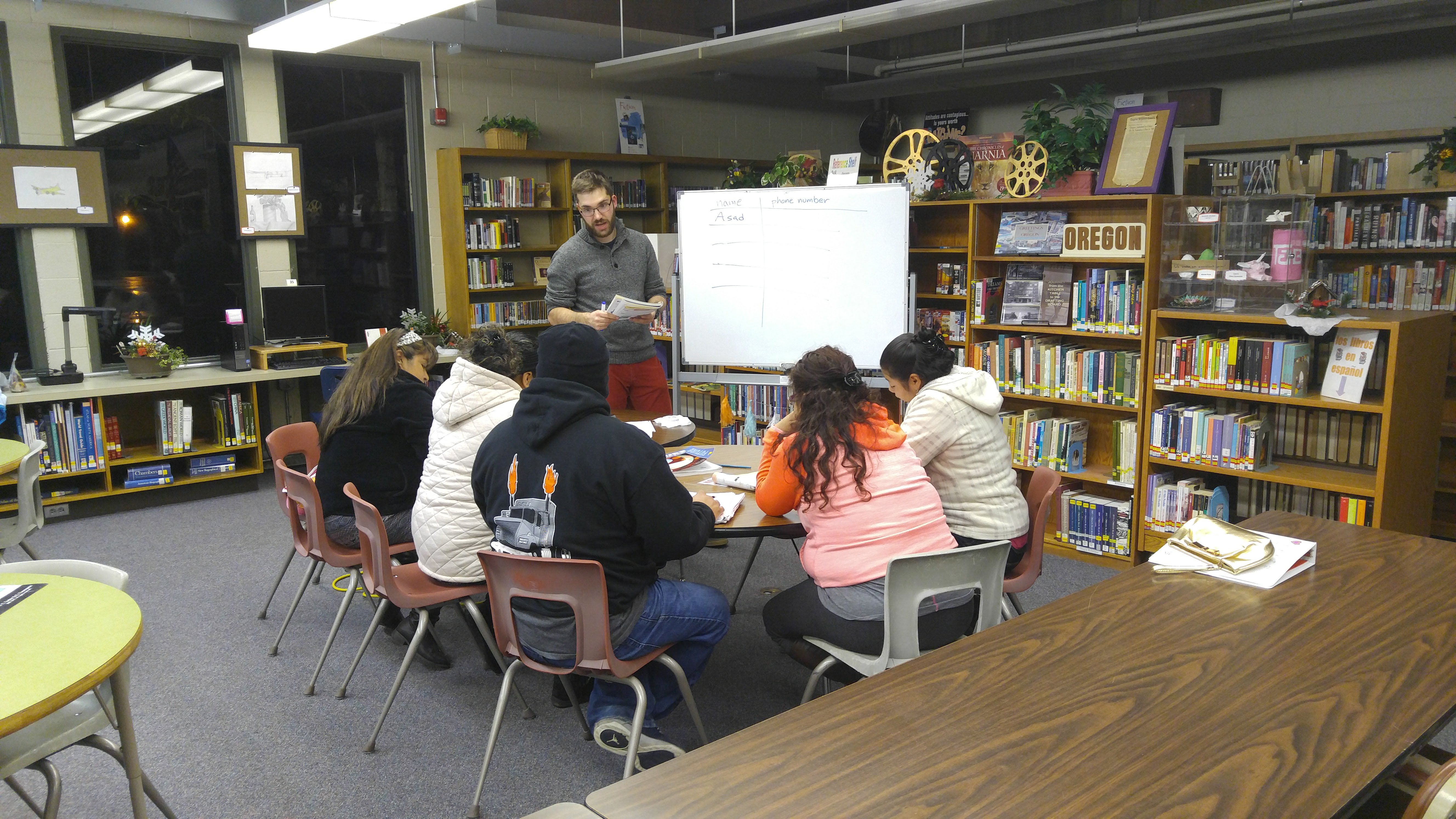
Nicolas works with a small group

What first interested you in this class?

Aissa: I knew that I would get the chance to put into practice what I have been learning from my previous LT classes!

Kaleb: I wanted to expand on my teaching experience and be able to put ideas into practice. I also tutor at AEI so this was a great opportunity to become more familiar with students and teaching styles that work in the given context.

Nicolas: This sort of class should be implemented in every education-based major. It highlights the importance of collaboration and team building whilst having low-stakes real-world experience teaching. Because I had already taken the course in my undergrad – Linguistics – I did not need to retake it, but it showcases the superb quality of the course that I wanted to re-take it.

Ryan: I had previously thought about working on improving how to create better lesson plans and workshop ideas on what activities I could do in the classroom. This class also gave me the wonderful opportunity to meet new people (now especially being from a different state) and reconnect with the international community in Oregon.

Kaleb, Anthony, and Ryan preparing class

How do you feel Talking with Ducks has benefitted your teaching? What is something that you will take forward into your future classes?

Aissa: With Talking with Ducks I got the chance to work in an entirely different language teaching context and so the experience has definitely broadened my perspective and knowledge about the field. I love how we were able to experiment on various activities and see what works in the classroom. One of my biggest takeaways from this class is the importance of being flexible – sometimes things don’t go as planned and so we need to be capable of making quick changes so we continue to provide the best learning experience for our students.

Kaleb: It was extremely beneficial to my teaching because it gave me the opportunity to develop lesson plans, work on my stage presence, become involved with the community, and to experience personal development and growth.

Nicolas: This experience has benefited my teaching in numerous ways. The main two that come to mind are adaptability and collaboration. Being able to adapt in education is a must because unpredictability can be the name of the game. Some lessons may not go over well – or in the best case, they’re so well-loved that students just want to interact with the activity. Collaboration, I feel, is the lifeblood of any successful lesson. TWD emphasized this by having weekly dry runs of the following week’s lessons to allow collaboration.

Ryan: I think this class has helped me understand that, depending on the type of classroom I will be teaching in and what we would be focusing on, I can finish this semester with the knowledge that I can work with different types of students and ensure that their needs are met when it comes to English.

Aissa decorates a whiteboard for a Halloween lesson

And of course, what were some highlights of your time in the class? Any special moments that you’d like to share?

Aissa: Having the chance to collaborate with my peers is a highlight for me. I love how we got the chance to bounce off ideas every week and learn from one another!

Kaleb: There was something really special about being able to create an activity from scratch and see it come to life in action with people actually enjoying it. For example, the Food Fusion game, where students were able to create their own dishes, ended up being a successful and fun activity for everyone. I would love to be able to apply these activities that were done into future classes.

Nicolas: There are a plethora of gem moments during the TWD course, but the ones that stand out are the blips of time prior to students arriving. I always love the conversations between peers.

Ryan: I really enjoyed TWD Halloween edition, as it was fun to hear everyone’s plans for Halloween and it was amazing to see everyone communicate with each other more and be open and optimistic in the classroom.

The success of this collaboration has not only been felt by the Ducks leading it, but also the international students participating. Nearly every student enrolled at the AEI signed up for the elective this fall term, and many had perfect attendance. Conversation was vibrant and enthusiastic, as students grew in both skill and confidence. Talking with Ducks is a truly wonderful program, and a fantastic opportunity; for both those who would seek it as an international student or as an educator, we highly encourage you getting involved if you have the chance!
Multi-level teaching internship for LTS students

This post is the 3rd of an awesome 3-part series this Spring/Summer on internship experiences in LTS (see the first here and second here). It is written by Laura Holland, faculty member in LTS and the American English Institute (AEI), and 3 of the 4 interns (Elaine Sun, Tigre Lusardi, Ellie Collins, all LTS students) who assisted her with a remote multi-level Speaking-Listening class.

Team “One-Room-Schoolhouse” rocks the house!

Laura G. Holland 

The global pandemic has taken a toll on enrollments in Intensive English Programs (IEPs) throughout the country and UO/AEI is no exception. Late in winter term we were informed that we only had enough students to offer one each of our core courses in the IEP, one Speaking-Listening, Grammar and a Reading/Writing class. Each class would serve all levels in a “one-room-schoolhouse” model. I was offered the Speaking-Listening class, my favorite to teach, but I confess I was initially skeptical of our ability to deliver a great student experience with this new constraint, and I wondered how in the world I might make successful, meaningful experiences for such a diverse level of student proficiencies.

In my heart (and teacher’s brain), I knew that the only way this might be even remotely possible would be to recruit interns. I put out the call to Keli Yerian, Director of the LTS Program and she in turn, sent out a message to the MA cohort. Within 2 days, I had four eager interns, 3 of whom I had worked with previously, and ready to take on this further experiment in online education (because teaching languages online IS still a bit experimental after only a year). I can safely say that without the interns, we would never have had the simply amazing experience that we had. Going into the term I was praying to stave off disaster; within the first week, I knew we were on to something big and by the end of term, we had delivered one of my favorite courses of my long and varied career.

Throughout the course and especially in the final weeks we requested IEP student feedback, asking what they liked, what they would like more of, which lessons and activities “stuck with them.” We asked in multi-modalities: in-class small group discussions, their weekly homework videos and writing in the chat in whole group. In each of these queries, students highlighted working with the interns, their ability to engage daily with UO students, both domestic and international. They were inspired by all and as a teacher, it was SUCH a luxury to have 4 talented and enthusiastic co-teachers to help plan ideas I never in 100 years would have thought of. The balance and variety they brought took our content over the top. Because we had “ditched” the textbooks this term (which one would we use with 6 different levels?!), we were free to develop our own passions and materials and as a result, we all thrived. Our team met weekly to plan and discuss, and to brainstorm ways to adapt all our lessons and activities to both in-person and online formats, so as to be prepared and ready for all contexts. As a teacher at the doorstep of retiring, I found this to be so inspiring and am grateful to be going out with a bang.

Our team of 4 interns included more variety than I could have hoped for: undergrad and graduate students, male and female, native and non-native speaking, novice and experienced teachers, people who had always wanted to be teachers and people who had begun careers elsewhere and found their way to teaching for a second act. From moment one, they were on it and together, we created one of the most exciting courses I’ve had the privilege to teach. They developed lessons incorporating pre-, while- and post-listening activities and discussed facing fears, and many other topics of interest; they incorporated poetry in the most successful poetry lesson I’ve seen; they compared “Bucket Lists” and they asked the students to tell stories from the past and look to the future; we discussed their hopes, fears and dreams for themselves and for the world; we watched videos and gave speeches and developed everyone’s academic discussion skills.

Thank you to the interns—I am being perfectly honest when I say this term could never have been this amazing without each of your many contributions and full-on presence. I will remember this experience forever and I’m positive our students will too.

Thank you, Gracias, Xi xie nie, Merci, Tack, Arigato, Shokran, Sulpayki!

Ellie Collins 

Though the prospect of an online speaking and listening class that spanned 6 levels was certainly intimidating, this internship ended up being one of my favorite experiences of the LTS program. During this internship, I had the opportunity to watch Laura Holland’s excellent teaching in action—I learned so much by observing her interact with students. One of the things that Laura does best is encourage her students to step outside their comfort zones to grow into better learners and speakers. At the same time, she encouraged me to step outside my comfort zone to plan and lead activities for the course. I grew as a teacher while learning to plan out lessons as well as teach lessons that were planned by someone else. Throughout this internship, I learned more about how to manage a classroom and differentiate lessons between many different proficiency levels and interests. I am so grateful for the opportunity to intern in this course, and I look forward to implementing the many things I’ve learned into my own classroom in the future!

Elaine Sun

I feel glad to work with Laura and the other three interns during this past Spring term. Also, working with students from all over the world was a precious experience. It was a wonderful chance for me to test the materials I designed for language teaching in a real language classroom. Ten weeks passed much faster than I thought. As an intern, I really enjoyed working with the students. While they were practicing English, they were also sharing their personal stories and some fun facts about their culture. Some of the stories were truly touching and made me think deeper about the target topic. It was also the first time for me to lead an English class as the main teacher. I feel grateful for Laura giving us this chance. This intern experience gave me the courage and helped me to get ready for being an L2 teacher. Finally, I just want to say “thank you” to everyone I met in this class. It wouldn’t be a wonderful trip without each of you.

Tigre Lusardi 

Interning with Laura’s multi-level Speaking and Listening class this spring was a seriously fun and wild ride! As a new teacher I really appreciated getting a glimpse of how a veteran teacher like Laura approached planning and executing a class for learners who varied so widely in their previous English language study and in their comfort and proficiency levels with speaking. Balancing every learner’s needs and goals and making sure that they were all participating and progressing was no small feat! One of the most delightful things to observe was how the learners’ comfort with expressing their ideas grew by leaps and bounds throughout the term. By far one of my favorite parts of this experience was noticing when learners felt confident enough both with their English and with us, the teaching team, to crack jokes or to tease us gently. Expressing humor in a second language is sophisticated both linguistically and inter-personally, especially given the idiosyncrasies of Zoom and online classes. I only wish I had had more than 10 weeks to spend learning alongside Laura and such an engaged and engaging group of learners!

LTS internships at Oak Hill School

LTS students who are proficient in Mandarin have the opportunity to assist in language classes at Oak Hill School, thanks to the welcoming instructors there, Li-Hsien Yang and Sophie Wang. Li-Hsien Yang is in fact a graduate of the LTS program herself! (See her 2018 blog post here). She worked as part of the CASLS team for many years.

Photo from Oak Hill School website

Oak Hill School is an independent, non-religious, non-profit K-12 school in Eugene. It offers 3 languages: Mandarin, Spanish, and French.

Two LTS students, Andrew and Ailsa, give us their reflections below on their experiences at Oak Hill this past Winter and Spring terms teaching Mandarin and ESL at the high school level.

Andrew Stevens

           Recently I had the opportunity to dip my toes back into teaching waters during my internship at Oak Hill high school. I worked with an ESL class and a Mandarin class where I got to implement many of the skills and techniques I have learned in the LTS program. Leading the weekly ESL group in discussions about Tom Sawyer allowed me to find ways to relate the material to the modern day lives of the students (often resulting in some memorable and hilarious stories from all). Designing my comprehension questions for each chapter of the book also helped me to incorporate elements of project-based language teaching, an important element of my master’s project. Our main instructor Li-Hsien Yang was incredibly helpful during both classes, especially as I eased my way into creating review materials and leading sessions for our Mandarin 2 class. Her scaffolding and encouragement helped me adjust to the experience of teaching Chinese while better understanding which aspects of my teaching translate well to this context and which ones I still need to work on. 

Aside from the memorable stories and interactions with all my students (including Yu’s insightful social commentary, Tommy’s Hong Kong adventures, Lalo’s musical experiences and Walker’s Bolivian football parties) my most important take-away from this internship was the chance to experience distance-teaching. Coping with the challenges of the pandemic has been especially difficult for the high school students I was teaching and interacting with them on a weekly basis gave me a realistic perspective of teaching as it exists outside of the ideal circumstances often assumed in the pedagogical theory classroom. Supporting students with encouragement and empathy is more important than ever in the current climate and this internship helped me solidify my teaching beliefs with regards to these principles. Distance teaching was far from just doom and gloom however, and with the challenges of distance teaching come the affordances as well. Zoom classes allowed for turn taking, chat bombs, and breakout rooms giving students opportunities to speak and interact that would have been very different in a traditional classroom (most of these techniques I copy/pasted straight from our LTS instructors’ classrooms). In all I can say that I am incredibly grateful for the experience and it has made me excited to dive-in to a full time teaching position after I finish my time with the LTS program. 

Ailsa Li 

I’m thankful for the LTS program to provide a wonderful chance for an internship.  I’m glad to have this opportunity to actually practically implement my learning into teaching. This was a term-long internship for teaching intermediate level Chinese in Oak Hill High School, I was teaching a special class called Chinese Honors which is for learners who have learned Chinese previously and decided to continue learning from the middle of the path. In Spring term the class had only one student, Anna, who was a very thoughtful student who always liked to engage in class activities and spontaneously ask questions. I was co-teaching with instructors Li-Hsien Yang and Sophie Wang. Even though we met on Zoom each week, the class atmosphere was super welcoming and warm. The instructors and students were more like family who could share thoughts freely without the constraints of large-sized class.  

Beyond the great experience in all the class sessions I joined, my major take-away from the internship is how to be a motivational teacher. Novice teachers need to develop their own teaching philosophies that accommodate the students’ interests and teaching objectives. An experienced teacher knows how to encourage students to use the target language spontaneously, whether it be a small chat about personal issues, the weather, or school life with friends, while still focusing on using the grammar etc. from the textbook. All current pedagogies in language teaching promote authentic context and natural language use, so educators cannot only rely on textbooks. Actually, both educators and students notice that textbooks are sometimes out-of-date and are not well-suited for real-word contexts. For us as future instructors in a new era in education, the most essential job is integrating content into context, from textbooks to the real world. 

LTS students reflect on Internship at CASLS

Spring 2021 intern team

Our blog post this week was written by Julie Sykes, CASLS Director; Stephanie Knight, CASLS Assistant Director; Ellie Collins, CASLS Graduate Intern; Rebekah Lloyd, CASLS Graduate Intern; Tigre Lusardi, CASLS Graduate Intern.

The Center for Applied Second Language Studies (CASLS) (casls.uoregon.edu) at the University of Oregon (UO) supports innovative world language teaching and learning. We develop research-based curricula, professional development resources, and assessments to support pedagogical infrastructures and innovation. We are one of sixteen National Foreign Language Resource Centers that work to increase the nation’s capacity for language education. Our resources incorporate best practices in pedagogy, the latest in second language acquisition research, and technology that enhances and extends classroom learning. 

Each year, we have a team of Undergraduate and Graduate Interns work with us at CASLS to gain hands-on experience. The projects vary each term, but, regardless of the project, our Interns’ input, ideas, and work are an invaluable part of our team. During the Spring 2021 term, three Graduate Interns from the Language Teaching Studies Program at UO joined our team – Ellie Collins, Rebekah Lloyd, and Tigre Lusardi. We loved having them! To tell you a little more about the CASLS Internship Experience, we decided to ask them a few questions. Check out their answers below! 

What is your internship at CASLS like?

Ellie: My internship at CASLS is different than anything I have done before. It has pushed me outside my comfort zone, and I mean that in the best way! I have learned new skills, and I have learned to apply skills I already know to new environments. When I was unsure about trying something new, Stephanie and Julie supported and encouraged me. I never thought I would be comfortable scripting and animating a video, but, turns out, it’s pretty fun!

Tigre: The internship with CASLS is such a collaborative, team-centered, and team-driven experience! We have been working on various projects that communicate ideas about language teaching to a wide audience of teachers, language professionals, and learners. These projects included making animated videos and classroom activities for CASLS InterCom e-digest and also making puzzles for one of CASLS’ new interactive learning experiences about the IPIC [Intercultural, Pragmatic, and Interactional Competence] model. All the things I’ve worked on so far have challenged me in the best ways to communicate effectively and to nerd out on language and visual design.
Beka: My internship at CASLS this term has given me the opportunity to work on a variety of projects and has allowed me to put into practice what I have been learning in my classes this year. It has been a great experience to work with the CASLS leadership, as they have been so collaborative, encouraging, and flexible. Our projects have been varied and creative and I really feel my experience here will be applicable in the future. This experience has challenged me to engage creatively with language teaching strategies and materials, and it has been amazing to work with a national organization that will be recognized by future employers. 

What did you create you are most proud of?

Ellie: I am most proud of the video I made about language variety. It was the very first video I created, and it covers a topic I am very passionate about! Though it took a lot of time and energy, I am so proud of the final project. I loved seeing it in the InterCom e-digest and knowing it was being sent out to actual language instructors and learners!

Check out Ellie’s video here: https://youtu.be/ObinJEjvBAA 

Tigre: I am really proud of the videos I made for InterCom. Using the animation program had a steep learning curve and was unlike anything I had previously done. I love thinking about visuals, colors and design, and how to best communicate information visually. Plus, I got to revive my childhood theater training by recording the voiceover for the videos too- so fun!

Check out Tigre’s video here: https://youtu.be/BBVls74b9m8 

Beka: I am most proud of the language learning strategy video I created for the YouTube channel and InterCom . It talks about using digital tools to practice pronunciation-particularly voice-recognition apps. I also created a short activity which can be used in a classroom alongside the video to introduce the technique and help learners implement the tool. I am also currently working on a series of puzzles which help learners explore pragmatic functions. It has been so fun and challenging to create content in these educational formats!

Check out Beka’s video here: https://youtu.be/pAaHYoONKIk 

What will you take with you from your internship to your future career?

Ellie: My internship at CASLS has challenged me to be flexible, to think outside the box, and to imagine what language learning might look like both in and out of the classroom. I have gained new perspectives on how to create engaging materials for language learners and instructors, and that is something I will certainly apply in my future classrooms. I have loved the opportunities to use my creativity and my training to make language learning fun!

Tigre: The ability to communicate why language learning is important and how learners can employ language learning strategies to better meet their goals will certainly be helpful in the future. I can imagine these skills as strong assets for wherever I end up in the field of language education. And as a classroom teacher, learning to communicate ideas about language succinctly and in an engaging way is so key!

Beka: I have really been challenged to think outside of the box when creating teaching materials and have already been thinking about how I can incorporate these ideas into my own future teaching. I would like to use short instructional videos in my teaching in the future. Gaining experience with a creative video software has shown me this is very possible. The puzzles we are currently creating are also encouraging me to look for new ways to engage learners in course content! 


Alumni Spotlight: Li-Hsien Yang

Li-Hsien Yang graduated from the LTS Program with her MA in 2011. Since then, she has had a very interesting career in language teaching. We asked her to share some highlights.

Li-Hsien with Black Egg Hello Kitty at Hakone

What have you been doing since graduating?
I started my journey as a Chinese Flagship GTF (I believe they call it GE now). I started at the Center for Applied Second Language Studies (CASLS) in 2010 as an LTS student, and I have been working at CASLS ever since (I signed my contract in the morning of my Terminal Project presentation day). What could a be better surprise than an actual employment contract? I began my first official job title as a Chinese curricula assistant. I worked with the curriculum team for various online Chinese learning projects, Chinese assessment item writing, and grading. Gradually, my role shifted toward working with specific international students. Currently I work with partners overseas to do customized programs for international students. I develop programs from 3 weeks to 10 months long with integration of intercultural experiences, place-based theme module learning about global issues, language pedagogy and American education systems. Every year, I have about 70 students on campus or in the community for various purposes.

Li-Hsien (front, left) and 3-Week Oregon Experience Program for Nagoya University and Meiji Gakuin University students

What jobs or activities in the field of language teaching have been most interesting for you?
I love my current job. I am able to develop a program from a program design prospective, but I also get to do the nitty gritty logistics such as course syllabi design, lesson plans and both summative and formative assessments. I am always stimulated by my students’ enthusiastic positive energy and beautiful smiles. This is the most rewarding part in the world languages field, to work with international students. I love to try new ideas on my students and this has been very fun and full of surprises.

Farewell Party with Oregon International Internship Program student interns, principals, mentor teachers and host families

What advice do you have for new language teachers?
Self-care is essential!
There is no perfect lesson plan.
Be flexible.

Is there anything else you’d like to share with us?
I have been getting more interested in gardening, and I have started planning what to plant this year. Also, I enjoy trying different cuisines and having great conversations with diverse people.

Li-Hsien (center) with Oregon Experience colleagues Isabelle Sackville-West (Linguistics Dept undergraduate student) and Zach Patrick-Riley (current LTS student)

Thank you, Li-Hsien! We wish you much continued success in the field of language teaching–and a great garden this year!

Student Spotlight: Yuxin Cheng (2017-2018)

It is my pleasure to introduce you to 2017-18 LTS MA student Yuxin Cheng!

Hi Yuxin! Please tell the world a little bit about yourself:

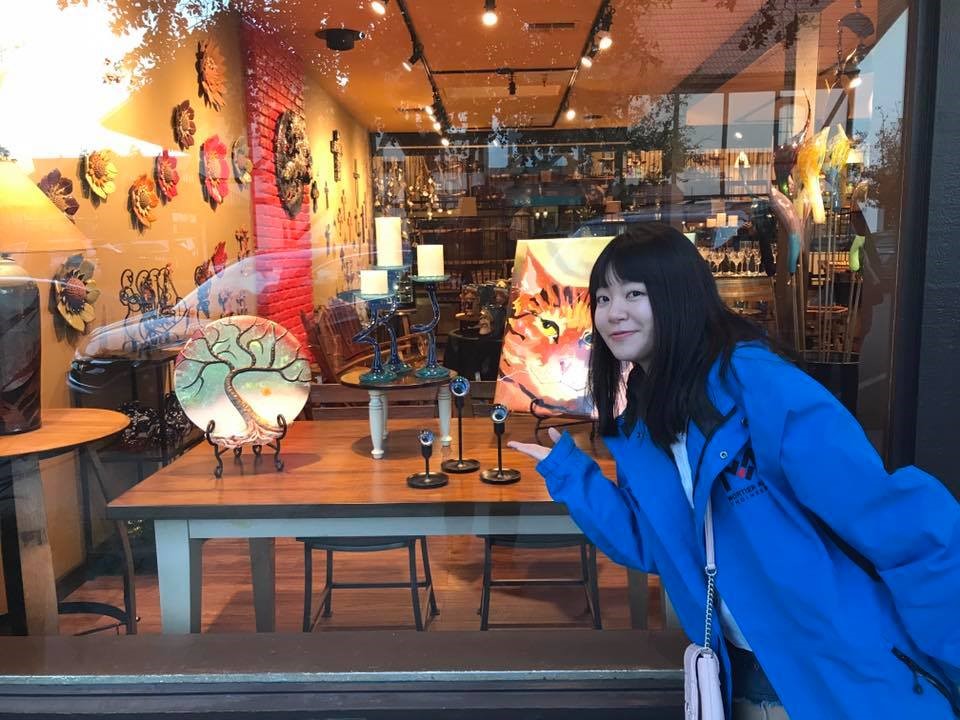
Yuxin at a cool shop in Monterey, California

Hi everyone, this is Yuxin. I like traveling and all kinds of cute stuff. My undergraduate major was in Accounting, and then I was suddenly aware that I wanted to be a teacher due to my volunteer experience in a Chinese immersion elementary school in Salt Lake City, Utah.

Have you been enjoying the LTS program?

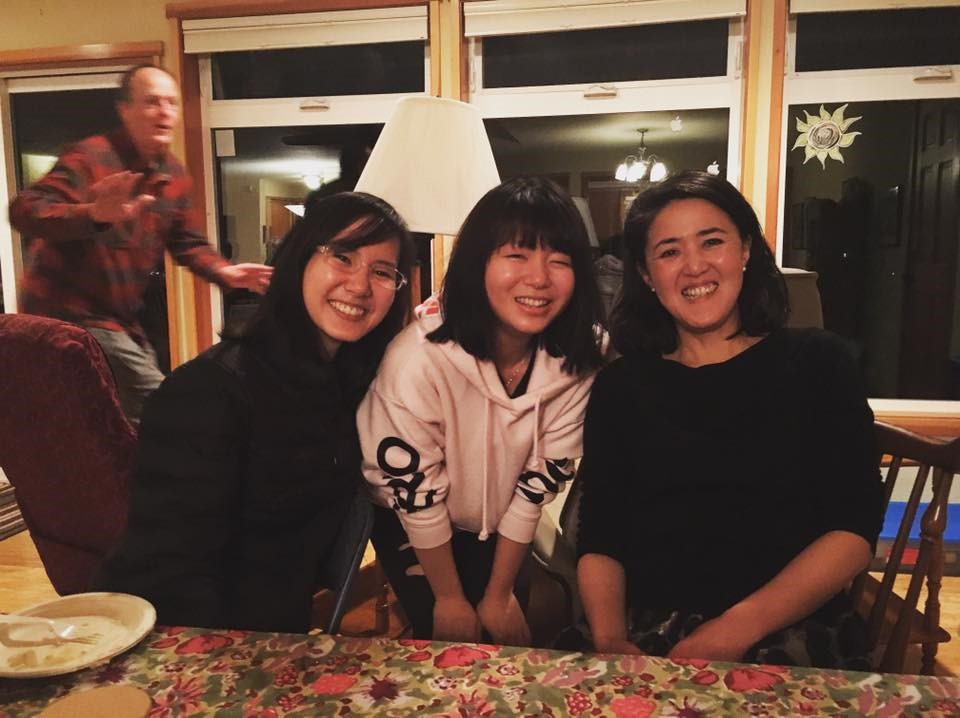
Yuxin (center) with LTS friends Ngan and Yumiko (and Gary from Yamada Language Center)

Yes! I like the courses I am taking and the internship I am doing. Although sometimes I feel a little bit “sad” since I hardly have any time to have fun with my friends, and only have classes, group meetings, readings and papers around my MA project. But I guess this is how my life is supposed to be as a graduate school student. My cohort is really nice; everyone is willing to share and help.

I really like the learning environment in all the courses, and the positive energy shared among our cohort. I appreciate that I have the chance to be involved in our LTS family (people get together after classes to do things, which is really nice and warm). We are more than a cohort in the same program: we are also good friends in each other’s life. Our program’s faculty are all very kind and helpful as well, and they have been working really hard to offer us professional advice and provide help.

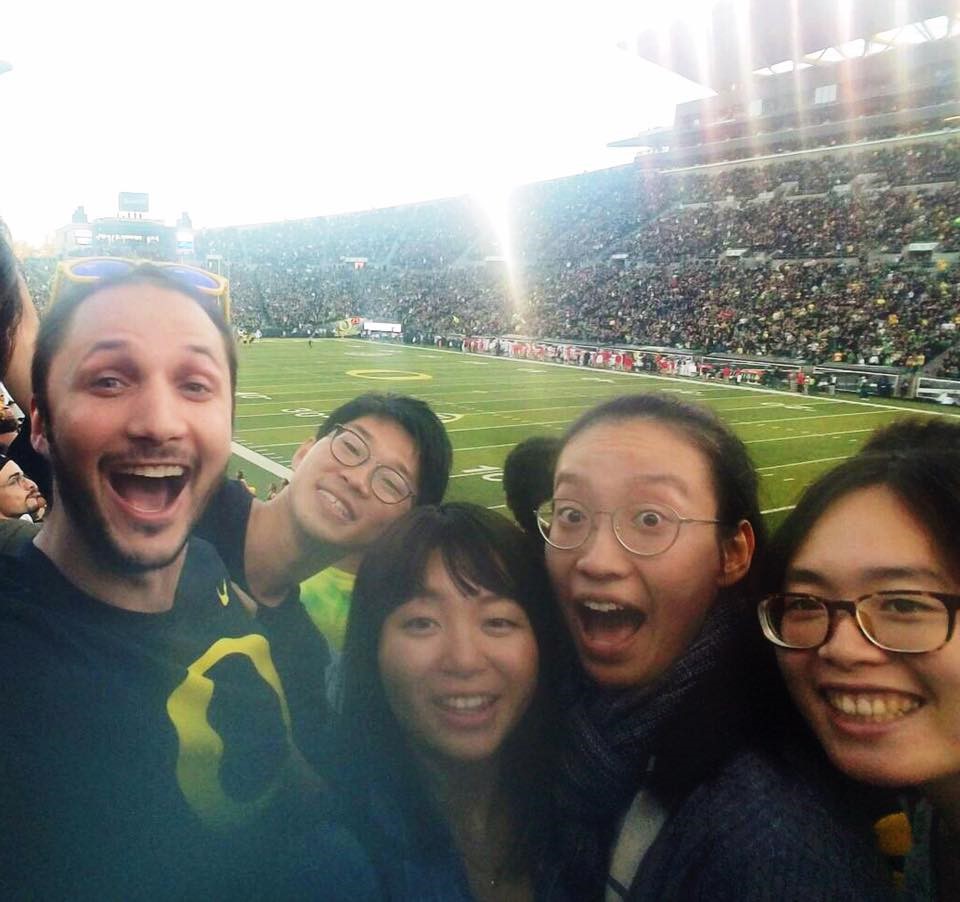
Yuxin (center) at an Oregon Ducks football game with neighbor Kohei and LTS friends Zach, Reeya, and Alina

What are you hoping to learn/gain from the program?

I am hoping to become a professional language teacher. I started from zero in the language teaching field, but I found my passion in our program. I knew teaching would be my future career. At the same time, I am hoping to have more chances to practice teaching in order to gain more experience.

And I know you are involved with the Chinese Club. How has that experience been going?

It has been a great experience for me, and a challenge as well. Students in the Chinese Club are combination of native and non-native speakers, so we have increased our attention on making a balance in teaching in order to have all the students to learn.

Yuxin teaching Chinese Club students at Edison Elementary School

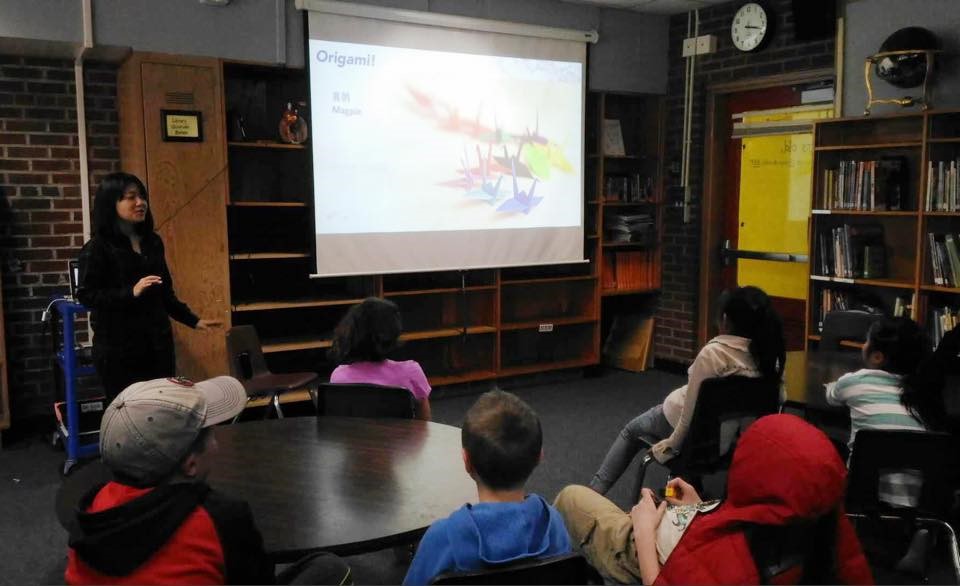
Yuxin practicing Origami with Chinese Club students

We decided to separate the native and non-native speakers in our classroom, and classroom management is a big consideration that we face every week since the energy level of our class is really high. But I like to challenge myself and I believe that I can successfully deal with these 9 year olds.

Any final thoughts?

Yuxin (left) with LTS  friend Ngan on the Oregon coast.


For me, I think our 15-month program is really intensive. I can’t believe that I am almost done! But this intensive program also provides me an opportunity to prove that I can actually accomplish many things in a short time period! PS: Eugene’s summer is wonderful! Please go to the Oregon coast!

Thanks so much for taking the time for this interview! Hope you have a great end to the term.

Yuxin (right) on Spencer Butte hike with LTS friends Alexis, Rebekah, Lee, Logan, and Ngan


Student Spotlight: Logan Matz (2017-2018)

It is my pleasure to introduce you to 2017-2018 LTS MA student Logan Matz!

Hi Logan! Please tell the world a little bit about yourself.

Logan and Polly

Oh gosh. My love for language really started growing up around a bunch of different, really robust immigrant communities. So everywhere I went, I heard more than just English being spoken, and I thought that was pretty neat! I got my undergraduate degree in linguistics from Western Washington University in Bellingham, WA, so the move to Oregon wasn’t really too far. I’m a quarter Hungarian (sziasztok!) and the bulk of my extra-continental travel has been to Denmark. I also really enjoy anything related to bikes and dogs. Cooking and hiking are up there as well, although cleaning up afterward is something I struggle with…

Have you been enjoying the LTS program so far?

Logan on his bike

I’ve been enjoying it a lot! It’s great having such a small cohort because it really allows you to work closely with your fellow students and get a lot out of professors because of the small class sizes. I also really like the balance between scaffolded assistance from faculty and dedicated “struggle time”; I think it fosters a sense of independence that’s important to have as a teacher combined with the knowledge that although I can work well on my own, I don’t have to, and there are TONS of resources, people and otherwise, at my disposal to help me learn and create the best project I can.

What are you hoping to learn/gain from the program?

In undergrad, I knew I really wanted to teach. But I also knew that I would need to learn how to teach first. I applied for the program knowing that I didn’t have any language teaching experience, and I’m so pleased to have taken the practicum class with Laura Holland– what a fun formative entry into the world of teaching! I’m really looking forward to developing pragmatics-related curricula, although I still have a lot to learn.

And I know you have two internships this term–Harrisburg and CASLS. How have those been going?

Logan teaching Adult Basic Skills in Harrisburg through Linn-Benton Community College

Harrisburg is great. I’m volunteering with Amy Griffin (LTS alum!), who’s teaching an Adult Basic Skills Community English Language Acquisition course through Linn-Benton Community College, and although I helped out once a week last quarter, I made it official this quarter and I’m teaching twice a week now. The class size and proficiency distribution means that there’s a beginner group and an intermediate group, and I’m very grateful to Amy for letting me swap between groups during the week. I work with the beginners on Tuesdays, and then Thursdays work with the intermediate group. Of course, I couldn’t do it without Amy, who’s putting in twice the work by writing both her own lesson plan and a lesson plan for me to follow. All I have to do is drive north, show up, and teach!

Logan monitoring Adult Basic Skills students

It’s a fantastic experience, and I couldn’t ask for a better on-the-ground teaching practice opportunity. The students are all great fun to work with, and I’m continuously impressed with how much effort they put into a two-hour class, at the end of a long workday, with families waiting at home. Amy’s lesson plans are always great, and I’m allowed to put my own spin on them when I see the chance to. I need to mock up a class schedule for Spring, but I’d love to go back and help again next quarter!

My internship at CASLS has been super rewarding. It’s great working with such a cool team, and of course it’s awesome to have my own desk! I was worried when I first started, knowing that Julie has a very hands-off managerial approach; but it’s been plenty easy to check in with her when necessary, and the rest of the team is super accessible for any questions or help I might need. My first project was working on a set of lessons for Games2Teach for the game Papers, Please, which is a super fun puzzle game that just so happens to naturally brim with pragmatic goodies. I’m all done with the rough drafts, and I’m just awaiting some feedback now. While that finishes up, I’m starting to work on cleaning up another existing CASLS project, called the Place- and Experience-Based Database for Language Learning (PEBLL). Basically, it just needs a little TLC to make sure current entries are up-to-date before more are added. I also get to attend the weekly curriculum meetings, which have been super fun and useful for developing my curriculum designer’s intuition. It’s also so inspiring to hear everyone throwing ideas around!

Any final thoughts?

Mmm…nope!

Thanks so much for taking the time for this interview! Hope you have a great last few weeks of Winter term!

Devon Hughes’s Fulbright Practicum in Taiwan

Recent LTS graduate Devon Hughes (Fall 2017) spent her final term in the program as the first Fulbright Taiwan FSE Teacher Practicum Program Grantee (based out of Changhua County). We were delighted to find out more about her exciting adventure.

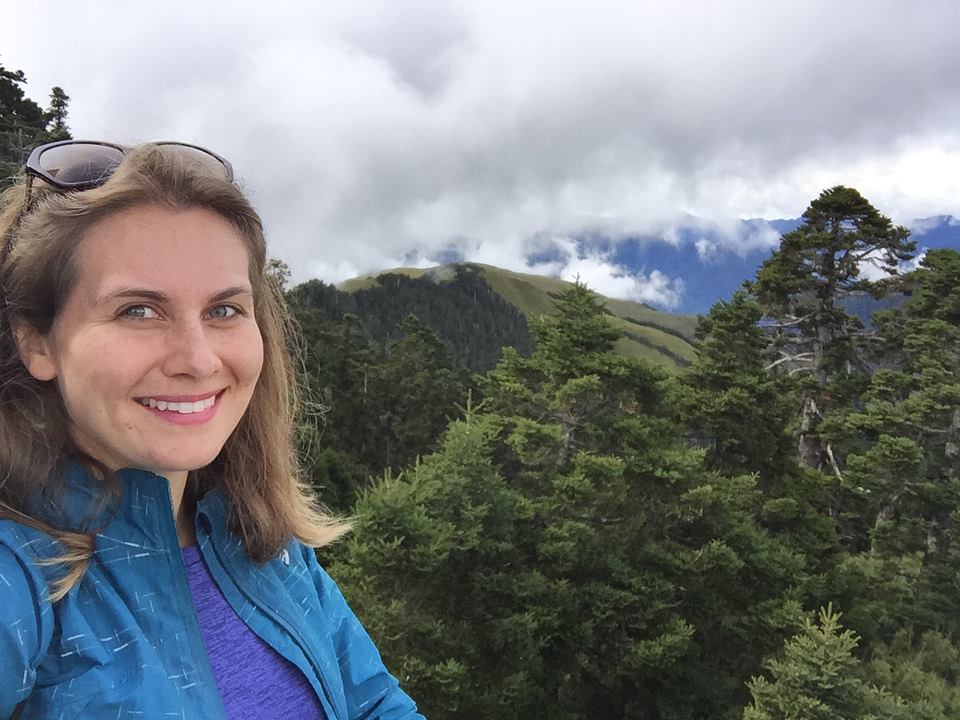
Devon Hughes hiking in the Central Mountains

What were your main activities and responsibilities?

As I was piloting this internship for both LTS and Fulbright Taiwan, I got to determine my own schedule and duties, with the guidance of a local English resource coordinator. I set three primary learning goals from which came my activities and responsibilities.

First, I sought to gain experience teaching in junior high EFL classrooms while encouraging and developing EFL students’ learning motivation and ability. I did this by teaching weekly at three junior high schools in Changhua County. I also observed and presented at various schools around the county.

Devon with student in Changhua County

Second, I wanted to broaden my perspective – as well as that of the local teachers and students – on international issues while gaining insight into the Taiwanese EFL education system at all levels. I worked toward this goal in various ways. I traveled around Changhua County to observe and chat with both Taiwanese and native English-speaking teachers about their classroom experiences, techniques, and views on local and federal education policies. I was an observer and occasional guest lecturer in two undergraduate TESOL courses at the National Changhua University of Education. I also participated in English military service officer meetings at the Changhua International Education and English Teaching Resource Center (CIEETRC) so to learn how military officers with advanced English proficiency and experience living in English-speaking countries support their schools’ English language learning goals. I even attended an international conference with the CIEETRC director on international education for primary and secondary schools.

My third learning goal was to assist in developing English teaching resources and materials and to share English teaching strategies with Changhua County English teachers. I did so by working weekly at CIEETRC on materials development, delivering professional development workshops, and meeting with elementary and junior high school teachers and principals. Together, we worked to increase critical thinking and English use in Changhua County classrooms.

What were some of the highlights of the experience?

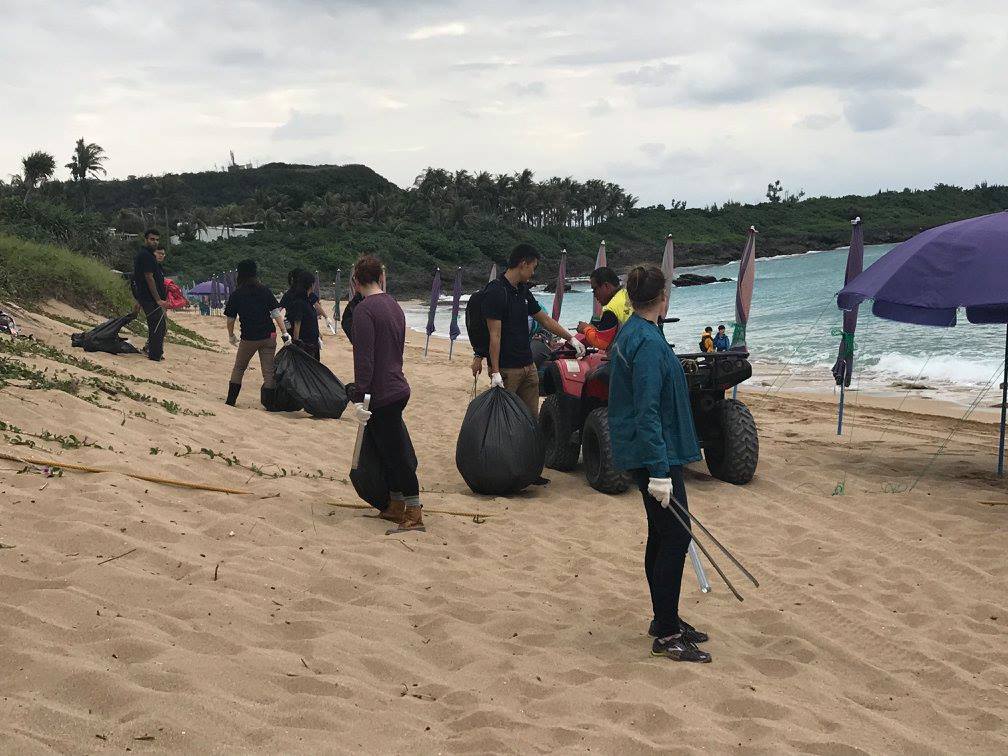
Devon with other Fulbright grantees at beach cleaning event

How much time do you have? Haha!

An initial highlight was meeting the other Fulbright grantees at orientation and hearing about their fascinating work. They had come to Taiwan for a variety of reasons and represented a wide range of academic backgrounds. I had the chance to get to know some of these Fulbrighters better at subsequent events like Double Ten Day, Thanksgiving, and a beach cleaning service trip.  Each time, I thought, “Whoa. What cool people!”

Speaking of cool people, I got to see some familiar faces while abroad. The night I arrived in Taiwan, I had the great fortune of crossing paths with friend and former AEI colleague Rachel Drummond. She introduced me to another former UO duck, Lydia Shen, and we went out for massages and food at a local night market. Words can’t describe how incredible it was to arrive in a foreign place and immediately connect with a dear friend. A few weeks later, a former AEI student from Taiwan visited me and took me out for lunch and groceries. Such meetings with friends throughout my stay made “halfway around the world” feel like a much smaller distance.

Devon at President Tsai Ing-wen’s Double Ten party

Perhaps the biggest highlight was Double Ten weekend when I got to host my husband, who flew 24 hours each way to spend 96 hours with me. It was wonderful to show him around and to experience Taiwan with him, if only for a few days! I also had the incredible opportunity to attend President Tsai Ing-wen’s Double Ten party along with other Fulbrighters and dignitaries from around the world. I felt like I was in a comedy as I wobbled in my 5-inch heels on the red carpet and told people drinking cocktails, “Oh, I’m here teaching junior high English.”

There were many elements of Taiwanese culture itself that were highlights – the warm and sunny weather, the food (e.g. bubble tea, xiaolongbao, beef noodle soup, fresh tropical fruit), the night markets, and, most especially, the hospitality of the people. Oh, and the scooters! Every time I hitched a ride on the back of a friend’s scooter, I was overcome with awe. As we zipped through crowded streets or up mountain switchbacks, I could only think, “Wow. I am in Taiwan.”

Devon (right) snorkeling in Penghu

Speaking of travel, many highlights were my weekend trips around the island. Solo trips were made easier by Taiwan’s wonderfully efficient public transportation system. I got to explore big cities like Taipei and Kaohsiung, as well as natural sites like Taroko National Park, the central mountains, Penghu (an island archipelago off the west coast) and the southern beaches. One fond memory was snorkeling with a small group of Taiwanese tourists and feeling the language barrier fade away as we squealed and pointed out clown fish and coral.

Okay, one final highlight: I was staying in one night, scrolling through my LINE (social media) contact list when I suddenly realized that around 95% of my contacts were newfound Taiwanese friends. This may sound unremarkable, but to me it was wonderful because I had lived abroad before and had found that ex-pats tended to gravitate toward each other and make insular friend groups. I went to Taiwan hoping for a different experience. A more immersive experience. So, when looking at that contact list of colleagues, university students, and random friends, I felt a wave of gratitude. I had travelled alone to somewhere new, where I didn’t speak the native language, and had managed to make friends! I believe this is largely in part to how generous and warm the Taiwanese people are.

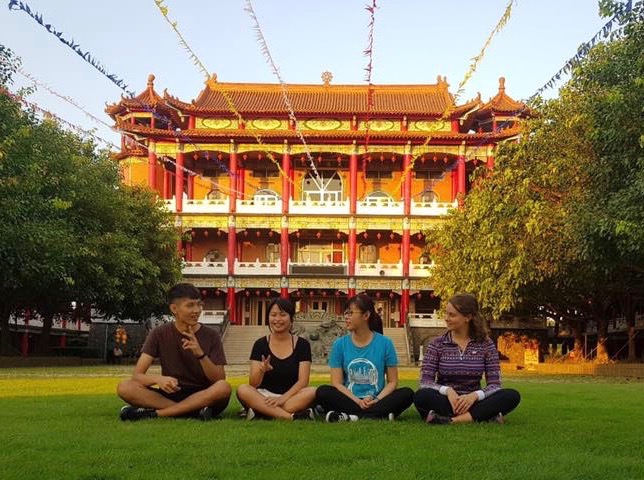
Devon (right) with her Changhua University of Education (NCUE) friends at temple of the Great Buddha statue (大佛寺) in Changhua City

Did you face anything especially surprising or challenging?

Yes, both. Some major challenges in the classroom were a) teaching junior high school students beginner-level English while keeping it interesting and relevant b) working with some students only once due to a quantity over quality approach and c) what my colleagues and I perceived as an overreliance on the L1 (by both teachers and students). I had many conversations with fellow teachers, professors, and the CIEETRC staff about how to best tackle these issues.

My biggest challenge, however, was not in the classroom. Halfway through my stay in Taiwan, I was involved in a head-on car collision during a trip in the mountains with a colleague. Thankfully, neither of us were injured, and I had friends and strangers help me back home to Changhua. Being involved in an accident so far away from loved ones was scary enough, but another, more traumatic car accident years ago made this situation even tougher to process. I found myself faced with the question, “Am I going to make a ____ decision out of fear?” Was I going to cut my internship short and return home? Would I avoid taking car and scooter rides? Would I keep traveling solo? I am so glad I had a support network both at home and in Taiwan to help and encourage me through that time.

Prof Frank (NCUE English dept.), Devon, and Frede (CIEETRC director) beside NCUE in Changhua

As for surprises, I was taken aback by the instant warmth and generosity of the people I met. I received so many thoughtful gifts and invitations. I can never pay them back for their kindness!

Another surprise was the peace that comes from feeling safe (almost) all the time. It’s wonderful. Taiwan is one of the safest places in the world. Experiencing that… travelling without fear (though always with a proper level of precaution), walking down streets without comment, getting lost with little worry… was a breath of fresh air.

A final, funny surprise was how Taiwanese food often reminded me of food from home (North Carolina). Taiwanese mom and pop restaurants serve what Americans call “sweet tea” at most

Devon trying “stinky tofu” at the Changhua Night Market

meals, collard greens cooked in pork fat, and beef stew that rivaled my grandmother’s. It was wild to try a “new” food only to discover that it tastes like home.

How has this experience contributed to your strengths as a language teacher?

My time in Taiwan helped me become more of a self-starter and willing to take risks, both in and out of the classroom. Since it was such an intense experience, I had to be flexible in new, high-stress situations, while remaining mindful of the needs of my students, co-teachers, and stakeholders. It made me a more well-rounded teacher as it provided me the opportunity to work for the first time with junior high students and beginner proficiency levels. I also honed my class observation and teamwork skills through multiple classroom visits and later discussions with colleagues. I also led several professional development workshops, which forced me to stay current and mindful of my own teaching practices. Finally, this experience abroad fostered in me a greater empathy for language learners. Living halfway around the world in a foreign language environment is a very humbling experience!

Devon (front center) with 9th grade students

Is there anything else you’d like to share with us about this experience?

If you get the chance, visit Taiwan! You won’t regret it. Especially if you’re a tea drinker. The best oolong! 

What advice would you give an LTS student who is planning to do this internship in the future?

If it makes time and money sense, go for it! Be flexible and ready to say “yes” to any opportunity. What you put into it is what you’ll get out of it (if not more). Yet, also remember to check-in daily with yourself and take care of yourself!

Six LTS Alumni Teaching at Tokyo International University

LTS student George Minchillo submitted this report on LTS alumni currently teaching at Tokyo International University. George is there now serving as an intern and will graduate from University of Oregon at the end of this term.

Please Give us a Brief Overview of Tokyo International University

Brick wall with shield and title of Tokyo International University

Welcome to Tokyo International University!

Tokyo International University is a Japanese university in the greater Tokyo area. Although the Global Teaching Institute (the university’s English language program and faculty) has only been around for close to 5 years, you wouldn’t be able to tell from its staff of about 50 instructors and the wide variety of activities and events that it sponsors for the university and surrounding community!

One of the biggest and most important missions of the GTI is cultural globalization and international cooperation, which is evidenced by the E-Track program (English Track: classes are taught primarily in English with some Japanese as a Second Language courses) comprised of students from many different countries who have come to Japan seeking a degree in Business, Economics, or English communication. The other program the GTI offers is the J-Track (Japanese Track: mostly Japanese students earning a Japanese degree) and this is comprised of the required English courses that all students at the university are required to take.

Six LTS alumni are currently members of the TIU faculty: Becky Lawrence, Ryan Felix, Annelise Marshall, Brandon Bigelow, Kodiak Atwood, and LeeAnn Genovese.

A woman showing a cell phone to a student

Becky Lawrence showing her Basic Writing student a photo about her experience at a Japanese festival.

What classes do you teach at TIU?

Becky: I teach four classes in the Global Teaching Institute. Three are core classes for J-Track students learning English. For these core classes, I teach Sections 3 and 4, which are pretty beginner levels (the levels go from 1-28). I teach English Comprehension (Reading) to both Sections 3 and 4, and Basic Writing to Section 4. The other class that I teach is Advanced Reading and Writing, and I teach the highest level of this particular class, which is an elective for J-Track students who are mostly juniors and seniors. I really enjoy all of my classes because they each present unique challenges. I like that I get to experience teaching beginner students and advanced students at the same time. It makes me more creative, and I regularly use techniques and activities that I learned in LTS!

Ryan Felix warming up his students with an exercise in frequency adverbs!

Ryan: I’ve been at TIU for four years now! Each year I’m assigned different classes to teach; this year I have reading and writing classes with Japanese students. I’ve also been teaching public speaking for the last three years in a separate program for international students studying business or international relations. At first, I was nervous about teaching it, having little public speaking experience myself, but I’ve learned so much!

Brandon: I graduated from the LTS program in 2013, and have been at TIU since September 2016. I teach English Comprehension and Basic Writing for freshmen Japanese students. I also teach Academic Composition for international students from countries including Vietnam, Uzbekistan, and Indonesia.

Kodiak Atwood posing for a photo with his students and co-teacher.

Kodiak: I’m currently teaching two listening classes and one speaking class to Japanese freshmen. The Japanese freshmen are really fun to work with and I have a lot of room to experiment and try new things out in the classroom. I’m currently implementing a gamified curriculum where all of the students are characters in a role-playing game and that’s going really well! I also teach an analytical reading and critical thinking course to international students. The international students are all advanced and occasionally native speakers, which is a welcome challenge and change of pace. We are able to cover really interesting topics and discuss complicated issues in class that I normally wouldn’t be able to do.Annelise: This year I’m teaching first year listening and speaking classes and a composition class focused on research writing.

George: I’m here as an intern, so I’m not regularly participating at the front of a classroom. However, there will be weekly opportunities for me to run a variety of workshops based on topics, skills, or functions that interest me (and hopefully interest the students). I also get to participate in a series of workshops for local Honda employees who are coming to the university for TOEIC training.

Which committee are you a part of?

Becky: All faculty are part of a specific committee that works to provide students to GTI faculty and students and make the GTI and TIU the best university it can be. I’m the SLI (Student Leadership Internship) Coordinator, which means that I work closely with J-Track and E-Track students who work part-time in the English Plaza. As Faculty Advisor, I’m responsible for ensuring that they have the support and training that they need to make the English Plaza a welcoming and educational place for all TIU students who want to come practice their English.

Annelise Marshall working with students in her Academic Composition class.

Ryan: I’m part of a committee that’s responsible for gathering and creating materials that teachers can use in their lessons.

LeeLee: Kodiak and I started our coordinator role: International Education Team. We started this role based on our observation that there is a lack of support for students interested in going abroad not related to the ASP (American Studies Program). The ASP is the largest study abroad program we have through TIU, where we send 120-130 students to Willamette University in Oregon for 10 months. ASP students have a lot of support, but other study abroad students are left to figure life out on their own. So, we decided to start doing what we could to help them. We do things like pre- and post-study abroad orientations, we advise and help students through the process of finding programs, we have even interviewed applicants to go abroad, and kept up communications with students as they were studying abroad. We have held multiple study abroad fairs in conjunction with the IEO (International Exchange Office). We discovered, encouraged, motivated and mentored international students (E-Track) currently at TIU to give cultural and educational presentations about their home countries in our plaza!

Kodiak: I am one of the International Education Coordinators. We are responsible for giving study abroad students the resources they need to be successful, creating opportunities for students to experience different cultures, and promoting internationalism around campus. We have been responsible from organizing the annual freshman trip to Oregon each year and give workshops and lessons related to study abroad.

Brandon: My committee focus is with the English Plaza Library, where I help maintain over 2,500 English books and continually add new and diverse options.

George: As the intern, you get to participate in all of the committees! I have a weekly rotation throughout all of the GTI committees that allows me to familiarize myself with their roles and duties, as well as help out with any of their current projects. At first it can be a bit overwhelming, but it’s also a unique opportunity and very insightful to see how the entire program comes together as a whole through these committees.

Brandon Bigelow posing with a group of students representing Indonesian culture for the TIU international fair.

What else do you do at TIU?

Becky: In addition to teaching, all faculty have to participate in either English Lounge, which is conversation time with students, or Academic Advising, which is helping with homework and essays. I chose to do English Lounge because I love talking with students every day. It’s awesome watching them blossom and try out new vocabulary and grammar as they talk about subjects they’re interested in.

Brandon: Additionally, I have the opportunity to chat with students on comfy couches about less formal, relaxing topics during English Lounge time.

Annelise: I also supervise the English-Speaking Society, a student-led club concentrated on using English for discussion and formal presentations.

George: I also get to participate in English Lounge and Academic Advising, which is pretty similar to the Conversation Partner program at UO. This has probably been my most favorite part of being at TIU, just because the students are fun to hang out with. At first it’s a little bit intimidating and it can be difficult to think of what to say, but then you realize that most of the students just want the opportunity to learn more about people from other countries and it becomes a very relaxing, fun experience.

Anything else you would like to share about TIU?

Becky: I really love working at TIU for many reasons. I love the wide range of students that I get to teach. I also love the working environment. All of the faculty are friendly and supportive. It’s nice to come to work and enjoy the people I am working with. It’s definitely like a family! We do things outside of work together, which is really nice when you’re living in a foreign country. It’s also nice to have a co-teacher that shares my same students, because we can plan our classes together and lean on each other for support. Not really TIU related, but I also really enjoy the Japanese semester system, because we have lots of vacation time. I’m looking forward to exploring South Korea, China, Thailand, and Taiwan in the upcoming months!  Finally, I really love that I have a network of LTS alumni here at TIU. It feels like a little piece of home even though I’m thousands of miles away!

Ryan: Teaching in Japan and at TIU has been an invaluable experience. I’m learning another language and culture—making friends and participating in local events has been personally very fulfilling. I’m also getting a better sense of what it means to be a professional in this field. Being a member of the Japanese Association for Language Teaching gives me access to talks and literature, as well as my own professional development opportunities. A great big thank you to LTS professors, and our great leader, Keli, who prepared us well to be in the field. It’s working!!

Walking into the TIU Campus Plaza, one can view the flags from many nations around the world.

Annelise: I love that at TIU I get to work with both Japanese students and international students from all over the world!

Brandon: TIU is incredibly welcoming. There is abundant respect and consideration for both the students and instructors. Being a part of the TIU community has been a true privilege.

Kodiak: I really enjoy working here! My coworkers and students are great, the class sizes are small, and I am able to try new and interesting things out in the classroom! 
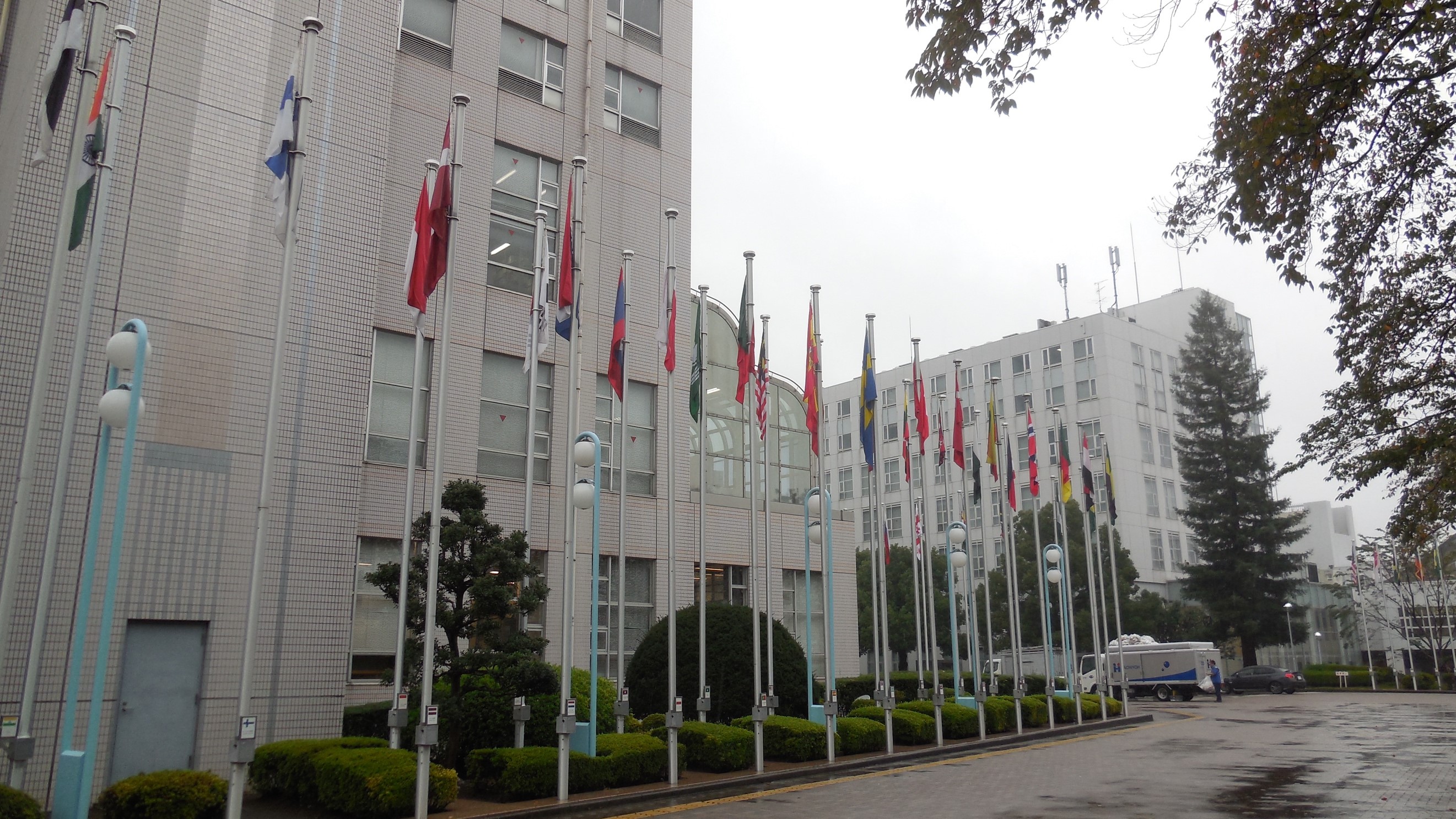
George: One of the best things about TIU is that the working environment is very low stress. In my previous experiences studying Japanese and learning about Japanese culture, I had heard that the working environment in Japan is often one of high stress and long work hours. While each member of the GTI team is certainly busy, and may occasionally need to work a few additional hours, there is no sense of stress and everyone really seems to enjoy their time here. I really hope that I can become part of the team myself one day!


Student Spotlight – Iryna Zagoruyko

Student Spotlight – Iryna Zagoruyko

Tell us about yourself! Where are you from? What kind of work have you done? Do you have any hobbies?

My name is Iryna Zagoruyko and I am originally from Ukraine. I moved to the U.S. 5 years ago. I got my first Master’s degree in Business Administration in Ukraine. After graduation, I worked as a manager of foreign economic relations at the Korean International Company in the capital of Ukraine, Kyiv. Also, in Ukraine I worked as an Interpreter of English for foreign economic delegations. After I moved to the U.S., I worked as a student specialist in the ESL Department at Lane Community College in Eugene. After that, I did my second Master’s degree with the Russian, East European, and Eurasian Studies Department at UO, simultaneously teaching first- and second-year Russian courses as a GE for two years (2014-2016). Being a Russian GE really changed my life goals: I understood that language teaching is my passion and decided to receive more knowledge on that. Now I am a graduate student at the LTS program of the Linguistics Department of the UO, and plan to receive my third Masters’ degree in language teaching this Summer.

This year was quite intense for me. Juggling being a graduate student in the intense LTS program, working at CASLS, and having a small baby (who was born three weeks after I started the LTS program) was quite a challenge. I did not manage to have a lot of free time for hobbies or interests and had to plan smartly to balance all aspects of my life. But every spare minute I have I try to spend with family: my baby and my husband. We really enjoy hiking together, going to the coast in Florence, and just being together at home.

Could you tell us more about your GE position at UO?

This year I was a graduate employee (GE) at CASLS (Center for Applied Second Language Studies) at UO. I worked on the Russian version of CASLS’ Bridging Project, a year-long hybrid course centered on exploring student identities. This project encourages students with high levels of proficiency, especially heritage students and those who graduate from immersion programs, to continue language study at the college level, which has become increasingly more challenging. CASLS is a great environment where people support and value each other. It was a big honor for me to work in such a highly-valued and highly-recognized National Foreign Language Resource Centers as CASLS. I truly believe that work which is done at CASLS will improve teaching and learning of world languages.

Could you tell us a little bit about the ideas that you have for your Master’s project?

My master’s project is called “Marching to Different Drummers: Differentiated Instruction for Teaching Mixed Classes of Heritage and Non-Heritage Learners of Russian with Motivation in Mind.” The motivation for this project is to offer language teachers access to the concepts of differentiated instruction, and strategies for applying it to their specific teaching context – mixed/homogeneous classes of heritage and non-heritage learners of Russian of novice to intermediate levels of proficiency.

What is the most valuable thing that you’ve learned during your time at the UO?

Probably, that we, LTS students, are all in a perfect place to gain very valuable knowledge on teaching which we can later apply in our lives. Professors in the LTS program possess extremely high levels of expertise in language teaching and offer us great support. Being a part of a single cohort of LTS students who are taking the same classes and doing the same projects together is really fun.