Amber Rolland Selected for UO Doctoral Dissertation Research Fellowship
Posted on

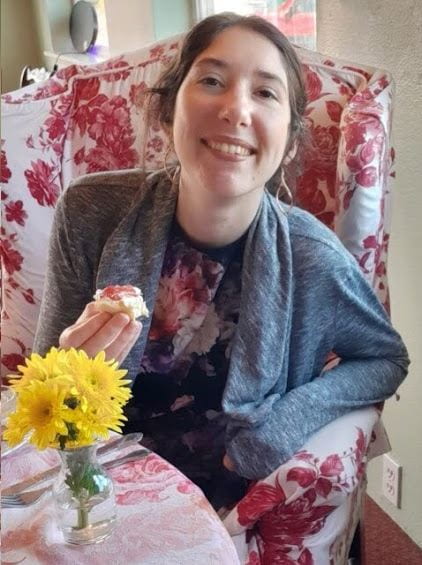
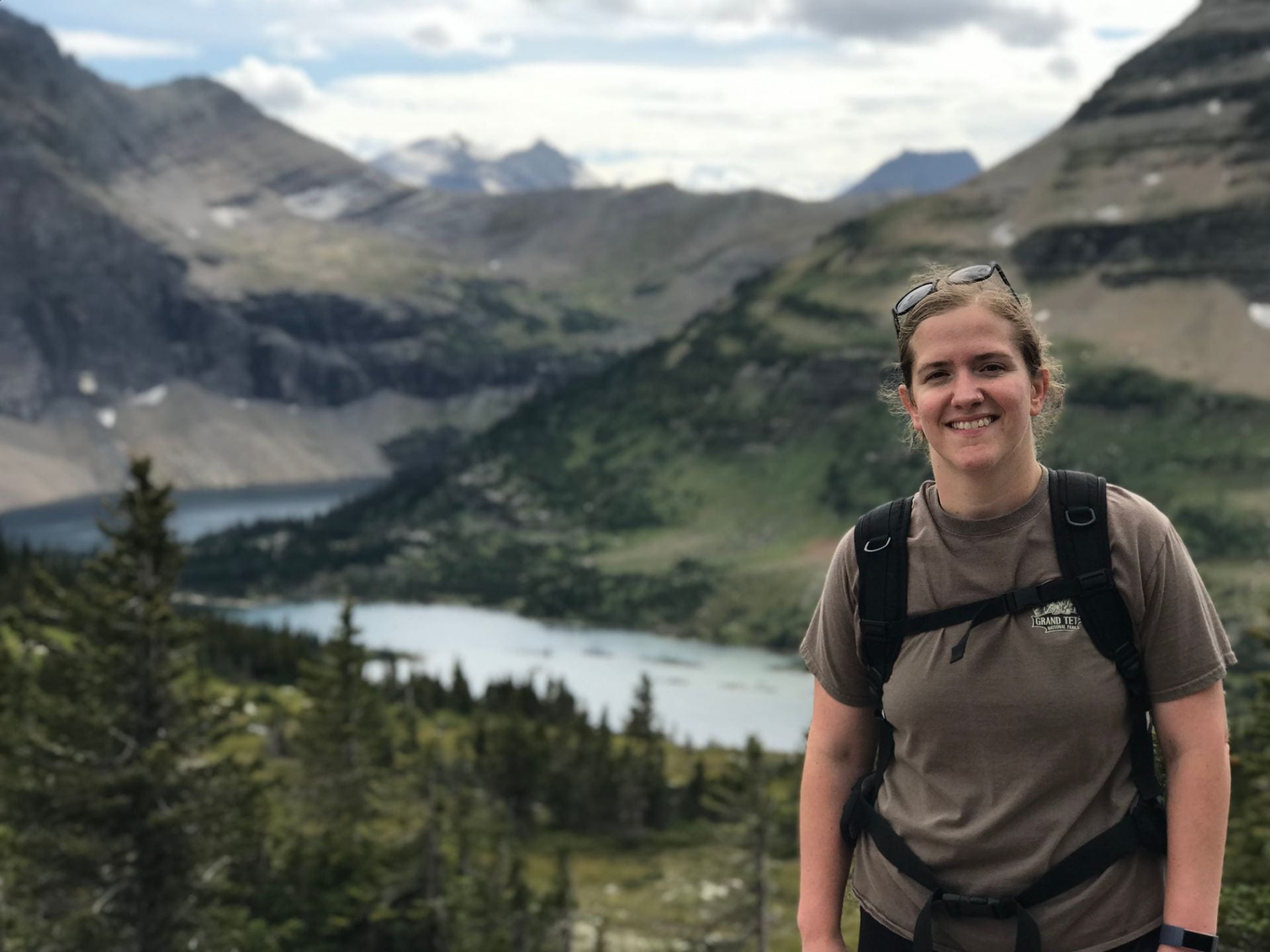
Photo: Amber RollandChemistry and Biochemistry graduate student Amber Rolland has been awarded the 2021-22 UO Doctoral Research Fellowship.

Open to students in any UO PhD program, the fellowship is awarded to the most outstanding doctoral student as determined by a faculty selection committee. Dissertations are judged on the quality of the written proposal and the potential impact of the research both within and beyond the student’s field. The fellowship carries an award stipend of up to $20,000 and includes a University tuition waiver, GE fee subsidies, and GE health insurance.

Amber is a fifth-year graduate student in the Prell Lab. Her dissertation work has pushed the boundaries of native ion mobility-mass spectrometry to elucidate more complex, detailed information about biomolecular structure, overcoming the quantitative barrier of this technique. The first half of Amber’s dissertation work comprises her computational and molecular dynamics approaches to gain insight into gas-phase compaction/structure of protein ions and to enable, for the first time, quantitative comparison between experimental and simulated structural data with known accuracy and precision. The second, ongoing half of her PhD research applies these computational approaches to investigate features of protein complexes which are important for human health yet typically difficult to characterize with other state-of-the-art methods due to their heterogeneity and/or disorder, including pore-forming toxins of interest for drug delivery such as alpha-hemolysin and cytolysin A, human eye lens crystallin proteins involved in cataract formation, and dynein motor protein subcomplexes.

In her free time, Amber enjoys hiking, traveling, and photography. She is the recipient of an ARCS Foundation of Oregon fellowship, John R. Moore Scholarship, Graduate Doctoral Service Award, and Peter O’Day Fellowship.

 

Faith Longnight Receives Inaugural Percy Julian Scholarship
Posted on

Faith Longnight has been selected as the first recipient of the Chemistry and Biochemistry Department’s Percy Julian Scholarship, a new department scholarship award for chemistry and biochemistry majors at the University of Oregon.

Established in 2020 by a generous donation, the Percy Julian Scholarship seeks to support talented undergraduate scientists in their pursuit of a career in chemistry and recognizes their contributions to promoting diversity, equity, and inclusion in STEM and their potential for further academic achievement.

photo - Faith Longnight
Faith Longnight

We asked Faith to tell us a little about herself and her science.

I was born in California, but I was raised in Eugene for most of my life! I am a junior this year and am double majoring in Chemistry and Sociology. The part of science that I love most is the aspect of discovery. It feels like I am using the skills I have learned to solve a puzzle each time I answer a question and it is such a rewarding process!

Current Research

I am in the joint Darren Johnson and Haley lab under the supramolecular anion recognition project. I first got into a research lab spring term of my freshman year but once I found my true place within the chemistry department, I joined the Johnson and Haley lab. I have been in this lab since March of 2020 and have loved every minute of it. I am currently working on a project that studies the kinetics of a reaction with hydrosulfide (HS) with and without the addition of a supramolecular sensor. The goal of the project is to see if the presence of noncovalent interactions slow down the reaction with HS. This would give insight in how our bodies might slow down reactions with HS, which is a highly reactive molecule that is essential to our bodies’ function.

What’s next?

I am still undecided in what I exactly want to do in the future, but I know that I want to pursue higher education within chemistry. No matter what I end up doing I want to find somewhere where I can use chemistry and research to help benefit the community around me. I want to pursue research so that I can show others that might feel alone that they are worthy and to show that researchers of color are valid, and that diversity is vital within the sciences.  I am currently very passionate about both pharmacology and forensic chemistry and I hope to learn more about both career fields while I am finishing out my time here at UO.


Dissertation Defense – Kelly Wilson, November 24th
Posted on

Good luck to Kelly Wilson as he defends his thesis for his PhD in Chemistry!

Tuesday, November 24, 2020
4PM via Zoom

Thesis title: “Design Principles of a Broadband Single-shot Transient Absorption Spectrometer”

For ZOOM link, email leaho[at]uoregon.edu

image - defense poster, Kelly Wilson

Hazel Fargher selected for Keana Fellowship and DOE Research Award
Posted on
Photo - Hazel Fargher
Hazel Fargher

UO Chemistry and Biochemistry graduate student Hazel Fargher has been named the department’s 2020-21 John Keana Fellow, and has also recently been selected for the Department of Energy’s Office of Science Graduate Student Research (SCGSR) Program. Hazel is in her fifth year of the UO Chemistry Doctoral program, working on a joint project between the D.W. Johnson, Haley, and Pluth Labs.

The Keana Fellowship was established in 2017 in honor of Professor Emeritus John Keana, and provides annual fellowship awards to graduate students studying in the Department of Chemistry and Biochemistry at the University of Oregon. The award may be used to assist with defraying the academic costs associated with attending the university such as tuition, fees, books, miscellaneous supplies, research and living expenses.

The SCGSR Program is open to graduate students pursuing doctoral degrees in areas of physics, chemistry, material sciences, biology (non-medical), mathematics, engineering, computer or computational sciences, or specific areas of environmental sciences that are aligned with the mission of the Office of Science. The award provides supplemental funds for recipients to conduct part of their thesis research at a host DOE laboratory in collaboration with a DOE laboratory scientist. The research projects are expected to advance the graduate awardees’ overall doctoral research and training while providing access to the expertise, resources, and capabilities available at the DOE laboratories. Hazel is one of 52 students nation-wide that were selected for the award this fall.

We caught up with Hazel and asked her to tell us a little about herself and her science.

I grew up on Cape Cod, Massachusetts, not too far from the beach. I went to Worcester Polytechnic Institute (WPI) in MA for my undergraduate degree in chemistry. I then started my first year of graduate school at UO in 2016.

I first got really excited about research when I learned about the principles of ‘green chemistry’. This is a really vague term but can refer to any chemical research that helps address environmental problems. During my time at WPI, I worked in Prof. Marion Emmert’s lab, studying ways to separate mixtures of rare earth elements so that they can be recycled. Now, I hope that some of the really fundamental work that I’m doing in physical organic chemistry can one day be useful in applications such as chemical sensing and pollutant extraction.

About her research

I am a host-guest chemist, so I design and synthesize organic hosts to bind guest molecules. More specifically, I develop hosts to bind hydrosulfide, which is both a highly toxic, foul-smelling molecule usually found in wastewater, and also a biomolecule that is essential for life.

I’m very excited to share that this award will help fund an internship at Oak Ridge National Lab through the DOE Office of Science Graduate Student Research program. I will be bringing hosts designed in the DWJ and Haley labs to the Moyer chemical separations group. We hope to use these hosts to study ion pair extraction of radioactive cesium salts from water. This area of research can be used to remove cesium nuclear waste from waterways and tank storage.

Future plans

After getting my PhD, I would love to continue to do hands-on research in a lab. I am keeping an eye out for post-doc positions and opportunities at national labs.