Crafting a personal statement for a program in language education

For those who are applying to graduate programs in language education in the US, it’s that time of the year to craft your personal statement as part of your application. Here are a few tips for making a statement that will stand out to your readers:

The DOs:

  • DO…organize your statement as a ‘deductive’-style essay: with an introduction paragraph, body paragraphs, and a conclusion. The introduction should engage the readers but also make a fairly direct statement about why you are a good fit for the program. The body paragraphs can then provide specific supporting information for your qualifications, interests and goals, while the conclusion can restate how these qualifications will match well with the program you are applying to.
  • DO…highlight your past educational and professional experiences that have brought you to a career in language teaching. If you are an experienced language teacher, highlight your accomplishments, what you have learned from them, and how they have influenced your teaching identity and philosophy. If you have little experience teaching so far, describe what experience you do have and why it has inspired you to learn and do more in this profession.
  • DO…tailor your statement to the specific program. Write about what you hope to learn from the program and how your participation and strengths will contribute to the program. Most departments want to see that an applicant is ready to take advantage of the resources in the program (e.g. relationships with faculty, other departments or institutes, internships, specific coursework topics, etc.) and realize their own full potential with those resources.
  • DO…provide specific examples of your achievements, goals, and experiences that help to tell the story of your journey towards becoming a language professional, e.g. a teacher, curriculum designer, future administrator, researcher, etc.
  • DO…write your statement well before the deadline, so you have time to revise and refine it before you submit it.

The don’ts:

  • Don’t…exaggerate or misrepresent your own experience, such as with teaching. If you have little experience so far, be honest about this.
  • Don’t…just list facts and statistics about yourself. Write also about what you have learned about your own interests and goals, and how these relate to the future.
  • Don’t…wait until the end of your essay to state why you want to attend the program. Readers want to see your ‘thesis’ near the beginning of the statement.
  • Don’t…ask someone else to write your statement for you! Readers will expect writing styles to naturally vary, and understand that bilingual and multilingual writers may have a unique writing ‘accent’. Do, however, revise and edit carefully for common errors and for typos.
  • Don’t… write it at the last minute.

In the end, faculty who are reviewing graduate program applications want to see a clearly written statement of who you are now, how you got to this point, and where you want to go, all in the context of your (future) professional identity as a language teacher.

Good luck with your application!

Keli Yerian, LTS Director

Teaching Uniquely: What will help you in your language education career?

This Fall term in our LT 436/536 Design for Learning Language Systems class, undergraduate and graduate students tried out some process writing strategies for a real audience (you, the reader). The prompt was to reflect on what personal characteristics, experiences, or identities they think might help them be strong future language educators. Here is what they wrote…  (- Keli)

Word cloud of this post

Something that could prepare me for a future career as an Ichishkiin teacher is my experience as a learner of the language myself and being invested in creating language materials. Ichishkiin is not my L1 language so I know what it is like to try and learn it as a second language. From this, I can share my experiences and guide new learners who are trying to immerse themselves in the language as well. One of the many struggles of endangered Indigenous language teaching is the lack of materials. One aspect I really enjoy doing is creating new materials and activities that engage the students through hands-on activities or visual materials such as videos or pictures.

– Allyson

The teachers I intend to emulate had the most profound ability to reach learners through compassion, patience, understanding, and openness. These are the traits of my personality I plan to envelope myself in when approaching teaching assignments. I plan on working in developing countries and relying on these qualities listed above to help guide me to be as useful as possible to all of my future learners.

– JY

My eclectic teaching and learning background – both related to language learning and involving issues of linguistic equity – is a strength I imagine I will draw on in my future career quite often. From teaching English to native-Spanish speakers in Nicaragua to learning Spanish as a second and foreign language myself; from conducting research on language phenomena to then witnessing firsthand the state of equitable education and linguistic access in public education: I have sought to strike a balance between theoretical, abstract foundation and practical, empirical application. Whether I end up teaching a second language or investigating phenomena related to language learning, my curiosity and fascination with language will help me better understand myself, my students, and the communities I work in.

– NW

Learning a language means you will feel like an outsider at some point. This was the first of many valuable lessons my semester abroad in Seville, Spain, taught me. Luckily, I took some wonderful advice from one of my former professors, and I actively searched for groups I could be a part of during my time abroad: I joined a local swim team, accepted dinner invitations, and spent time with my host family. I want my future learners to understand that they, too, will likely feel like outsiders at some point in their language learning journeys, but that they have the power to find places in which they belong.

– Anne

There are some philosophies and skills that I hold that will help me to become a language teacher. First of all, I believe that education is extremely important and that everyone deserves the education that they want to receive, regardless of race, gender, sexual identity, age, background, etc. Secondly, I have experience teaching/tutoring both in the U.S. and abroad, which has allowed me to get to know people from all over the world; with different cultures and backgrounds. Finally, I have great interest in learning languages and I always encourage others to at least try to learn another language in their lifetimes, and that is what I want to facilitate in my teaching; I want to provide an inclusive English education for those who want to learn.

– Julie

It wasn’t until my junior year of high school that I found my interest and voice in writing. My teacher at the time, Mr. Cabrera, would assign us to do a free-write at the beginning of each class. This would either be about a topic that was on the board or about anything that we wanted to write about. If it was about a a topic on the board, we would have to choose on of two or three topics that were presented and expand of them. These writing gradually became more and more fun and interesting to me especially when we were to share our writings with the class and I could see their reactions. This helped my writing so much in fact that I later went on to write speeches for my school as the ASB president. Through free writing, I was really able to find my voice and how to express myself through writing and in turn, public speaking and speaking in general.

– Kaleb Stubbs

I have multiple family members in education fields that I highly respect. They have all made a difference in the lives of their students by being sensitive to the needs of their classes and communities, as well as taking every opportunity to meet students where they are. I hope to take those same qualities into my own teaching, as well as my own educational background in linguistics that provide me with more mechanical knowledge of language.

– E

When I ask myself: what makes me want to be a language teacher? The first thing that comes to my mind is I love learning! I love learning about new cultures, new languages, and new people. When I was growing up, during the Chinese New Year, my family members would get together, have dinner and talk about their overseas living experiences, I was always fascinated by their stories and some English words that they used when they describe a phenomenon that does not translate in Chinese, so I hoped one day I could travel around the world and see all of these on my own. When it comes to language teaching and learning, first,  I think being a teacher means being a lifetime long learner as teachers constantly learn from their learners and peers while they teach, they also learn the learners’ cultural backgrounds, behaviors, and understand where their learners are coming from. Things like these become my life inspiration. I also see teaching as a way to help people out, as the language skills can transform the learners to somewhere better for their life, I as the guide and facilitator in this process, it makes me feel my job is very rewarding.

– HS

An aspect of my identity that will help me as a future language educator is being a Heritage learner. Being a Heritage learner will reflect on my teaching style as I will be more aware and responsive to the needs of Heritage learners in my class who may have strong oral skills, but struggle with reading, writing, and/or grammar. Additionally, I am empathetic to the strong ties and connections students may have to the target identity and culture. Thus, using real world examples and culturally relevant pedagogy in my classroom will play an extremely important role.

– LN

Having lived in France will greatly benefit my ability to teach French in the future. Growing up in K-12 French Immersion program, I was always taught the “proper” forms of French, which can potentially be problematic. While academic language will always have some merit, I rarely used it when speaking to the locals in France. In my future French classroom, I’d like content and ideas to be valued over delivery and accuracy, as language can be fluid and there doesn’t need to be one specific way of conveying information. On top of that, I want to encourage student engagement in the classroom, and not discourage students from participating for speaking in an incorrect tense.

– AM

My understanding on cross-culture communication can help with my teaching. I have been working in the international student center and have lots of trainings on understanding culture difference such as direct/indirect communication. I understand if students are from a low-context culture, they mean what they say. While for students from a high-context culture, there may be a hidden meaning behind what they say. And therefore, for students from a high context background learning a L2 that has a low-context environment, the meaning of the language would be vague if they are trying to get too many meanings crossed. For students from a low context culture learning a language under a high context culture, it would be rude to say certain things and make the reader or listener think too much.

– RL

Being a language learner could help me become a language teacher. As a child, I learned Russian, Ukrainian, and English. When I got older, I learned Spanish and started to learn Greek. I hope that my experiences, knowledge, and the ability to understand will allow me to help others learn a foreign language.

– Anna

One aspect of my background that will (hopefully!) benefit my students is that I’m curious about and interested in just about everything. As a result, it’s fun for me to learn about students’ diverse interests and tailor the classroom experience to who they are as people– which should ultimately help students stay motivated. For example: I was a triple major in History, French, and Government, but also love the sciences, video games, baking, and all genres of music. I even do weird things like build semi-aquatic environments for salamanders. If my students connect with something in their personal lives, you can bet I will try to learn all about it, and incorporate it into our curriculum.

– NGH

I am creative and innovative which allows me to see things from new angles and keep plans exciting. When combined with my need for organization, these characteristics tend to result in well-formatted and aesthetically pleasing handouts, clear instruction, and detailed examples which might guide students in their language learning without being monotone. Additionally, my artistic tendencies allow me to recognize unique style and ingenuity in other individuals, and I am a firm believer in the freedom of differentiation. Learners know themselves best, and I feel no need to force them to follow my preferred method if they have a strategy of their own. Flexibility and creativity will serve me well as I adapt from my own experiences as a learner and teacher.

– Aleya

When I asked myself, why do I want to become a language teacher? What made me pursue this professional path? The first thing that came to mind are my grandparents. I remember going to their house for vacation and being immersed in their bilingual home. I remember being fascinated with my mom switching from French to Palenese (an Italian dialect). I remember cooking delicious Italian food with my grandma, while listening to her and following her instructions. My passion for languages come from all these memories and all the emotional and cultural enrichment I gained throughout my years for learning languages. These feelings and memories are what I hope to recreate in my language classrooms.

– AB

Student Spotlight- Ailsa

Ailsa and her cat “Soymilk”

Ailsa is a current LTS student on the two-year schedule  and is at the beginning of her second year of study. 

Hello Ailsa! Tell us a little bit about yourself and your background.

Hello everyone! I’m Ailsa Li, a native speaker of Chinese who was born in Hebei province in China. Probably not many people have heard about my hometown, but it’s located in the northern part of China and is close to Beijing. 

I came here as an international student for my undergraduate degree 6 years ago. I was originally enrolled in the Economics department and minoring in Business at UO for my first two years. Although these are popular majors for many Asian students, I finally decided to quit due to my terrible calculation skills (what’s a shame!). But more essentially, I realized Economics is not the true interest for my whole life. Later I started learning Japanese and it was the most memorable experience that I personally enjoyed throughout my undergraduate studies (I will talk more about it in the next question). Finally I achieved a double major in both Japanese and General Social Science 2 years ago, and now I’m one of the grad students in the LTS program! 

For leisure time, one of my favorite hobbies is trying out cooking recipes of different cultures. I believe cooking is an amazing strategy to release stress and train patience. Also you can have a real taste for the little success! I also have a cat named “Soymilk”, she is my best “friend” but also the most annoying “roommate”! She likes staring at me or sleeping on my desk when I am working or studying. But deep down in my heart, I am really thankful that Soymilk has always accompanied me, especially during the pandemic when everyone had a tough time connecting with others. 

What made you interested in studying language education?

Here I’ll continue with my Japanese learning experience in UO. I was going into this cold; I had zero experience in learning Japanese except occasionally watching Japanese TV shows, and I needed elective credits at that time so my friends recommended that I take Japanese classes. I wasn’t very confident for the first couple days of starting Japanese class, but soon I realized I did a better job than I expected. To be honest, the main reason for me to choose a Japanese major is that all the professors I met are real experts in teaching. As a student, I could feel their contagious enthusiasm in every single class. I was learning the language with fun, and I still had the passion to learn Japanese after I graduated.

Soon I started thinking about the importance of a teacher’s role in language class. It reminded me of the English learning experience of TOEFL classes in China. I understand most extracurricular English courses are score-driven programs in many countries, and China is not an exception. But I still remember how stressful and tedious the class was. I questioned myself a lot during that period because of my shifting TOEFL test scores. Comparing  these two completely contrary language learning experiences, I was curious about becoming a language teacher who could make language courses more enjoyable and delightful. Now, I’m stepping on that path. 

A beautiful sunset in Eugene

What has been most interesting or motivating for you as an international student living in Oregon? What advice would you give other international students interested in LTS?

Eugene is a relatively small town but it has a mixed urban and suburban environment. You can enjoy a very peaceful life surrounded by plenty of greenery. Walking through campus, you can feel the changing of the four seasons by observing the colors of tree leaves, smelling the breeze and feeling the rain. Oregon is also famous for its beautiful landscapes, coastal scenery and outdoor activities. I was originally from an inland city without any sea around. But living here I experienced crabbing, fishing, snow skating and other fun outdoor entertainment. 

For international students who have a passion for language teaching or are interested in applying to the LTS program, welcome and please join our LTS family. We have many current cohort members and alums who are elaborating their creativity in language education. Some of them are mainly focusing on teaching the majority languages such as Spanish and English. But we also have people who prefer to do projects on minority languages or even endangered ones. In LTS, we encourage everyone to pursue their own path of teaching. Besides we have the kindest program director Keli, she is always willing to hear individuals’ needs and provide thoughtful advice. 

What would be your ideal career path after LTS?

Currently I really enjoy being one of the tutors in the Chinese Flagship program in UO. I’m offering one-on-one tutoring classes to Chinese learners with English L1 backgrounds. I’ve also participated in other Chinese teaching courses in past terms, such as a Chinese Honors class at Oak Hill high school in Eugene. My bilingual or even trilingual linguistic background helped me a lot in teaching, and I feel it’s beneficial if a teacher is able to share their language learning strategies with students. My ideal career path would be teaching Chinese to adult learners with native English backgrounds in a school setting. But teaching communicative or pragmatic focused English class in China or other EFL contexts also sounds appealing. 

Finally, how did you get your unusual name and spelling? I’ve always wanted to ask you that.

I’ve heard this question all the time, and now I can explain it to everyone. During my high school, one day there was a Caucasian looking man with a big smile walking into our classroom. He said he will be the teacher for our English speaking class for this year. The first task we had is that everyone needed to find a nickname they preferred to use in speaking classes. Then we needed to write down our nicknames on note cards and give them to the teacher. The teacher gave us 5 minutes for thinking, discussing or searching online. I just did a quick search on general English names for girls and originally planned to use the normal “A-L-I-S-A” name. But at that point, I didn’t notice my spelling was slightly different….

Soon an extremely interesting thing happened when the teacher started calling everyone’s name from the note cards. He found there were two girls who wanted to be called “Alisa”, but he compared our two name cards and noticed my spelling mistake. So he suggested why not just use “Ailsa” as my unique nickname and it sounded quite cute. I think being a little bit different indeed is a cool thing so I have been using Ailsa ever since. 

Sometimes I feel annoyed explaining my nickname’s spelling in every self-introduction situation. But thanks to my unusual name, people always remember me!

Visiting a Japanese Garden with friends in Portland

Student Spotlight- Aleya

Korean sweet pancake

Aleya enjoying 호떡 (hotteok), a Korean sweet pancake, during a pre-COVID trip to Japan.

Aleya is our first incoming 2021 cohort member to contribute to our LTS blog this academic year. She is pursuing the LTS MA to prepare herself to support learners beyond the classroom.

Hi Aleya! Tell us a little about yourself – where are you from and what you like to do for fun?

Hello! I’m Aleya and I’m from the Willamette Valley (Albany/Corvallis area) here in Oregon. For fun I like to travel with my sister, do digital art, take care of my houseplants, listen to international music (especially Korean R&B), and read. I’m currently growing tiny orange trees in my apartment. They started from seeds this summer and I’m very proud. I love trying new things and am currently taking a kickboxing class because I’ve always wanted to. This year I’m also hoping to take advantage of the UO Craft Center, get back into pottery, and learn more about woodworking.

Tell us the story of what led you to the field of language education. Why did you decide to do an MA in LTS?

Aleya (middle) and two of her undergraduate Linguistics friends, Ellie (left) and Preston (right).

Aleya (middle) and two of her undergraduate Linguistics friends, Ellie (left) and Preston (right).

I got my undergraduate degree in Linguistics from UO a few years ago and made lifelong friendships with four students from that major. One of whom, Ellie Collins, did the LTS program this past year and told me about it when I was sharing some of my language interests – including my wish to study language retention and provide a space for learners to continue their second language use outside of the classroom. She told me how customizable the LTS program was and mentioned that it might be a good fit for me even though I wasn’t particularly interested in teaching language myself. I was intrigued and met with Keli Yerian, the LTS director, and Jeff Magoto, the former Yamada Language Center (YLC) director, over the summer to talk about the LTS program and whether it might prepare me for work at a language center. I received encouraging answers and was excited to apply!

Your background in Linguistics and language center interests led to some good graduate employee (GE) opportunities for you – can you tell us more about what you’re doing with those?

My undergraduate degree in linguistics gave me the opportunity to work as a grader for Doris Payne’s LING 150: Structure of English Words course. I was grateful and excited to receive the position. I took an extra course over the summer in order to give myself more time this fall, with the intent of doing internships with both the Yamada Language Center (YLC) and The Center for Applied Second Language Studies (CASLS). I got connected with Robert Elliott, the new YLC director and it came up that the YLC might be approved for a much-needed GE position, and I might be a good fit for the job. After an unpredictable few weeks, it worked out that I could split my GE in half, working half the time as a grader for the Linguistics class, and half the time working with Robert on the YLC’s needs analysis. This week I’m working on designing an undergraduate survey about the center’s various services for the YLC position and grading the first big assignment for around 250 students for Doctor Payne’s class. I’m learning so many new things this term and the two positions certainly keep me on my toes.

airplane view in clouds

“My favorite place to be is above the clouds.” An airplane photo taken on a summer trip to Mexico.

What about your own experiences or observations led you to wanting to work on language retention?

I was able to study abroad in France in my last year as an undergrad. In the program, I made international friends, finally began to connect my most-studied non-native language to my identity, and experienced what it was like to be surrounded by a non-English language daily. I graduated shortly after I returned to the U.S. and found no space in which to use this part of myself. As time went on, I could feel my skill slipping and was hesitant to use my French skill on the rare occasion the opportunity arose, for fear of not recognizing the language coming out of my mouth. Looking back over my history with language learning, I identified the same pattern, though more severe, with the Spanish I studied in elementary and high school, and the Russian I studied in college. My family and friends, who had learned multiple languages and/or lived abroad for several years, rarely used any language but English. I began to wonder how many other people speaking English around me were actually multilinguals navigating monolingually. My interest in language retention and language centers came from my constant wish to use my languages, but feeling how much of them I had lost, and struggling to find places to speak them in an English-dominant society.

You are an experienced UO student and Eugene resident – what tips or advice would you give people who are new to the university and area?

Visit the Oregon coast at least once, more if you can. Dress warmly, bring a picnic, go at multiple times of day. It has a quiet calmness that always makes for good memories. As for campus, explore buildings even if you don’t have classes there. UO is full of so many corners, hidden hallways, walkways, landings, etc. Wander around and try new places to study. Also, carry an umbrella if you want to. It rains a lot, and the folk idea that true Oregonians don’t use umbrellas is silly. Stay dry, stay warm, stay healthy, stay happy.

"We're all friends here," a self-portrait.

“We’re all friends here,” a self-portrait.


Student Spotlight- Miranda

Miranda and her partner Kurt taking in the beachy breeze in Florence, OR

Miranda is a current LTS student on the 2-year schedule who is starting her 2nd year. Her interests include supporting diverse English Language learners.

Hi Miranda! Tell us a little about yourself! Where you’re from and what you like to do for fun?

Hello everyone! I grew up in Merlin, Oregon which is about two hours south of Eugene and I’ve lived in Eugene since 2009. For fun, I like to play my Nintendo Switch, spend time with friends and family, bake, cook, and I love going on hikes with our dog.

A picture from Miranda’s trip to Iguazú Falls

Tell us the story of what led you to the field of language teaching. Why did you decide to do an MA in LTS?

I was a SLAT student during my undergraduate time at UO and I was scared to take the leap and teach when I was younger. I also wanted to stay local and I’m glad I did, because I grew up a lot more during my time working at mental health clinics. Now, after traveling to Buenos Aires, Argentina, Iguazú Falls, and Rio de Janeiro, Brazil, I realized that traveling internationally is a joy unlike any other and I would love to experience other cultures while living abroad and teaching. I chose the MA program because I wanted to have the most informed and current pedagogies in my toolbox to best support my learners and feel prepared walking into the classroom again. Teaching is appealing to me because I love helping others reach their fullest potential as well as learning from learners about their own experiences, passions, and expertise.

You are choosing the 2-year schedule of the program. What have been the benefits of this in your case?

Since I have a more open schedule, I have had the opportunity to take two teaching assistant internships. One was with Lane Community College in a night class with novice high adult learners. The head teacher offered to let me teach my own activity each week. Although I experienced some flops for my lesson plans, it taught me so much and helped me develop better “teacher speak” with novice learners. It was also on Zoom during the pandemic. I learned so much about how to properly scaffold lessons and I am grateful for the experience.

My second internship was this past summer with an AEI mixed level, intermediate to advanced speaking and listening classroom. I worked in a separate Zoom room regularly to individualize instruction for the intermediate low and intermediate mid students. Some students were calling in from their home countries and others studied from Eugene. The head teacher designed most of the activities for me to implement in a separate Zoom room, and I learned how valuable combining short videos, dictation, and cloze fills can be for developing listening skills.

What topics have been most important to you in the program? How might they translate into your final Masters Project next year?

I want to design and scaffold instruction so that it can benefit neurodiverse folks with learning differences as well as everyone else in the classroom, so Universal Design for Learning UDL has been important for my teaching philosophy and coursework. I also really like learning about project based design, which I am currently implementing with 5-10 year old children at my job as a co-teacher at Treetop Academics, which is exciting.

Are there any words of wisdom or advice you have for the incoming cohort as they start the program?

Make sure you balance your schedule with things that you love and with self-care so that you can continue anew with the intensive work of the program! Graduate school has many different opportunities, but I would suggest you check in with yourself to make sure that the commitments you are making seem manageable with your schedule without getting burned out and overwhelmed. Enjoy your time and remember it is a learning experience and learning naturally means making mistakes before you reach the level of expertise you want to attain.

Alumni Spotlight- Yoshi

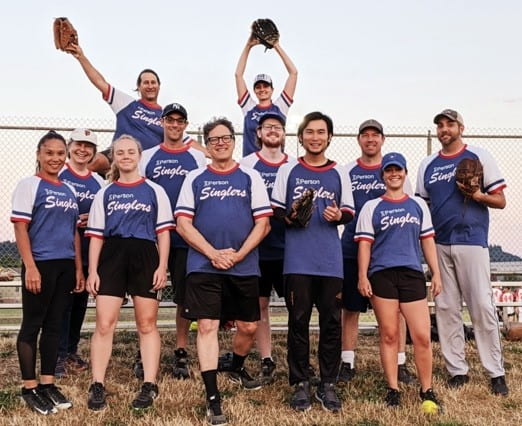
Softball at South Eugene field

Hi Yoshi! You graduated in Summer 2020 during a very strange year! And started teaching in the middle of a very strange year! Can you tell us about your first teaching job after graduation?

Hello 🙂 Long time no see.

It was indeed a strange year to finish school and start working! Fortunately, I got a teaching job at a public middle school in Eugene and at university in Seattle. Since I wanted to apply what I have studied during LTS program (SOOOOOOO many things), I took both jobs. However, I realized that one job was in Eugene and the other in Seattle. As you can imagine, it was very tough because I had to fly to Seattle every Tuesday and Thursday like every other CEO at Amazon, Google …


What was it like to teach in these strange conditions? What were some of the advantages and challenges? How was it similar or different from teaching in-person and remotely at the university?

It was definitely a tough year for me (I guess for everyone?). At the same time, I believe we can grow the most in the face of hardship. Here, I want to share some of my experiences and my thoughts.

Advantages:

・I first need to confess that I actually did not fly to Seattle every week. Because it was online 🙂 I find this (online learning) a huge advantage for language teaching. I believe it is very important  for us to provide opportunities to use the target language. However, in many places / schools, there are few people who can teach / speak the language. With online, it is not the case. In addition to the fact that I was able to teach students in Seattle, I summoned Japanese speakers living in Japan to my classes (real language speaking opportunities outside the classroom) 🙂

・I was able to explore so many new things (especially online teaching)! If it had not been online teaching, I would not have tried using online resources this much since I was not a big fan of language learning apps and websites before the pandemic. Don’t get me wrong. I am very young (Digital native), but I just didn’t enjoy them when I was a student (I am still (and always) a little younger than Emma Watson!!). Anyway, during this journey, I played around with using Google document assignments, Flipgrid, interactive videos, and so on!

・Since it was online, I was more available to my students. For example, some of my university students have a Japanese study group. They hold this on zoom at night. I could drop in to the group for like 10 minutes and answer their questions. Since it is very easy to go to their meeting (You just open your laptop), I managed to help more.

・We became eco-friendly. I did not print any handouts this year (although I personally prefer studying with paper)!

Oregon coast to avoid really hot day


Disadvantages:

・The hardest thing was that I could not see and hear my students (at middle school). It was very tough because you don’t know whether they understood you or not. In addition, students can’t use their non-verbal communication (since their camera is off), which is important in language classes. I definitely believe we need to create a students’ mandatory camera policy.

・It was difficult to establish a good rapport with my students online. I can’t explain exactly why, but it was different from in-person classes.

・It was very difficult for students to focus on online classes (on their iPad / computer screens). I do not blame my students since we have so many distractions at home. I myself was busy all day scrolling through all 679 channels on my cable. Moreover, the class always had this man named “Yoshi” who looked a lot like Brad Pitt, so you know… which was a huge distraction for us too. Anyway, thus, I tried to have many small activities where students need to do something during the class.

・It seems it is hard for students to ask and answer questions on zoom. Since the covid situation got better, I was able to teach them at school in-person. I found out that many students raised their hands whenever I asked them questions.


Do you have any particular memories or stories to share about your experience?

Crater Lake

Yes!! I do have many wonderful memories during this year. 🙂 Since I have a softball practice in 10 minutes, I will share one project here. (If you want to know more about my experiences, please join the softball team. You can meet LTS professors, other LTS graduates, and great people too.)

As I mentioned above, I took advantage of online learning and connecting my middle school students with Japanese students living in Japan. It was a more than one month project. Students introduced their food culture and towns to each other. Since Japan and America have 16-hour time difference, we used Flipgrid (which is basically a video version of Instagram). In order to benefit both students in Japan and America, our project was conducted in 50 % English and 50 % Japanese. From the survey I collected at the end of this project, I found out that our international exchange activity helped many students get motivated during this difficult time.


And your adventures are not over! Tell us about your plans for the next year. You will be the global Japanese teacher indeed.

Yes, I decided to take a teaching job at university in Saint Petersburg in Russia. Please look forward to my next post from Russia. 🙂 My next post might be wearing a jacket.

じゃあまた(See you soon)!


Yoshi with his roommate

Multi-level teaching internship for LTS students

This post is the 3rd of an awesome 3-part series this Spring/Summer on internship experiences in LTS (see the first here and second here). It is written by Laura Holland, faculty member in LTS and the American English Institute (AEI), and 3 of the 4 interns (Elaine Sun, Tigre Lusardi, Ellie Collins, all LTS students) who assisted her with a remote multi-level Speaking-Listening class.

Team “One-Room-Schoolhouse” rocks the house!

Laura G. Holland 

The global pandemic has taken a toll on enrollments in Intensive English Programs (IEPs) throughout the country and UO/AEI is no exception. Late in winter term we were informed that we only had enough students to offer one each of our core courses in the IEP, one Speaking-Listening, Grammar and a Reading/Writing class. Each class would serve all levels in a “one-room-schoolhouse” model. I was offered the Speaking-Listening class, my favorite to teach, but I confess I was initially skeptical of our ability to deliver a great student experience with this new constraint, and I wondered how in the world I might make successful, meaningful experiences for such a diverse level of student proficiencies.

In my heart (and teacher’s brain), I knew that the only way this might be even remotely possible would be to recruit interns. I put out the call to Keli Yerian, Director of the LTS Program and she in turn, sent out a message to the MA cohort. Within 2 days, I had four eager interns, 3 of whom I had worked with previously, and ready to take on this further experiment in online education (because teaching languages online IS still a bit experimental after only a year). I can safely say that without the interns, we would never have had the simply amazing experience that we had. Going into the term I was praying to stave off disaster; within the first week, I knew we were on to something big and by the end of term, we had delivered one of my favorite courses of my long and varied career.

Throughout the course and especially in the final weeks we requested IEP student feedback, asking what they liked, what they would like more of, which lessons and activities “stuck with them.” We asked in multi-modalities: in-class small group discussions, their weekly homework videos and writing in the chat in whole group. In each of these queries, students highlighted working with the interns, their ability to engage daily with UO students, both domestic and international. They were inspired by all and as a teacher, it was SUCH a luxury to have 4 talented and enthusiastic co-teachers to help plan ideas I never in 100 years would have thought of. The balance and variety they brought took our content over the top. Because we had “ditched” the textbooks this term (which one would we use with 6 different levels?!), we were free to develop our own passions and materials and as a result, we all thrived. Our team met weekly to plan and discuss, and to brainstorm ways to adapt all our lessons and activities to both in-person and online formats, so as to be prepared and ready for all contexts. As a teacher at the doorstep of retiring, I found this to be so inspiring and am grateful to be going out with a bang.

Our team of 4 interns included more variety than I could have hoped for: undergrad and graduate students, male and female, native and non-native speaking, novice and experienced teachers, people who had always wanted to be teachers and people who had begun careers elsewhere and found their way to teaching for a second act. From moment one, they were on it and together, we created one of the most exciting courses I’ve had the privilege to teach. They developed lessons incorporating pre-, while- and post-listening activities and discussed facing fears, and many other topics of interest; they incorporated poetry in the most successful poetry lesson I’ve seen; they compared “Bucket Lists” and they asked the students to tell stories from the past and look to the future; we discussed their hopes, fears and dreams for themselves and for the world; we watched videos and gave speeches and developed everyone’s academic discussion skills.

Thank you to the interns—I am being perfectly honest when I say this term could never have been this amazing without each of your many contributions and full-on presence. I will remember this experience forever and I’m positive our students will too.

Thank you, Gracias, Xi xie nie, Merci, Tack, Arigato, Shokran, Sulpayki!

Ellie Collins 

Though the prospect of an online speaking and listening class that spanned 6 levels was certainly intimidating, this internship ended up being one of my favorite experiences of the LTS program. During this internship, I had the opportunity to watch Laura Holland’s excellent teaching in action—I learned so much by observing her interact with students. One of the things that Laura does best is encourage her students to step outside their comfort zones to grow into better learners and speakers. At the same time, she encouraged me to step outside my comfort zone to plan and lead activities for the course. I grew as a teacher while learning to plan out lessons as well as teach lessons that were planned by someone else. Throughout this internship, I learned more about how to manage a classroom and differentiate lessons between many different proficiency levels and interests. I am so grateful for the opportunity to intern in this course, and I look forward to implementing the many things I’ve learned into my own classroom in the future!

Elaine Sun

I feel glad to work with Laura and the other three interns during this past Spring term. Also, working with students from all over the world was a precious experience. It was a wonderful chance for me to test the materials I designed for language teaching in a real language classroom. Ten weeks passed much faster than I thought. As an intern, I really enjoyed working with the students. While they were practicing English, they were also sharing their personal stories and some fun facts about their culture. Some of the stories were truly touching and made me think deeper about the target topic. It was also the first time for me to lead an English class as the main teacher. I feel grateful for Laura giving us this chance. This intern experience gave me the courage and helped me to get ready for being an L2 teacher. Finally, I just want to say “thank you” to everyone I met in this class. It wouldn’t be a wonderful trip without each of you.

Tigre Lusardi 

Interning with Laura’s multi-level Speaking and Listening class this spring was a seriously fun and wild ride! As a new teacher I really appreciated getting a glimpse of how a veteran teacher like Laura approached planning and executing a class for learners who varied so widely in their previous English language study and in their comfort and proficiency levels with speaking. Balancing every learner’s needs and goals and making sure that they were all participating and progressing was no small feat! One of the most delightful things to observe was how the learners’ comfort with expressing their ideas grew by leaps and bounds throughout the term. By far one of my favorite parts of this experience was noticing when learners felt confident enough both with their English and with us, the teaching team, to crack jokes or to tease us gently. Expressing humor in a second language is sophisticated both linguistically and inter-personally, especially given the idiosyncrasies of Zoom and online classes. I only wish I had had more than 10 weeks to spend learning alongside Laura and such an engaged and engaging group of learners!

LTS internships at Oak Hill School

LTS students who are proficient in Mandarin have the opportunity to assist in language classes at Oak Hill School, thanks to the welcoming instructors there, Li-Hsien Yang and Sophie Wang. Li-Hsien Yang is in fact a graduate of the LTS program herself! (See her 2018 blog post here). She worked as part of the CASLS team for many years.

Photo from Oak Hill School website

Oak Hill School is an independent, non-religious, non-profit K-12 school in Eugene. It offers 3 languages: Mandarin, Spanish, and French.

Two LTS students, Andrew and Ailsa, give us their reflections below on their experiences at Oak Hill this past Winter and Spring terms teaching Mandarin and ESL at the high school level.

Andrew Stevens

           Recently I had the opportunity to dip my toes back into teaching waters during my internship at Oak Hill high school. I worked with an ESL class and a Mandarin class where I got to implement many of the skills and techniques I have learned in the LTS program. Leading the weekly ESL group in discussions about Tom Sawyer allowed me to find ways to relate the material to the modern day lives of the students (often resulting in some memorable and hilarious stories from all). Designing my comprehension questions for each chapter of the book also helped me to incorporate elements of project-based language teaching, an important element of my master’s project. Our main instructor Li-Hsien Yang was incredibly helpful during both classes, especially as I eased my way into creating review materials and leading sessions for our Mandarin 2 class. Her scaffolding and encouragement helped me adjust to the experience of teaching Chinese while better understanding which aspects of my teaching translate well to this context and which ones I still need to work on. 

Aside from the memorable stories and interactions with all my students (including Yu’s insightful social commentary, Tommy’s Hong Kong adventures, Lalo’s musical experiences and Walker’s Bolivian football parties) my most important take-away from this internship was the chance to experience distance-teaching. Coping with the challenges of the pandemic has been especially difficult for the high school students I was teaching and interacting with them on a weekly basis gave me a realistic perspective of teaching as it exists outside of the ideal circumstances often assumed in the pedagogical theory classroom. Supporting students with encouragement and empathy is more important than ever in the current climate and this internship helped me solidify my teaching beliefs with regards to these principles. Distance teaching was far from just doom and gloom however, and with the challenges of distance teaching come the affordances as well. Zoom classes allowed for turn taking, chat bombs, and breakout rooms giving students opportunities to speak and interact that would have been very different in a traditional classroom (most of these techniques I copy/pasted straight from our LTS instructors’ classrooms). In all I can say that I am incredibly grateful for the experience and it has made me excited to dive-in to a full time teaching position after I finish my time with the LTS program. 

Ailsa Li 

I’m thankful for the LTS program to provide a wonderful chance for an internship.  I’m glad to have this opportunity to actually practically implement my learning into teaching. This was a term-long internship for teaching intermediate level Chinese in Oak Hill High School, I was teaching a special class called Chinese Honors which is for learners who have learned Chinese previously and decided to continue learning from the middle of the path. In Spring term the class had only one student, Anna, who was a very thoughtful student who always liked to engage in class activities and spontaneously ask questions. I was co-teaching with instructors Li-Hsien Yang and Sophie Wang. Even though we met on Zoom each week, the class atmosphere was super welcoming and warm. The instructors and students were more like family who could share thoughts freely without the constraints of large-sized class.  

Beyond the great experience in all the class sessions I joined, my major take-away from the internship is how to be a motivational teacher. Novice teachers need to develop their own teaching philosophies that accommodate the students’ interests and teaching objectives. An experienced teacher knows how to encourage students to use the target language spontaneously, whether it be a small chat about personal issues, the weather, or school life with friends, while still focusing on using the grammar etc. from the textbook. All current pedagogies in language teaching promote authentic context and natural language use, so educators cannot only rely on textbooks. Actually, both educators and students notice that textbooks are sometimes out-of-date and are not well-suited for real-word contexts. For us as future instructors in a new era in education, the most essential job is integrating content into context, from textbooks to the real world. 

LTS students reflect on Internship at CASLS

Spring 2021 intern team

Our blog post this week was written by Julie Sykes, CASLS Director; Stephanie Knight, CASLS Assistant Director; Ellie Collins, CASLS Graduate Intern; Rebekah Lloyd, CASLS Graduate Intern; Tigre Lusardi, CASLS Graduate Intern.

The Center for Applied Second Language Studies (CASLS) (casls.uoregon.edu) at the University of Oregon (UO) supports innovative world language teaching and learning. We develop research-based curricula, professional development resources, and assessments to support pedagogical infrastructures and innovation. We are one of sixteen National Foreign Language Resource Centers that work to increase the nation’s capacity for language education. Our resources incorporate best practices in pedagogy, the latest in second language acquisition research, and technology that enhances and extends classroom learning. 

Each year, we have a team of Undergraduate and Graduate Interns work with us at CASLS to gain hands-on experience. The projects vary each term, but, regardless of the project, our Interns’ input, ideas, and work are an invaluable part of our team. During the Spring 2021 term, three Graduate Interns from the Language Teaching Studies Program at UO joined our team – Ellie Collins, Rebekah Lloyd, and Tigre Lusardi. We loved having them! To tell you a little more about the CASLS Internship Experience, we decided to ask them a few questions. Check out their answers below! 

What is your internship at CASLS like?

Ellie: My internship at CASLS is different than anything I have done before. It has pushed me outside my comfort zone, and I mean that in the best way! I have learned new skills, and I have learned to apply skills I already know to new environments. When I was unsure about trying something new, Stephanie and Julie supported and encouraged me. I never thought I would be comfortable scripting and animating a video, but, turns out, it’s pretty fun!

Tigre: The internship with CASLS is such a collaborative, team-centered, and team-driven experience! We have been working on various projects that communicate ideas about language teaching to a wide audience of teachers, language professionals, and learners. These projects included making animated videos and classroom activities for CASLS InterCom e-digest and also making puzzles for one of CASLS’ new interactive learning experiences about the IPIC [Intercultural, Pragmatic, and Interactional Competence] model. All the things I’ve worked on so far have challenged me in the best ways to communicate effectively and to nerd out on language and visual design.

Beka: My internship at CASLS this term has given me the opportunity to work on a variety of projects and has allowed me to put into practice what I have been learning in my classes this year. It has been a great experience to work with the CASLS leadership, as they have been so collaborative, encouraging, and flexible. Our projects have been varied and creative and I really feel my experience here will be applicable in the future. This experience has challenged me to engage creatively with language teaching strategies and materials, and it has been amazing to work with a national organization that will be recognized by future employers. 

What did you create you are most proud of?

Ellie: I am most proud of the video I made about language variety. It was the very first video I created, and it covers a topic I am very passionate about! Though it took a lot of time and energy, I am so proud of the final project. I loved seeing it in the InterCom e-digest and knowing it was being sent out to actual language instructors and learners!

Check out Ellie’s video here: https://youtu.be/ObinJEjvBAA 

Tigre: I am really proud of the videos I made for InterCom. Using the animation program had a steep learning curve and was unlike anything I had previously done. I love thinking about visuals, colors and design, and how to best communicate information visually. Plus, I got to revive my childhood theater training by recording the voiceover for the videos too- so fun!

Check out Tigre’s video here: https://youtu.be/BBVls74b9m8 

Beka: I am most proud of the language learning strategy video I created for the YouTube channel and InterCom . It talks about using digital tools to practice pronunciation-particularly voice-recognition apps. I also created a short activity which can be used in a classroom alongside the video to introduce the technique and help learners implement the tool. I am also currently working on a series of puzzles which help learners explore pragmatic functions. It has been so fun and challenging to create content in these educational formats!

Check out Beka’s video here: https://youtu.be/pAaHYoONKIk 

What will you take with you from your internship to your future career?

Ellie: My internship at CASLS has challenged me to be flexible, to think outside the box, and to imagine what language learning might look like both in and out of the classroom. I have gained new perspectives on how to create engaging materials for language learners and instructors, and that is something I will certainly apply in my future classrooms. I have loved the opportunities to use my creativity and my training to make language learning fun!

Tigre: The ability to communicate why language learning is important and how learners can employ language learning strategies to better meet their goals will certainly be helpful in the future. I can imagine these skills as strong assets for wherever I end up in the field of language education. And as a classroom teacher, learning to communicate ideas about language succinctly and in an engaging way is so key!

Beka: I have really been challenged to think outside of the box when creating teaching materials and have already been thinking about how I can incorporate these ideas into my own future teaching. I would like to use short instructional videos in my teaching in the future. Gaining experience with a creative video software has shown me this is very possible. The puzzles we are currently creating are also encouraging me to look for new ways to engage learners in course content! 


Student Spotlight- Tigre

Tigre is a current student in the LTS program, graduating in August!

Tigre with his partner Lydia in Uppsala, Sweden, pre-pandemic.

Hi Tigre! How did you come to know about LTS, and what made you decide to pursue the degree?

I took a little bit of a circuitous route to get to LTS, as I have no previous language teaching experience and had been out of academia for nearly 20 years prior to starting the program. I originally came to UO three years ago to complete a bachelor’s degree in Human Physiology as the first step in a career change, as I thought a career related to physiology or medicine would be a practical way to find interesting and steady work.

However, while in the midst of really struggling through the required series of calculus, physics and anatomy courses for the Human Physiology degree, I took a first-year Swedish class on a whim. This was my first formal language class in decades after having studied as many languages as I could in middle and high school and then completing a previous bachelor’s degree in Italian (and musicology!). As soon as I sat down in that Swedish classroom, I was entranced with language learning again- how exciting it was to learn how to pronounce new sounds and put words together in new ways! However, in all of the classes I was taking, Swedish and science/math alike, I noticed that I spent way more time thinking about how we were learning than I did actually learning the material myself. So I started to think about what it would take to be a language teacher, and googling teacher training programs at UO led me straight to LTS.

What is most compelling to you about language learning and/or teaching?

Tigre’s pandemic puppy, Clover!

There’s so much to say about why language learning is compelling! I find it fascinating how our brains build meaning, personal and group identities, and social connections out of the patterned use of sound. You could say that music and language, two things I’ve often pursued concurrently, are used similarly in that way; they both can communicate all range of human experience- from the most quotidian to the most sublime. My partner is a professor of music at UO and we talk frequently about parallels between learning languages and learning music. And we’ve had great conversations around teaching philosophy and how to best create inclusive and supportive learning environments too! I think at the most idealistic core of it, learning a new language is a potent tool for self-actualization, whatever one’s goals in life may be. And as a teacher one gets to create space for that process to happen. Pretty powerful!

You are now well into your MA Project writing and design. What is your topic about, and why did you choose it?

I was inspired to dig into pragmatics for my MA project after taking an LTS seminar in pragmatics with Professor Julie Sykes. I realized through this class that so many of the miscommunications I had when speaking a second language were not due to vocab or grammar errors but rather were due to interpersonal and intercultural factors. I also couldn’t remember any language class I took that addressed these factors explicitly, and so decided to design a project that would do so. My project is aimed at beginning level adult ESL learners and increasing their understanding of how to evaluate and make language choices based on cultural, situational and relational considerations (especially for tricky interactions like apologizing or refusing an invitation). Or more succinctly, how to evaluate whether the language they used did what they wanted it to do. Adult ESL learners already can already do this easily in their L1, so it makes sense to start building on their sophisticated language skills by instructing them how to do so from the very beginning level in English.

One of my big pandemic projects outside of classes- building a new chicken coop.

You’re also involved in two different internships this term. Can you describe those to us?

I’m interning with two different institutes housed at UO: the American English Institute (AEI) and the Center for Applied Second Language Studies (CASLS). At the AEI, I’m a assisting in a multi-level ESL Speaking and Listening class, helping primarily to leading small group discussions or activities. Watching the students’ language skills progress over the term is a joy. At CASLS I’ve been helping to create video and activity content for their weekly InterCom e-newsletter that goes out to teachers and language professionals. I’ve really been enjoying the challenge of figuring out how to communicate complex linguistic ideas and learning strategies in a succinct and visually interesting way for the videos. Each internship complements the other well – the practice teaching and the practice communicating about teaching and learning.

2020-21 has been quite the year to both start and complete an intensive MA program during the Covid-19 pandemic. What are your thoughts on the experience?

Clover likes to participate in LTS classes on Zoom (I only left my seat for a split second!).

I’m sure completing a Master’s degree feels hard whenever one does so, but doing so during a pandemic has felt extra hard, if I’m honest. I’ve definitely been less social with peers and professors than I would have liked to be if we were able to gather in person- one can only stand so many hours a day on Zoom! I am definitely looking forward to meeting everyone in person this summer, once fully vaccinated. One of the great upsides of doing the program online, though, has been seeing creative strategies for online teaching modeled by our professors. They make teaching online look doable and enjoyable, and I feel like I have a ton of new ideas and strategies for if I ever teach online in the future.

Are there any tips for the incoming cohort that you have for the next year?

Take breaks! There will always, always be more schoolwork that you could be doing. Turning off your computer for a whole afternoon and doing something non-school related can feel indulgent and a little fool-hardy during such an intensive program, but it is so needed! During the winter term I made it a priority to hike as much as I could, around 3-4 times a week – having gotten a pandemic puppy was a great motivator for this! Now that it’s spring I am working in my garden at least a little every day, and am so glad for the break from the computer screen.