My LTS Experience: Wedad Al-lahji

My LTS Experience

by Wedad Al-lahjiWedad A
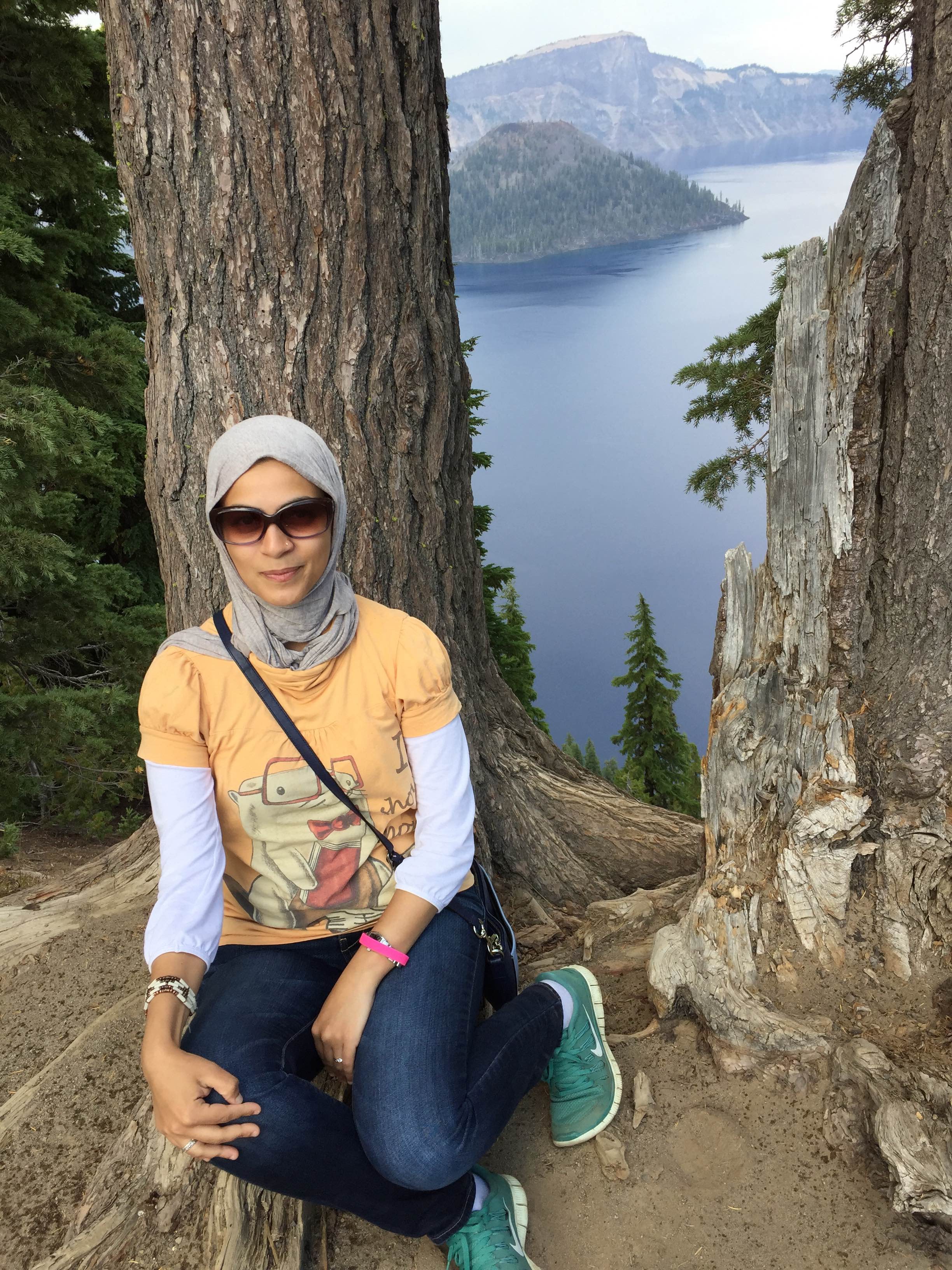
For an international student who has never lived in a foreign country before, who is a mother of three daughters, and who has not been in school for eight years, beginning the program was scary but eventually turned out to be the most wonderful rewarding experience. Through the two years I spent in the program I learned and experienced a lot through being in an encouraging friendly environment.

My first term in the program was scary and very challenging but my teachers were so supportive and provided me with guidance about how I can meet my courses’ requirements. After that, it was easy for me to take responsibility for succeeding in graduate school with all the scaffolding we have in the LTS program.

Besides the great amount of academic knowledge I learned in different courses, I had the chance to be in different teaching experiences through teaching in Yamada Language Center, leading the Arabic Circle in the Mills International Center, and different internships. My first internship was in a second year Arabic class. It was so helpful because I was not familiar at all with this context – teaching Arabic in a foreign context. It also prepared me for teaching my own class at Yamada. The second internship was at Center for Applied Second Language Studied (CASLS). I worked with my friend on creating online Arabic reading and listening lessons for students learning Arabic. It was also a great experience of creating language-learning materials.

My third and last internship was in an English Oral Skills 1 class. It was surprising for me how it is possible for communicative interaction to take place in such a beginner level class. There were a lot of opportunities for students to communicate and express themselves with what language they had. What was challenging and interesting at the same time was to prevent myself from using my L1 (Arabic) that I share with some students especially because it is difficult sometimes to use English all the time with novice learners. However, I succeed in that and learned how to find ways to communicate with the students. This experience was so rewarding and I will always remember the first time I was teaching in that class and how all the students there were so supportive, participated, and interacted very well with my instructions.

Finally, I highly encourage any international student thinking of joining the program to apply. The program is designed very well to help students accomplish their teaching goals, and there is a great friendly international community at the University of Oregon.


Wedad is 2015 graduate of the LTS Program from Saudi Arabia.  The title of her MA project is Implementing Communicative Language Teaching in Saudi Colleges’ English Preparatory Programs.

Internship Spotlight Ben Pearson

Ben Pearson is an LTS graduate student originally from Salem.  Ben’s MA Project is entitled: Using Analog Games to Improve Negotiation Skills in Upper Intermediate Level ESL Learners.


What was your internship context?

I chose to take my internship at the Center for Applied Second Language studies, (CASLS). My context was that I’d be working on their blog website called Games2Teach.  My master’s project is about using games in a classroom setting to teach pragmatics and I took a class from Julie Sykes, the CASLS director, on that topic in the winter.  I asked her if there was any way I could intern with CASLS, and she said she had a position available.  I worked on the Games2Teach site and also creating materials, lesson plans, and activities.  It was a really nice, comfortable office setting with a great group of people.


What surprised you most about your internship?

One of the most surprising thing about working over at CASLS was how accommodating Julie and all of the staff were there.  It was just a friendly, warm environment, and I didn’t feel like an outsider at all.  Everyone had their own jobs to do, and it was a very supportive atmosphere that really made me feel like part of the team.  Even though I may not be as proficient in a second language as some of my colleagues there, (some of them speaking three or four different languages), I still felt like I had my part to play and that what I was doing was meaningful. That was also surprising.  I was producing content for the InterCom newsletter, and I was creating activities and updating the blog. It was great to be actually putting what I was learning in LTS to use in this great atmosphere.


What was the most chBen_Pallenging part of your internship?

One of the challenges of working at CASLS became time management. While doing all of this great work coming up with activities and blogging, I was also in the LTS program, which as you know is a very intensive program where you’re taking about 12-14 credits per term, so time management was a big challenge.  It was something that I had to learn to do well, but I think it was a positive challenge. Before I hadn’t considered myself very good at time management, but having this internship and being in this Masters program I had to learn to do it effectively.  Not to mention, if something really big came up in my academic life, I could talk to my colleagues and flex my schedule.  They were very accommodating and understood that I was a very busy student.  It was definitely tough, but I think I am now better because of it.


Would you care to share a memorable moment?

One of the more surprising things that happened to me was when I was asked to write up a game review for Dragon Age: Origins, a recent game that had come out.  Julie had created a template for five different criteria that needed to be addressed in the review.  I was sitting in the office one day playing this video game, and some members of the team came over and starting asking me linguistic questions and discussing how parts of the game could be used for instruction.  I sat there a moment and realized that I play video games on my own time, but I never thought talking about pragmatics and speech acts and linguistic forms would ever mesh up together with that context. It was one of those moments when I realized that I was really interning at the best place for me, and I had never thought that this combination would work! My skill set and my interests were really lining up perfectly.  I really enjoyed interning there, and it was one of the best experiences I’ve had in the program.

Internship Spotlight Patricia Roldan Marcos

Patricia is an LTS student originally from Spain. She will be graduating in summer 2015.

In what context did your internship take place?

I did an internship in the Intensive Spanish Grammar Review course in Winter 2015. It was a 300-level class with Sayo Murcia and the group consisted mostly of American students, but I remember there was a student from Europe and also a heritage language learner. The learners were very enthusiastic even if they knew the focus would be grammar. Who said students hate grammar? ☺


What surprised you most about the internship?

The most surprising part of the internship was the fact that students had to present a grammatical point to the rest of the class. I had never tried this in my teaching career, so it was really interesting to see how students found original ways to help their classmates grasp the language features. It was challenging, but it worked really well because the time they spent researching and preparing their topic helped them gain confidence and become experts on it. I remember a pair used a sonnet by Neruda to exemplify a type of subordinate clause – just amazing!


What part of the internship was the most challenging for you?

Well, I love grammar, but I had never taught it outside of an integrated skills class, so it was a new experience for me and that’s why I wanted to intern in this course. Moreover, I hadn’t taught Spanish since 2008, so these two factors pushed me out of my comfort zone and provided me with the challenge I was looking for. Being a native speaker of the language, I had to spend a good amount of time researching the grammatical points I was going to teach. When preparing my presentations, I also considered why English speakers found these topics especially hard and tried to come up with examples that would be tricky and relevant for them.

For Tiff-blog

Would you be willing to share a memorable or special moment from your internship?

There were a lot of memorable moments because of the positive environment in the class. Sayo built rapport with students from day one by playing salsa before the teaching began, through the use of humor and the sharing of personal experiences. For me, it was special every time we pointed out cultural elements, pragmatic differences, and shared personal insights with the class because I feel we were contributing to the development of well-rounded students. I’m really grateful for having had Sayo as my mentor in this internship.

Internship Spotlight Katie Rasmussen

Katie Rasmussen is a current LTS student graduating in summer 2015.  She is interested in the use of mobile apps to augment language learning.

In what context did your internship take place?KR Photo 3

I did an internship in an Oral Skills class, E-prep level. E-prep is called so because it is the lowest level in the AEI and it is preparing them to study English in the higher levels. It consisted mostly of students from the Middle East who have not had much, if any, English instruction before coming to the States. Many of them were experienced professionals in their countries.


What surprised you most about the internship?

The thing that surprised me the most was how much I enjoyed the level. I was nervous about interning for this level and wasn’t sure I would like it very much. But at this level the students require a lot of energy and enthusiasm, and because the teacher was able to give that to the students, it was a great and really fun class. Most of the students were new to the United States so they were really enthusiastic and excited to learn, so it was a great and fun environment.


What part of the internship was the most challenging for you?

The most difficult thing about the internship was giving instructions. Because of the level, some vocabulary words that are often used when giving instructions and describing activities were not known by the students. Often, the teacher would give instructions and tell the students to start the activity but they misunderstood them. I would try and help and go around and reiterate the instructions, but it was difficult sometimes to find vocabulary that the students would understand. There always ending up being lots of gesturing, writing things on the board, repetition, and modeling.


Would you be willing to share a memorable or special moment from your internship?

Honestly, there were a lot of great moments in the class. I would always leave the classroom happier and with more energy than when I entered the classroom. Spending time with the students and the wonderful teacher really energized me. A particularly special moment was seeing the students give their first ever presentation in English. It was just a 2 minute speech about their families, but seeing them make that accomplishment of getting up in front of the class and giving a speech in this new language was great to see. In the break after the presentations, one of the students went up to the teacher and asked her if they could do speeches and presentations in front of the class every week because he enjoyed it and wanted to practice speaking in English more. It was great to see the students so willing and wanting to practice.

Faculty Spotlight Robert Elliott

What do you do at the University of Oregon, and how are you connected to LTS?

I am faculty at the American English Institute and the Associate Director of Educational Technology at the Northwest Indian Language Institute (NILI). I specialize in CALL, pronunciation and intonation, and International Graduate Teaching Fellow (IGTF) Training, as well as work with indigenous language revitalization. I teach classes in the LTS program on CALL in the Spring and Summer terms. One of my favorite classes is the Summer CALL class where I get to witness firsthand the metamorphosis of the project papers into academic presentations. I love seeing the creative and innovative ways LTS students come up with to present their work to the UO community.

What do you think is most important for LTS students to get out of the program?

Since I work with small, endangered languages I am a bit biased. I feel the LTS program offers a rare opportunity for new teachers to raise their awareness of the issues of minority languages and the threats to linguistic diversity, both here in the US and around the globe. This is something my MA program in TESOL did not do.

Just as we are witnessing the severe threats to endangered species around the globe, similarly we are seeing the world’s languages disappearing. The teaching of major languages like English is not the cause of the problem, but it certainly can exacerbate the problem. I think the LTS program – with its emphasis on building language education professionals rather than English teachers – leaves graduates with a sensitivity to these issues. I think LTS grads see mother tongue language as a basic human right. As language professionals we should “tread lightly” on smaller, more vulnerable languages. We should not leave our students with the explicit or even implicit assumption that some languages are more valuable, useful or more fit for the modern world than others. LTS students get to experience this first hand through exposure to faculty and peers working on less commonly taught and endangered languages.

What message do you have for LTS students this week?

MA Project Spotlight Liatris Myers

Liatris Myers is a member of the Language Teaching Specialization program from the western U.S. Her MA project’s working title is: Integrating instruction on pragmatically appropriate English oral requests into IEP courses.

WhLia_Myersat is your MA project?

My project is about teaching pragmatically (culturally) appropriate English oral requests to learners of English as a second language by inserting bits of instruction on requests into their IEP (Intensive English Program) courses. Making appropriate requests is something that many ESL learners struggle with at all levels, and it also tends not to be prioritized in language learning courses, especially academically focused IEP programs that already have packed curriculums aimed at helping learners develop the linguistic skills they need for university level classes. That’s why I’m working on ways to work instruction on requests into IEP courses.

What inspired you to choose this topic?

Working with ESL learners, I became accustomed to them making requests using the imperative, such as, “Give me the pencil”. I knew they didn’t mean to be rude, and so I just paid attention what they were saying and ignored how they said it. Then a girl told me a story about a traumatic experience she’d had when she first came to the U.S. and, knowing very little English and nothing of polite requests, had used the imperative to ask an American woman for something and the woman had gotten angry with her. Then I thought, oh, maybe I shouldn’t be letting this go, because sooner or later they’re going to meet people who don’t understand and get upset.

What has been most challenging about doing the project (or what advice would you give new LTS students about the project)?

For me the most challenging things about the project are the way it’s always shifting and how nothing ever seems to end. As you work on it, you find you need to adjust or add or dispose of a lot of things, and partly because of this, it seems like there’s always more literature to look up, more information to collect for the needs analysis, etc. So I would tell new LTS students to be prepared for and open to the ever-evolving nature of the project, but also to know where to draw the line, because you can’t include everything in the universe on your topic.

What do you like best about your project?

There are many things I like about my project. In doing research for it I’ve gotten to learn many interesting things from the literature, people, and the IEP. I like that it doesn’t focus on just one skill, but gathers together many things like grammar, vocabulary, pronunciation, and cultural knowledge. I feel like there’s a real need for my topic and what I learn now will help me in my future teaching. And I’ve been surprised and thrilled by the enthusiasm and support I’ve received on the project from everyone – language teaching professionals, non-teaching ESL program employees, and the learners themselves.

Faculty Spotlight Brian Barnett

Could you tell us a little bit about your connection to the LTS program? 

I became connected to the LTS program while being the Director of French Language Instruction in the Department of Romance Languages at the U of O.  My academic background is in French and language education, so I wanted to find additional opportunities to work with students and faculty dedicated to language pedagogy. My profile is somewhat different from most other LTS faculty members as I bring a perspective of an experienced language educator working in the field of FL instruction (French) within the United States. Currently, I am the Director of the First-Year Language Program in the Department of Languages, Literatures, and Linguistics at Indiana State University.  I teach first- through third-year French courses, supervise graduate students teaching first and second semester courses for all languages (German, Spanish, Arabic, Chinese, French, etc.), and teach in the graduate program in linguistics. I have remained involved with LTS from a distance by working with students’ final projects and teaching the summer capstone seminar (LT 610) in some years.

Could you briefly describe the course(s) you teach?

I have taught two different courses in the LTS program. The first is LT 536 Second Language Teaching.  This course gives students a solid foundation in developing lessons plans for their particular teaching contexts.  The culminating assignment is quite practical as it requires students to design a unit of at least three sequenced lesson plans that is grounded in current pedagogical theory and practice; this is a task that future teachers will encounter in the classroom.  The second course is LT 610 Language Teaching Seminar in Summer terms.  This 4-week seminar is taught with variable topics.  My class has been organized with three modules focusing on learning styles and strategies: (a) exposure to different learning styles and strategies and their classifications, (b) frameworks for Styles- and Strategies- Based Instruction and how to incorporate this approach to your lesson plans, and (c) teacher action research through collection of style and/or strategy data from students.

What do you like best about working with LTS students?  

[note: despite the background, no wine was consumed during the making of this video]


MA Project Spotlight Ben Pearson

Ben Pearson is an LTS graduate student originally from Salem.  Ben will graduate in summer 2015.Ben_P

What is your MA project?

My project is a materials portfolio on how to use certain board and card games to teach negotiation skills to ESL learners. Essentially, this portfolio will give teachers some fresh ideas on how games can be used to teach and some sample activities to try out for themselves.

What inspired you to choose this topic?

One of my hobbies is playing analog games of all different kinds, but I was not sure if that could transfer over to a very robust MA project. I was taking a course on pragmatics at the time and one day the class discussed how games can offer several opportunities for learners to engage in authentic discourse and practice speech acts in a safe, fabricated environment. However, I noticed that there was a large amount of research done on digital games, not analog. From there, I knew that my topic could fill a gap in the research out there as well as give me a chance to bring one of my favorite hobbies into my work.

What has been most challenging about doing the project (or what advice would you give new LTS students about the project)?

One of the more challenging issues that I have run into is not getting sufficient needs analysis data for my project. I have not received as many responses to my survey as I would have liked, so I am now trying to get in touch with students that I have taught in the past to see if they would be willing to help me out. My advice is to manage your time effectively when it comes to your project and to have plenty of backup plans ready if anything goes wrong.

What do you like best about your project?

It gives me a chance to flex my creative muscles which have admittedly atrophied due to different obligations and assignments which require more linear thinking. I also like the idea that someone else could continue the work of my project in the future and create some activities based off of new games that have not been created yet.

MA Project Spotlight Kelsey Hertel

Kelsey is a current LTS student.  Her MA Project is titled:  Integrating American English pragmatic instruction in tourism training programs in Latin America: A materials portfolio.


What is your MA Project?

I am creating a materials portfolio that will teach American English pragmatic instruction in tourism training programs in Latin America. The point of this project is to implement my materials into these programs so that tour guides trained there will be able to communicate with American tourists more easily and effectively, ensure quality customer service, and increase their profits.


What inspired you to choose this topic?

When I was traveling in South and Central America last year, I did a lot of different tour programs and treks throughout the region.  I noticed a very large disconnect between American English pragmatics and the way the tour guides were communicating with the tourists from the United States.  Because of this, the tourists felt offended at times or felt disrespected – and it wasn’t at all intentional. The tour guides just weren’t aware that their methods of communication were incorrect or inappropriate when speaking English and were creating these unsuccessful transactions with their clients.  I realized then that there was a huge need for this kind of pragmatic instruction in their English and tourism training programs.


What is the best thing about your MA Project?  What’s made it challenging?

What advice would you give incoming LTS students about the MA Project?

Pick a topic that you love, that really inspires you, and that you could possibly use in the future.  You will be spending so much time on so many different areas and aspects of this project, that you should love it and love spending the time on it.  Having a personal connection makes it so much more doable, easy, and enjoyable!

Faculty Spotlight Tom Delaney

How have you been involved as a faculty and administrator at the University of Oregon?

In addition to teaching in the LTS MA program, I am faculty and an administrator in the American English Institute (AEI). I have taught extensively in most of the AEI’s programs, including the Intensive English Program (IEP) for pre-matriculated students, the Academic English for International Students (AEIS) program for UO undergraduate students, and the eLearning program, which provides teacher training and development courses for language teachers around the globe.

I am also currently the Coordinator of the AEIS program. This means I am involved in curriculum and assessment development, scheduling courses and teachers, and working with campus partners – we are always looking for ways to improve our programs and help students succeed at the University of Oregon.

Can you describe what you teach in the LTS program?

I regularly teach LT 535 Second Language Teaching Methods and LT 549 Language Testing and Assessment.

LT 535 builds a bridge between the theoretical issues explored in the study of Second Language Acquisition (LING 540) and the very practical skills developed in the course on Language Teaching Planning (LT 536). We explore the history of language teaching up to our current understanding of the principles of language teaching and learning. We also get a sense of all the different individual, social, cultural, and institutional factors that can affect how languages are taught and learned. We then move on to building some skills which are developed in more depth in LT 536: curriculum development, lesson planning, and choosing or developing appropriate tasks and activities.

LT 549 is a course that some students are not excited to take, but, in my experience, most students find language testing and assessment surprisingly interesting. Some even find it fascinating! This class is a unique blend of the deeply philosophical (“How can we know what a language learner knows or can do?”) and very practical (“What’s the best way to assess what my students have learned in this class?”). Personally, I find developing valid and reliable ways to assess learning to be an intensely creative and intellectually stimulating activity, and I am always gratified that many students seem to come to a similar view after taking this class.

What is an example of a strength of the LTS program?

What advice do you have for LTS students?

Be patient. This program prepares you to be a well-rounded language teaching professional. You will gain knowledge and skills that will serve you well in any language teaching context, not just one or two. You will develop practical skills and you will have the opportunity to personalize your projects, but don’t breeze past the things that seem “too theoretical.” Give the tough issues your attention and you may find that those are the things you return to again and again in your career. There are many, many books full of activities and lesson plans. This program will give you a lot more than that, and that’s what separates a good MA program from a fly-by-night language teaching certificate.