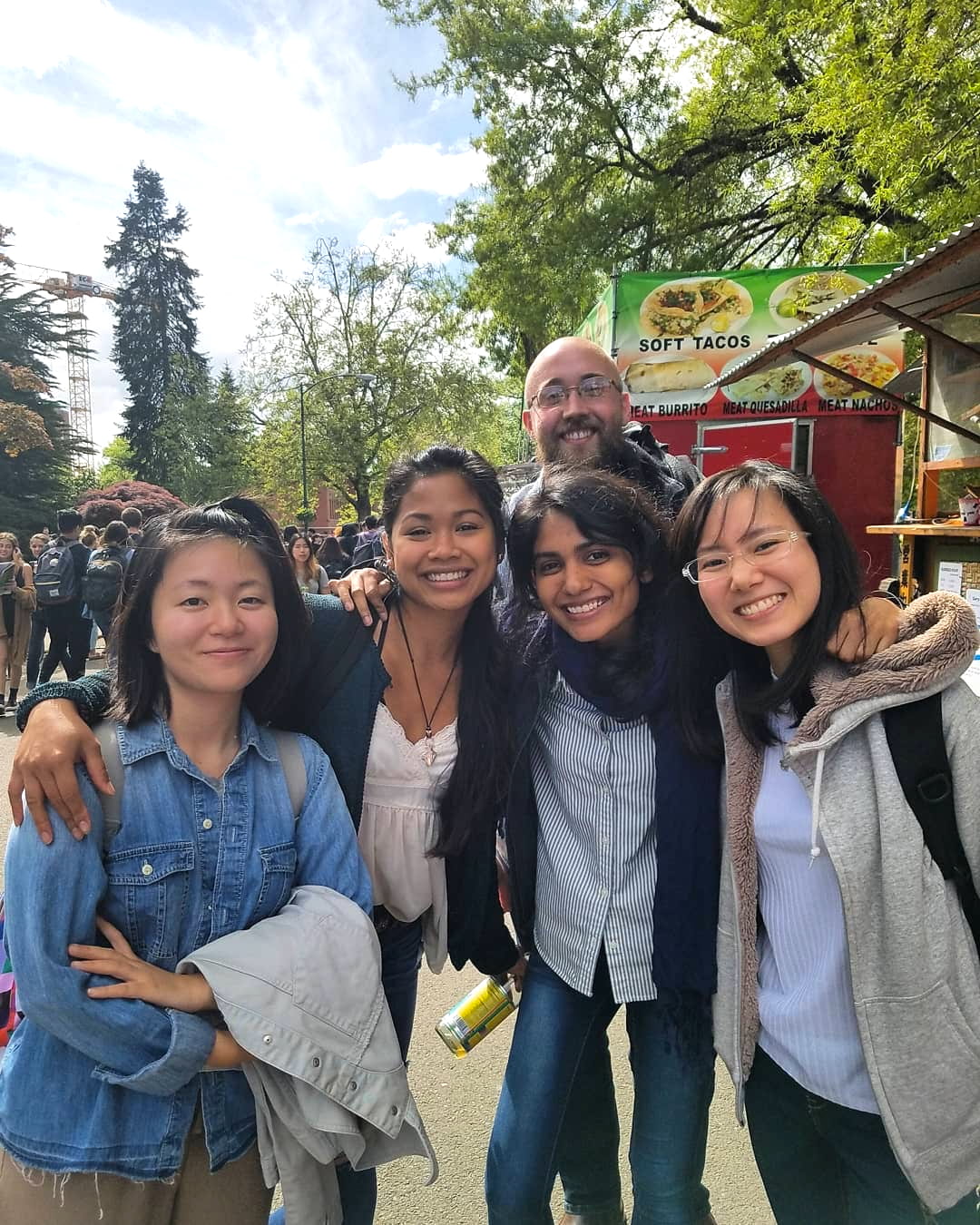
Alumni Spotlight: Emily Letcher

Emily standing next to the botanical garden in Oaxaca City

The botanical garden in Oaxaca City

Emily Letcher is a 2016 alumna of LTS and is writing to catch us up on her life as a teacher and language program director at La Universidad de la Sierra Sur (UNSIS). Thank you Emily!

You graduated from LTS in 2016 and last posted for us in 2018 (7 years ago!) after completing a year of teaching in Oaxaca, Mexico. How have the last 7 years gone for you? Have you had any changes in your job? Did the pandemic affect your work?

Two major things have happened in the last 7 years. The first was the pandemic. We went online for a year and a half. I stayed in Miahuatlan where my dogs kept me going. I learned nature and physical activity were very helpful for my productivity and creativity. I would work outside while my dogs napped in the sun. We took long walks each day. Meanwhile, I enjoyed the change of pace of online teaching.After we returned to classes on campus, I was asked to take over as the head of the language center. This was in the fall of 2021. We had less than half the teachers we needed, and not all students had been able to keep up with English, especially those from remote towns with irregular internet access. Growing and shaping the department and the English curriculum post-pandemic was a rewarding challenge. We’ve doubled in size since then, and we’ve shifted drastically from focusing on the TOEFL exam towards focusing on communication and practical English.

Mezcal fair in Miahuatlan. There is a band on stage, food vendors, and papel picado hanging above the crowd.

Mezcal fair in Miahuatlan

Unlike many people who teach abroad for just a year or two after graduating, you have settled in more deeply. How would you describe your language and cultural evolution over the 8 years you have lived in Mexico?

I feel like Mexico is my home and living here for eight years has certainly changed me.  As for the language, my Spanish has improved greatly thanks to my students and because there are very few English speakers in Miahuatlan, so day-to-day life depends on speaking the language.  I’ve not only adapted to the language but specifically to life here. When new teachers arrive, they tell me I seem very “Mexican” – my communication style, my values, my habits, even my style of dress.

What impacts do you feel you are having on your students as a teacher and administrator in this field?

Emily on a bike ride around Miahuatlan

Biking around Miahuatlan

In addition to the classes in their fields (medicine, dentistry, etc.), we’re teaching students critical thinking skills, study skills, culture and general knowledge. This is because the topics used to teach English include history, literature, film, music, geography, and more. Also, as the department head, I’ve had the privilege of hiring a diverse group of teachers exposing students to a wide range of cultures. 

Would you give any new advice to incoming LTS students? Has your advice changed from 2018?

My advice hasn’t changed. It’s very simple: be open to trying new things. I came here expecting to leave after 6 months. And now it’s been eight years. I didn’t think that a small town of 50,000 people would give me a reason to stay, but I’ve thoroughly settled into the lifestyle here.
Also, adopt dogs!

Three of Emily's dogs, the smallest is sitting on the biggest bed

Three of Emily’s dogs

What is something outside of language teaching that you enjoy or are passionate about? Or maybe a fun fact about yourself that others may not know?

Honestly, dogs. I’ve just adopted another dog, and now I have five (again). Otherwise, I enjoy exploring things in the city and taking part in community activities, such as dance classes, art workshops, conversation clubs and the local agriculture (mezcal!).

Alumni Spotlight – John Wagner

Balloons at sunrise in Kapadokya

Balloons at sunrise in Kapadokya

Our first post in 2025 is another alumni post, this time from a teacher who joined LTS in 2016 to obtain the MA after many years of teaching experience already. We’re grateful to our alumni who keep us posted about their lives after LTS!

Hi John! You graduated from LTS in 2016 as a teacher of Spanish and German and are now teaching in Türkiye. Can you tell us about your path as a language teacher?

During my middle school years, my family and I lived in Mexico and Central America. There I learned Spanish and gained a love for foreign languages and cultures. In college, I focused on German. I studied for a year in Germany and also decided I wanted to teach. During my teaching career, one year I did a Fulbright exchange in Germany and for two years we were teaching in an international school in Bolivia. Through the years I have found that teaching ESL is one of the better paths for those teachers that desire to teach overseas or work with foreign students in their home country. I do love working with foreign students and traveling overseas. So now I am doing both as a teacher in an international school in Türkiye.

Touring in Ancient Ephesus

Touring in Ancient Ephesus

What are you enjoying most about Türkiye so far?

Türkiye is a beautiful country filled with wonderful people. There are so many impressive archeological sites from a variety of different cultures spanning thousands of years. Besides meeting great people, eating delicious food and seeing amazing sites, I really enjoy the challenge of learning how to do everyday tasks in a new language and a new culture. And by the way, Turkish is great language, but quite difficult and amazingly different from other languages I’ve learned.

Has anything surprised you?

My wife and I have been amazed at how kind, honest and generous the Turkish people are, and how safe we feel there. Besides that, we have been surprised at how modern and prosperous Türkiye is, especially in the larger cities.

John and Lisa standing in front of the school where they teach

John and Lisa standing in front of the school where they teach

You came into the LTS program as an experienced teacher already. What do you feel has been most useful for you from your year in LTS in terms of how you have applied it to your teaching since then?

I had a lot of experience teaching foreign language and math, but not much teaching ESL. The LTS program was a big help in that area. The coursework, the instructors, and the other cohort members were invaluable in giving me not only the information that I have used, but they also gave me the opportunity to gain experience and confidence, not to mention the credentials that I have needed to continue on the path that I wanted to pursue.

What has been most rewarding to you in your career as a teacher, looking back?

My biggest reward has been seeing the growth and the gratitude of my students. I was recently able to make a surprise visit back to the high school that I taught at for the last 6 years. I probably should have called or emailed first, but I was on a tight time schedule, and I didn’t know if I’d be able to go there. Nobody knew that I was even in the area, and I was a little nervous about how I would be received. Well, I was able to see most of my former students, and their kind words and enthusiasm for the classes they had taken with me was simply overwhelming.

John and Lisa overlooking the view of Ankara

John and Lisa overlooking the view of Ankara

Would you give any advice to incoming or current LTS students?

Teaching isn’t the easiest career or the most lucrative. But few other jobs provide such an opportunity to make a positive impact on such a large number of individuals. Knowing and loving the subject matter you’re going to teach is important. But I believe it’s crucial that a teacher truly cares for their students and is willing to do what it takes to help them succeed – not only in the classroom, but in also in life.

Various bowls of nuts, dried fruits, olives and cheese

A typical Turkish breakfast spread

Do you have any other fun facts or stories you’d like to share about your adventures so far?

We have enjoyed our time in Türkiye and specifically at our school, but it hasn’t all been easy. In fact, as I write this, we find ourselves back in the US, trying to finally obtain a work visa. Many countries, including Türkiye, are quite fond of bureaucracy and lots of paperwork, and the regulations and requirements may change often. We are fortunate that our school is very helpful and that as a result of our visa issues we have got to spend some unexpected time in interesting places like Washington DC, Paris and Tbilisi, Georgia.

Alumni Spotlight: Aleya Elkins

Hiking Inwangsan Mountain, Seoul.
Ice cream with a student from the hidden ice cream shop at a local park.
Supporting students at a weekend dodgeball competition.
Aleya (center, right) with some of her 2022 cohort.
Exploring Ninh Bình, Vietnam by motorcycle.

Alumni Spotlight: Annelise

– blog post by Inês Bernardo Catarino, FLTA-LTS

What led up to your work with the English Language Program?

Since graduating in 2016 I’ve been teaching at the university level abroad. I taught in Mexico and Japan at universities that I connected with through LTS alumni. Currently, I’m teaching in Türkiye, through the US Department of State and Georgetown University’s English Language Programs. As an English Language Fellow, my primary project is teaching at a local university, but I am also involved in secondary projects which have included teacher training, collaborating with local nonprofits, and hosting community events.

Two tables full of colorful food

Iftar with students during the month of Ramadan

What have you enjoyed most about this work?

As an English Language Fellow, I teach at a university that normally wouldn’t have the opportunity to have foreign teachers. Although local English instructors at my institution are exceptionally qualified, both teachers and students are really excited to interact with me as a native speaker and ambassador for American culture. I’ve hosted speaking clubs and other events for students, and created testing materials for my department. I’ve also benefited a lot from collaborating with my colleagues and have learned about Turkish culture from my students.

I also love my host community! When I applied to the EL Fellow program, I was able to select regional preferences, but didn’t know what country or project I would be matched with. I was surprised but excited to be offered Ankara, and I’ve really enjoyed living here. I’ve been able to see different cities through some of my secondary projects, and also to travel during school breaks.

Annelise sitting on a low stone wall, looking at an ancient building

Visit to Afrodisias ancient city during a mid-semester break

Any particular challenges?

Being the only American teacher in my department is both an opportunity and a challenge! As a Fellow, it’s really important to learn cultural expectations and norms, especially for professional settings. I was also the first in-person Fellow to work in my department, so when I arrived in the fall of 2022 it took some time to arrange my role and responsibilities, which are different from local, full-time teachers. For me, these challenges have been completely worthwhile, but it is something to keep in mind for anyone interested in exchange programs.

What should LTS students or alumni know about EL Programs?

I definitely recommend the EL Fellow program for alumni who are interested in temporary work experiences abroad. The Fellow contract is 10 months, with the possibility to renew for a second year, which I did. Right now, 5 years of full-time teaching experience are required to apply, but that can include any teaching experience before completing a Masters degree. There is also a virtual program, which only requires 3 years of teaching experience. Information about both programs can be seen here: https://elprograms.org/ 

What advice would you give our graduating students?

Enjoy your time in the program and nurture the connections you make with other students. Of course it’s important to focus on academic work and completing your final project, but your cohort members are also an incredible resource for your professional and personal development. I learned so much from my classmates, many of whom had vastly different backgrounds and teaching experiences from myself. I’m still in touch with many of my LTS connections, and have even had the opportunity to meet up with a few while traveling.

Annelise giving a presentation from the perspective of the audience

Presenting during the 2023-2024 Midyear Fellowship event in Tbilisi, Georgia

Alumni Spotlight: Jiyoon and Chris

– by Emma Snyder, LTS student

Special guests Jiyoon and Chris join us 6 years later to update us on their lives in language education after LTS.
Chris, Jiyoon, and their son enjoying a break at the STL Zoo

Chris, Jiyoon, and their son enjoying a break at the STL Zoo

Jiyoon: Hi, I’m Jiyoon Lee, and I am a LTSler from 2017. I’m originally from South Korea but have been here in the US since 2016.

Chris: I’m Chris Meierotto, and I graduated with Jiyoon in 2017. I’m originally from Colorado, but I spent some time gallivanting around Europe and South Korea studying language and teaching English until I met Jiyoon a decade ago.

Jiyoon: I was his Korean teacher in Seoul at that time.

Chris: That’s right, lol. I was teaching EFL in a Korean public school when I decided to take some Korean classes to help make life more accessible, and it turned out that she was my teacher. A decade later and here we are.

How has life been for you since finishing the LTS program?

Chris & Jiyoon: Busy.

Jiyoon: After graduating from the LTS program, I applied for Korean teaching jobs in the States. To tell you the truth, at first, it was a slow process and I started to become impatient, but within a few months after graduating, I started to get interviews and a few offers. I decided to accept an offer at UC Berkeley. Chris and I moved down there in 2018, and I worked as a lecturer in their Korean program until the pandemic hit. My specialty at Berkeley was with first-year and heritage learners. Working at Berkeley was a great experience. It gave me an understanding of how language programs function in higher education in the US. We found out we were pregnant in Nov 2019, and shortly after that, the pandemic hit. I decided to take some time off and be with my newborn for a year, and that year was a good break. I got to stay at home with both our baby and Chris for most of the pandemic. I also finished and submitted my first publication to the Journal of Korean Linguistics during that time. In 2021, one of my former colleagues connected me with the Korean program coordinator at Washington University in Saint Louis (WashU). I was able to fill an opening, and I’ll be starting my third year here this fall.

Chris: I was so proud when Jiyoon started getting offers from famous schools and gladly followed her down to the Bay Area. The Bay Area was a great place for me to gain a lot of experience in a short time. Life there certainly isn’t cheap and at one point after our son was born, I was working four jobs to make ends meet. I was teaching in an intensive English program, adjuncting at Berkeley, coordinating a citizenship program at a non-profit, and examining for one of the major international English language assessments. The hustle was real, but each of those jobs taught me so much. They also helped put my LTS training into action.
The IEP I taught for was an open enrollment private academy- I was teaching a six-hour intermediate ESL class four days a week. With the open enrollment model, the course had no clear start or end and just perpetuated itself for the three years I worked there. During the pandemic, the course blended with an advanced one, so I got to work with the same students for nearly three years. That type of intensity forced me to look back on my LTS training in planning. By working with students so intimately in that capacity, I began to critically think about how to connect the language aspect with the students’ real-world experience. There were a lot of incidental lessons based on student needs; everything from writing police reports and asking landlords for extensions to drafting statements of purpose and negotiating when buying cars. I still communicate with that group regularly.
At UC Berkeley, I was able to jump into their Summer English Language Studies program where I designed and taught three courses; an academic writing one, a grammar and academic language writing one, and one called “The Science of Innovation”. I used some materials I created in the LTS program as part of my application at Berkeley.
At the non-profit, I was involved in teaching academic ESL, and I helped develop programs for trafficked youth, for nurses and medical professionals, and also for hospitality workers. I also got my hands dirty with some grant writing there, and in 2020, our proposal was awarded a $250,000 federal grant for an ESL citizenship program. I coordinated and piloted its first iteration before leaving California in 2021.
My favorite experience in the Bay Area was getting my foot in the door to become a certified examiner for that language proficiency test. My MA from the LTS program qualified me for the position, and after some rigorous training, I passed the certification and have been going strong ever since. I must have interviewed at least 7,000 face-to-face candidates since starting to examine in 2019. I’ve definitely read over 100,000 exams in my tenure as well. During the pandemic, the writing examination portion of the test moved to a remote one which is something that I continue doing today.

Jiyoon’s son’s first Halloween in California

Jiyoon’s son’s first Halloween in California

Jiyoon: I know it sounds like all we do is work, which is true, but we’ve also done some traveling. We’ve been back to Korea twice since graduating. We’ve also been to quite a few National Parks; Crater Lake, Yosemite, Sequoia, Lassen, Redwoods, Yellowstone, Grand Tetons, the Great Smokey Mountains, Mammoth Cave, and we’re heading to the Great Sand Dunes, and maybe Rocky Mountain in Colorado in May.

Chris: With academic jobs, it’s pretty common to move around quite a bit until you get enough experience or have the right credentials to where you can find a good opportunity and kind of settle down. Having to move across the US a few times has given us great opportunities to see the natural beauty of this country.

Jiyoon: We also love being parents. It’s so amazing watching our son grow and develop by the day. We’re raising him to be bilingual, and he’s getting the hang of both languages and he knows which one to use with whom. It’s so cool!

What are you currently doing within the field of language teaching?

Chris: I am still examining writing and speaking for that test. I rate writing samples from home and travel to Chicago on weekends once a month to conduct speaking exams. I’m contractually bound not to say which exam I work for, but it’s captivating work with a lot of responsibility. Test candidates use the scores I give them to apply for universities in English-speaking countries and visas across the commonwealth. I have a huge ethical responsibility to be accurate and give each exam my full consideration because giving a wrong score could derail a person’s life and ambitions. Interviewing that many people and reading that many exams have given me a lot of insight into the human condition. What started as a side gig turned out to be a full-time one and I’m humbled by it. What I learned in the LTS assessment course helped me discover this career path and it also helped me interview competently for it.
Examining isn’t my only job. I was also able to jump in as an adjunct at a few departments at WashU as well. I teach in five schools at WashU; engineering, medical, architecture and design, law, and arts and sciences. I don’t teach those subjects, but I do teach English and writing. I work with international graduate students and post-doc researchers. I’ve had to push myself hard to learn how to teach legal and technical writing and to help students improve presentations in science, medicine, and engineering. The work that these students and postdocs are working on is often mind-blowing, and I’m glad I can provide them with the English language support needed for their university acculturation and professional development. At WashU, I also am helping develop courses that feed into a certificate program for their English Language Program. We’re also working on a few projects there and am excited about some new directions that it’s moving in. I volunteer for TESOL as a conference proposal reader as well.

Jiyoon: I am teaching in the Korean program in the Department of East Asian Languages and Cultures at WashU. I teach 1st through 3rd year Korean. It’s a big and intensive program here, and the lower-level courses are taught via a coteaching model. It’s a lot of work planning and innovating, but it’s fun. I am also the program’s student engagement and activities coordinator. I’ve been planning and organizing department and campus-wide events that engage students in learning about traditional and contemporary Korean language and culture. Since coming to WashU, I’ve participated in some conferences, too. I have presented at a few here on campus, and I am planning on presenting at next year’s AATK conference. Also, after hearing from Chris how much fun being a language assessor is, I’ve decided to pursue my ACTFL OPI assessor certification for Korean later this year.

Looking back at your time in the LTS program, what is an important takeaway or lesson that your time at UO gave you?

Jiyoon: I was fortunate to have the opportunity to teach Korean as a GTF at UO. I also took electives within the Korean department. These opportunities helped me tremendously with my career path. If you want to work as a GTF or take courses within your chosen language, do it! UO has many great resources and opportunities available that complement the LTS program.

Chris: During the LTS program, you focus so much on your work that you don’t always get to see what your cohort is working on at the moment. When it comes time for the cohort to defend their terminal projects, you suddenly see how truly diverse, amazing, and inspiring their work is. I am still humbled from watching Joline Adams, one of the 2017 cohort, present her work on Ichishkíin and place-based maps.


 Chris on his way to Alcatraz Island in SF

Do you have any advice for current or future LTS students?

Jiyoon: The LTS program provides the perfect climate for a supportive and diverse cohort. Embrace diversity and contribute to that support system. It will enrich your experience.

Chris: The LTS program is intense. You learn a lot in a short period. If you are a novice teacher, you will competent upon completion. If you’re an experienced teacher, you’ll be able to explore new avenues and enhance your teaching and find your passion. If you’re a linguist, you’ll be able to put function into pedagogical practice. Everything in the program is an exercise that sets you up for a successful career in language teaching. Take advantage of that and tailor your projects towards your future career goals. Diversify your projects under an overarching theme. Attend conferences and present at symposiums. Treat your coursework as a portfolio and consider how to create a story with it; doing so will help you when applying for jobs. It will also give you a clear focus.

Alumni Spotlight- Iryna

Iryna Zagoruyko, a native Ukrainian, is an LTS alumna (graduated 2017). For the last eight years Iryna has taught and/or designed a total of seven language courses (Russian, English, Ukrainian languages) for Russian, East European, and Eurasian Studies Dept.; Center for Applied Second Language Studies; American English Institute; and Lane Community College. She is currently teaching a Ukrainian Virtual Immersion Course for Concordia Language Training Center, MN. Iryna has a particular interest in teaching Ukrainian language.

Iryna’s Home City Vinnytsia

Tell us about the course on Ukrainian that you are teaching now. Is it a new course or just new to you?

I am teaching an intensive 4-week Virtual Immersion Course on Ukrainian language for the Concordia Language Training Center in Minnesota. I am connecting with students online (through Zoom) Monday through Friday for daily 6-8-hour language sessions. There is a total of 30-40 training hours per week consisting of 2/3 synchronous and 1/3 asynchronous activities. These hours include classes with up to three students, independent study, and activities with the entire cohort. This course on Ukrainian is new for both the Concordia Center and for me.

Does it have special significance during this time in history with the invasion of Ukraine?

Of course! Since Russia brutally invaded Ukraine on Feb. 2022, the world has changed drastically. All branches of the US and state governments have always faced a growing need for employees to function in a globalized environment, dealing with colleagues, partners and clients domestically and all around the globe. War in Ukraine shaped this globalized environment significantly. People all over the world want to speak with us, Ukrainians, in Ukrainian to celebrate our culture, liberty, and the incredible courage with which our people are now standing up in their own defense in the face of indescribable and unprovoked brutality.

Who are the kinds of learners who are taking the class? Why are they taking it?

Iryna Wearing the Colors of Ukraine

This course is a Government Training Program and is only available to individuals associated with the United States Department of Defense. It is designed to target students who have tested at the 1+ to 3 range on the ILR scale. Most of students are Russian speakers with 2+ on the ILR scale with limited Ukrainian background.


You have taught Russian in the past. What is it like to also teach your home language now?

I have native proficiency in both languages; however, Ukrainian is my native language. It is much easier for me to teach Ukrainian from a “technical side” in comparison with teaching Russian. Since I grew up in Ukraine, I can share with my student’s authentic knowledge on Ukrainian history/culture/customs etc. I feel very privileged to teach Ukrainian language.

Do you have any last thoughts on these topics?

I have been long waiting for the opportunity to teach Ukrainian. Around 4 years ago I proposed to teach a Beginners’ Ukrainian course at one of the local Community Colleges in Oregon. I got a reply that my Ukrainian course wouldn’t get enough enrollment since Ukrainian is a minority language. But Ukrainian has never been a minority language. It is currently the eighth most spoken language in Europe with more than 46 million speakers. It takes the 26th place among the most widespread languages in the world due to the number of its speakers. And it is the second most widespread Slavic language after Russian. It has been an official language in Ukraine since 1991, the year Ukraine gained its independence. Despite having some similarities with Russian, it is a separate language. The number of people learning Ukrainian has significantly grown since Russia invaded Ukraine. The language learning app Duolingo reported a 577% increase in the number of global users studying Ukrainian (and 554% among people from USA). Ukrainian language has become a symbol, and it is experiencing a surge of interest among those who once felt speaking Russian “was enough”. I am honored to finally get a chance to teach Ukrainian course. I am very thankful to the LTS program of the University of Oregon for providing me with all the necessary skills to become a good teacher. I would like to express a special “thank you” to the Director of the program, Keli Yerian, who has always been extremely supportive of all the students in the LTS program.

Vinnytsia


Collaboration doesn’t end after LTS

By Keli Yerian, LTS Director and faculty member, and Connor Yiamkis, LTS alumnus 2020 and Pit River tribal member

Graduating from the LTS program doesn’t mean we say goodbye! Many LTS alumni stay in touch with each other and with faculty for many years after they graduate. Sometimes we even continue to collaborate on presentations and other projects. As one example, Keli and Connor describe their ongoing project below.

(Keli) LTS alumnus Connor Yiamkis and I are working together this year on a chapter called A Multicompetence Approach to Awakening Dormant Languages with third co-author Jarrid Baldwin from the Myaamia Center, member of the Miami Tribe of Oklahoma. The chapter will be part of an edited volume on Awakening Languages organized and edited by Linguistics faculty member Gabriela Pérez-Báez. We just presented an early draft of this work at the Linguistics Society of America (LSA) annual convention in January, 2022. Connor is now working as Community Consultant for the Achumawi Database & Pit River Language Curriculum Developer and Language Teacher for Indigenous Language Network.

In this chapter we explore how a multicompetence approach (see Hirata-Edds & Peter, 2016) can help support efforts to awaken languages that have been dormant in a community for some time. A multicompetence perspective claims that bilingualism is not parallel monolingualism; learners of an additional language are not starting from scratch. Learners already have rich cultural and communicative resources in their mutually shared language or languages (e.g. English) that can help maintain motivation and momentum if used intentionally and mindfully as scaffolding to awaken a heritage or ancestral language. With time, the awakening language can establish stronger and stronger footholds in chosen domains of use and expand as learners gain confidence and proficiency. In this way, a multicompetence perspective does not mean simply reverting to the dominant language; on the contrary it can promote more and more use of the awakening language in meaningful ways as part of a growing overall repertoire of bilingual language competencies. Connor will explain more about how this has been working in his case with Pit River language revitalization.

Connor teaching a virtual lesson in Pit River. The domain is in the kitchen, cooking breakfast. Click to watch the video!

(Connor) Cʰú micisunwíumá LTS – How are you doing LTS? I first want to mention that I am grateful for my time in the program, and it has been a pleasure to stay in touch with faculty after graduating from LTS. As Keli has mentioned we have been working together on a chapter exploring a multicompetence approach to language revitalization. For the context of my tribe’s (Pit River) language community this has taken the form of a method called reclaiming domains. This method utilizes a multicompetence approach through instruction in English and providing scaffolding to slowly build up language use in the target language. A domain is a space, such as a room in the house, that is dedicated to speaking the language. For example, if the bathroom is your first domain you can start out with the activity of washing your hands and self-narrating each of the steps. Each week, you add another activity which increases the amount of time you are speaking the language each day.

A similar scaffolding process is applied to conversations: “where did you go today?”, “who did you see?”, “what did you eat?”, etc. Eventually these short conversations can be added together and flow into a more natural conversation. If someone doesn’t know the word in Pit River word for “meat” for example, they can simply insert the English word in the meantime as the focus is on keeping the conversation flowing (Ex: Sáámi qa meat: “I ate meat”). English and other languages the learners may know can also be used to compare and contrast with when discussing pronunciation and grammar and can help students start to branch off of the scripted speech, drawing on all of their language knowledge to help them learn a new language.

Pit River is in the upper right side of this map: Achumawi

We hope our collaboration continues for many years to come. Stay in touch and keep learning LTS!

Alumni Spotlight- Yoshi

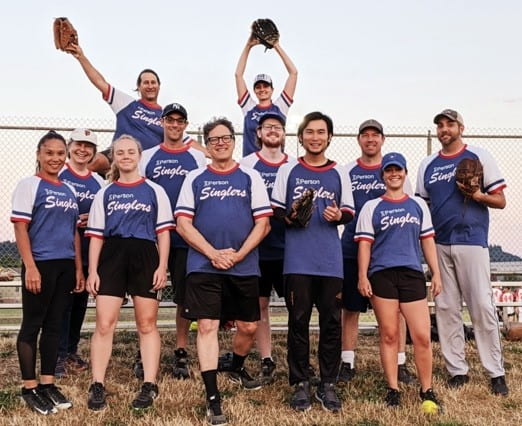
Softball at South Eugene field

Hi Yoshi! You graduated in Summer 2020 during a very strange year! And started teaching in the middle of a very strange year! Can you tell us about your first teaching job after graduation?

Hello 🙂 Long time no see.

It was indeed a strange year to finish school and start working! Fortunately, I got a teaching job at a public middle school in Eugene and at university in Seattle. Since I wanted to apply what I have studied during LTS program (SOOOOOOO many things), I took both jobs. However, I realized that one job was in Eugene and the other in Seattle. As you can imagine, it was very tough because I had to fly to Seattle every Tuesday and Thursday like every other CEO at Amazon, Google …


What was it like to teach in these strange conditions? What were some of the advantages and challenges? How was it similar or different from teaching in-person and remotely at the university?

It was definitely a tough year for me (I guess for everyone?). At the same time, I believe we can grow the most in the face of hardship. Here, I want to share some of my experiences and my thoughts.

Advantages:

・I first need to confess that I actually did not fly to Seattle every week. Because it was online 🙂 I find this (online learning) a huge advantage for language teaching. I believe it is very important  for us to provide opportunities to use the target language. However, in many places / schools, there are few people who can teach / speak the language. With online, it is not the case. In addition to the fact that I was able to teach students in Seattle, I summoned Japanese speakers living in Japan to my classes (real language speaking opportunities outside the classroom) 🙂

・I was able to explore so many new things (especially online teaching)! If it had not been online teaching, I would not have tried using online resources this much since I was not a big fan of language learning apps and websites before the pandemic. Don’t get me wrong. I am very young (Digital native), but I just didn’t enjoy them when I was a student (I am still (and always) a little younger than Emma Watson!!). Anyway, during this journey, I played around with using Google document assignments, Flipgrid, interactive videos, and so on!

・Since it was online, I was more available to my students. For example, some of my university students have a Japanese study group. They hold this on zoom at night. I could drop in to the group for like 10 minutes and answer their questions. Since it is very easy to go to their meeting (You just open your laptop), I managed to help more.

・We became eco-friendly. I did not print any handouts this year (although I personally prefer studying with paper)!

Oregon coast to avoid really hot day


Disadvantages:

・The hardest thing was that I could not see and hear my students (at middle school). It was very tough because you don’t know whether they understood you or not. In addition, students can’t use their non-verbal communication (since their camera is off), which is important in language classes. I definitely believe we need to create a students’ mandatory camera policy.

・It was difficult to establish a good rapport with my students online. I can’t explain exactly why, but it was different from in-person classes.

・It was very difficult for students to focus on online classes (on their iPad / computer screens). I do not blame my students since we have so many distractions at home. I myself was busy all day scrolling through all 679 channels on my cable. Moreover, the class always had this man named “Yoshi” who looked a lot like Brad Pitt, so you know… which was a huge distraction for us too. Anyway, thus, I tried to have many small activities where students need to do something during the class.

・It seems it is hard for students to ask and answer questions on zoom. Since the covid situation got better, I was able to teach them at school in-person. I found out that many students raised their hands whenever I asked them questions.


Do you have any particular memories or stories to share about your experience?

Crater Lake

Yes!! I do have many wonderful memories during this year. 🙂 Since I have a softball practice in 10 minutes, I will share one project here. (If you want to know more about my experiences, please join the softball team. You can meet LTS professors, other LTS graduates, and great people too.)

As I mentioned above, I took advantage of online learning and connecting my middle school students with Japanese students living in Japan. It was a more than one month project. Students introduced their food culture and towns to each other. Since Japan and America have 16-hour time difference, we used Flipgrid (which is basically a video version of Instagram). In order to benefit both students in Japan and America, our project was conducted in 50 % English and 50 % Japanese. From the survey I collected at the end of this project, I found out that our international exchange activity helped many students get motivated during this difficult time.


And your adventures are not over! Tell us about your plans for the next year. You will be the global Japanese teacher indeed.

Yes, I decided to take a teaching job at university in Saint Petersburg in Russia. Please look forward to my next post from Russia. 🙂 My next post might be wearing a jacket.

じゃあまた(See you soon)!


Yoshi with his roommate

Alumni Spotlight – Ryan

Hi, I’m Ryan, and I graduated with the LTS cohort of 2013. Since then I’ve been teaching at Tokyo International University in charming Kawagoe, Japan, about an hour northwest of Tokyo by train. Positions for full-time English teachers are usually limited to a few years in Japan, so last year it was time to begin the hunt for another job.

Hello Ryan! Thanks for catching up with us on the LTS blog! The last time we heard from you, you described your work at Tokyo International University. Now you are about to start a new adventure. What are you doing next?

I was really excited (and extremely relieved) to land a spot at Kanda University of International Studies, a school that focuses exclusively on foreign language studies. It’s in Chiba, about an hour east of Tokyo. With the arrival of COVID-19, everything has changed. Like schools around the world, Kanda has made all courses online for the first semester, my entire orientation to the university has been on Zoom, and collaboration with colleagues from afar. It looks like this will be the new norm for the foreseeable future! Let’s hope we can make more of a human connection in the fall.

What is interesting or exciting to you about this new position?

I’m particularly interested in getting involved in their Self-Access Learning Center, where students can be trained to direct their own learning (related to my final project in LTS!).  I’ll be starting at the end of March, and I’m really looking forward to what’s in store.

You’ve said you had a good experience at TIU as your first teaching position after LTS. Looking back on your 6 years at TIU, what do you think is key to a positive and growth-oriented workplace? What should our LTS graduates be looking for when they interview for positions?

I really lucked out with TIU. It was the first opportunity for employment after LTS (Thanks for the heads up, Keli!) and was a wonderful experience. Both the administration and my colleagues were very supportive; at no time did I feel I couldn’t turn to someone for help or information. There were also plenty of opportunities for professional development and learning. I hope new LTS graduates can sense such an environment when they begin looking for jobs.

It’s been 6 years since you graduated. What do you hope to learn, experience, or discover in the next 6 years?

Looking forward, I’ll continue to develop professionally and enjoy my life here. I intend to get more involved in research at KUIS’ center for autonomous learning, a subject I’m very interested in. I also want learn about my new community: find new haunts, meet locals, and participate in neighborhood events. And, of course, continue my life-long study of Japanese!

A last question – how important do you think it is to stay in touch with colleagues from the past as you move through different phases in your life? 

Life after LTS has been a real adventure, just like the program was. It’s always fun to hear what old classmates have been up to. Many of us have been lucky enough to see each other at various celebrations in our lives. Staying connected is sometimes a way to learn about professional opportunities, but it’s always a way to remember and enjoy good times.

In memoriam – LTS alumnus Lee Huddleston

Lee Huddleston started LTS in June 2017 and graduated in August 2018. He tragically passed away in February 2020 in the Confederated State of Micronesia, where he had returned to teach English after earning his MA degree. According to sources listed at the end of this post, he suffered a heart attack after saving a child who was drowning.

Lee was much loved by his peers and teachers in our program. He spread good cheer and encouragement to everyone he met and worked with. His MA project, “Local Legend Literature as Content in English Language Classrooms: A Micronesian High School Context”, was a reflection of his deep care for the community he had worked with for 2 previous years in the Peace Corps; it was a sincere effort to supplement the English curricula for his students with indigenous and locally meaningful materials.

Below are memories and testimonies written by some of those who knew him while he was in LTS. If you would like to add your voice to the ones below, please write to Keli Yerian at yerian@uoregon.edu.

We will deeply miss you, Lee.

This video clip of Lee and Alina trying out the TPR teaching method in Spanish shows why he was such a special cohort member and teacher.

“Lee was a bright light everywhere he went. I will never forget the countless hours we spent together studying, hiking, sharing stories and ideas on teaching, and simply enjoying life. He genuinely cared about everyone that he met, even if only for a brief moment. I will miss you dearly- colleague, friend, adventurer, and hero.” — Alexis Busso

“I had the pleasure to stand next to Lee at commencement, and it was such a joyful experience. On that day, Lee was wearing his shapely ironed gown without a cap. When we were tossing our graduation caps, Lee was acting how to toss the air above his head. We laughed so hard. He was a guy who has magic to turning everything around him funny and amazing. Rest In Peace, Lee. It was so wonderful meeting you”.  — Yuxin Cheng

“The way that Lee gave his life for another has proven everything I came to believe about his character in the time I knew him”. — Sean Brennan

“I feel so glad to have a chance to work with him even just for a term. I feel so glad to meet him so I learned how to be a gentle person. Thank you Lee. You maybe didn’t notice, but you really brought a lot to this world”. — Elaine Sun

“Lee has been and always is a cheerful and warm-hearted friend, full of wonder, gentle and caring soul and humble and passionate human being. I am saddened by this loss and grateful for having crossed path with a loving and thoughtful Lee. He has lived his life to the fullest and with no regrets.” — Ngan Vu

“It was such a pleasure to have Lee as a student, he was always positive and engaged and really cared about his work and the way it would impact students. He was a clear mentor to his peers and always someone people looked up to, whether they needed help on something or were just having a bad day. I am grateful our paths crossed and will always remember Lee fondly”. — Julie Sykes

“Lee, you devoted your life to teaching. Your passion and love will always be my guiding star. Farewell good friend, and good teacher.” — Reagan Yu

“Dear Lee, Just the other day I was thinking to text you and ask you about your plan to visit Pakistan, and then the next day you shocked me with the news that you are no longer on this earth. Since then, my eyes are filled with tears, and I am living  in a flashback. I am rereading our chat again and again. Have I ever told you how amazing and selfless a human you were? You know you are the luckiest man because every single person you met in your life is mourning for you. I feel so honored to spend part of my life with you, learning from you, and getting to know you, and I am proud to call you my friend, Lee. I’ll miss you so much. (Let’s finish this with our fist bump)” — Amna Hassan

“Lee was always a very friendly and positive person to be around. He was a great person and a friend to all in the LTS and SLAT program”. — Paul Badger Nishide

“Although Lee and I were never close friends, it never mattered how deep the relationship was, he always took the time to listen, and his words were always chosen carefully, and delivered with thoughtfulness and kindness. I came to Lee for advice before taking an adventurous leap into the unknown, knowing he himself had already done so before. He gave me the reassurance and perspective I needed to take that step, and I couldn’t be more grateful for it. In his own small way, he made a large impact on me, and I know he did the same for so many others. Truly a
shining example of a human being — the world will be far less rich without him.” — Dustin Robson

“My heart aches to hear this sad news.  I remember Lee passionately talked about his peace corps experience and life in Micronesia at the LTS party where 2017-2018 cohort and faculty members got together on the first weekend of the summer 2017. His kind and thoughtful gestures (and funny jokes) always lightened up our mood and busy days in grad school. Lee had a gentle, beautiful spirit. My thoughts and prayers go out to his family, friends, and everyone who loved him.”   — Yumiko Omata

“Lee, you were sometimes a goofball in class, but always in a way that kept us laughing. You were willing and ready to participate in any LTS activities, such as the optional microteaching workshops, where you always shared plenty of energy for teaching. You were sincere and caring, and people followed your lead. I easily remember the first day I met you when you came to ask about the program. I’m glad you decided to join us. Thank you for what you have shared with us all while you were with us”. — Keli Yerian
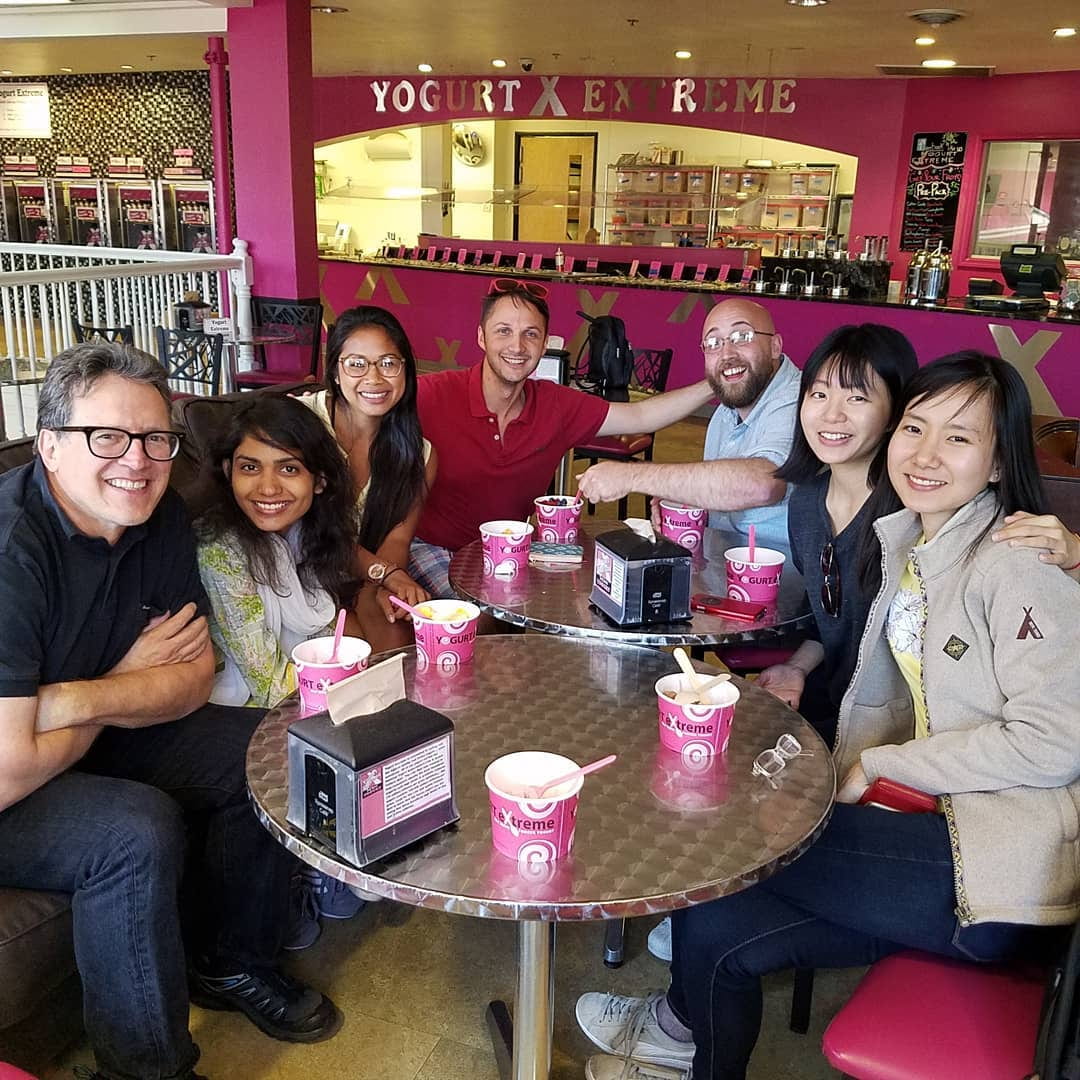
“It was my pleasure to meet you in LTS program. You were always one of the classmates who showed your warm heart to people around you. Although you left us early, we will remember your sense of humor and kindness forever”. — Alina Chen

“Lee was a wonderful, kind presence at all times, and he made the cohort feel more like a family than anything else. His genuine desire to help everyone (but especially his students) is an inspiration that I’ll carry with me for the rest of my life”. — Logan Matz

“Some of my favorite memories of Lee include: spending weekends at coffee shops during grad school, watching reality cooking shows in Kazakhstan to unwind after a long days work, going on epic hikes, watching his favorite football team- the Philadelphia Eagles- win the Super Bowl, and just so many times laughing together about all sorts of stuff.  Lee you were truly an exceptional person and friend. You put your heart into everything, especially when it came to helping others. When we would design lessons together, you would spend as long as it took to create activities the students would enjoy.. You were a rock of support for everyone during our time together in grad school and Kazakhstan. You had a delightful sense of humor and wit about you. You loved exploring new places and new cultural experiences. You constantly inspired me to be a better teacher and person. There are so many words to say, but for now Lee, your legacy will live on forever in all the lives you beautifully touched, including mine. Thank you for everything, dear friend.Here are some words inspired by you.
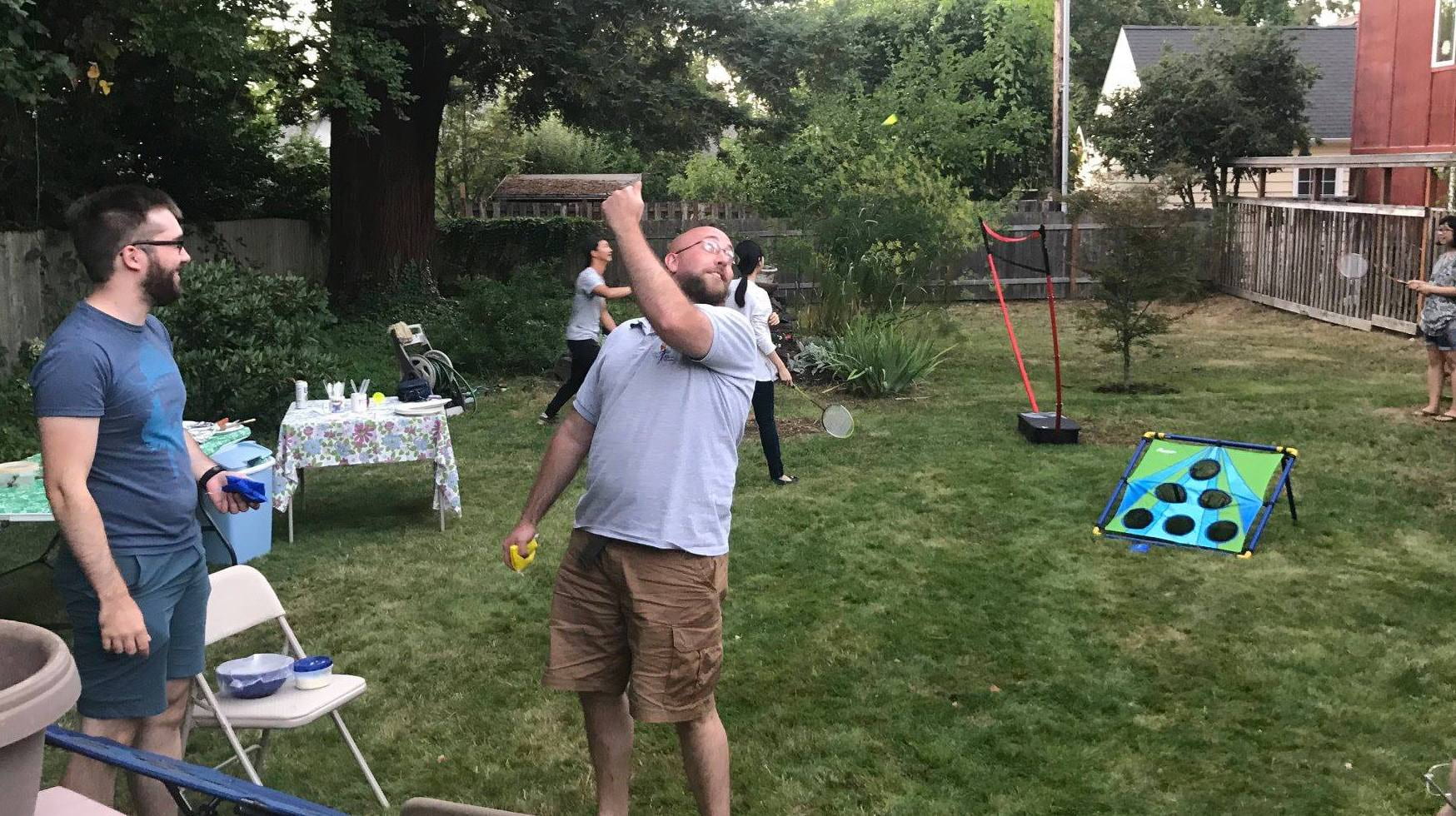
 

A teacher is a mentor
A teacher is an educator
A teacher is a guide

A teacher is an artist
A teacher is a performer
A teacher is a designer

A teacher loves adventure
A teacher loves learning
A teacher loves creating

A teacher helps others intellectually
A teacher helps others socially
A teacher helps others emotionally

A teacher cares deeply about their students
A teacher cares deeply about schools
A teacher cares deeply about the world

A teacher is a hero.

Lee you were all these things and more”

— Zach Patrick-Riley


News link:

https://www.registerguard.com/news/20200227/former-eugene-man-30-died-saving-girl-in-indonesia

Here are several past LTS blog posts including Leehttps://blogs.uoregon.edu/linglts?s=huddleston