Throughout “Nature”, Emerson’s ministry background is evident, but it is especially clear in the “Introduction”. Like a minister, enlivened by his faith, he asks countless rhetorical questions of the reader, like a preacher to his congregation. “Why should we not have a poetry and philosophy of insight and not of tradition, and a religion by revelation to us, and not a history of theirs?” This is his initial call for spirituality based on the direct observation of nature, instead of through texts or prophets. Again, playing the good minister, he clarifies his terminology, stating that “Nature” is that which is external to ourselves, “essences unchanged by man; space, the air, the river, the leaf.”
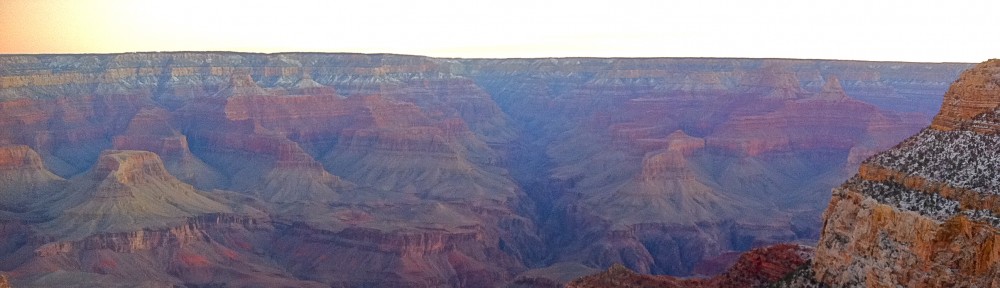
A reoccurring pattern throughout the text is the notion that spirituality and connecting to the divine is achieved by a communion with the sublime. In essence, forgive the rhyme, the sublime is linked to the divine. In “Chapter 1. Nature”, Emerson jumps immediately into the sublime.
“…if a man would be alone let him look at the stars. The rays that come from those heavenly worlds, will separate between him and what he touches. One might think the atmosphere was made transparent with this design, to give a man, in the heavenly bodies, the perceptual presence of the sublime.”
Continue reading →