We now have an archive of all of the #vcs11 tweets from this weekend. Thanks so much to all who participated in the conversation! You can access the archive here.
Author: dblandy@uoregon.edu
Mississippi Avenue

One of the neighborhoods that some participants in the symposium visited on Saturday afternoon was Mississippi. Milo Petruziello recently completed a research project that investigated the gentrification of this neighborhood. Titled “Gentrification and the arts on Mississippi Ave.: Creating two neighborhoods and trying to make them whole,” this research explores gentrification as a “complex process of urban development that often leads to the creation of vibrant cultural districts. While this often has a positive effect on the established arts community and on the neighborhoods economic and physical infrastructure, it also causes the displacement of the areas original residents. This research will attempt to explain how the arts fit into this process and make recommendations on how the arts can and should play a role in community revitalization without gentrification.” This resource has also been added to the Media page.
New Resources
The “media” page of this site has been updated with additional resources associated with the symposium.
Inflections is a journal for “research creation.”
The Sustainable Cities Initiative in Salem, OR
Petruzillo, M. Gentrification and the arts on Mississippi Ave.: Creating two neighborhoods and trying to make them whole
A Field Guide to Portland’s Alberta Arts District
Mapping Cultural Resources in Northeast Salem: Sustainable Cities Initiative
If it rains…

| “No umbrella, getting soaked, I’ll just use the rain as my raincoat.” -Daito Kokushi http://bit.ly/eKg833 Green Koans Case #31 |
More on Friday’s Dinner
In addition to what STOCK has planned for us at our dinner on Friday evening, there will be three short presentations on some examples of Portland’s material/visual culture.
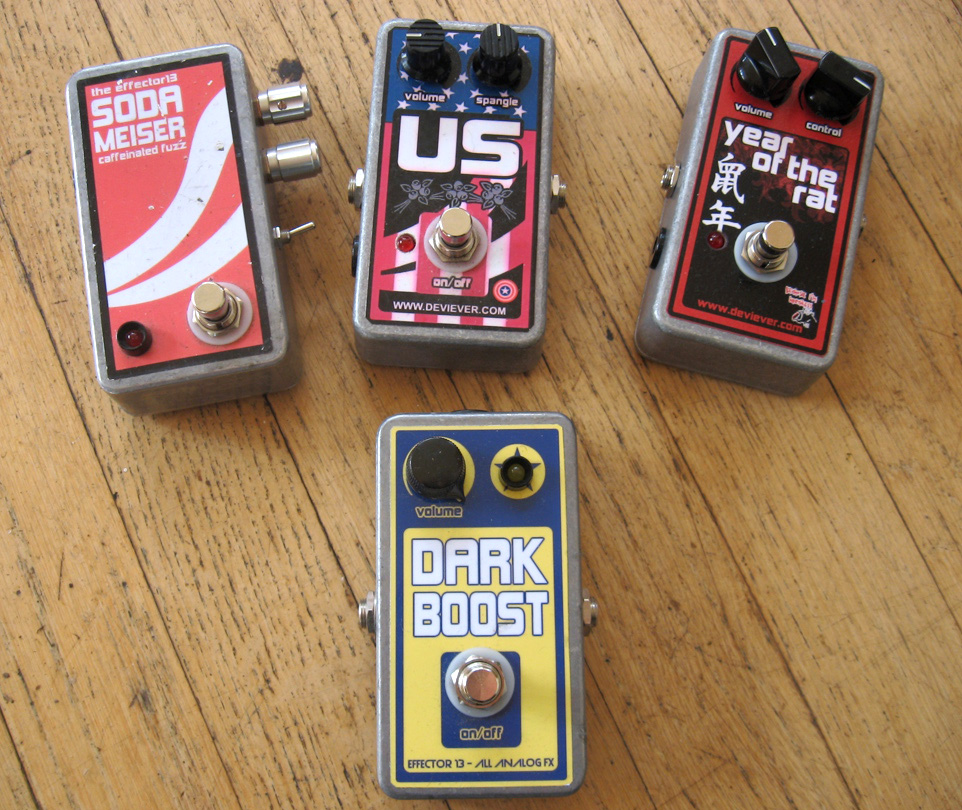 John Fenn, an assistant professor in the UO Arts and Administration Program will talk about how the designing and building of unique or custom guitar effects pedals in small batches has emerged as a vibrant cottage industry over the past decade, with quite a few builders calling Portland home. He will describe how small scale or boutique business practices intersect with aesthetics, creativity, community, and various concepts of sustainability.
 Sarah Mirk will talk about the 10 comics on Portland’s history she is writing for the Dill Pickle Club. The first one in the series on the Lone Fir Cemetery is also illustrated by her. Mirk is a reporter for the Portland Mercury.
 Ira Ryan of Ryan Cycles is a bike builder who has built over a hundred bicycles since Ryan Cycles opened in 2005. Ryan describes his cycles as the “result of a love affair with the bicycle as a tool for discovery, a vehicle of effiecency and one of the most elegant machines … made.”

Expose Yourself to Art
 J. E. “Bud” Clark was Portland’s populist left leaning Mayor from 1985 to 1992. As mayor he developed a plan for Portland’s homeless population and supported mass transit including the light rail system.However he may be best known for the poster Expose Yourself to Art depicting him in a raincoat “exposing” himself to Kvinneakt, a statue in downtown Portland
 I had forgotten about this image until Kit Grauer sent me an email and this image. She wrote, “Just found this image of Graeme and I exposing ourselves to art as a take off on the Portland mayor’s piece done twenty five years ago. We have been trying to learn from Portland and Visual Culture for a long time!”

The UO White Stag Block

The UO White Stag Block is Leed Gold Certified. Learn how that will shape your experience during the 2011 Visual Culture Symposium: LEED: The White Stag Block.
2011 Visual Culture Symposium Participant List
UO Center for Community Arts and Cultural Policy

One of the sponsors for the upcoming 2011 Visual Culture Symposium is the UO Center for Community Arts and Cultural Policy (CCACP)
The University of Oregon Center for Community Arts and Cultural Policy (CCACP) sustains and strengthens arts, culture and heritage in the American West through research, policy, education, and community engagement.
In its main objective to foster civic engagement and cultural resource development in the American West, CCACP will, through research and education, support policymakers and cultural sector professionals to:
Cultivate public participation in the arts
Foster creative activities
Preserve cultural heritage
Develop sustainable community cultural development
Institute faculty, students, and affiliate members conduct and disseminate policy-relevant research, and create and provide professional development opportunities to address the needs of current and future leaders in a broadly defined cultural sector.

Embassy Suites / White Stag: Here to There

Following are the directions from the Portland Embassy Suites Hotel to White Stag.
Embassy Suites – 319 SW Pine Street
Head east on SW Pine toward SW 3rd Ave (79′)
Turn left at SW 3rd Ave (.2 mi)
Turn right on NW Couch St (pronounced Cootch)
White Stag on the right (0.1 mi)
