Final Entry

Throughout this process I learned that science and art can be fascinating subjects. Of course I want my viewers and myself to take away the effects and impacts of hurricanes and the risk global climate change has on effecting natural disasters, but I think I’ve gained even more from this project and class. This project allowed me to learn about something that I had never considered learning about before. I got to conduct and dive into my own research because it was my own interest driving me to learn more; I wasn’t reading and searching for more sources because a class or professor was telling me to do so. I was (and am) learning for the sake of learning. After all, isn’t that what we as students are supposed to be doing at an institution of higher learning? We are supposed to be fostering that curiosity and hunger for knowledge and strive to constantly learn more. We can then apply that knowledge to other areas of interest in order to solve problems and create change. Ultimately, that is my goal for this project, for myself and for my viewers. I want them to come to my site thinking that hurricanes are the most random, irrelevant, and unrelated topic, but leaving my blog glad that they know this seemingly random and unrelated information now. It is because of that reason that I brought up the many different social and political issues in addition to the scientific and artistic information. I also left a bigger question about the responsibility we, as humans have to help our fellow humans. Although we cannot always predict or prevent hurricanes from happening, we can help after the fact and we can better prepare for hurricanes or any natural disaster that might happen later.

My project includes information about their formation, decay, effects on man-made development and ecosystems, the effects of global climate change on the future of hurricanes, and the sociological effects of hurricanes and the rebuilding that follows. There is a lot of information on hurricanes. On my blog I try to present the information in a way that is simplified and comprehensive for any viewer with any level of knowledge about hurricanes. I include pictures, diagrams, key terms, and videos to make the information more tangible and interactive. I also have external resources that viewers can use to learn more about hurricanes on their own. Given the large quantity of information and the different social and political issues associated with hurricanes, I didn’t focus on one in particular but rather touched on a few and left some final questions regarding these issues for viewers to think and learn more about. I touch on the issue of global climate change, the issue of clean up and rebuilding after hurricanes, the issue of where man-made cities are located and how they are built to withstand hurricanes, and the issue regarding the destruction of ecosystems.

However, I think that because there is so much information and only some of it could be touched on is a weakness of my project. I think some of the social and political issues could definitely be expanded on as well. But I think that this only offers opportunity to later researchers or even myself to add to my blog and add to the basic information that is presented. I also think other, more philosophical questions could even be raised regarding hurricanes and all natural phenomenon and our place amongst it all. There is definitely room for more research and I think that turns this negative, or weakness, into a positive.


Journal #13 (Make Up): Learning from Dr. Dawson

I loved Dr. Dawson’s visit and hearing about her experience with human anatomy and cadavers. My initial feelings about the Bodyworlds exhibit changed after her visit and our class discussion. Initially, I was adamantly against the display of the bodies carrying out everyday activities, like playing chess or kicking a soccer ball. However, after discussing with the class and Dr. Dawson, I realized that that kind of display could make anatomy and learning about the body more appealing to someone who otherwise wouldn’t go to such an exhibit. Dr. Dawson challenged us and questioned whether or not everyone should be allowed to learn about and see all aspects of human anatomy and bodily functions. The class agreed that everyone, despite their economic status or education level, should have the opportunity to learn about their body and its functions. Bodyworlds is an exhibit that engages the audience to at least look at human anatomy and its functions through its displays. I have to admit, going to see a row of bodies lying flat on a display would not be the most exciting exhibit to go to. Dr. Dawson’s engagement and enthusiasm about what she does is inspiring. It was her enthusiasm that inspired me to hold the human heart that she brought to class– something I never thought I’d do!

not my image. use URL to find original image source.

Engaging a modern audience in an antiquated practice and classical art style?


Her visit helped me realize that on a larger level, we as students and as citizens in a country that offers so many opportunities to learn and educate ourselves, have a right to always gain knowledge. If we have the opportunity to learn or try something new, why shouldn’t we? Nobody can be harmed by having too much knowledge. Dr. Dawson inspired in me a desire to learn even beyond whatever I’m learning in the classroom. Yes, grades are important. However, we are at an institution of higher learning, a place where we are encouraged to constantly learn more. As students at the University of Oregon, we have access to so much knowledge. We can take classes taught by published and renowned experts. We have laboratories that contain the most state-of-the-art technology. We have studies being conducted that are revealing the most groundbreaking information. Having the opportunity to study at a university is an opportunity so many people around the world are denied. Even if I think my classes aren’t the most interesting at times, there is still something I can learn everyday. At the end of the day, whether its a controversial exhibit like Bodyworlds or a seemingly boring lecture, isn’t it more important that we are learning and discovering something we otherwise wouldn’t have, had we not visited that exhibit or attended that lecture? If just one piece of information from that exhibit or lecture sparks an interest in a person, hasn’t the end goal of education in both those environments been met?

Report 3: The Annotated Bibliography

Works Cited

BBC Worldwide. How a Hurricane Is Born- the Science of Superstorms- BBC. youtube.com. N.p., 31 July 2009. Web. 11 Feb. 2015. <https://www.youtube.com/watch?v=4f45jA5UxB0>. This video also gave me a look at the formation and birth of a hurricane. It is how I first discovered that small atmospheric disturbances (like a girl kicking up sand) could cause a massive hurricane.

Beleasen, Ariel R., and Solomon W. Polacheck. “How Hurricanes Affect Wages and Employment in Local Labor Markets.” American Economic Review 98.2 (2008): n. pag. JSTOR. Web. 11 Feb. 2015. This journal passage also examines the detrimental affect of hurricanes, this time, the economic affects of hurricane damage. I think it is an interesting and important topic to know about. Like hurricanes are started from a series of events, they leave in their wake a series of damages and events as well.

Bose, Ashish. “Are Natural Disasters Manmade?” Economic and Political Weekly 35.43/44 (2000): 3793-94. JSTOR. Web. 11 Feb. 2015. This source has an obvious bias, but it addresses the basics of a potential social issue regarding how “natural” natural disasters are. I think it’s an interesting topic and if I decide to make this the focus of my social issue, this will be a good starting source.

Calder Foundation, ed. “Calder Foundation.” Calder.org. Calder Foundation, n.d. Web. 11 Feb. 2015. I wasn’t going to do more with Alexander Calder, but when I got the feedback on my Creative Display 1 I quickly decided to search Alexander Calder and at least have a source for some of his work. This nice thing about this site is that it includes a biography and also a very in-depth look at all of his work created over the course of his lifetime. I’m still not sure how I feel about creating a hanging mobile (or the online equivalent) for this project, but at least his work can be presented to the class and whoever else views my blog and perhaps I can get feedback on this idea.

Copley, Rich. “Morlan Gallery Exhibit ‘Waves and Currents’ Upends a Familiar Medium.” Kentucky.com. N.p., 5 Sept. 2013. Web. 11 Feb. 2015. <http://www.kentucky.com/2013/09/05/2805065_transy-exhibit-waves-and-currents.html?rh=1>. Although this source doesn’t focus on Friedman’s piece “Hovering Hurricane”, it still talks about her style and medium of art and what is unique about her style and medium.

Evans, Andrea Sherrill. “Interviews: Georgie Friedman.” Temporary Land Bridge. WordPress.com, 8 Oct. 2013. Web. 11 Feb. 2015. <http://temporarylandbridge.com/2013/10/08/georgie-friedman-interview/>. This interview is important because Friedman tells the story behind the subject of her art. Friedman also discusses how and why she displays her art the way she does in this interview.

Friedman, Georgie, ed. Georgie Friedman. Georgie Friedman, n.d. Web. 11 Feb. 2015. <http://georgiefriedman.com/georgie_friedman.html>. This is my artist’s website so it’s the primary source for her actual work and biography. This is also a helpful site because it gives videos and pictures and links to articles Friedman is featured.

Geophysical Fluid Dynamics Laboratory. “Global Warming and Hurricanes.” Geophysical Fluid Dynamics Laboratory. Ed. Geophysical Fluid Dynamics Laboratory. N.p., 13 Nov. 2014. Web. 11 Feb. 2015. <http://www.gfdl.noaa.gov/global-warming-and-hurricanes>. This site discusses and predicts the overall impact of global (or “Anthropogenic”) climate change on hurricanes, their frequency, location, and characteristics, especially by the end of the 21st century. This article helps tie in my scientific subject with a larger, social issue.

Greening, Holly, Peter Doering, and Catherine Corbett. “Hurricane Impacts on Coastal Ecosystems.” Estuaries and Coasts 29.6 (2006): 877-79. JSTOR. Web. 10 Feb. 2015. This source also discusses hurricanes in general and their impact on ecosystems– which could be a scientific and/or social topic. I think this is a good source or at least good topic because it is important to remember the destruction that hurricanes can cause.

Karl, Thomas R., and Kevin E. Trenberth. “Modern Global Climate Change.” Science 302.5651 (2003): 1719-23. JSTOR. Web. 10 Feb. 2015. This is a very legitimate source found from a reliable database and a journal specific to science. This is where I found a lot of general information on global climate change that I can use for basic definitions and terminology about global climate change.

Ready Campaign, ed. Hurricanes | Ready.gov. Ready, 27 May 2014. Web. 11 Feb. 2015. <http://www.ready.gov/hurricanes>. This source gave me all my basic information about hurricanes, what they are, how they’re born, and how they decay. The fact that it is a .gov (government site) is promising and means that the information is likely reliable given that it is from a reliable source.

**Link to Annotated Bibliography with Indentations**

Journal #12: Dissecting the Truth About Bodily Portraits

I don’t think I’ve ever really thought or learned about bodily portraits and the topics discussed in the most recent reading assignment. The first reading I looked over was Bodyworlds and Human Remains by Michael Y. Barilan. My initial reaction was one of shock and disgust at the idea of an exhibit like Bodyworlds. What would have been an otherwise educational exhibit, seemed to me, from the author’s description, more of a stunt done for shock-value. The poses the cadavers are said to be arranged in horrified me! However, throughout the rest of the reading, Barilan brings up probing ideas and questions that I have never even thought about, such as: do we have an obligation to the living or the dead when it comes to a person’s remains? What is the best way  to deal with unclaimed remains? Why do we have the cultural process and response that we do when it comes to burial and care after life? One particularly interesting point that Barilan makes is that all cultures and peoples have their ways of honoring the dead and their remains; it is human nature to respect and not defile a corpse. Somewhere, innately in us (unless there are psychological problems perhaps), we all know that there is a certain cultural respect we uphold for another human’s remains. Once I completed this reading, my final thoughts were similar to my initial ones: I find Bodyworlds morbid and an exhibit based more on shocking its visitors rather than educating them. I was disturbed by the concept Dr. von Hagans  presented about two cadavers having sex in his newer exhibits. There are other, less controversial ways to display human anatomy and educate the public in my opinion. Dr. von Hagans clearly enjoys creating controversy in order to generate publicity for his exhibit, probably because he does not think it would gain popularity otherwise. Modern technology is so developed that there are so many  ways to explore the body and study anatomy in a potentially less offensive manner.

human anatomy

This leads me to my reflection on the next, much longer reading by Marita Sturken and Lisa Cartwright, Practices of Looking: An Intro to Visual Culture, brought up Bodyworlds amongst a myriad of other examples of science (specifically observation of the human body) and its influence on and from art and pop culture. I found this reading interesting although it was dense mostly with examples of countless ways the worlds of art and science have interacted. The reading overall addresses the question of whether or not it is actual possible to separate science from popular culture. From X-Rays to Anatomy  Theaters to photography to ultrasounds, there has always been a general desire to see the unseen and visually understand the smallest workings of the world. Scientific images have been depicted in artistic formats and used to start conversation about political topics. Scientific images are used in advertisements and other areas of media and popular culture. The conclusion this reading left me with was that it is really almost impossible to separate science from art when you really think about all the ways these two worlds intersect.

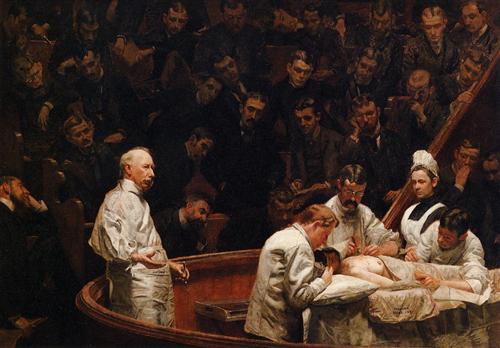
The third and final reading was The Agnew Clinic, the Gross Clinic, the Crucifixion, and Swimming: Dissecting Eakins’ Paintings by Amy B. Werbel. I found it interesting that Eakins’ paintings could receive such mixed responses based on who his viewer was. I think it was interesting that Werbel brings up how during that time period it was acceptable to show the naked body as it was considered “fine art” but once the body is cut open, it is no longer decent.

The Agnew Clinic by Thomas Eakins wikiart.org

Journal #11: The Power of Presenting and Peers

I was so excited I got to share what I’m doing for my project and hearing about what everyone else is doing for theirs during our discussion in Thursday’s class! Small discussions really make a big difference, in my opinion. I was impressed with everyone else’s topic, research, and their plans for their creative displays. I like how we’re all doing something different, from molecular gastronomy to fractals to video games to nutrition– it’s crazy how broad the categories of art and science expand; there truly is some area of interest for everybody.

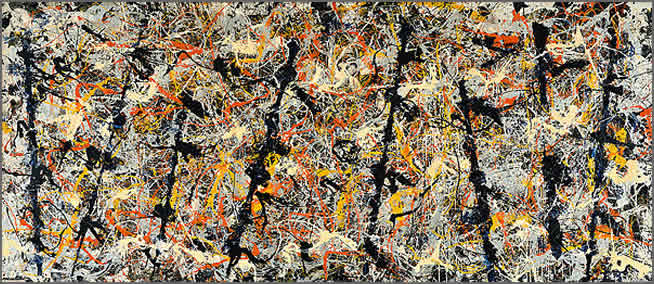
The forms I received from my classmates gave me just the feedback I was looking for, and some feedback that I wasn’t looking for, but I think will allow me to take my project to the next level. My project is clearly defined as “the science of hurricanes” or something along those lines by my peers’ single-sentence descriptions. Seeing those responses was perfect; that’s exactly what I want my topic to be and I’m glad it’s clear to my audience. The points of my presentation that my peers found interesting were usually my enthusiasm towards my research, and the small causes that create the large effect of a hurricane. Those points are great! I’m glad my enthusiasm showed because I want my audience to understand and know that I am passionate about my topic in the same way that any passionate researcher (like Richard Taylor or Georgie Freedman) is about their work. If someone isn’t initially interested in hurricanes and the importance of my research on them, I want to sell that person. After going over my entire final project and the steps it took to get there, I want that disinterested person to say “Wow! That’s actually pretty interesting!” I think that’s the response any true artist or scientist wants when someone looks over their work.

Which leads me to the common question my peers had at the end of my presentation which was, “What’s [your final project and] your creative display going to look like?” That should be the biggest question my peers have because that’s my biggest question too! I will continue to think about and work on developing my creative display. A few people asked how I was going to connect my research  and project to the greater “So what?” issue, which is a perfectly reasonable question. Granted,  that is a question that I decided to forgo for a period while I researched and narrowed down my topic of interest to hurricanes. As I continue to work on my project though that will certainly be a question I will work on addressing, as the “So What?” component is a vital part of the final project.

My inspiration and nerdy, scientific obsession at the moment

Creative Component 1

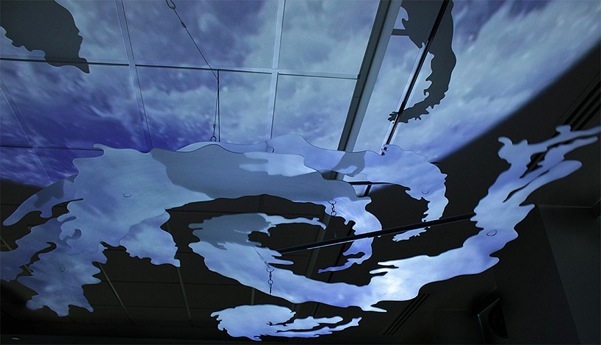
I really am not sure what to do for my creative component. I am fascinated by my artist, Georgie Friedman, and my topic, hurricanes. However, I really have no idea what to do still for my creative component. Looking at Friedman’s piece “Hovering Hurricane: Sandy 2012” I immediately thought of similarly creating a mobile, either like hers with inspiration from Alexander Calder.

Hovering Hurricane (Sandy 2012) by Georgie Friedman

Mobile by Alexander Calder

However, looking over the instructions for the assignment, I realized that recreating Friedman’s work was not what I was supposed to do. I also knew that I wasn’t strongly or creatively compelled to build a mobile,  especially after reading the science behind my topic.

As much  as I had dreaded researching my topic, I found that it was the most fun I had had with a school related assignment in a while. I got to research a topic that I actually cared about and I was learning for the sake of learning rather than just looking for textual evidence for a paper or reading an assigned article. I took notes willingly just so I could remember everything there was to know. I thought I had learned everything I needed to know about hurricanes when I was in elementary school (something to do with warm water…spinning air and clouds…huge storms… the eye is the calmest part). But through my reading and researching, I was learning the nitty gritty details about how hurricanes form, develop, and decay. What I was fascinated about the most is how hurricanes really start as the result of all these small coincidences that occur within the atmosphere and the ocean. The water temperature has to be just warm enough. Sometimes the process of evaporation and churning of water to replace the water that has just evaporated can completely destroy the hurricane before it even begins. The hurricane has to be far enough away from the Earth’s equator otherwise certain wind forces won’t react as a result of the Earth’s rotation. If the wind velocity (direction or speed) changes even the smallest amount that can be enough to weaken or destroy a hurricane. And– the craziest concept of all to me– it only takes the slightest disturbance in the atmosphere to trigger a wind that will start a storm with 100+ mile per hour winds and enough power and rain to completely destroy a city. Those disturbances in the atmosphere are usually referred to as the African Easterly Wave. Technically, it is the hot air from the Sahara combining with the cold air from the Gulf of Guinea, but that wave could have been started by the slightest disturbance of air. How is it possible that one of the most destructive weather phenomenons can be the result of just a small stirring in the air?

http://www.hurricanescience.org/science/science/

My mind was blown, similarly to how Georgie Friedman’s was. As she says in one article, “Katrina shocked my senses. It didn’t affect me physically: I wasn’t there, I didn’t lose anything, my life wasn’t interrupted or ruined, but it still felt very close to home. I was so scared for all my friends and family who lived there and for the city in general” (Evans). She also realized that storms are a series of small natural occurrences and coincidences that you would never think would be capable of destroying cities and lives. Her artwork is done to create “experiential and contemplative spaces” (Evans).

http://temporarylandbridge.com/2013/10/08/georgie-friedman-interview/

I realized after my research that I couldn’t do a mobile. I want to do something that expresses the intricacies and moments that go into creating a storm and all the little cycles that build up to create the massive cloud images that are visible from outer space. I want my creative component to be detailed and profound– small but powerful. However, I literally have no idea how or what to do. I’ve contemplated using string, fragments of glass or plastic, or cotton balls and tissue paper. I’ve thought about using water itself as a medium in some kind of container or set up. I’ve considered watercolors to paint a hurricane or creating a moving animated image that demonstrates the birth of a hurricane (like an interactive web feature).  I hope this doesn’t count against me, because I really am thinking and I’m hoping that my classmates might have ideas for me too. The link that I have attached at the end of this post is my own illustration of the “recipe” to create a hurricane. When I was reading about how a hurricane is born, it started to sound to me kind of like something you would find in a cookbook the way it listed out the proper climate and conditions needed to create a this massive storm. It may not be much, but it is a creative start, a little humorous, and gives me some inspiration and preparation to whatever my creative side is trying to develop for this project.  AAD 199 Creative Comp

Journal #9: Response to Richard Taylor and the CAMCOR Labs

I really enjoyed hearing from Richard Taylor. His passion and dedication to Jackson Pollock was so admirable and the fact that he was able to take something he was interested and use science and art practices to learn more about that topic. Also, I was inspired by the fact that he not only studied physics in school but also went to art school. He inspired me that if and when I find something I’m passionate about I can research and learn about that regardless of what I major in. I also learned that learning is not confined to your years in school; learning is a lifelong process– and it doesn’t have to be boring. This inspiration can also be applied to my Term Project. I need to find something that I am passionate about and go beyond just trying  to recreate Georgie Friedman’s work. The entire laboratory was so fascinating. I never considered going into a science field, and I’m still not certain I will, but I would just to use those amazing facilities. The type of research that can be done is so amazing! I was definitely impressed with this visit and Taylor’s talk.

http://www.arthistoryarchive.com/

Journal #7: Response to Lisa Freinkel’s Visit

I wasn’t really sure what to expect with Lisa Freinkel’s visit to our class last week. I knew she was responsible for assigning the Common Reading of the  The Emotional Life of your Brain but I didn’t know she actually practiced and taught the concept of meditation. She was definitely an interesting woman although I have to admit I was skeptical about the exercises we practiced during class with her. I found myself wondering “Why the heck are we doing this?” when we were examining the raisins and it was hard to focus during the meditation. Perhaps I felt irritable because I was tired and wasn’t fully focused on examining a raisin. I do, however, appreciate her work and effort because I know that meditation and “being present” is an important and helpful practice. I am trying to get more into meditation because it’s so easy to get overwhelmed in college. There will be days where I feel like I never have a chance to catch my breath because I’m constantly going from one activity to another and all I can do is think ahead to when the next activity or class will be over. Meditation allows me to calm down and focus on just my breathing, like Lisa Freinkel had us do. Taking time to try to “be present” forces me to stop constantly thinking ahead and instead fully devote my energy on what is happening in that moment. When I get free time, I’d like to continue to read The Emotional Life of your Brain and hopefully attend the lecture by Michael Posner. I also think that being more organized and efficient with my time would help me not feel as overwhelmed everyday. 

Journal #8: Reaching the Limit When Art Becomes Science

I found this reading confusing and not very engaging. The article seems outdated, like it was written at the turn of the century just when the internet was blowing up. The author of the article, Beatriz Da Costa, brings up all this terminology and the work that goes into being an artist in this new era, but doesn’t really associate what biotechnology and lab work (mentioned in Da Costa Part 4) has to do with this new discovery of a thing called the internet and the creation of Wikipedia (mentioned in Da Costa Part 2). If my post so far is confusing and seems to jump from topic to topic, that’s exactly what it was like reading this article. Even with the five parts she uses to divide up her article, there is no common thread connecting the parts to each other. At least two or three unrelated topics are brought up in just one part alone– there is no common thread within each part! Da Costa brings up the “politically oriented artist”, technoscience, “specific intellectuals”, the rise of digital media and computer art, data categorization, accessible knowledge like Wikipedia, computer software development, scientific research and publication, and the popularity of hobbies and this particular practice of art as a hobby. I could not deduce what the purpose of this article was. Was it trying to describe the new millennial artist? Is it heralding all the things you can do with this handy dandy new tool called the World Wide Web? Is it warning artists about the potential dangers the internet will bring to their field?  Is it warning scientists about the potential dangers the internet will bring to their field? It does a little bit of all of these things and more. I do not see how the article relates to this course besides the fact that Da Costa mentions the words “art” and “science” at some point amongst the spew of terminology.