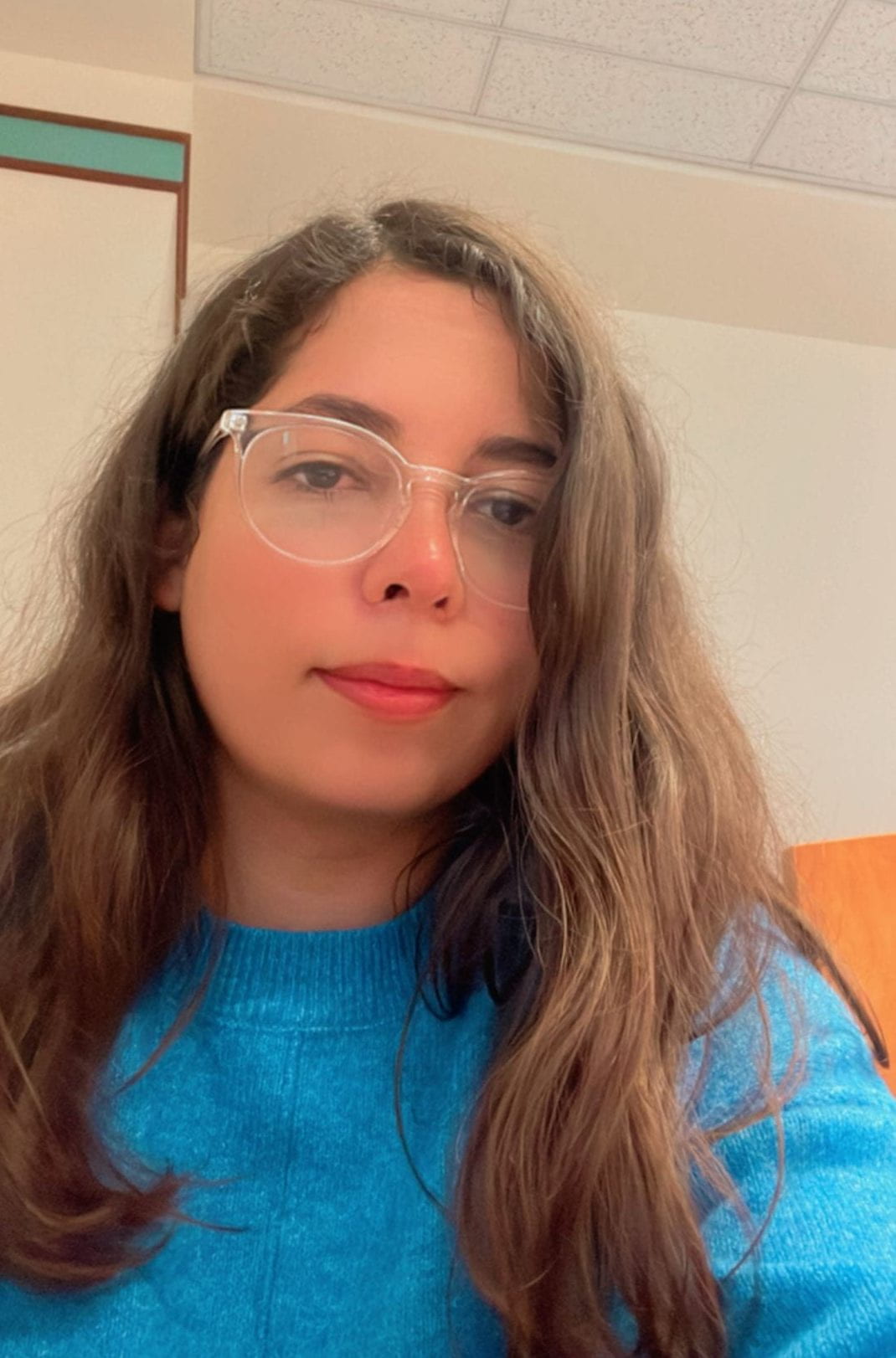
Student spotlight Madi Collins

Post prepared by Emma Synder, current LTS student

It’s Spring in Oregon and that means the sun and hail are taking turns ushering in a new term at UO! Congratulations to our students in LTS on another term finished. We’re ready for another great term to come!

This month’s student spotlight is Madi Collins. Welcome, Madi! Please, tell us a bit about yourself.

Madi working with a small group of English language students

I’m a student in the 15-month LTS program, and I’m set to graduate in August this year! I’ve lived most of my life in Oregon and found my love for language and language learning in high school when I started taking Japanese classes. Since then, I’ve been expanding my own language knowledge by continuing my study of Japanese while also adding some Ichishkíin and Korean to my linguistic repertoire. My main interests outside of working on growing my own understanding of languages and teaching lie in language revitalization, language change and pragmatics. 

That is quite an impressive repertoire of languages! Have you always been interested in language learning, then? What brought you to the LTS program? To UO?

Originally, I started at the UO in 2018 and graduated in 2022 with my BA in Linguistics. My experiences in the linguistics department at the UO eventually led me to the Center for Applied Second Language Studies (CASLS) where my passion for curriculum development and effective language pedagogy started to grow. This was also paired with the opportunity that I had to take Ichishkíin classes at the UO which helped me to gain more perspectives into language experiences in our society and further intensified my passion for language pedagogy and creating accessible learning spaces and materials for learners of all languages. The LTS program has provided me with opportunities to dig into these passions and uncover further questions and answers to my ideas and has helped me grow even more in my understanding of pedagogy and appropriate, effective approaches to material development. 

Madi standing in front of a class

Madi leading a session in the Talking with Ducks class

It sounds like you have had some incredible experiences at UO so far! Have you had many past experiences with language teaching? Do you have any especially fond memories?

I honestly don’t have much experience with language teaching, and my first experience happened in the fall term of this program in LT 537! This class was a conversations class that was collaboratively led by LTS and UO undergraduate students at the American English Institute (AEI). Collaborating with my peers on lesson plans and working with all 40 of the students really confirmed my pursuit of language teaching and reassured me that I wanted to continue teaching and engaging with students. We would create conversation topics and games for students to play with the language during class, and these class sessions were really fun for both me as an instructor and participant and the students. This class was overall a very positive experience for both myself and the AEI students, and I think of it very fondly as one of my first teaching experiences. 

LT 537 has certainly been a crowd favorite with our cohort, for sure! What have been some other highlights of the program for you?

I think that a highlight of my time within the program so far has been the supportive community within the LTS program. My peers continue to amaze and impress me with the work that we create inside and outside of class, and I really value all of the feedback that I’m able to get from them about my own projects and ideas! So I would say that working with my peers has definitely been a highlight in the program, and it’s so fun watching all of us grow!

The cohort community has certainly been wonderful. Now that you are moving toward the end of your time in the LTS program, what are your plans for the future? How do you hope to work in the teaching field?

Madi holding a plant and giving a thumbs up gesture

Madi shows a green thumb!

Based on my past experiences and experiences within the program, I hope to be able to create accessible language curriculum and materials for learners of any languages, but I am especially interested in creating accessible materials for LCTLs (less commonly taught languages). Online spaces are only continuing to grow in their potential for language learning, and I think that using this space to deliver language resources in culturally appropriate ways would greatly help to support learners of LCTLs and other disadvantaged languages. I hope to be able to use my skills in language teaching, linguistics, and pedagogical theory as a tool of support to communities looking to use online spaces for language learning. 

Outside of language learning, I enjoy caring for my houseplants! I started growing a ZZ plant, an umbrella tree and a rhaphidophora tetrasperma in 2020, and while some of these plants have gone to different homes or not made it through the winter, my tetrasperma is now as tall as me! I love taking some time each week to check in on, prune and water my plants, and I love having my plants in my living space! When I find a more permanent place to live I plan on building a greenhouse for even more plants and hopefully some vegetables!

 

Global Language Advocacy Day 2023: Language Rights Save Lives

– Post written by Emma Snyder, current LTS student

Winter term is coming to an end and warmer weather is right around the corner! We are sending thoughts and encouragements out to our students as they prepare for finals week. Make sure to rest well and take time to take care of yourself; we know you are all working hard. Today, I have been given the opportunity to spotlight a fantastic holiday, and speak a little bit on how it has impacted me personally, as well as how it can help LTS students in their paths as future educators.

Poster that says Language Rights Save Lives

Poster from https://www.coalitionforlanguagerights.org/

On February 22nd, we celebrated Global Language Advocacy Day, an event organized each year by the Global Coalition for Language Rights (GCLR). The GCLR has been dedicated to their mission of language rights for all people for many years, and are strong advocates for digitally-empowered linguistic rights through the intersection of digital, human, and linguistic rights. UO LTS shares GCLR’s passion for language empowerment, and has had a strong multilingual approach, working to best support multilingual and multicultural language learners towards their language learning goals. UO continues to work to support teachers of minoritized languages, such as indigenous languages in the US. The Yamada Language Center’s Self Study Program is allowing students to learn less commonly taught languages in small, tight-knit classrooms led by native speakers. And the Center for Applied Second Language Studies continues to develop resources and curricula that utilize digital resources in new and innovative ways.

Every year, Global Language Advocacy Day brings together advocates for language rights to spark conversations and raise awareness for language rights. Webinars are hosted, lectures are led, and programs are proposed. This year’s theme was “Language Rights Save Lives.” There were several key events hosted as part of it, including a screening of Breathing Through the Feet – a film created as a response to post-apartheid Johannesburg language ecology– and the 7000 Languages Workshop, which worked with the Indigenous Mapping Collective to show community members how they could create online language learning materials for endangered languages. GCLR also opened a GLAD#23 blog on their website, where people could post their own experiences, observations, and research around language rights, and how language could impact the lives of its speakers.

This concept, that language could be a matter of life and death, has been shown for centuries through the unequal treatment of speakers of non-dominant languages, and through the lack of resources for said speakers that has led to a noticeable disparity in public health. Recently, many groups that may have been unaware, or felt unaffected by such disparity were given an incredibly clear example with the onset of the COVID-19 pandemic. COVID-19 was largely advertised as being an absolutely grueling, but entirely survivable virus for the vast majority of Americans, save a small minority of various high-risk populations. This put many at ease. I was not fortunate to be among the many. As a severely immunocompromised person, COVID-19 was extremely dangerous, potentially life-threatening, and I spent the better part of two years absolutely terrified at the possibility of contracting it. The care, or lack thereof, in the way my friends and family interacted with COVID-19 permanently altered the relationships I had with them. 

Language rights are just as important in the classroom setting. COVID-19 was the first time that I found myself within a minoritized population, with resources that were not designed to account for or accommodate me, and public opinion and misinformation that was at times actively harmful. For many, this has been the case for much longer, both inside and outside the classroom. Many languages have been deemed inherently unequal by the cultures and the contexts they exist within, and students are fighting to maintain not only their identities as speakers of multiple languages, but their identities as people of multiple cultures. It is our job as language educators to support them, and be sensitive to the trials that they face inside and outside the classroom. Several myths regarding imagined harm caused by bilingual learning have been empirically proven false. However, to many outside linguistic and language teaching communities, these ideas are still alive and well, and heritage languages are often lost by the third generation. These trends toward language loss can be fought, and UO, GCLR, and others like them have done wonders to bring accessibility and resources to better support those fighting it. And as we look toward you, our future language educators, we cannot wait to watch you take up arms and do the same.

To learn more about the Global Coalition for Language Rights, visit their website at coalitionforlanguagerights.org

Student spotlight Aissa Canteras

– Post by current LTS student Emma Snyder

It’s been another crazy week of weather in Eugene! Don’t worry friends; winter’s end comes ever nearer, and all of us at LTS are excited to welcome in the spring! We hope you all are looking forward to the end of another productive term, and have made some plans over break to celebrate all your hard work. Today, we are spotlighting Aissa Canteras. Welcome, Aissa! Please, tell us a bit about yourself.

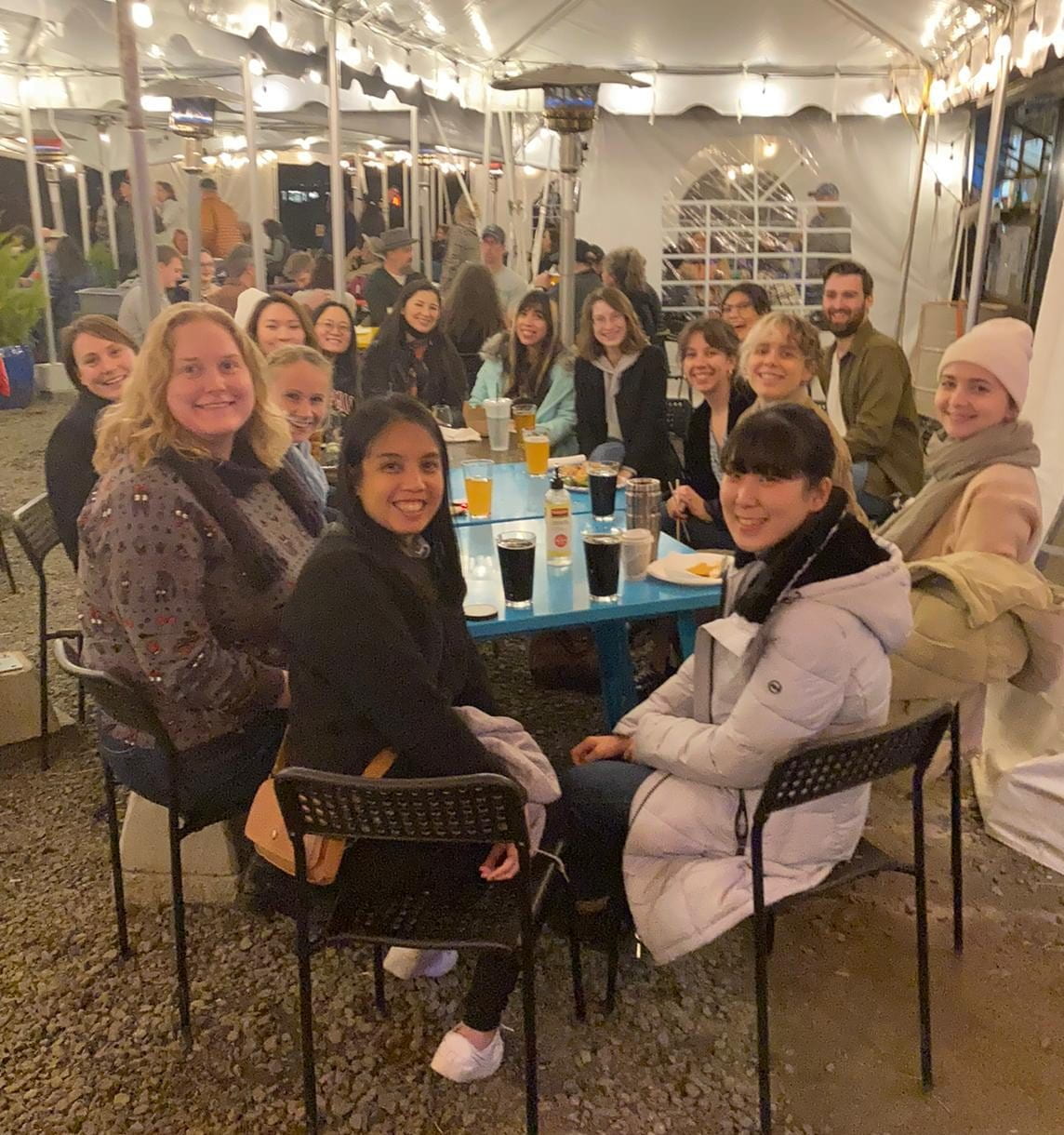
Group of people around a table

Aissa grabs drinks with friends in LTS

Hello! My name is Aissa, and I’m an international graduate student from Manila, Philippines. I’m taking the 2-year track of the LTS Program, and am currently in my second year. It’s hard to believe how I had a completely different career path many (many) years ago. I graduated with a major in Business Management and took on a corporate job for a couple of years. It was a rewarding experience but it wasn’t the right job for me. Somehow I knew I wanted to teach so I shifted careers and never looked back.

It is always so fascinating to hear how our students have come to join us in the program. We are so glad you are here, and so excited that you have found a home in language teaching. Was there something that first piqued your interest toward teaching? Toward UO?

After my first year of working as a preschool teacher, I went back to school to earn my Masters in Education. Before my graduation, I joined a global internship program where I took a 6-month language teaching internship in Japan. Two months into my stay, the school director shared her plans of launching a bilingual program and offered me a permanent teaching job. I was over the moon! I completed my masters, returned to Japan, and taught in the kindergarten. Because the program was fairly new, I became so invested in finding ways to provide effective and meaningful learning experiences in the classroom. Language also became a huge part in our home because we were learning Japanese and teaching our eldest child Filipino. Over the years, I definitely grew a deeper love for the field.

4 women in Japanese traditional dress

Aissa celebrating in Japan

After two years, I gave birth to my second child and decided to take a break from teaching. What originally was a one-year teaching hiatus got extended when the world unexpectedly shut down. While on an extended hiatus, I came across the LTS Program. I remember feeling so excited about how it offers the flexibility for students to focus on various languages. And now here I am!

It sounds like you’ve had some truly incredible and rewarding experiences. From your time teaching, are there any moments in particular that stand out? Moments that you feel specifically fond about?

In the Philippines, I tutored school-aged children in Filipino and English. I also briefly taught Japanese ELLs online. Most of my students were adults but had varying proficiency levels so it was a challenge having to constantly adjust based on their needs. In Japan, aside from teaching in the kindergarten (children ages 3-6), I also taught 1st and 2nd graders in English after-school programs. I’m currently a classroom tutor and conversation partner at the AEI, and also a language teacher to my kids at home.

That is wonderful! Now that you’ve been in the program for a bit, what would you say is a highlight of your time here?

I absolutely love being in the classroom! Just the thought of being a student is already a highlight for me. I love how I’m gaining so much inspiration and knowledge from our professors’ different teaching methods and styles, and also from the way they manage classes and find ways to cater to the needs of their students. I’m not only learning about language pedagogy but I’m also learning how to teach. I also have to mention that another highlight is being part of two cohorts. I love the supportive environment and that everyone is helping one another succeed.

Family in the outdoors

Aissa with her family

There truly is a wonderful community to work with and learn from. After you complete your master’s, do you have any plans for your future in teaching?

Aside from teaching, I’m interested in learning more about early dual language learning so I can find ways to promote early bilingualism to Filipino families living in the Philippines or abroad. I hope to develop Filipino language materials, particularly storybooks, and also offer Filipino immersion classes for children. I’m currently designing a curriculum in one of my classes so I’m excited.

That sounds incredibly exciting! Early dual language learning is truly fascinating. Lastly, what is something outside of language teaching that you are passionate about? A fun fact about yourself that others may not know?

I love making things! My most recent project was a colossal squid costume which my son wore last Halloween. Aside from my random projects, I love spending time and traveling with my family.

Student Spotlight Arezou Darvishi

– Post by Emma Snyder, LTS student

Welcome back to another student spotlight, everyone! We hope you all have managed to stay warm and cozy during these last few frigid days; spring will return to us soon! Today we are here with our newest addition to the LTS grad cohort, Arezou Darvishi! Welcome, Arezou! Please, tell us a little bit about yourself!

Hello, I am Arezou from Iran. I have studied French translation at the University of Tehran, and I have worked as a web content developer in a language learning company.

Image of Arezou's face

Arezou

That sounds absolutely fascinating! It is so interesting to see the leaps and bounds that digital content has made in language learning, especially with the rapid increase of online instruction in the last few years. What first brought you to language teaching? To UO?

I worked as a French content developer in an enterprise where we focused on creating platforms and an application to allow language learners from all around the world to learn languages by following an algorithm. Coming up with new ideas at work, I decided to renew my academic knowledge. Moreover, being a French Teacher at the UO made me interested in the language teaching world, so I made up my mind to join LTS in order to improve my teaching. 

Well we are very pleased to have you joining us. You have quite a history of experience with language behind you; do you have any particularly fond memories? Either teaching language or learning it?

One of my most interesting memories about learning English is that I had the worst and the best teacher at the same time. I believe that I am able to speak English now because of her, but looking back to her method, it was one of the most traditional ways of teaching. Luckily, I could learn English in this way, but afterwards I needed to brush up my mind to do away with some of the wrong pronunciations of English she taught me.

It’s always interesting looking back at the experiences you’ve had with past teachers. There are so many things to learn from, both in deciding what to include in your own practice and what you might change or do differently. Now that you are with us, what is something you are looking forward to in the LTS program?

So far, I have enjoyed the LTS classes, as the teachers are well-prepared and we do activities together, which makes us interact more with each other. 

There are definitely some fantastic teachers in the LTS program, and some great opportunities for community building as well! Do you have any plans on what you may do after completing the program?

I hope to get a job as a French instructor.

And with that, we wish you bonne chance! Lastly, what is something outside of language teaching that you are passionate about? A fun fact about yourself that others may not know?

Developing a new identity when you teach is interesting for me. I feel I am another person when I teach.


Student spotlight Emma Snyder

Happy New Year, everyone, and welcome to 2023! It is time for another student spotlight from our LTS cohort, and it is our pleasure to introduce Emma Snyder, who has normally been the writer of these blogs this year, but this month the tables are turned on her!

Emma returning from the farmer’s market

Hi Emma, could you introduce yourself?

Hello, my name is Emma Snyder, and I am the writer for the LTS blog this year, as well as a graduate student in the intensive Language Teaching Studies master’s program, where I am beginning my third term.

I am an Oregonian born and raised, and grew up in the town of Keizer, before coming to Eugene for university. I completed my undergraduate in linguistics, with a minor in creative writing. I absolutely adore learning languages, and have studied Spanish and Arabic, with hopefully many others to come in the future!

Have languages always been an interest? What brought you to language teaching? To UO?

My comedic answer would be that I was inspired to pursue linguistics because of the movie Atlantis: The Lost Empire. More realistically, looking back, I think that many of my interests all the way back to childhood revolve around language. I’ve always been a big reader and writer, and language feels like such a huge unifying force between people. Linguistics first caught my eye in a freshman interest group revolving around linguistics and psychology that I took my first year at university. I realized I was passionate about teaching after I began to take job and volunteer opportunities to tutor for language learners. UO was originally my choice in undergraduate because I had family that had lived and been raised in Eugene. By the time I was ready to start looking at graduate programs, I loved the city, loved the professors, and loved the friends that I had made. 

Speaking of past teaching and tutoring, what have your experiences in language teaching been so far? What is a fond memory that you might have from them?

I have been lucky to have had numerous opportunities when it comes to language teaching and tutoring. I began with volunteering at the nonprofit Paper Airplanes, which works to provide language instruction to people affected by conflict. It was incredibly rewarding work, and the people I met as a part of it were nothing short of inspiring. I have also had the opportunity to lead conversation circles and pronunciation classes for adults and children at El Cultural in Trujillo, Peru. Now, I am a classroom tutor and a conversation partner at the American English Institute at UO. All of my teaching and tutoring opportunities have given me such fantastic experience and insight into my own future teaching strategies, and my life has been so enriched by all of the people that I have met in the process.

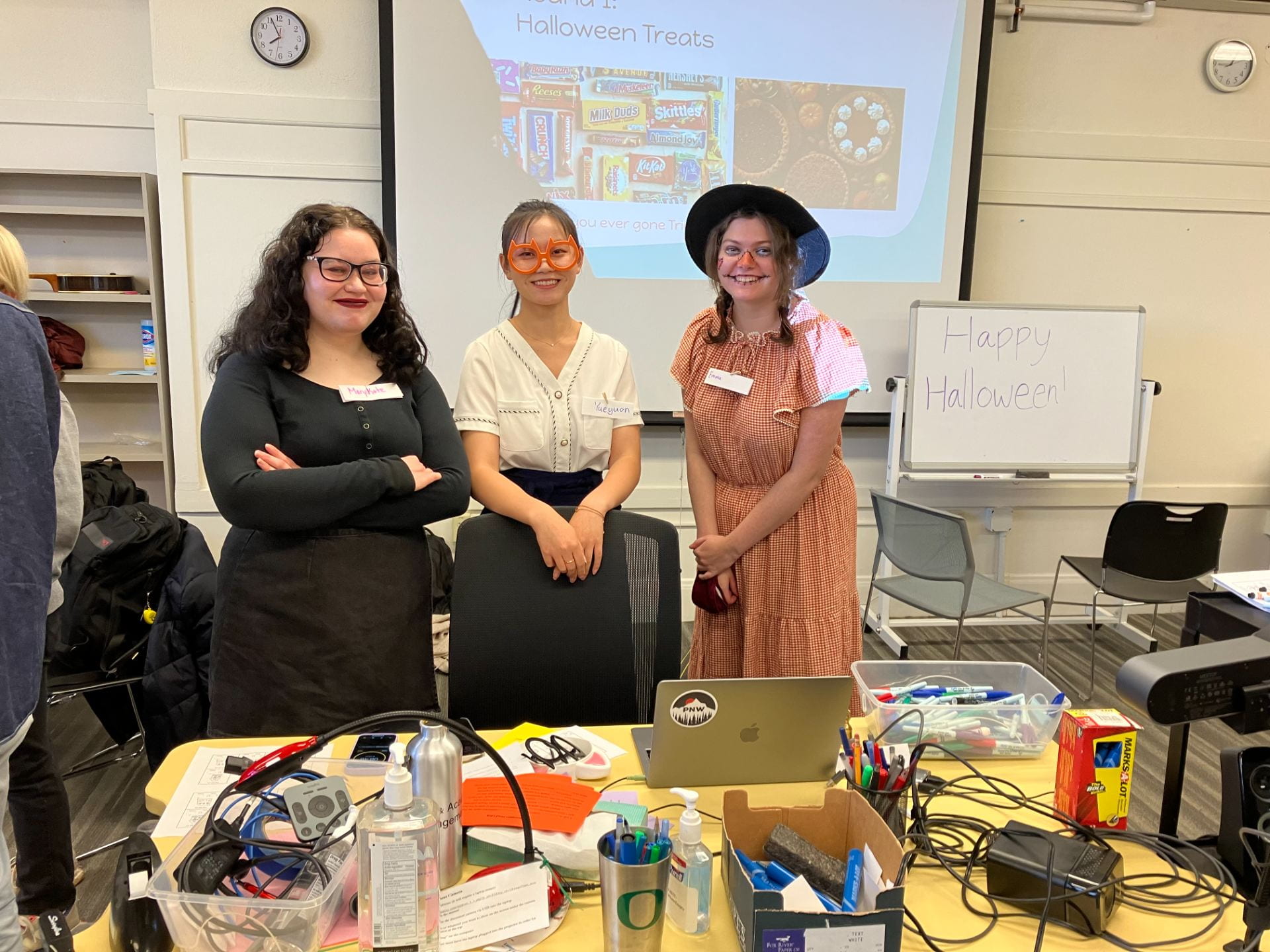
Emma helps lead a Halloween class for English language students

Now that you are approaching being halfway through the LTS program, what has been a highlight for you of the program so far?

Last term I was one of the Ducks that helped lead the Talking With Ducks program. Not only did I get more practice in a classroom, but I got to work closely with my peers in brainstorming and developing lesson plans and activities every week. It was absolutely incredible to watch so many talented individuals bring their own strengths and personalities to the class, and I truly feel that I learned and grew so much from being able to watch them and work with them. 

Looking forward into the future, how are you hoping to work in the language field after your time here?

This is such a tricky question, and I feel like my answer changes slightly every time that I think about it. I have enjoyed every context and every program that I have had the opportunity to work in. I absolutely love the AEI, and I think that it does incredible things, so I would very much enjoy being able to work with a similar organization. I also have a lot of interest in curriculum design. While I am certainly not opposed to working internationally, I think that there are a lot of language learning needs to be met on the local side of things too!

Finally, what is something outside of language teaching that you are passionate about? A fun fact about yourself that others may not know?

I am a huge hobbyist, and a bit of a jack-of-all-trades. I absolutely love reading and writing, and through the last few years I’ve dabbled in gardening, baking, fiber arts, and a handful of musical instruments, to boot. I love visiting antique shops, and have a bit of a tendency to acquire strange or unique things!

Student Spotlight Anna Krinitsyna

– by Emma Snyder, LTS student

December is upon us, and we welcome the intermittent snow, prepare for the holidays, and congratulate UO students on a successful and productive fall term. We hope you all take this time for some well-deserved rest and recharging! Today we are welcoming to the stage another member of the LTS grad cohort for our student interviews.

So happy to have you here with us, Anna, please, tell us a bit about yourself!

Hi, I’m Anna. This is my second year of the LTS two-year schedule, so I’ve taken most of the classes I need to graduate.

Anna at the Tulip Farm

I was born in Ukraine and moved to Oregon at seven years old. I have been in Oregon ever since, except for two years in Russia. I grew up speaking Russian, some Ukrainian, and English. Later, I learned Spanish. I would love to learn several more languages, such as Greek, Arabic, and Hebrew.

You’re on your way to becoming a regular polyglot, then! Have you been interested in languages for a while? What brought you to language teaching? To the UO?

I have been interested in languages and teaching for a long time, but I was not sure exactly what I wanted to do with my interests until I discovered the LTS program at UO. Prior to that, I worked in various medical fields, like optometry and pharmacy. At the same time, I kept coming back to short teaching experiences (mostly volunteering). After a while, I realized that if I keep dabbling in teaching, I must do something with it by finally getting a teaching degree. The LTS program stood out to me because of the flexibility it provides in choosing the language and age we would like to teach. I would like to have the flexibility to teach English, Spanish, and Russian, depending on where I am in life. I would also like to be able to teach both children and adults. 

It sounds like you’ve had such an interesting journey prior to joining us; we are excited to have you as part of the program! You spoke of short teaching experiences in the past, could you elaborate more on those? What is a fond memory or two you have of them?

During my undergraduate studies, I was a teacher’s assistant at a preschool. Eventually, I started teaching Spanish to the school-age children there. Before graduating, I completed an internship at an ESL class in a community college. I also taught English for a year to a small group of children in Russia. 

My most memorable experience was co-teaching Russian to pre-teen heritage learners at an evening school. These were children who were born to immigrants. The parents, but not the children, were interested in the children learning their heritage language. It was a challenge to motivate the children, as they were more interested in being as “American” as possible. This experience got me thinking about curriculum changes that Russian heritage evening schools could make. At the time, they were teaching from a curriculum intended for monolingual Russian learners. As it turns out, heritage language teaching must be approached differently. Curricula must be developed specifically for the needs of heritage learners.

What an interesting and fulfilling experience that must have been! Supporting heritage learners is certainly important. Now that you are in your second year of the LTS program, what has been a highlight for you of the program so far?

There are so many things I am grateful for in the LTS program, from the director and the professors, to my classmates, to the knowledge I have gained. I am especially thankful for the internship opportunities I have had at CASLS and in RUS 101. The internships have allowed me to try out some of the valuable theories on language teaching and learning that I have learned about in my classes. 

Anna and her husband at an Oregon beach

It is wonderful to hear that you have had so many opportunities and positive experiences with the UO. Looking toward the future, how are you hoping to work in the language field after your time here?

One of the reasons I applied to the LTS program was that I was opening a tutoring business and I wanted to provide high-quality language-teaching services. My short-term goal after graduating is to expand my business. Long term, I would like to create online resources and Russian language programs, especially for heritage learners. My very-far-away-in-the-future goal is to teach at a college or a university.

We wish you all the best in your business ventures, and your future teaching career. May both be filled with success! Finally, what is something outside of language teaching that you are passionate about? A fun fact about yourself that others may not know?

I am passionate about helping people with disabilities reach their goals. This might be related to being a teacher, but I do what I can to help people get over hurdles they might be facing. I have been involved in a Slavic special needs group for over 7 years. We organize events, teach weekend classes, help look for resources, and simply make long-lasting friendships.

I also like to explore different hobbies, such as hiking, playing the piano and the harp, painting, organizing, reading, gardening, and watching documentaries.

Program Spotlight: Talking with Ducks

Blog post by Emma Snyder, LTS student

The month is drawing to a close, and it’s time for another spotlight!  This time we are looking at one of the teaching practicum opportunities for students in LTS. We turn our focus to the American English Institute (AEI), a provider of English language instruction to our university’s international students, as well as home to the “Talking with Ducks” class. 

The Talking with Ducks participants on their last day of the term

“Talking with Ducks” is a conversational elective for international English learners at the AEI  that is collaboratively taught by some of the university’s “Ducks”: students in LTS MA program and the Second Language Acquisition and Teaching (SLAT) undergraduate certificate program. Supervised by LTS faculty Dr. Patricia Pashby, this class allows AEI students to practice speaking English with their peers while giving the LTS and SLAT students important time to practice developing classroom materials, leading lessons, and gaining comfort in front of a class. This program is a symbiotic relationship at its finest – wonderfully beneficial to both students seeking to practice their conversational skills and future educators seeking teaching experience. 

Four of our current Ducks, LTS graduate students Aissa Canteras, Kaleb Stubbs, Nicolas Vassilenko, and Ryan Wozniak, were happy to share their experiences with the program.

What was your past teaching experience before Talking with Ducks?

Aissa: I was an English teacher in Japan. I taught novice learners, around three to seven years old.

Kaleb: I had teaching experience from interning with CASLS. I mainly had taught students that were from Japan and China

Nicolas: My past teaching experience came from participating in Talking with Ducks in my undergrad years, personal tutoring, and large-scale class assistance. This class has always had a special place in my heart for the genuine connection you make with the students and your peers.

Ryan: Before Talking with Ducks, I had tutoring positions at the University of Montana, and had spent about three years teaching English in Japan.

Nicolas works with a small group

What first interested you in this class?

Aissa: I knew that I would get the chance to put into practice what I have been learning from my previous LT classes!

Kaleb: I wanted to expand on my teaching experience and be able to put ideas into practice. I also tutor at AEI so this was a great opportunity to become more familiar with students and teaching styles that work in the given context.

Nicolas: This sort of class should be implemented in every education-based major. It highlights the importance of collaboration and team building whilst having low-stakes real-world experience teaching. Because I had already taken the course in my undergrad – Linguistics – I did not need to retake it, but it showcases the superb quality of the course that I wanted to re-take it.

Ryan: I had previously thought about working on improving how to create better lesson plans and workshop ideas on what activities I could do in the classroom. This class also gave me the wonderful opportunity to meet new people (now especially being from a different state) and reconnect with the international community in Oregon.

Kaleb, Anthony, and Ryan preparing class

How do you feel Talking with Ducks has benefitted your teaching? What is something that you will take forward into your future classes?

Aissa: With Talking with Ducks I got the chance to work in an entirely different language teaching context and so the experience has definitely broadened my perspective and knowledge about the field. I love how we were able to experiment on various activities and see what works in the classroom. One of my biggest takeaways from this class is the importance of being flexible – sometimes things don’t go as planned and so we need to be capable of making quick changes so we continue to provide the best learning experience for our students.

Kaleb: It was extremely beneficial to my teaching because it gave me the opportunity to develop lesson plans, work on my stage presence, become involved with the community, and to experience personal development and growth.

Nicolas: This experience has benefited my teaching in numerous ways. The main two that come to mind are adaptability and collaboration. Being able to adapt in education is a must because unpredictability can be the name of the game. Some lessons may not go over well – or in the best case, they’re so well-loved that students just want to interact with the activity. Collaboration, I feel, is the lifeblood of any successful lesson. TWD emphasized this by having weekly dry runs of the following week’s lessons to allow collaboration.

Ryan: I think this class has helped me understand that, depending on the type of classroom I will be teaching in and what we would be focusing on, I can finish this semester with the knowledge that I can work with different types of students and ensure that their needs are met when it comes to English.

Aissa decorates a whiteboard for a Halloween lesson

And of course, what were some highlights of your time in the class? Any special moments that you’d like to share?

Aissa: Having the chance to collaborate with my peers is a highlight for me. I love how we got the chance to bounce off ideas every week and learn from one another!

Kaleb: There was something really special about being able to create an activity from scratch and see it come to life in action with people actually enjoying it. For example, the Food Fusion game, where students were able to create their own dishes, ended up being a successful and fun activity for everyone. I would love to be able to apply these activities that were done into future classes.

Nicolas: There are a plethora of gem moments during the TWD course, but the ones that stand out are the blips of time prior to students arriving. I always love the conversations between peers.

Ryan: I really enjoyed TWD Halloween edition, as it was fun to hear everyone’s plans for Halloween and it was amazing to see everyone communicate with each other more and be open and optimistic in the classroom.

The success of this collaboration has not only been felt by the Ducks leading it, but also the international students participating. Nearly every student enrolled at the AEI signed up for the elective this fall term, and many had perfect attendance. Conversation was vibrant and enthusiastic, as students grew in both skill and confidence. Talking with Ducks is a truly wonderful program, and a fantastic opportunity; for both those who would seek it as an international student or as an educator, we highly encourage you getting involved if you have the chance!

Student Spotlight Ryan

This month’s student spotlight is on Ryan Wozniak, a new student on in the intensive track of the LTS program. Interview by LTS student Emma Synder.

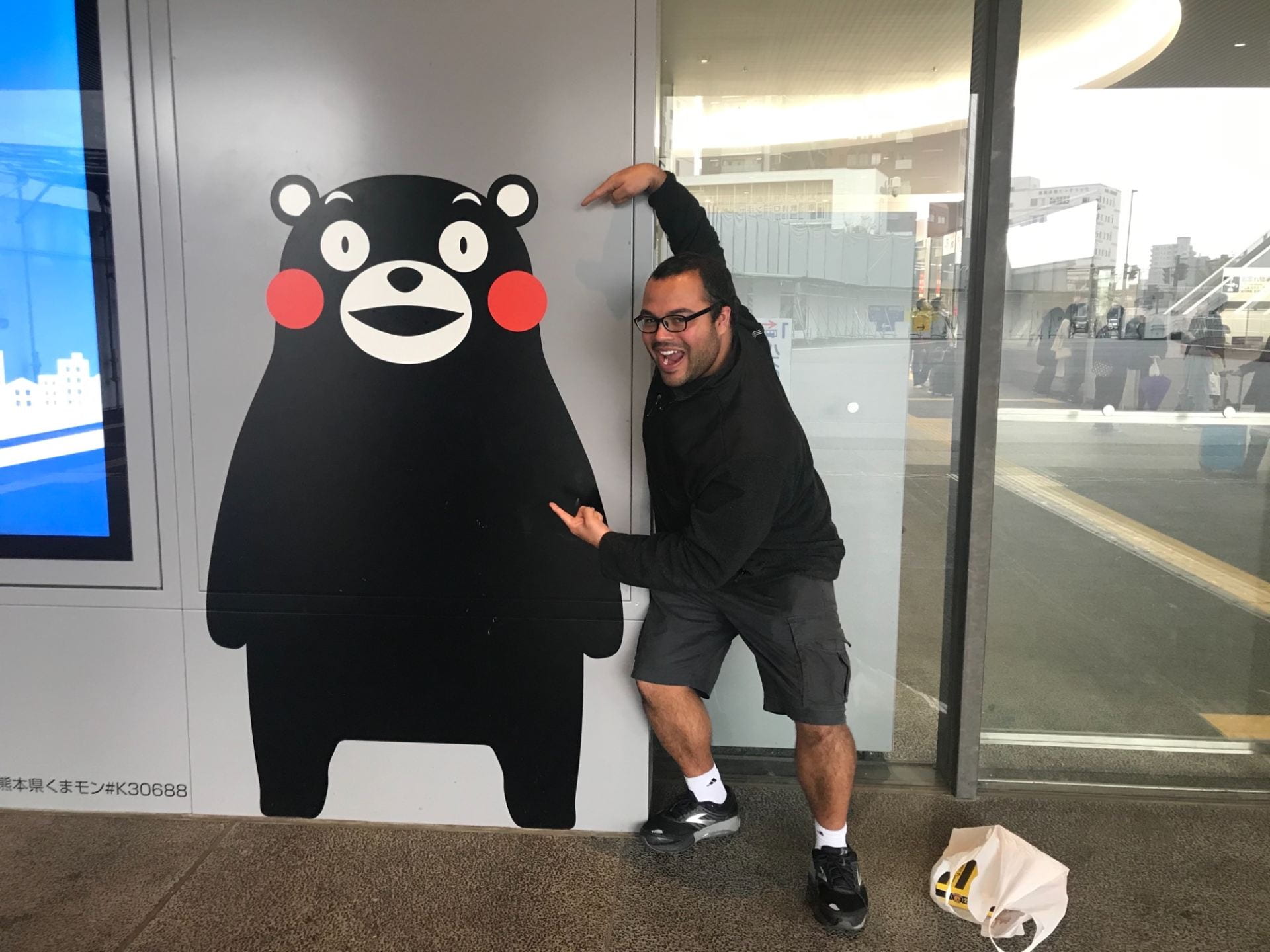
Ryan with his partner in Japan on their first couples’ date

Winter draws ever nearer, and as we try to fend off the cold, it is time for another LTS student spotlight! Welcome Ryan, please tell us a bit about yourself!

I am a current graduate student on the 15-month track Language Teaching Studies program. I am somewhat from the north and the south if we are being technical. I was born in Fort Worth, Texas and was adopted from there and raised in Missoula, Montana. I am the oldest in my family, and I am most often either the source of comedy or tension reliever, as I try to see the silver lining in a lot of situations. I completed my undergraduate from the University of Montana, earning a BA in Japanese. Before starting school in Eugene, I was previously an assistant language teacher (ALT) in Japan teaching English in Ishikawa prefecture.

That sounds like such an incredible opportunity! How was the experience of teaching in Japan; do you have any particularly fun memories?

Teaching in Japan was one of the greatest experiences I have ever had. When I got accepted into the program and got to my location where I would be working and living, it was on such short notice that I had only a month and a half to say goodbyes and handle things at home before flying off to Ishikawa. I spent three years teaching at elementary and junior high schools, and the staff and the students were wonderful beyond words. Out of the many fond memories I had during my time there, I have two in mind, and will try to keep it brief. With my work/school life, I got to be a part of one of my school’s culture festivals, where I had the honor to announce the opening of the festival and make everyone laugh by being a part of a pirate skit, something I won’t ever forget. The most memorable part of my time there was when I got to meet my partner there, who I got along with very well, fell in love, and proposed to her just last year. I have no doubt that she made my time in Ishikawa more heartfelt and meaningful because of her.

Many congratulations to you and your partner; it sounds like a truly life-changing time. Have you always been interested in language teaching? What brought you to the LTS program? To UO?

My circle of friends from college has primarily been students who were studying abroad or friends who were all in various language programs. After spending time with them, helping them with their English, teaching them about the cultural differences and aspects of the states, and earning opportunities to teach and tutor students and student groups, it really clicked to me how much I enjoyed teaching English to people, and that I was able to learn more about other people’s cultures and languages, especially Japanese. I was brought to the UO as a result of a friend who is currently a PhD student here at the University of Oregon. They were talking to my partner and I while we were in Japan about the various programs they offered, and although I was a bit skeptical in researching, I was floored by the course work, community, and everything that UO had to offer with the LTS program.

Ryan finds a friend

It sounds like a match made in heaven, then! We are certainly glad to have you here; what has been a highlight of your time with the program so far?

The highlight of this program was being able to interact with other students again. Having to be in an area of Japan during COVID was tough, even more so that people were very spread out in the country. Being able to talk to other people, to laugh and make jokes, to discuss experiences in teaching and traveling and living in Oregon, it really highlights the beauty of the program of being a close-knit group of cohorts and professors who all want the best for each other.

Community is most definitely a fantastic benefit of the LTS program. After your time here, how would you hope to work in the field of language teaching in the future?

If all goes well and everything is set into place in the future, I hope to be back in Japan, teaching. After the end of the LTS program, I will try to find work in teaching ESL or beginner’s Japanese in Eugene for a year and then move to Japan to teach English at a university, with potentially applying to some universities there to earn a PhD in an English teaching program.

We wish you the best of luck then, and many safe travels in your future! Finally, what is something outside of language teaching that you are passionate about? A fun fact about yourself that others may not know?

Outside of language learning, I enjoy reading manga (in English and Japanese), watching really good or really cheesy k-dramas, and I proudly state that I am a huge gamer nerd. I love playing all sorts of games on console or PC– I am currently obsessed with Overwatch 2. I also love tabletop board games or RPGs, especially Dungeons and Dragons, which I both am an active player once a week and am a major dice goblin. I like the team building it creates and just having fun playing with people, whether it is in person or online!


Student Spotlight: Anthony Delsanter

Post prepared by LTS student Emma Snyder

Hello and welcome, Anthony, to the first of our LTS student spotlights for the year 2022-2023! Thank you for joining us; please tell us a bit about yourself and your background.

I am a graduate student on the 15-month track for the Language Teaching Studies program. Before UO, I double majored in Linguistics and Spanish from Michigan State University and graduated in December 2021. I’m originally from Cleveland, OH.

Anthony leading a group of English learners in the LT 537 “Talking with Ducks” practicum class at the American English Institute at UO

Excited to have you here with us in Oregon! What first brought you to language teaching? To the U of O?

I have always been interested in languages since I was a young kid, however, when it came to actually studying and doing something with language, I didn’t know if I wanted to teach or work somewhere in the government. I had already had some teaching experience due to my internship in 2019 teaching Business English in Buenos Aires, whereas government work would be a new adventure. Eventually I ended up searching for schools that had programs for teaching languages and the rest is history! What drew me to UO in particular was the background each student in the cohort brings to the table in terms of teaching and language experience, as well as the amazing professors and beautiful PNW scenery. 

The scenery is definitely a big plus! Now that you’ve gotten your footing in the LTS program, what would you say has been a highlight of the program for you so far?

I would say a highlight of the program so far is being able to design and implement our own lesson plans in LT 537 with the AEI students. So far it has been super fun!

Fantastic to hear that you are enjoying your opportunities to plan and apply lessons. Is this something you look forward to in the future? How do you see yourself interacting with the language teaching field in the future?

In the future, I hope to work abroad teaching English for at least one year before considering PhD programs that focus on language and culture!

It sounds like you have some fascinating travels ahead of you! Finally, what is something outside of LTS that you are passionate about, or a fun fact about yourself that others may not know?

Outside of language teaching, I love doing Brazilian jiu-jitsu and enjoy competing when I have the time!


Student spotlight Taysiki Allyson Alvarado

Hello Allyson! You are our final cohort of 2022 student spotlight! Thank you for sharing with us. First, could you introduce yourself?

Ink nash waníksha Taysíki ku suḵaputɨmtki Allyson Alvarado. My name is Taysíki and in English my name is Allyson Alvarado. I am Yakama and I’m from Wapato, Washington.

What has been the focus of your work during the LTS program? What makes this work meaningful to you?

Throughout LTS I have been working with the Ichishkíin language and exploring how best to teach and learn it. At first, I was really focused on incorporating language use and cooking together. Eventually, I came to focus on family language learning and meal-time ended up being a component of that. Family language learning is special to me because I’ve been learning Ichishkíin with my own family, especially my younger siblings so I wanted to create something that would make that easier/accessible for not only myself, but other Ichishkíin learners who want to speak with their families.

You had a very special living arrangement and housemate this year. Could you tell us more about that?

I have been living with Tuxámshish, my elder, my teacher and my inspiration! She has accomplished many things not only for the Ichishkíin language, but just in general! She is 100 years old and an L1 Ichishkíin speaker, she has taught me so much that I’m extremely grateful for. I didn’t grow up with an L1 speaker in my home, so I’m glad that I was able to experience this with her. She has also helped me many times translating my lesson plans, shared a whole bunch of good stories with me, and made me laugh a lot throughout my time here so living with her has been my home away from home.

What are you doing after LTS? Do you think you’ll miss Eugene?

After I graduate, I’ll immediately start preparing to teach Ichishkíin to 5th-8th graders in the district I went to school at! I’m really excited because there has never been a 5th or 6th program for Ichishkíin until now and since I have a lot of flexibility in the curriculum creation, I’m happy I’ll be able to use some of the lessons I’ve created throughout LTS.

I will miss Eugene! This is my 5th year being in this city so it’s emotional to be ending my time here. I’m going to miss food delivery 🙁 and even though I’ve complained many times about my wet socks, I will miss the rain. I do hope to come back for NILI Summer Institute as a chaperone for my future Ichishkíin students who could be possible LTS recruits 👀

What has been most important to you in LTS?

Most important to me in LTS has been the relationships that have come out of it. It takes me a long time to come out of my shell and make friends with people, so when I do make them the relationships are very precious to me 🙂 I’ve learned sooo much from everybody within the program and I just feel very privileged to have learned from everyone’s experience and expertise!

What is a fun fact about you that we may not know?

One fun fact about me is that I weave baskets. I use contemporary materials like yarn and cord to weave traditional Columbia plateau baskets and when I go home, I hope to gather and learn about more traditional materials to make baskets with those. I also love to watch tv!