Virtual Insanity

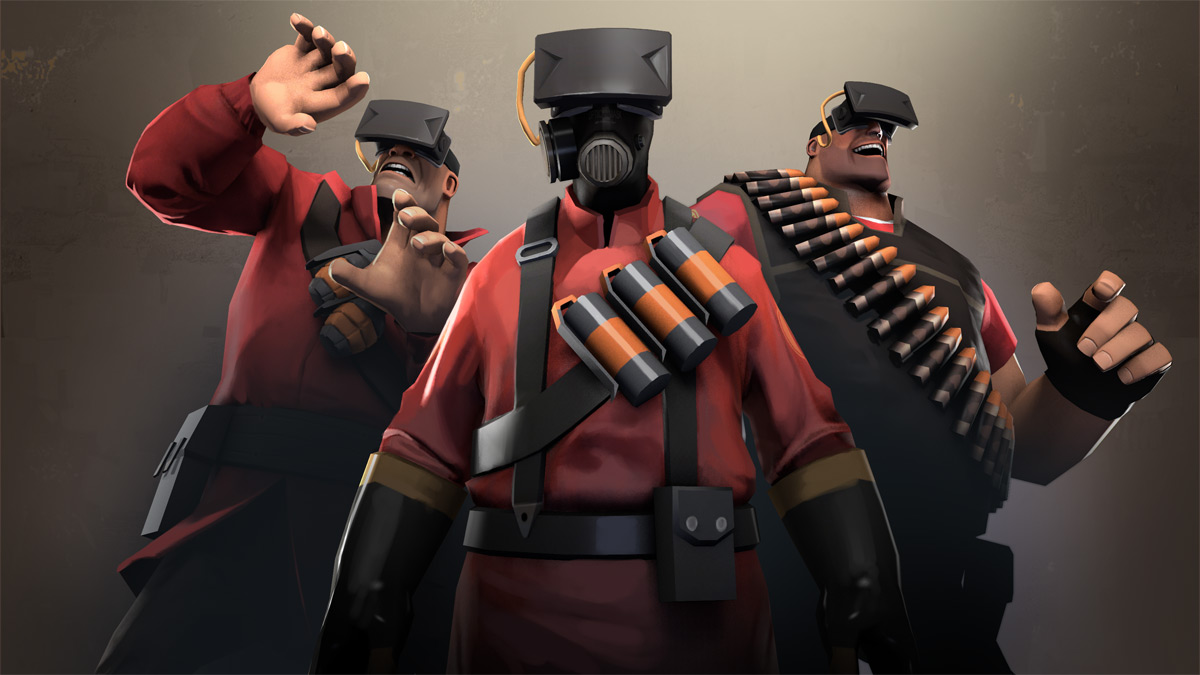
The Oculus Rift is a virtual reality headset that is being developed Palmer Luckey who is part of Oculus VR, a company stationed in California. The rift itself is a virtual reality headset that utilizes stereoscopic imagery to trick the eye into thinking its looking at a fully 3D image. Our eyes do exactly this in real life which is how we see; Our right and left eye focus on one point and generate two slightly different images of that focal point then combine those two images into one image that has depth to it. This is why those with only one eye have bad depth perception as they are only viewing one flat image at all times. The Oculus uses one 7 cm screen at the resolution of 960×1080 to project two views of the game into the users eyes to create the stereoscopic image. This gives the users the impression of depth within the virtual world, and to further the impression of virtual reality the Rift uses head tracking using Gyroscope, Accelerometer, Magnetometer trackers to determine the X, Y, Z, pitch, roll, and yaw of the users head allowing the camera to mimic the users exact head movements in the game and direct the camera as such. The device creates an image that fills your entire field of vision without distortion, which the Rift uses a pair of cheap magnifying lenses, and Oculus developers distort their games so they look right when viewed through the optics. The Rift has been met with widespread success even in its prototype and early development phase, so much so that its funding was totaled up to around 2.4 million USD from crowd funding and donations from such video game companies such as Valve (The developers of many popular games including Team Fortress 2).
Art Meets Science

Combining both of these mediums of art in video games and the science of virtual reality creates an almost lifelike game world possibility that hasn’t been seen before. This breakthrough in impressive technology has allowed an advancement in art interaction as a result. From the illusion of depth that 3D video games try and make our eye perceive to the near perfect reality of the game using the Rift, both can be related back to one very old form of artist representation, perspective. Perspective is the idea of a painting, image, or even what we are looking at having a single focal point or several depending on the environment displayed, but mainly the idea of a single main focal point. In the Renaissance, painters needed to be able to translate the three-dimensional world around them onto the two-dimensional surface of a painting. The solution was “linear perspective”; the idea that converging lines meet at a single vanishing point and all shapes get smaller in all directions with increasing distance from the eye.
Virtual Reality to Actuality
VR can be applied to more helpful uses in the field of medicine. One example is helping amputee victims overcome phantom pains, which is the feeling the missing limb but not being able to see or control it. Exactly what causes phantom pain is unknown, but it’s likely a result of the brain still recognizing the limb even though it’s no longer there. IT does this by allowing the person to not only see a virtual representation of the limb, but also to control it using electrodes attached to the base of the missing limb that measured muscle movement. Patients reported a drastic improvement in their phantom pain symptoms. VR can also be used in training for medical practices as conducting a series of tests which produce complex sets of data. But virtual reality can be used to create a visual explanation of this data which is easier to read, understand and interpret. It also allows for the opportunity to train surgical skills on a wide scale and in a repeatable manner, in a way similar to the routine training of pilots who utilize virtual reality cockpits in a flight simulator to practice for flying a real plane.
Ironically, a game exists that has VR support titled “Surgeon Simulator” that puts you in control of a hand that has to preform several surgeries in horribly incorrect and not practical ways that would most likely kill the patient. So instead of training people to become masterful surgeons, it teaches them how to be impractical ones!
Resources:
- http://msl.cs.uiuc.edu/~lavalle/papers/LavYerKatAnt14.pdf
- http://www.wired.com/2014/05/oculus-rift-4/
- http://www.technologyreview.com/news/519801/can-oculus-rift-turn-virtual-wonder-into-commercial-reality/
- http://www.huffingtonpost.com/2014/03/28/virtual-reality-uses-medicine-autism-ptsd-burn-amputee-victims_n_5045111.html
- http://www.ncbi.nlm.nih.gov/pmc/articles/PMC1129082/
This discussion on the Oculus Rift and its impact on both art and medicine is fascinating! The blend of virtual reality with artistic perspective really opens up new possibilities for immersive experiences. I remember playing a game called crazy cattle 3d, which showcased how engaging VR can be when done right. It’s exciting to think about how this technology could further evolve and enhance various fields, including medical training and rehabilitation!