Objectives:
- Consider the origins of art
- Explore a brief history of Western Art
- Examine multiple perspectives for evaluating art
Original Post:
This weeks reading was, “What is art for?” by E. Dissanayake.
Reading through this article I found myself agreeing with points from different eras in terms of art, but then accepting the progression and species-centered view of art. Art is a word that can be used somewhat loosely as it is seen in many different aspects of life (sports, poetry, physical art, imagery, medieval times-religion). As art has become more esoteric and outrageous, the role of the critic has been shown to be more helpful in the reception of works of art. This is seen in modernism as Dissanayake states, “…it seems inevitable that an “institutional” theory of art arose to explain what art is.” (pg. 18) Directors, editors, art critics, gallery owners (the list goes on), all determine the status of art and place more restrictions on what a true “work of art” is. It seems to restrict the limits of art and take away from the freedom of art and expression (as seen in the past). Dissanayake continues to explain, “Implicit in this account is a recognition that what is said (or written) about a work is not only necessary to its being art, but it is indeed perhaps more important than the work itself. There is no appreciation of art without interpretation.” (pg. 19). It seems sad that in order for art to be accepted, it must be reviewed and then critiqued in some way to determine whether it should be appreciated.
Post modernists show how artists (just like other individuals) do not see the world in some sort of “privileged” or better/truer way than others. They just interpret it in their own individual ways. Dissanayake says, “Art is not universal, but conceptually constructed by individuals…” (pg. 19). One issue with the post modernism is that, “If everything is equally valuable, is anything worth doing?” (Dissanayake, p. 21).
Modernist and postmodernist views have many contradictions and one way to resolve those is through a broader view. A species centered view combines the modernism view (value and personal experience) with the postmodernism view (that it belongs to everyone and is potentially “all around us”. This is done by thinking of it in terms of a human behavior (pg.22). Dissanayake explains how “art” is usually referred to as an object (paintings, pictures, sculptures, dances, etc.), but works of art are the result of an artist’s behavior. When art is regarded as making something special, we can see it in many different forms (things we cook, an outfit we wear, rituals in everyday life). Dissanayake says, when we look at art this way, we are making the things we care about special. (pg.24). Denis Dutton also explained in the video how this idea is portrayed through things of beauty whether it be human beings, landscapes, works of art, or skilled human action. I agree with this view of art. It does not mean standards get lost along the way because there will always be critics. I just believe that this view leaves the least amount of restrictions on the term “art”. There are so many beautiful things surrounding us and I think they all deserve the right to be claimed as art in the opinion of the viewer/artist and how we feel as individuals.
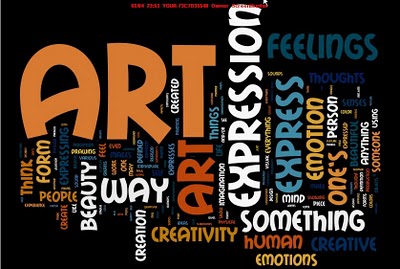
Reflection: I find this illustration above to be a great example of how art can be expressed in many different ways. From our reading, I have come to the conclusion that art is always evolving and that there may always be different ways of viewing “artwork”. I loved that Dissanayake and Denis Dutton, both explained how art may be explained through its beauty. It does not have to be a painting or piece of art work, it can be a beautiful view, dance, or a song. There are so many ways to express art, and I have come to find that I definitely still agree with the species-centered view of art. Dissanayake explains it as being, “All around us..”. There are so many places where I think art is present. I find myself experiencing art in new ways as well as discovering it in new ways every day (this ties in similarly to our food as art topic). I do not think there should be limitations on what art is and I found that this assignment taught me about the true appreciation of art.
Future: I hope that I can continue to find art in various places. I also hope that I can make art of my own and choose to accept something as “art” rather than critique it. It may be difficult to set boundaries for what art truly is, but I hope that I can continue to find ways to appreciate it.