Sensor Proposal
By Sara Kennel and Diana Derry
Abstract:
As Eugene, Oregon looks to increase environmentally sustainable mass transit, EmX is increasing the amount of service routes down 6th, 7th, and West 11th. With a combination of sensors and a smart phone application, data from EmX riders and bicyclists will be collected to examine the potential of a local bike-sharing program. Installing bike sensors developed by William Henderson, of Knock Software, on all four doors of the EmX buses will allow for an accurate count of EmX riders and bicycles. The application will serve dually as a way to administer surveys and collect sensor data via blue tooth. The survey tool delivered by a smart phone application is a tool that allows collection of quantitative and qualitative data of bike riders and potential bike riders, how transit is currently being used, and a proposed bike-sharing program along the EmX route for the City of Eugene. This combination of methods will allow for data collection of not only how the current transit system is being used, but also serve, as a community assessment of what riders think will improve transit.
Literature Review:
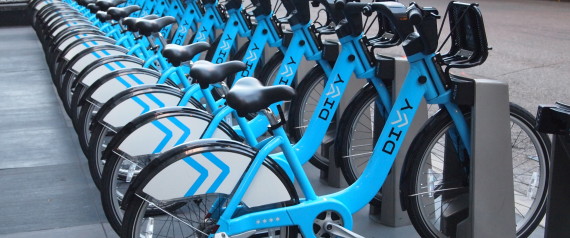
To date there are 880 cities worldwide that have bike-sharing programs in operation and 245 more cities in the planning or construction stages according to Paul Demaio creator of The Bike-sharing World Map. Most bike-sharing programs are currently run by a membership system that allows users to check out and check in bikes through a network of automated stations. “Implementing bike-sharing can be an eco-friendly solution to the first mile/last mile problem(Birdsall, 2015).” According to Michelle Birdsall Chicago has had success with integrating a bicycle transportation infrastructure combined with a bike-sharing program. This shift in the infrastructure was able to happen largely due to the ongoing support and innovation of the local government along with constant communication with the local communities and businesses. It was proposed that this multi-modal transportation would increase street safety.
According to Moscovich several attempts have been made to reconcile transit service and suburban living. One of the biggest challenges is that mass transit has a hard time competing with the door-to-door convenience of the automobile. Simply building a mass transit system will not generate riders. Other adjustments to the infrastructure need to take place such as growth limits and traffic calming. Growth limits in some areas have been attempted by implementing transit-oriented development (TOD). “TOD includes mixed land uses; diverse housing types and prices; building designs and layout and street layouts that promote walking; and diverse uses in a relatively compact area (Moscovich, 2003). Traffic calming should be a well-balanced system to help communities become less polarized and all transportation needs are understood and reasonable. In the current research there is a lack of data and understanding of accurate trip demand and use, measures and standards that do not favor implementation of bike lanes, and scarcity of funding (Moscovich, 2003)
Theme:
Health and safety: By adding sensors to the doors of EmX buses, this will allow us to count the numbers of bikes and people using the EmX bus system. The data that will be collected via these sensors and the app that is accompanying it will allow the city of Eugene to gain further insight into who is using this public transportation system, and how it could be improved. This data will provide the opportunity to create a safer riding experience for commuters, and have them put in their own opinions about how this could be done. By seeing what times the EmX is most busy, what stops and bus lines are being most used we can also gain further insight into a potential bike share program around Eugene. Bikes can often be cumbersome to travel with, and to ride with on public transportation. They are big and often are in the way of pedestrian users. By collecting data on the potential of a bike sharing program we look to reduce the amount of bikes having to be carried on to EmX buses, while still promoting the health benefits of people and the earth by cutting down on the use of cars, and still promoting bikes as a form of exercise and alternative forms of transportation by making them more available to the public in convenient places people who already use public transportation may be; such as EmX bus stops.
Objectives:
Is a multi-modal system of bus/bike-sharing a viable option for Eugene, OR? Eugene has many variables in place that would make for a smooth transition to a bus/bike/pedestrian system being even more seamless. The City of Eugene has done many things to improve the transportation infrastructure such as adding over 150 miles of bicycle friendly paths including 7 bicycle/pedestrian bridges. In addition there has been an ongoing downtown restoration to increase the economy in the Central Business District of Eugene. The Lane Transit District (LTD) has implemented and expanded the EmX system with increased speedy service to the central locations in Eugene/Springfield area. These innovations to the local transportation infrastructure make the move to bike-sharing the next logical step. Collecting the raw numbers of the riders and bicycles on the bus provide a picture of when and where users are riding the bus and if they intend to use their bicycles to finish the trip. The implementation of the survey will allow the capture opinions and attitude of all riders. While it is important know how many people are bus/biking it is equally important to assess the community for the perceived needs of future bus/bikers. Asking questions related to the distance and purpose of the trip as well as willingness to use bike share would give planners the ability to create systems that will materialize and be used.
Methods:
In this project the sensors created by William Henderson, founder of Knock Software in Portland, OR will be used. At $50 each, 44 sensors will be needed to cover all of the doors on the 11 buses on the EmX. This will go over the 2000-dollar limit by $200, but we are currently in negotiations with Mr. Henderson as he has worked on similar projects in Portland. As we explore other options to fund the additional sensors we are confident we ensure full sensor coverage. We figured one sensor for each doorway, and volunteers or interns for the project will install them in order to save on labor costs. Interns and volunteers will be a large part of our project, as they will also be creating the smart phone application that will be available to the public and collect sensor data. As an incentive, we are partnering with LTD to offer each participant that completes the survey a free day pass. The smart phone application will include information on the bus routes, have surveys asking the users their opinions on their current EmX experience, what could improve upon these experiences, opinions about implementing a bike share program in Eugene, and basic information about their gender, age, destination, and what hours of the day they use the EmX most often. All surveys will remain anonymous in order to protect people’s privacy and hope that they will participate in the surveys given to them.
Once the sensors are installed on the bus doors they will stay mounted for the three-week data collection period. The sensors themselves have a magnetic pull in them that allows the sensor to know if a bike is passing through the doorway, as well as a thermo reader that can tell if people walk though the door due to the amount of body heat being put off. The sensors will also collect stop and time of day. We will not need to check on the sensors daily. The data is collected off the sensor is via Bluetooth by the app we will create. The sensor does not connect to the Internet, so there will be no breach in privacy when you walk by the sensor with your phone. As you walk by though, and have the app installed, the sensor will connect for a split second to your phones Bluetooth and send all of the counts collected by the sensors into the cloud. This will give us frequent updates throughout the three-week period, but we can collect all the data off the sensors after the trial period is over. In order to account for people getting on and off the bus we plan to take our total data count and divide it by half. This will account for the fact that every person that gets on, must also get off the bus at some point. When the three-week data collection period is over we will be able remove the sensors and see a time stamp associated with each person or bike the sensors counted. By looking at timestamps we will be able to see when the most frequent use of the EmX was.
Since bus use varies due to the time of year, we figure it would be best to conduct out data collection between the months of April and May. For Eugene this is a time of year when it could be nice and warm, but also cold and rainy in a moments notice. Comparing the data to the weather will reveal correlation with the amount of riders the bus had that day. This will also require us to keep track of weather patterns for those three weeks. With the correlation to the weather and the survey answers transit riders will provide us with, we see this as good feed back for the possibility of working towards a grant to implement a bike share program here in Eugene. If this data supports the implementation of a bike share it is proposed that a partnership be built with LTD to create a subscription or additional fee to the monthly bus pass. For instance adding $5 to current monthly pass or charging a flat rate for access to bike-sharing bikes and facilities. Although the bike share would be another project completely within itself, we are thinking of possible long term affects it could potentially bring for the community.
Broad Impacts:
Although the bike sensors attached to the door of the bus may not be there long, they will have the potential to impact people that partake in our community’s public transportation system. This data collected will be available to the City of Eugene and LTD in the hopes that some of the riders concerns will be addressed making a safer riding experience overall. In addition, this data will help evaluate the need and usefulness of a bike share program within Eugene. A bike share has the potential to eliminate the amount of bikes on the EmX and free up more space for pedestrian riders, promote a faster and more efficient way to getting to your destination without having to walk, or use a car and contribute to the pollution of our air. Bike-sharing promotes a more sustainable community and a healthier life style for people of all ages. The use of the bike-share program would be integrated into your monthly bus pass for only a small increase, and alleviate the burden of the rider having to pack a bicycle on and off the bus. Eugene is a much smaller city than one like Chicago, but why can it not have some of the same community building amenities and conveniences for its citizens on the go?
References:
Anderson, M. (2015). This $50 device could change bike planning foreverBikePortland.org. Bikeportland.org. Retrieved from http://bikeportland.org/2015/01/13/50-device-change-bike-planning-forever-130891
DeMaio, P. (2015). The Bike-sharing World Map. from https://www.google.com/maps/d/viewer?mid=zGPlSU9zZvZw.kmqv_ul1MfkI&hl=en Accessed May 7, 2015.
Birdsall, M. (2014). Bikesharing in Full Bloom. Ite Journal-Institute Of Transportation Engineers, 84(2), 28-31.
Moscovich, J. (2003). Designing transportation systems for active communities: Planning, design and system performance considerations. Institute of Transportation Engineers. ITE Journal, 73(6), 34.