The Stress, Adaptation and Resiliency (STAR) team conducts biocultural research addressing how stress, resilience and other social determinants of health “get under the skin” via experiential and physiological pathways. One aim of this work is to understand gender and sex-based social experiences and embodied marginalization in order to reduce negative health outcomes among those most vulnerable to social stress effects. Research in this area includes mixed-methods studies of transgender experience and health integrating biomarkers of stress and health with in-person interviews and ethnographic methods. The team also contributes to methodological developments to facilitate the integration of biomarker measures in work among vulnerable populations.
Learn more about the students in the STAR lab below.
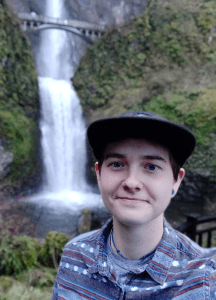 Kelsi Kuehn, MA. Kelsi (they/them) is a PhD student in the Department of Anthropology. Kelsi’s current research is focused on understanding how chronic stress related to queer identity becomes embodied within the skeleton. Kelsi is also working with Dr. L. Zachary DuBois and his STAR Lab to examine transgender health and resilience from a biocultural perspective. Previously, Kelsi completed a Master of Arts in Applied Anthropology at the University of South Florida. There they studied the application of an elemental analysis technique called Laser-Induced Breakdown Spectroscopy (LIBS) within the fields of forensic anthropology and bioarchaeology, for the purpose of discriminating individuals from one another using the unique elemental profiles within their skeletons.

Dee Jolly, MS. Dee (they/them) is a Ph.D. student in the Department of Anthropology. Dee’s research interests broadly include embodied inequities and stress, intersectional approaches to health inequities, allostatic load and HPA-axis function, systemic inflammation, chronic pain, and transgender health over the life course. Their dissertation research explores how lived experiences of inequity, stress, and stigma become embodied in the form of chronic pain among different communities (e.g., LGBQ+ adults, older adults, transgender and nonbinary adults) in the United States. Their research within the STAR Lab more broadly explores questions about embodied health inequities among transgender and nonbinary people. Dee’s research has been published in journals such as Annals of Behavioral Medicine, Hormones and Behavior, Journal of Adolescent Health, and Annals of Surgery among others (see Google Scholar for all publications). Dee was also a 2022 Cultural Anthropology Methods Program (CAMP) Fellow, where they were trained in advanced cultural anthropology methods. Prior to coming to UO, Dee worked as a research specialist and research manager at Boston Children’s Hospital where they studied gender-affirming medical and surgical care. Dee previously earned their M.S. in Medical Anthropology and Cross-Cultural Practice from Boston University in 2018, where they studied the healthcare experiences of LGBTQ+ individuals of color through an intracategorical intersectional perspective. Dee additionally holds a B.A. in Anthropology and a B.S. in Psychology with an emphasis in Behavioral and Cognitive Neuroscience from the University of Florida.
 Ronan Santaniello (he/him) is an undergraduate student in the Clark Honors College studying Biocultural Anthropology with minors in Global Health and Classic Civilizations. Ronan has been a member of the STAR lab since Spring 2024. His research interests include resilience, health disparities, embodiment, and structural stigma/oppression. His current work is focused on furthering our understanding of resilience among transgender and nonbinary people and is supported by a VPRI Fellowship for Undergraduate Research. Ronan appreciates the biocultural perspective of the STAR lab, seeing the work as uniquely poised to offer and support holistic health interventions for transgender and nonbinary people.