The Tale of the Bathroom and the Consumer

Yash Akhouri


The bathroom has seen many transitional phases in design, purpose and importance. From being a space that was left to outhouses to a heart-like feature for the home and then a more serviceable space it has changed quite a bit. The occupancy and atmosphere of this particular space have seen many changes as well, it started off as this communal space with little sanitation interventions and now is what most people call, ” the only private time I get in my day.” There are many design variants of the bathroom that took the consumerist world by storm and led to a variety of designs that were based around sanitation and culture. To squat or not is an analysis of the cultural differences in toilet designs between Eastern and Western society and gives us insight into the ideologies that ruled these worlds. The research done in the “10 houses by Frank Lloyd Wright” is an analysis of the western world and how the placement and amount of toilets in designed Usonian homes changed over time. The main findings after analysing both research topics are that after World War 2 the bathroom became essential in the household, it started off as being a central idea that everyone could access but then we see it move away from the ground floor and become exclusive for property owners, the ground floor started introducing the idea of powder rooms for guests and was limited to a toilet and a sink. The privacy gradient of the bathroom developed into an idea of status.


Bathrooms: from luxury to common appliance?

A summary of the Barbara Penner text the Bathroom, chapter 3 the rational bathroom. An exploration of how the bathroom went from a communal space to a thing of luxury, to a consumerists dream which was intervened by design  and social reform.


To squat or not? Global perspectives on the toilets

An exploration of the differences between eastern and western ideologies of sanitation and the toilet.


The 10 House by Frank Lloyd Wright and their Bathrooms

An analysis on the placement, interior design and ideas behind the design of the bathrooms in the Usonian homes designed by Frank Lloyd Wright


#### Heading

headings or short descriptions (1-2 sentences for each research phase)

see the tutorial for embedding your map or timeline

Bibliography

Figure 1: Penner, Barbara. Bathroom, Reaktion Books, Limited, 2014. ProQuest Ebook Centralhttps://ebookcentral-proquest-com.libproxy.uoregon.edu/lib/uoregon/detail.action?docID=1707062.

Figure 2: Seaver, Tara. “Buckminster Fuller and The Dymaxion House.”

Figure 3: “Ultrasonic Bath: Human Washing Machine ~ Pink Tentacle.”Jan. 2009,

Figure 4: “JSTOR: Access Check.” JSTOR, 1 Jan. 2012

Figure 5: “Exporting the American Model? ‘Americanization’ and Postwar Western Europe.” Makinghistoryatmacquarie, 18 Nov. 2013

Figure 6: Micaelaw. “To Squat or Not to Squat | Culture and the Ergonomics in the Bathroom | the Toilet!” UoregobBlogs, 25 Jan. 2021, blogs.uoregon.edu/wc75/2021/01/25/to-squat-or-not-to-squat-culture-and-the-ergonomics-in-the-bathroom.

Figure 7: Cromwell, Bob. “Squat or Sit? — Squatters and Thrones among The.” Toilets of the World, 23 Aug. 2020, toilet-guru.com/squat-or-sit.php.

Figure 8: “Frank Lloyd Wright Montana Compound – Alpine Meadows Ranch | Darby, Montana.” THIRDHOME, exchange.thirdhome.com/properties/12114-darby-montana-frank-lloyd-wright-montana-compound. Accessed 6 Mar. 2021.

Figure 9:  Casale, Rocky. “10 Must-See Houses Designed by Master Architect Frank Lloyd Wright.” Travel + Leisure, 21 Mar. 2017, www.travelandleisure.com/culture-design/architecture-design/frank-lloyd-wright-houses

Figure 10: “Home.” The Elam House, theelamhouse.com. Accessed 6 Mar. 2021.

Figure 11: “PALMER HOUSE – Ann Arbor, MI, USA.” PlansMatter, plansmatter.com/view-rentals/palmer-house-ann-arbor-mi-usa. Accessed 6 Mar. 2021.

Figure 12: “Still Bend, Frank Lloyd Wright’s Bernard Schwartz House.” Stillbend, www.theschwartzhouse.com. Accessed 6 Mar. 2021.

Figure 13: Bianchini, Riccardo. “Darwin D. Martin House Complex by Frank Lloyd Wright | Buffalo, NY.” Inexhibit, 3 Nov. 2019, www.inexhibit.com/mymuseum/darwin-martin-house-complex-frank-lloyd-wright-buffalo-ny.

Figure 14:  “ABOUT.” About.Org, www.experiencegraycliff.org. Accessed 6 Mar. 2021.

Figure 15:  “Floor Plans.” Penfieldhouse.Com, www.penfieldhouse.com/about/floor-plans. Accessed 6 Mar. 2021.

Figure 16: “Hollyhock House.” Frank Lloyd Wright Foundation, 1 Oct. 2020, franklloydwright.org/site/hollyhock-house.

Figure 17: Simplicity Website Designs. “Welcome to the Seth Peterson Cottage | A 1958 Frank Lloyd Wright Masterpiece.” Https://Www.Sethpeterson.Org/, www.sethpeterson.org. Accessed 7 Mar. 2021.

Figure 18: “Taliesin.” Frank Lloyd Wright Foundation, 14 Apr. 2020, franklloydwright.org/taliesin.


Bathrooms in 10 Houses By Frank Lloyd Wright

10 Houses by Frank Lloyd Wright
Yash Akhouri


Through the analysis of the 10 most famous houses designed by architect Frank Lloyd Wright(1867- 1959), we are able to see how the bathroom is designed or moved about the house to occupy various spaces and to join spaces. It is fascinating to see how each property has a different understanding of how the bathroom is designed and also shows the importance of or that lack of in the design of the space.  The various projects show the different styles that Frank Lloyd Wright uses according to site and climate and this does have an effect on the way the bathroom is designed. In many of his designs, there is a definite lack of care and thought given to the bathroom as it just follows some of the materiality that is seen in the house and is very utilitarian in nature, not very special and very functional.  The use of mass-produced products is very evident in the designs not so much in some creating a more personal atmosphere.

Let’s take a closer look

The Elam House, Austin Minnesota

Completed 1951

This Usonian home is the largest of its kind having six bathrooms in total. each designed more for function than aesthetic itself. The bathrooms follow the order and sizing of the dymaxion stamp bathrooms created by Buckminster Fuller in the 1930s where each bathroom has the combination of a sink, toilet and bath/shower. the master bedrooms have an interesting touch in which they have double sinks.

Palmer House, Ann Arbor Michigan

Completed 1952

The house hosts 3 bathrooms where there is one ensuite the master bedroom, one that is for 2 adjacent rooms. The bathroom in this house even though led by functionality is special as it lends itself to the materiality of the house and is personalized through the shelving and picture frames, creating a most customized feel is exactly what the goal was for architects after the war as that is what people wanted.


Bernard Schwartz House, Two Rivers Wisconsin

Completed 1938

This house clearly separates the public bathroom against the private, even though side by side for ease of plumbing the house has very clear restroom for guests and for bedrooms. The bathroom in the bedroom is separated from the bedroom by the wardrobe which is very interesting move and may speak to the idea of privacy and even sanitation. A funny mishap is that the toilet is placed right behind the door on the second floor which does not allow the door to fully open and this shows that the space was an after thought and not a priority

Martin House Complex, Buffalo, New York

Completed 1905


There are 4 bathroom in this house that each have its own experience created by axial views. The bathrooms are given thought here and they are visually connected to the indoor and outdoor spaces. The sense of privacy is somewhat lost with large windows leading into courtyards. The bathroom is hidden away in this design and the guests only hae access to one whilst the dwellers have access to 3 on the secidn floor. It becomes an essential here and a amenity for guests.

Graycliff Estate, Derby,

New York

Completed 1931


The bathrooms in this deisgn seem to be used and interstitial spaces, connecting bedrooms. It is very similar to how bathrooms were designed in the 1920s in Europe, where bathrooms still had a sort of communal aspect. Ths pictured bathroom is very spacious yet is not very customiseable so it is not completly like the French bathrooms as they contained bidets etc. The design here is very evident of the mass production era as we can see the fittings arent designed to reminicse the colour of the space itself.

Louis Penfield House, Willoughby, Ohio

Completed in 1955

The bathroom in this house is only on the second floor which makes it accessible to only the owners and no guests. The toilet is separated from the shower by a thick wall and this brings forward the sanitary ideal behind toilets. The bathroom in this house is communal as it is not connected to any of the rooms but insteasd acts as the fabric between them. The personal has been separated from the work/living space by a vertical gradient.


Hollyhock House, Los Angeles, California

Completed 1921

This may be the largest bathrooms in all the houses in this presentation and includes a shower and bath both in its design. It is very functional in design. The bathrooms are all ensuite and there is one toilet for guests right at the entrance of the house. The servant quarters have a shared bathroom which shows us that the bathroom is a status symbol in this house and that having one to yourself is very much a symbol of higher status, allows on to differentuat between the rooms

Seth Peterson Cottage, Lake Delton, Wisconsin

Completed in 1958

There is a designated powder room which futher personalises the house and allows guests a space for privacy but it is interesting that it is right across the master bedroom. The bathroom attached to the master bedroom is very interesting in its materiality as there is a metallic wall to its shower which is very reminsicnt of the dymaxion stamp bathroom that was unrealististic in design.  There is no connection to the outdoor here and the powder room is at the very centre of the house.

Alpine Meadows Ranch, Montana

Completed in 2003

The farmhouse has 6 bathrooms and the abundance of this a sign of personal and private spaces for all. most homes after WW2 only had one bathroom but Frank Lloyd Wright-designed all his spaces with more than one bathroom allowing for the property to signify its status and to give what the people really wanted. The bathrooms in this house are not very well documented but to bring unity to the spaces as he did with the bedrooms through colour. The first-floor bedrooms share a bathroom and the other rooms have either their own or share one between 2 rooms


Taliesin, Spring Green, Wisconsin

Completed in 1959

This is so amazing because this is the dymaxion aluminium stamp actually used in a bathroom.  Even though separated by the floor and other elements there is this idea of the unification of space as done in the 1950s. This also gives the space the idea of a durable form, longlasting in nature. The placement of these bathrooms is all near the bedrooms creating that privacy gradient but none are directly connected. However, they are in this cove of the house that allows for privacy with the use of the thick walls. also does seem to be a very central idea of the property.

Map of all the Houses mentioned

This map pin points exactly where all these amazing projects are found in the USA


Bibliography

Figure 1: “Frank Lloyd Wright Montana Compound – Alpine Meadows Ranch | Darby, Montana.” THIRDHOME, exchange.thirdhome.com/properties/12114-darby-montana-frank-lloyd-wright-montana-compound. Accessed 6 Mar. 2021.

Figure 2: Casale, Rocky. “10 Must-See Houses Designed by Master Architect Frank Lloyd Wright.” Travel + Leisure, 21 Mar. 2017, www.travelandleisure.com/culture-design/architecture-design/frank-lloyd-wright-houses.

Figure 3: “Home.” The Elam House, theelamhouse.com. Accessed 6 Mar. 2021.

Figure 4:  “PALMER HOUSE – Ann Arbor, MI, USA.” PlansMatter, plansmatter.com/view-rentals/palmer-house-ann-arbor-mi-usa. Accessed 6 Mar. 2021.

Figure 5: “Still Bend, Frank Lloyd Wright’s Bernard Schwartz House.” Stillbend, www.theschwartzhouse.com. Accessed 6 Mar. 2021.

Figure 6: Bianchini, Riccardo. “Darwin D. Martin House Complex by Frank Lloyd Wright | Buffalo, NY.” Inexhibit, 3 Nov. 2019, www.inexhibit.com/mymuseum/darwin-martin-house-complex-frank-lloyd-wright-buffalo-ny.

Figure 7: “ABOUT.” About.Org, www.experiencegraycliff.org. Accessed 6 Mar. 2021.

Figure 8:  “Floor Plans.” Penfieldhouse.Com, www.penfieldhouse.com/about/floor-plans. Accessed 6 Mar. 2021.

Figure 9: “Hollyhock House.” Frank Lloyd Wright Foundation, 1 Oct. 2020, franklloydwright.org/site/hollyhock-house.

Figure 10: Simplicity Website Designs. “Welcome to the Seth Peterson Cottage | A 1958 Frank Lloyd Wright Masterpiece.” Https://Www.Sethpeterson.Org/, www.sethpeterson.org. Accessed 7 Mar. 2021.

Figure 11: “Taliesin.” Frank Lloyd Wright Foundation, 14 Apr. 2020, franklloydwright.org/taliesin.


To squat or not? Global perspectives on the toilets

To squat or not?

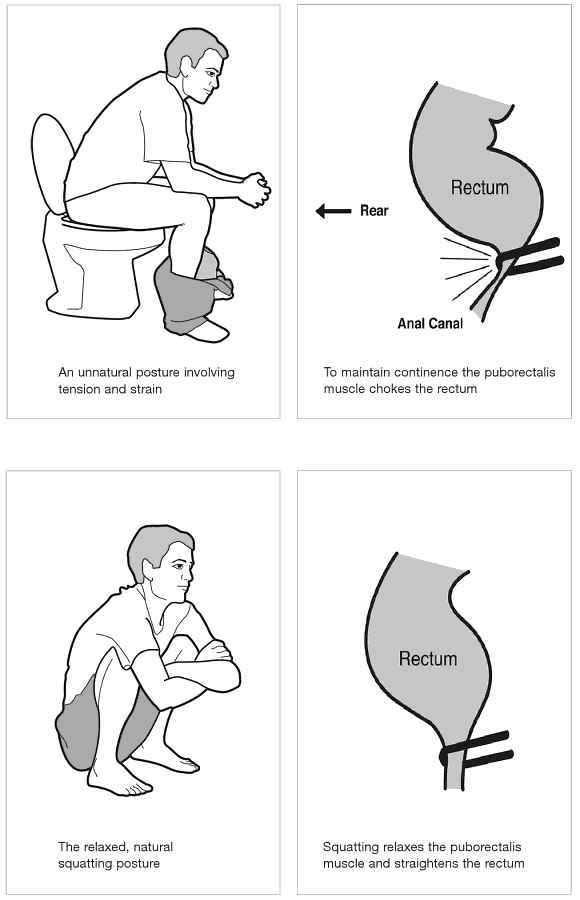
This is such an interesting concept as the squatting techniques not only has effects on the digestive system but also has cultural implications. The throne toilet is a very western and European concept as it was first seen in Roman and English toilets. The problems with waste management and disposal were awful as the human waste would end up mixing with drinking and cooking water. The sanitary implications of this throne system were terrible and needed intervening. Chamber pots came along to try and solve that issue but soon became even more dangerous in sanitation terms as people started emptying them out of windows instead of into drainage systems. The flushing throne toilet was finally made by John Harrington. Without proper maintenance and construction, the throne toilet system is very expensive in water usage and upkeep. There is no real cultural significance for the throne styled toilet beside the fact of it benign raised off the ground for sanitary purposes and for ease of usability by all ages. It is fascinating because even with proven evidence of a squatting technique being a far better method the West still believes in the use of throne styled toilets. Japan went a little further with this idea and turned their simple raised commode into a work of luxury, they added technology that would automate the washing, a seat warmer, a wiper that sanitizes the seat before and after use along with some rather unusual utilities. 

Squatting is a method of defecating use by the East and these practices are still used by 35-40% of the population today. Its is believed to be the natural way that we relieve our bowels as it fully opens the colon to relieve the body of its contaminants. Water is the main way of washing the rectum when done as the paper is respected and holds a very high status in Hindu and other Asian cultures. They also believe that skin contact with the toilet is very unsanitary. This method, however, is not viable for the elderly or those with disabilities.

https://toilet-guru.com/pictures/sit-vs-squat.png

(Image depicting the effect of the sitting positions on the rectum)


Bibliography

Micaelaw. “To Squat or Not to Squat | Culture and the Ergonomics in the Bathroom | the Toilet!” UoregobBlogs, 25 Jan. 2021, blogs.uoregon.edu/wc75/2021/01/25/to-squat-or-not-to-squat-culture-and-the-ergonomics-in-the-bathroom.

Cromwell, Bob. “Squat or Sit? — Squatters and Thrones among The.” Toilets of the World, 23 Aug. 2020, toilet-guru.com/squat-or-sit.php.

Bathrooms: from luxury to common appliance?

Bathrooms: Luxury to the common appliance?

Yash Akhouri


Prefabricated Dymaxion Bathroom(1938) Buckminster Fuller

Summary

The biggest criticism made for bathrooms was that they did not move with the times, there was this sizeable industrial development happening and so many products and appliances were being streamlined that it seemed the one space that was falling behind was the bathroom. The house and what is essentially was; became more of a prevalent question as bathrooms were such crucial space for self-hygiene and care yet it seemed to be resolved as outbuildings due to a lack of development in waste management. The bathroom was a crucial element that solved the problem of the house. Buckminster Fuller was an architect to be one of the first to design a house with its own septic tank, this developed into the idea of the bathroom becoming the heart of the house. The innovation was led in the direction which was focused on off-site construction of the bathroom unit and less on-site work. This idea, however, needed a lot more work because making it all out of steel made it extremely heavy and very difficult to move around. Bathroom fittings and fixtures started to take on standards and norms, all artistic interpretation was ignored and everything was simply picked from a catalogue that was put together by industrial designers, manufacturers and engineers. This was a very objective approach and started to create bureaus of design development that intervened and by this creation, they were able to drive down cost and improve overall standards. bathrooms started becoming inferior to architects as there was no way for them to add their artistic flair into the design, it all became about sales figure and gauging the public instead of the craft itself. In 1905 Buffalo Statler hotels started including compact bathrooms into every room in their hotels, providing the concept of comfort and privacy for all its guests. All the plumbing and fittings fit with the trend of being standardised and mass-produced so it was easy to provide for all. Bathrooms turned from a luxury to a norm overnight. The suite came into fashion as these bathrooms started becoming streamlined, there was no overall theme but instead, space was brought together visually by straight lines, cleanliness and comfort started coming forward as there was now an integrated into bathrooms. The creation of the Dymaxion bathroom and its development in my eyes is the most fascinating system. Having a shower, toilet, bath and sink all in a single metal die-stamp that would form a core and be installed, seems crazy. The prefabrication was a successful process but the idea of installation and handling was ridiculous and was not even presented to a plumbers union. The bathroom developed into being an appliance and no longer an understood luxury, it became about building these happy consumerist products that did not satisfy basic needs and were for pomp and show. Plastic became a massive game-changer as now bathrooms units were moulded, lighter and easier to produce. “Americanisation” was a term coined after the rapid production of items such as the car and appliances; after World War Two a domestic bathroom in the household is all everyone wanted and this was easily deliverable as the Americanisation process and way of production easily lent itself to these demands. Bathrooms were being installed or were part of all new construction becoming a basic standard for housing, the lack of was a sign or disparage or deprivation. The time of social and architectural reform finally came about after the creation of eccentric pods that washed and massaged the body, the automation involved was rather kitsch and frustrating and brought about a realisation of how far things had gone. Now at the perimeter of buildings and not at the core. They were understood as services and no longer a core that the house was built around. 


Buffalo New York~Hotel Statler~1905 Postcard.

The first bathroom suite(1910)

##### Caption

Human Washing Machine

This was one of the many pods typed bath room appliances that were taking hold of the commercial world 

Ultrasonic Bath: Human Washing Machine ~ Pink Tentacle.”Jan. 2009, 

An example of a public restroom also known as a  superloo

Peel Street public toilets, Superloo(2013)

Bibliography


Penner, Barbara. Bathroom, Reaktion Books, Limited, 2014. ProQuest Ebook Central, https://ebookcentral-proquest-com.libproxy.uoregon.edu/lib/uoregon/detail.action?docID=1707062.

Seaver, Tara. “Buckminster Fuller and The Dymaxion House.”

“Ultrasonic Bath: Human Washing Machine ~ Pink Tentacle.”Jan. 2009,

“JSTOR: Access Check.” JSTOR, 1 Jan. 2012,

. “Exporting the American Model? ‘Americanization’ and Postwar Western Europe.” Makinghistoryatmacquarie, 18 Nov. 2013,

Topics- How was waste management handled?

Potential Topics

  •  “toilet wars in South Africa”- social and status linked to toilets
  • availability and usage – then vs now
  • gender separation and throne styled seating- an indication of civility
  • basic sanitation- how do we provide this basic need to everyone
  • how art and plumbing have evolved together